A discreet buyer’s framework for evaluating boutique Wynwood residences beyond the immediate appeal of a skyline or neighborhood view.
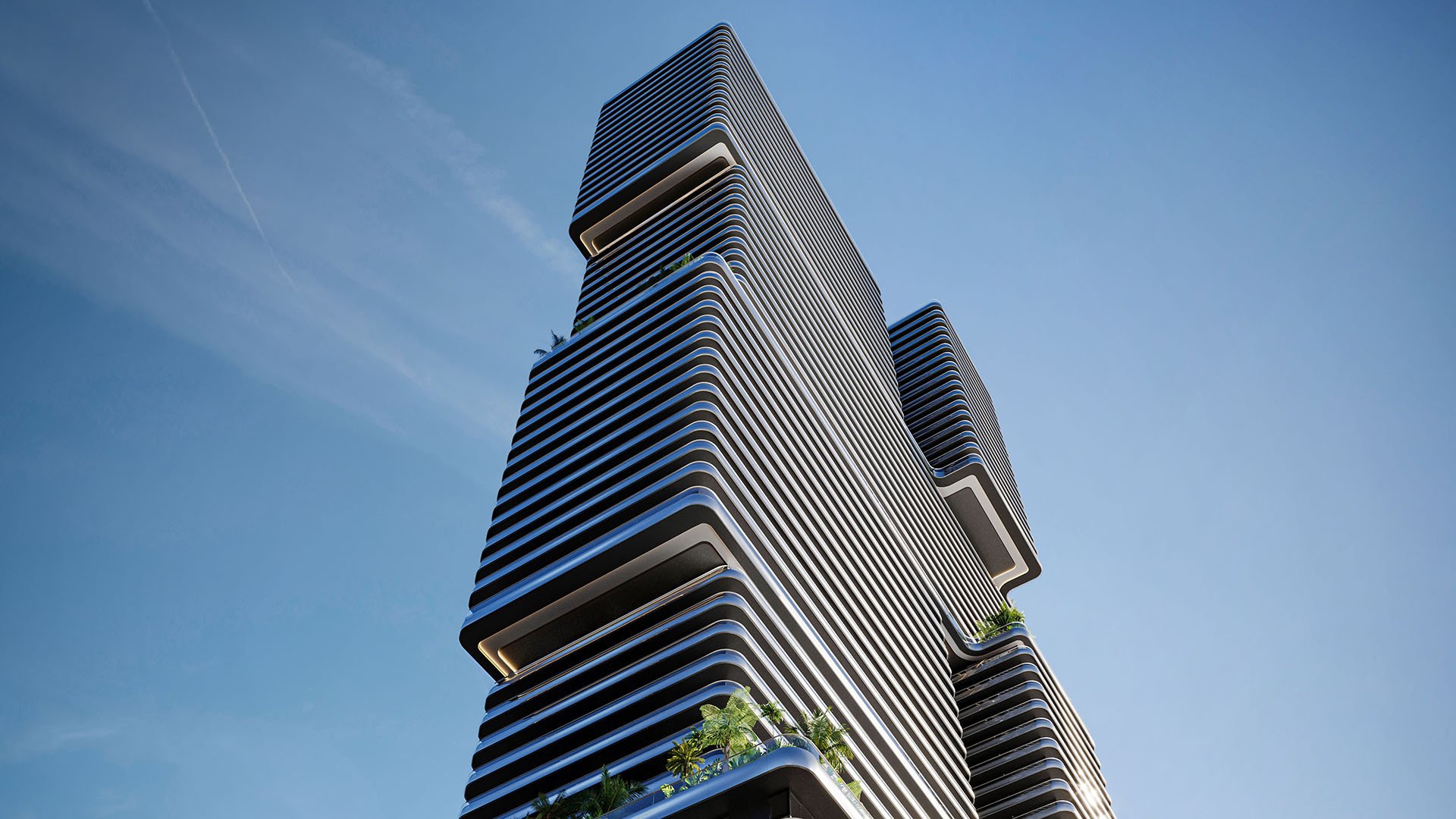
A compelling view can compress a buyer’s judgment. It draws the eye, lowers defenses, and makes a room feel complete before the residence has been properly examined. In Wynwood, where visual identity is often part of the appeal, that first impression can be especially persuasive. Yet refined buyers treat the view as an invitation, not a conclusion.
The question is not simply whether the outlook is beautiful. It is whether the residence remains desirable when the light changes, when privacy matters, when guests arrive, when storage is tested, and when the building’s daily rhythm becomes your own. A boutique residence has to earn its intimacy. The right one feels personal without feeling under-scaled, expressive without becoming theatrical, and private without feeling isolated.
Begin with restraint. Before falling for glass, height, or a terrace moment, ask whether the home would still be compelling if the view were treated as a bonus rather than the centerpiece.
A view has several layers. The obvious one is composition: what you see when you enter the room. The more important layers are durability, privacy, glare, depth, and how the sightline performs from the rooms you will use most.
Stand where daily life actually happens. Sit at the dining table, not only at the terrace edge. Look from the primary bedroom at night, not only from the living room at midday. If the strongest outlook belongs to a space you rarely use, the premium may not translate into daily pleasure. Conversely, a quieter view that supports the kitchen, living area, and bedroom may prove more valuable than a dramatic angle confined to one corner.
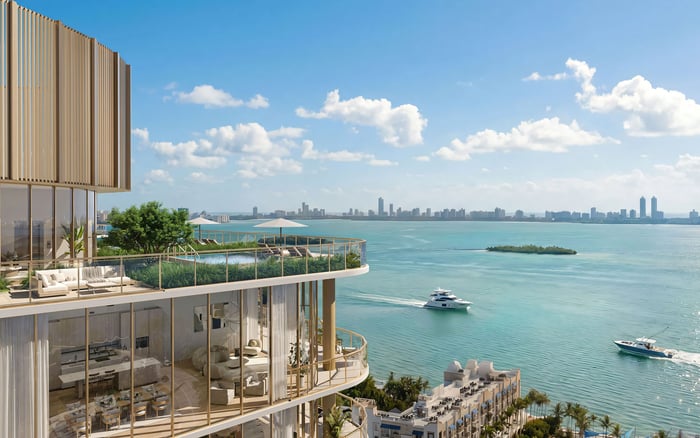
Privacy deserves equal attention. A view that looks open from one position may feel exposed from another. Study neighboring windows, terrace alignments, and the way interior lighting changes visibility after sunset. The best Waterview or skyline-facing residence is not always the one with the most dramatic panorama. It is the one that allows you to live elegantly without performing for the buildings around you.
Boutique buildings require a different lens from large-scale towers. The smaller the community, the more important its operating culture becomes. A discreet lobby, a calm arrival sequence, and a well-considered service path can matter as much as finishes. In a boutique setting, small frictions become visible because there is less scale to absorb them.
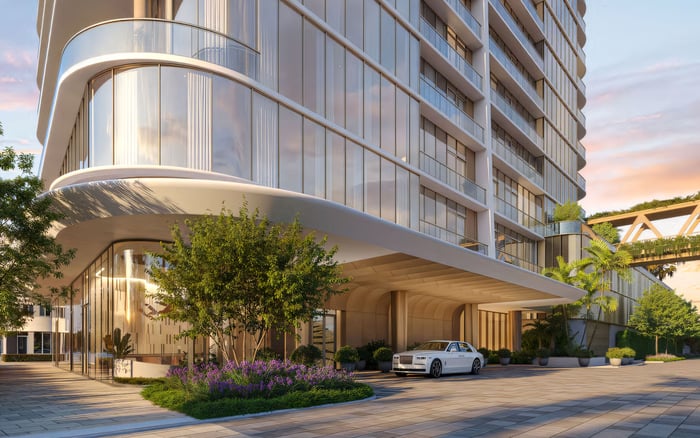
Ask how residents, guests, deliveries, pets, and staff move through the property. A beautiful home can feel compromised if the arrival is awkward or if service functions interrupt the residential experience. Look for clarity: where cars pause, where packages are handled, how elevators are managed, and whether amenity spaces feel proportional rather than decorative.
Boutique does not automatically mean better. It means fewer residences sharing the same architecture, systems, amenities, and governance. That can create intimacy, but it can also magnify weak planning. The goal is a building that feels composed, not merely small.
A view can disguise an inefficient plan. Long corridors, compromised bedroom placement, shallow living areas, and limited wall space may disappear during a first showing because the eye moves outward. A disciplined buyer brings the attention back inside.
Begin with the entry. Does the residence offer a moment of arrival, or does it reveal too much too quickly? Then study the relationship between kitchen, dining, and living areas. In a boutique residence, open space should feel intentional, not simply emptied out. There should be room for art, proper seating, layered lighting, and a dining experience that does not feel incidental.
Judge the primary suite by quiet, privacy, storage, and morning light, not only by the outlook. Secondary rooms should have credible use cases: guest suite, office, wellness room, or staff-supportive space, depending on the buyer’s lifestyle. If every room depends on the view to feel special, the plan may lack depth.
A Wynwood purchase should be evaluated against how the buyer actually lives across South Florida. Some buyers want the immediacy of a creative urban setting. Others need a more traditional waterfront rhythm, a branded service environment, or a quieter residential cadence. The strongest decision comes from comparison, not infatuation.
A buyer considering Frida Kahlo Wynwood Residences might also look at nearby design-oriented residences to understand how architecture, branding, and neighborhood identity affect long-term fit. For example, Kempinski Residences Miami Design District offers a useful point of comparison for buyers weighing cultural proximity against a different residential expression.
Those drawn to height, water, and a larger tower environment may compare the boutique instinct with Aria Reserve Miami. A buyer who values a more business-oriented urban setting may also study 2200 Brickell to understand whether Wynwood’s energy or Brickell’s structure better suits daily life.
This is not about ranking one district over another. It is about fit. New-construction buyers in South Florida are often choosing between different versions of luxury: expressive, waterfront, branded, quiet, vertical, or village-like. Wynwood should win because it matches the owner’s habits, not because the first view was memorable.
The reward of a boutique residence is intimacy. Fewer neighbors can mean a more personal atmosphere and a stronger sense of identity. The risk is that every decision matters more. Architecture, management, reserves, amenity programming, and maintenance standards are not abstractions. They shape the daily experience and the eventual resale narrative.
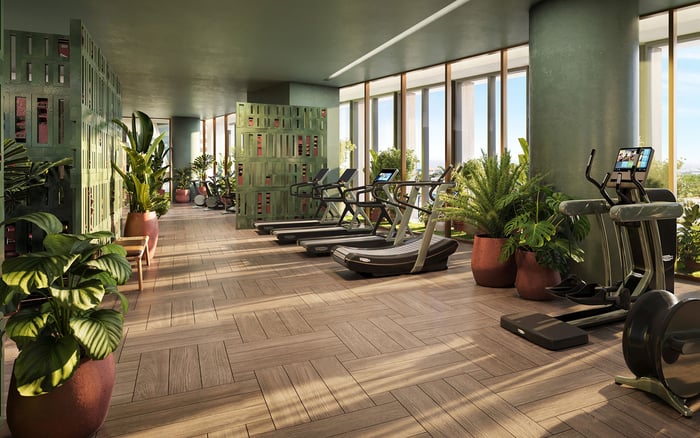
Look closely at the balance between private square footage and shared amenities. An amenity package should support the way residents live, not simply photograph well. If the building has limited common space, the residence itself must carry more of the lifestyle burden. If the amenities are ambitious, their scale and operating logic should feel believable for a smaller community.
Lifestyle is also about sound, movement, and routine. Visit at different times if possible. Notice elevator wait times, corridor acoustics, the feeling of the garage or arrival court, and the transition from street to sanctuary. A boutique home should make the outside world feel edited by the time you reach your door.
Before committing, ask practical questions in a calm sequence. What exactly is protected about the view, and what is merely assumed? How does the floor plate affect privacy between neighboring residences? What are the rules for short stays, guests, pets, renovations, and terrace use? How are reserves, maintenance, and insurance responsibilities explained? What is the service expectation, and does the building have the staffing model to support it?
Then ask the most revealing question: would you still want this residence if the view were only good, not extraordinary? If the answer is yes, the home likely has substance. If the answer is no, the view may be carrying too much of the value proposition.
The best boutique residence in Wynwood is not necessarily the one that photographs most dramatically. It is the one where the view, plan, building, and private routine align so naturally that none has to compensate for the others.
What is the first thing to evaluate in a boutique Wynwood residence? Start with the floor plan and privacy, then return to the view. A strong outlook should enhance the home, not rescue it.
Is a higher floor always better? Not necessarily. Height can improve exposure, but privacy, glare, elevator experience, and room proportions may matter more.
How should I think about a view premium? Treat the view as one component of value. Its worth depends on durability, usability, privacy, and how often you enjoy it.
What makes a boutique building feel truly luxurious? Luxury comes from proportion, discretion, service logic, and calm daily operation. Small scale alone is not enough.
Should I compare Wynwood with other Miami neighborhoods? Yes. Comparison clarifies whether Wynwood suits your habits or whether another district better supports your routine.
Can amenities be less important in a boutique residence? They can be, if the private residence is generous and well planned. Still, shared spaces should feel useful and well managed.
What should I notice during a private showing? Watch the arrival, acoustics, elevator experience, natural light, storage, and sightlines from seated positions.
Is New-construction always preferable for a boutique buyer? New-construction can offer current design and systems, but the plan, governance, and operating quality still need scrutiny.
How does Waterview value differ from skyline value? Waterview appeal often depends on calmness and depth, while skyline value depends on composition, privacy, and night presence.
What is the best way to shortlist comparable options for touring? Start with location fit, delivery status, and daily lifestyle priorities, then compare stacks and elevations to validate views and privacy.
For a tailored shortlist and next-step guidance, connect with MILLION.
If branded residences are on your mind — as a home or as an allocation — we would be glad to share what we are seeing, privately.
Begin a quiet conversation