A refined buyer’s guide to evaluating full-service towers in the Miami Design District, focused on service, privacy, operations, amenities, and long-term livability before the view takes over the conversation.
.jpg)
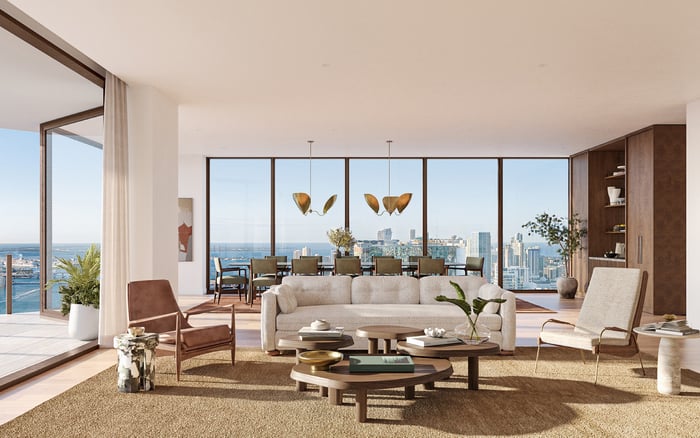
In Miami, a view can disarm even the most disciplined buyer. The light over Biscayne Bay, the geometry of the skyline, the late-afternoon reflection on glass: these are real emotional advantages. But in the Miami Design District, where buyers often weigh architecture, service, privacy, and proximity with unusual precision, the view belongs within a much larger residential equation.
A full-service tower is not judged only by what happens when the elevator doors open into the residence. It is judged by the sequence before that moment: how the car arrives, how guests are received, how staff anticipates needs, how deliveries disappear, how amenities perform when the building is fully occupied, and how the address feels on an ordinary Tuesday morning.
That is why a serious evaluation begins before the sales gallery, before the terrace, and before the sunset. The buyer who understands service infrastructure is less likely to overpay for drama and more likely to secure a residence that feels composed for years.
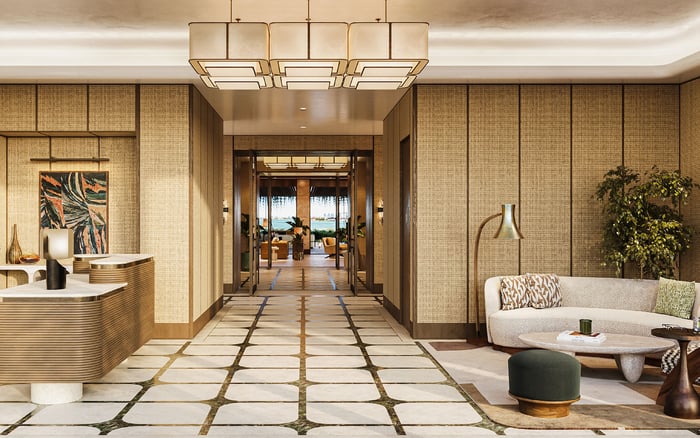
The most revealing moment in a full-service tower is often the first thirty seconds. A refined arrival should feel intuitive, protected, and calm. Look for a porte cochère or drop-off experience that separates residents from congestion, shields them from weather, and gives valet, security, and front-desk teams enough room to work without theater.
The best lobbies do not simply impress. They decompress. They create a transition from the city into the residence. Materials matter, but choreography matters more. Ask how guests are announced, how vendors are routed, where rideshare vehicles wait, and whether private arrivals remain private during social peaks.
For buyers considering the Design District specifically, Kempinski Residences Miami Design District is the type of project that invites this service-first lens. The question is not only whether the brand feels luxurious, but whether the building’s everyday systems support the standard implied by the name.
Nearly every luxury tower can describe a collection of services. Fewer can demonstrate a culture of service. A concierge desk, valet program, wellness offering, and resident lounge are only as strong as the staffing model, access rules, and management philosophy behind them.
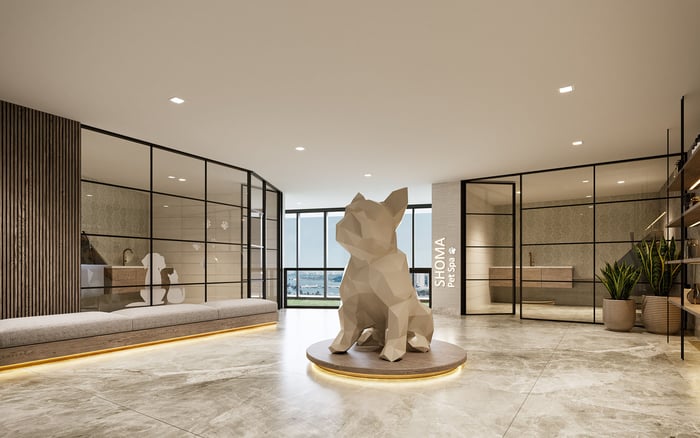
Ask direct questions. Who trains the staff? How are requests documented? What happens when several residents need cars at the same time? How are packages, private chefs, pet services, and household staff managed? Is there a clear protocol for visiting family, high-profile guests, and recurring vendors?
Service should be discreet rather than performative. A true full-service building reduces friction without inserting itself into every moment. If the team seems focused on presentation rather than precision, the buyer should pause. In the ultra-premium market, daily competence is more valuable than ceremonial polish.
This is especially important for Branded Residences, where the name can be seductive. Brand alignment matters, but operational alignment matters more. The buyer should determine whether the service promise is embedded in the building’s governance, staffing, and budget, not merely in its marketing language.
Amenities should be evaluated the way an owner will use them, not the way a brochure presents them. A pool deck is different at noon on a quiet weekday than it is during a holiday weekend. A fitness center is different when two private trainers are present. A residents’ lounge is different when it must support children, guests, remote work, and evening entertaining at once.
Study capacity, access, acoustics, privacy, and adjacency. Is the spa zone insulated from the social areas? Can a resident host a dinner without turning the lobby into a holding area? Does the wellness program feel restorative, or does it compete with circulation? Are outdoor spaces arranged for actual use, not only photography?
If cross-shopping nearby product, Miami Design Residences Midtown Miami may belong in the same conversation for buyers who want adjacency to the Design District without evaluating only one address. The key is to compare how each building translates lifestyle into routine, not just how it frames a view.
New-construction buyers should be particularly alert to amenity optimism. Renderings can make every space feel serene. Ownership requires asking who controls those spaces, how they are reserved, how they are maintained, and whether the monthly cost structure appears aligned with the promised experience.
Privacy in a full-service tower is not a single feature. It is a system of thresholds. It begins with the garage or drop-off, continues through the lobby and elevator core, and ends at the residence entry. The strongest buildings minimize accidental encounters without making the experience feel sterile.
Evaluate elevator configuration, guest routing, service access, and staff visibility. A buyer who entertains frequently may value one form of privacy, while a buyer with household staff or visiting family may need another. The right building should support both formal and informal life without forcing every movement through the same public frame.
In Miami, privacy also includes sound. Ask how amenity noise is separated from residences, how mechanical systems are buffered, and how terraces relate to neighboring homes. A magnificent panorama loses its force if the residence cannot provide quiet when the doors are closed.
The Miami Design District offers a distinct lens for buyers who want design fluency, urban energy, and a residential experience that feels curated rather than resort-like. But a disciplined buyer should still compare it with adjacent and alternative luxury markets. Edgewater, Brickell, Miami Beach, and Waterfront settings each solve different priorities.
For example, EDITION Edgewater may appeal to a buyer who wants a bay-oriented residential rhythm, while 888 Brickell by Dolce & Gabbana speaks to a more vertical, metropolitan idea of hospitality-driven living. Neither comparison is about declaring one superior. It is about clarifying which daily life the buyer is truly choosing.
Brickell often emphasizes intensity, access, and a downtown cadence. Waterfront properties can prioritize air, horizon, and a softer sense of escape. The Design District sits in a different psychological category, where the value proposition may rest on architecture, taste, and proximity to a design-oriented environment. The correct answer depends on whether the buyer wants the building to feel like a private retreat, an urban salon, or a highly serviced base in the city.
A full-service tower carries a service economy. The more ambitious the promise, the more carefully the buyer should examine the budget, staffing plan, maintenance expectations, reserve philosophy, and governance structure. Finishes may win attention, but operations preserve value.
Ask what is included, what is optional, and what could become expensive as the building matures. A buyer should understand valet operations, amenity staffing, insurance exposure, mechanical complexity, and the relationship between private residential services and any hospitality component. The goal is not to avoid cost. It is to ensure the cost supports the quality of life being purchased.
The most compelling tower is rarely the one with the longest amenity list. It is the one where services, architecture, staffing, and ownership structure feel coherent. When those pieces align, the view becomes a privilege rather than a distraction.
What defines a full-service tower in the Miami Design District? It is a residential building where arrival, security, concierge, valet, amenities, and daily operations are coordinated to reduce friction for owners.
Should the view be the deciding factor? No. A view can support value and pleasure, but service quality, privacy, layout, and building operations shape daily satisfaction more consistently.
How should I evaluate a luxury lobby? Look beyond finishes and study circulation, staffing visibility, guest management, package handling, and how calmly the space functions at busy times.
Are Branded Residences always better serviced? Not automatically. The buyer should confirm that the brand promise is matched by staffing, training, governance, and a realistic operating budget.
What amenity questions matter most? Ask about access, reservation rules, capacity, staffing, maintenance, acoustic separation, and whether owners can use the spaces comfortably year-round.
Why does privacy matter so much in a tower? Privacy protects the feeling of home. Elevator design, guest routing, staff protocols, and acoustic planning all influence how private a residence feels.
How does New-construction change the evaluation? New-construction requires extra attention to projected operations, future staffing, maintenance assumptions, and how renderings will translate into daily use.
Should I compare Design District with Brickell or Waterfront options? Yes. Each area supports a different lifestyle rhythm, so comparison helps clarify whether the buyer values culture, skyline energy, or open-water calm.
What is the biggest mistake buyers make? They fall in love with the terrace before understanding the building’s service model, monthly cost structure, and long-term livability.
What is the best way to shortlist comparable options for touring? Start with location fit, delivery status, and daily lifestyle priorities, then compare stacks and elevations to validate views and privacy.
For a discreet conversation and a curated building-by-building shortlist, connect with MILLION.
If branded residences are on your mind — as a home or as an allocation — we would be glad to share what we are seeing, privately.
Begin a quiet conversation