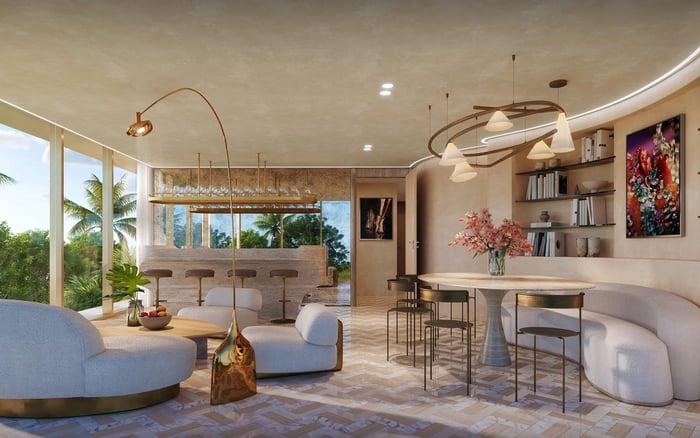
A practical buyer’s guide to evaluating owner-only treatment rooms in Miami and Palm Beach residences, with attention to legal permissions, building systems, privacy, practitioner access, and resale flexibility.

In Miami and Palm Beach, private wellness now extends well beyond a gym, sauna, or quiet terrace. For many luxury buyers, the next layer is an owner-only treatment room: a private residential space intended for the owner, family, and personal guests, not commercial clientele. The appeal is clear. Privacy, personalization, and on-demand access are difficult to replicate in a public spa environment, particularly for buyers who travel frequently, keep demanding schedules, or prefer trusted practitioners at home.
The more important question is not whether a massage table fits. It is whether the residence can legally, structurally, and operationally support the intended treatment use. A room suitable for occasional stretching may not be appropriate for facials, IV infusions, red-light therapy, post-surgical recovery, or wet services that create humidity, linen turnover, and equipment demands.
That is why buyers considering wellness-forward residences, from The Well Bay Harbor Islands to private homes in Palm Beach, should evaluate the treatment room as part of due diligence rather than as a decorative amenity.
The most disciplined starting point is a written use profile. Will the room support massage, facials, red-light therapy, IV wellness, recovery care, aesthetic treatments, or a rotating menu of services? Each modality can carry different requirements for privacy, plumbing, power, ventilation, lighting, storage, and practitioner movement.
A generic spa room may photograph beautifully, but the strongest spaces are calibrated to the owner’s actual routine. A massage-focused room may require quiet, circulation space, linen storage, and acoustic separation. A facial or aesthetic room may need adjustable task lighting, a nearby sink, greater counter space, and surfaces that tolerate frequent cleaning. A post-surgical recovery room may place more emphasis on comfort, access, climate stability, and separation from household traffic.
The goal is not to turn a residence into a clinic. The more valuable approach is to integrate wellness functions discreetly, so the home still reads as a residence first.
Owner-only treatment rooms differ from med-spas or salons because they are not designed as income-generating businesses. That private-use distinction matters. Zoning, condominium documents, HOA rules, and licensing regimes may treat commercial and non-commercial activity differently, especially when visiting practitioners enter the property.
Before committing to a residence or renovation, buyers should review whether private treatments are permitted, whether practitioner access is restricted, and whether building rules regulate repeated guest visits, service elevator use, insurance documentation, or deliveries. In a condominium, the association’s interpretation can be just as important as the floor plan. In a gated community, HOA restrictions may be central. In a single-family home, zoning and permitting questions still deserve careful review.
This is particularly relevant in dense luxury markets such as Brickell, where residences like The Residences at 1428 Brickell place buyers in highly serviced vertical environments. The more formal the building, the more important it becomes to understand how private practitioners, equipment, and recurring appointments are handled.
A treatment room is only as successful as the systems behind the walls. The essential building review should include structural capacity, plumbing, electrical load, ventilation, HVAC performance, waterproofing, and acoustic separation. A room with beautiful millwork but insufficient air movement can feel uncomfortable during long treatments. A room with inadequate power may struggle with specialized equipment. A room without moisture control may be inappropriate for steam, wet services, hydrotherapy-adjacent uses, oils, linens, or equipment that affects humidity.
Acoustic isolation deserves special attention. Treatment rooms often require calm and confidentiality, especially in households with staff, children, guests, elevators, or shared corridors nearby. The room’s location within the plan can matter as much as the wall assembly. A space tucked beside a primary suite may be convenient, but it may also need stronger sound management if the suite is actively used during treatment hours.
In coastal residences such as 57 Ocean Miami Beach, buyers should think beyond the beauty of the setting and ask whether the proposed wellness space can manage humidity, air-conditioning performance, and service flow in daily use.
A dedicated treatment suite can keep visiting practitioners’ work contained, discreet, and separated from the rest of the home. Ideally, the practitioner can arrive, set up, perform the service, clean down the space, and depart without moving through the residence’s most private areas.
Buyers should study the path from entry to treatment room. Is there a service corridor or secondary entry? Is there a powder room nearby? Can linens, oils, devices, and supplies be stored without cluttering family areas? In a condominium, is there a practical protocol for guest registration, parking, elevator access, and equipment delivery?
The best owner-only treatment rooms feel serene to the owner and operationally logical to the practitioner. That combination is what separates a true residential wellness suite from a spare room with a table.
Resale value should remain part of the conversation. An overly specialized treatment room may appeal to a narrower buyer pool unless it is designed with flexibility. The strongest candidates can function as a wellness room today and a study, recovery lounge, dressing room, meditation room, or guest-adjacent sitting room tomorrow.
This is especially important in branded residences, hotel-condos, and ultra-prime single-family homes, where wellness amenities are increasingly positioned as core features rather than extras. Buyers are not only purchasing square footage. They are purchasing a lifestyle system. Still, a room that appears too clinical can interrupt the emotional continuity of a high-design residence.
Projects associated with wellness-driven living, such as The Well Coconut Grove, help illustrate why buyers should ask how wellness is integrated into the residential experience rather than treated as an isolated feature.
Palm Beach and West Palm Beach buyers often approach treatment rooms through the lens of discretion, household service, and long-term livability. In this market, the treatment room should feel private enough for recovery or personal care, yet polished enough to align with the rest of the residence.
For buyers studying residences such as Alba West Palm Beach, the same checklist applies: confirm private-use permissions, understand association or building rules, review the room’s systems, and evaluate how practitioners would move through the property. The most successful wellness spaces are the ones that disappear into the rhythm of the home when not in use.
Start with legality. Review zoning, condominium rules, HOA restrictions, licensing exposure, and any limits on visiting practitioners before assuming a private treatment program is acceptable.
Then examine the room itself. Confirm ceiling height, circulation around equipment, storage, lighting, electrical capacity, ventilation, waterproofing, HVAC performance, plumbing proximity, and acoustic separation. If treatments may involve humidity, oils, linens, water, medical-adjacent equipment, or extended recovery time, the systems must match the ambition.
Finally, test the operational reality. Ask how the practitioner arrives, where they park, which elevator they use, where they wash hands, how supplies are stored, and how the room returns to residential calm after the appointment. Luxury in this context is not excess. It is frictionless privacy.
What is an owner-only treatment room? It is a private residential wellness space intended for the owner, family, and personal guests, not commercial clientele.
Is it the same as a med-spa or salon? No. The key distinction is that an owner-only treatment room is not designed as an income-generating business.
What legal issues should a buyer review first? Review zoning, licensing exposure, condominium documents, HOA rules, and limits on visiting practitioners.
Why does practitioner access matter? The arrival path, elevator use, guest registration, and service flow can affect privacy and building compliance.
Which building systems are most important? Structural capacity, plumbing, electrical load, ventilation, HVAC performance, waterproofing, and acoustic separation are central.
Does every treatment room need plumbing? Not always, but facials, wet services, cleaning protocols, and certain wellness uses may make nearby plumbing important.
Why is acoustic isolation so important? Treatments require calm, privacy, and separation from household, corridor, elevator, or building noise.
Can a treatment room hurt resale value? It can if it is too specialized, which is why flexible residential design is usually more resilient.
What uses are buyers commonly considering? Massage, facials, IV infusions, red-light therapy, post-surgical recovery, and aesthetic treatments are common examples.
Who should verify whether a room is permitted? Buyers should consult counsel, the association or HOA, qualified design professionals, and local permitting authorities.
To compare the best-fit options with clarity, connect with MILLION.
If branded residences are on your mind — as a home or as an allocation — we would be glad to share what we are seeing, privately.
Begin a quiet conversation