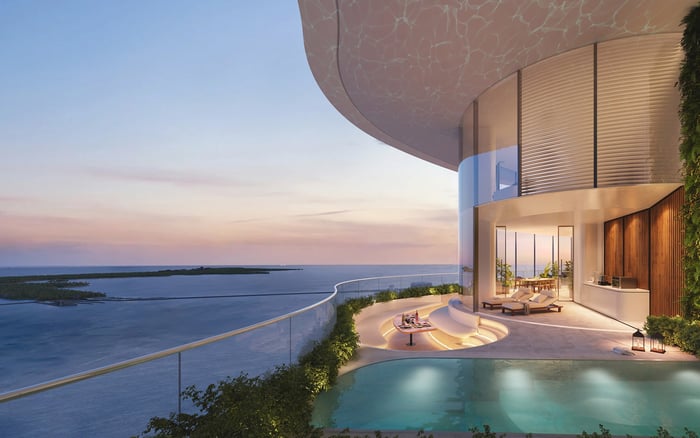
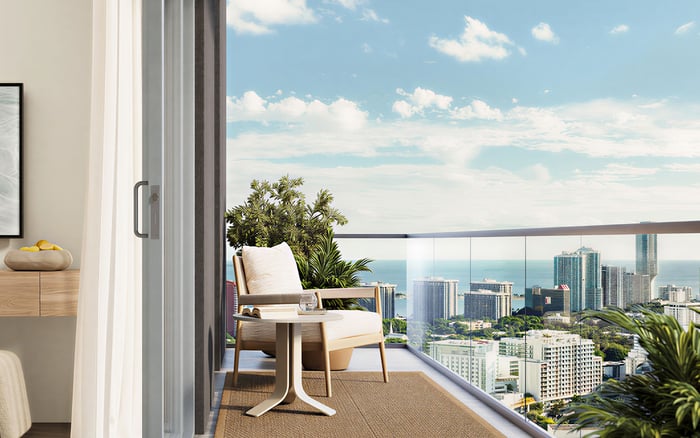
A discreet buyer’s guide to assessing outdoor audio rules, terrace etiquette, board approval, and livability before purchasing a South Florida penthouse.

A South Florida penthouse is often purchased for the open air: the dinner terrace, the sunset lounge, the private plunge pool, the long view over water or skyline. Sound is part of that experience, but it is also one of the least understood details in a luxury acquisition. Outdoor audio can elevate a residence, yet it can also create friction with neighbors, the association, or the building’s architectural standards when treated casually.
For a buyer comparing a penthouse in Miami Beach, Brickell, Sunny Isles, or another waterfront market, the question is not simply whether speakers can be installed. The better question is whether the intended lifestyle aligns with the building’s rules, culture, physical design, and approval process. A discreet system for dinner music is very different from a terrace designed for amplified entertaining. Both may feel reasonable to an owner; either may be unacceptable in the wrong setting.
The most sophisticated buyers evaluate outdoor audio before closing, not after a designer has completed the terrace concept. In high-value buildings, a sound plan should sit beside the furniture plan, lighting plan, landscape plan, and privacy strategy.
The first review should be documentary. Ask for the condominium declaration, bylaws, house rules, architectural guidelines, alteration policies, and any terrace or balcony use rules that apply to the residence. The relevant language may not use the phrase “outdoor audio.” It may appear under nuisance provisions, quiet enjoyment, mechanical equipment, exterior alterations, limited common elements, visible equipment, or after-hours use.
A careful reading should answer several practical questions. Are exterior speakers allowed at all? Is board or management approval required? Are wireless portable speakers treated differently from hardwired systems? Are speakers, subwoofers, cabling, brackets, or control boxes considered exterior alterations? Are there restrictions on placing equipment on railings, ceilings, planters, pergolas, or structural walls?
The goal is to understand authority. In some buildings, a buyer may be able to choose furniture freely but need approval for anything attached to the building envelope. In others, even loose items can be restricted if they affect appearance, drainage, safety, or neighboring enjoyment. Before assuming that a large private terrace gives complete autonomy, confirm whether it is owned outright, assigned for exclusive use, or governed as part of the building exterior.
Rules on paper matter, but building culture often matters just as much. A tower known for serene full-floor residences may respond differently to terrace music than a building with an active pool deck, restaurant-style amenity spaces, or a more social ownership profile. Neither model is inherently better. The issue is alignment.
During due diligence, ask management and your advisor how outdoor living is typically handled. Are residents known to entertain on terraces? Are gatherings common during season? Does management take a strict approach to complaints? Are warnings informal at first, or does the association move quickly to enforcement? Has the building recently revised its rules around noise, speakers, or terrace use?
Frame these questions neutrally. A buyer is not seeking permission to be disruptive; the buyer is learning whether the building’s rhythm suits the intended lifestyle. In South Florida, where indoor-outdoor living is central to the appeal, that distinction matters.
Penthouse buyers often assume height creates isolation. Sometimes it does. Sometimes wind, glass, neighboring setbacks, and hard surfaces carry sound in surprising ways. A terrace that feels private visually may be exposed acoustically to adjacent balconies, lower amenity decks, neighboring towers, or even another wing of the same building.
Visit the residence at more than one time of day if possible. Stand in the principal entertaining areas and listen before adding music. Note wind, road sound, ocean sound, mechanical hum, pool activity, marina activity, and the way voices carry. If the penthouse has multiple outdoor zones, evaluate each one separately. A dining loggia protected by walls may behave differently from an open roof deck.
Also consider the difference between perceived volume and transmitted bass. Low-frequency sound can be more problematic than background music because it travels through structure and partitions. A refined system does not necessarily mean a powerful one. For many luxury terraces, clarity at low volume is more valuable than capacity.
If outdoor audio is important, request clarity before the purchase becomes emotionally committed. The most useful questions are specific. Would an owner need approval for flush-mounted ceiling speakers? Would planter-concealed speakers be treated as furniture, landscaping, or equipment? Are subwoofers prohibited or discouraged outdoors? Are there limits on hours, placement, visibility, or connection to smart-home systems?
Ask whether plans must be submitted by a licensed contractor, whether acoustic information is expected, and whether management requires insurance certificates or work-hour compliance for installation. Also ask what happens if a neighbor complains after approval. Approval to install equipment does not always mean unrestricted permission to use it in every manner.
For resale penthouses, ask whether any existing terrace audio system was approved. A system already in place is not automatically compliant. Confirm whether permits, board approvals, warranties, wiring diagrams, and service records will transfer, and whether the association has ever objected to the installation.
The best outdoor audio systems in luxury buildings tend to be almost invisible. They are designed for even distribution, low volume, and minimal leakage rather than theatrical force. More speakers at lower output may be preferable to fewer speakers pushed harder, depending on the terrace geometry and the building’s rules.
Placement should respect sightlines, architecture, drainage, salt air, maintenance access, and hurricane-season protocols. Equipment that looks harmless in a showroom can appear intrusive on a façade or conflict with a building’s exterior standard. In a curated tower, visible wires, makeshift brackets, or temporary-looking devices can create aesthetic objections even before sound becomes the issue.
Smart controls are equally important. Separate zones can keep music near a dining table rather than projecting across the entire terrace. Volume limits, presets, and simple shutoff controls help household staff, guests, and family members use the system consistently. In a condominium environment, operational discipline is part of the design.
Outdoor sound should be evaluated alongside privacy, elevator access, service flow, parking, pet policies, guest rules, and amenity proximity. A penthouse may have extraordinary views but limited tolerance for amplified outdoor use. Another residence may offer a more flexible social setting but less visual seclusion. The right answer depends on how the owner actually lives.
Buyers who entertain frequently should be especially attentive to guest arrival patterns, catering access, security procedures, and valet operations. Music rarely exists in isolation. It accompanies voices, dinner service, doors opening, late departures, and furniture movement. A building comfortable with elegant entertaining will usually feel different from one designed for near-hotel quiet.
This is where local nuance matters. Brickell may appeal to an owner who enjoys an urban evening atmosphere. Miami Beach may be chosen for resort-like open-air living. Sunny Isles may attract buyers seeking dramatic height, water views, and expansive terraces. Even within the same area, two buildings can carry completely different expectations.
If a penthouse is otherwise ideal, audio uncertainty does not necessarily end the conversation. It may simply require additional conditions, written confirmations, or a revised design concept. A buyer can ask for association records relating to the terrace, request seller representations about existing systems, or make approval review part of the contract timeline where appropriate.
Do not rely on casual assurances. A statement that “everyone uses speakers” is not the same as written permission. Likewise, a beautiful staged terrace with portable music does not prove that a permanent system will be approved. The strongest position is a clear paper trail, a conservative design, and expectations aligned with the building’s actual governance.
For ultra-premium buyers, the point is not to eliminate pleasure. It is to protect it. The most enjoyable terrace is one that can be used confidently, without improvising around rules after the fact.
Can a penthouse owner usually install outdoor speakers without approval? Not necessarily. Any attachment to exterior surfaces, ceilings, railings, or shared building elements may require association review.
Are portable speakers safer from a rules standpoint? They may avoid installation issues, but use can still be restricted if sound disturbs neighbors or violates house rules.
Should I review audio rules before making an offer? Yes, if outdoor entertaining is important to your lifestyle. Early review helps prevent a mismatch between expectations and building culture.
What documents should I ask to see? Request the declaration, bylaws, house rules, alteration guidelines, terrace rules, and any policies addressing nuisance or exterior changes.
Does a private terrace mean I control all sound use? No. Private outdoor areas can still be subject to condominium rules, architectural standards, and neighbor-enjoyment provisions.
Can an existing speaker system create risk for a buyer? Yes. Confirm whether it was approved, properly installed, transferable, and free of prior objections from management or neighbors.
Is bass usually more sensitive than background music? Often, low-frequency sound is more likely to travel through structure or across open spaces, even when overall volume feels moderate.
Should an audio designer be involved before closing? For a major terrace plan, yes. A designer can assess placement, zoning, visibility, and how to achieve clarity at lower volume.
Do rules differ between balcony areas and roof terraces? They can. Each outdoor area may have different ownership status, exposure, architectural limits, and operational expectations.
What is the best buyer mindset? Treat outdoor audio as part of due diligence, not an accessory decision. The right plan should feel elegant, compliant, and neighbor-conscious.
For a discreet conversation and a curated building-by-building shortlist, connect with MILLION.
If branded residences are on your mind — as a home or as an allocation — we would be glad to share what we are seeing, privately.
Begin a quiet conversation