A buyer-focused guide to evaluating yoga-room acoustics in Edgewater residences, from reverberation and mechanical noise to privacy, finishes, and pre-closing diligence.

A yoga room is often presented as a serene extra: a den with a mat, a wellness studio, a quiet corner facing the water, or an amenity space wrapped in calming materials. Yet the true luxury is not the view alone. It is whether the room supports breath, voice, stillness, and movement without distraction. In Edgewater, where buyers often compare vertical residences, amenity-rich towers, and rooms that shift between fitness, meditation, and remote work, acoustics deserve the same scrutiny as light, ceiling height, and finishes.
The point is not to demand a recording studio. A residential yoga room should feel composed. It should soften footfall, limit echo, reduce mechanical hum, and protect privacy. The strongest spaces allow a private class, a guided meditation, or a quiet morning practice without forcing the user to compensate for the room.
Before judging aesthetics, listen for four categories: reverberation, mechanical noise, impact noise, and speech privacy. Reverberation is the lingering echo that makes a small room feel hard or unsettled. Mechanical noise may come from air conditioning, elevators, plumbing, ventilation, or nearby equipment. Impact noise includes footsteps, dropped weights, rolling furniture, and movement above or beside the space. Speech privacy is the degree to which voices carry in or out.
A beautiful room can fail acoustically if every instruction bounces off glass, stone, and exposed surfaces. Conversely, a modest room can perform gracefully when it has soft furnishings, thoughtful doors, appropriate flooring, and controlled mechanical noise. For a buyer, the question is simple: does the room invite a slower breath, or does it ask you to tune out the building?
During a showing, spend several minutes in silence. Stand in the center of the proposed yoga room, then move near the door, windows, and corners. Clap once softly and listen to how long the sound remains. Speak at a normal teaching volume and notice whether the voice feels sharp, hollow, or intimate. Walk barefoot if appropriate, then take a few slow steps with shoes on. Small observations reveal how the room may behave with daily use.
If the residence is occupied or staged, ask whether rugs, curtains, upholstered pieces, or wall treatments are included, because those elements can materially change how a room feels. If the room is vacant, do not assume it will remain echoing once furnished, but do not ignore the baseline either. Hard rooms need deliberate softening.
Not every buyer needs a dedicated yoga room inside the residence. Some prefer a flexible den, some use a building wellness studio, and others practice on a private outdoor space when conditions allow. Each option has acoustic tradeoffs.
A private room offers control and privacy, but may be affected by adjacent bedrooms, corridors, or mechanical systems. An amenity studio may have better flooring and more volume, but it can introduce scheduling, neighboring users, and music bleed. A balcony or terrace can feel liberating, but exterior sound may shape the experience more than the room itself. For search discipline, some buyers file notes under practical labels such as Edgewater, new construction, pre-construction, waterview, high floors, and terrace, then compare how each setting supports actual use rather than brochure language.
Ask direct, non-dramatic questions. What rooms are adjacent to the proposed yoga space? What is above and below it? Are there mechanical closets, elevator banks, trash rooms, service corridors, or high-use amenity areas nearby? Are windows and balcony doors designed with acoustic comfort in mind? What flooring assembly is planned or already installed? Can area rugs, acoustic panels, drapery, or millwork be added without violating building rules?
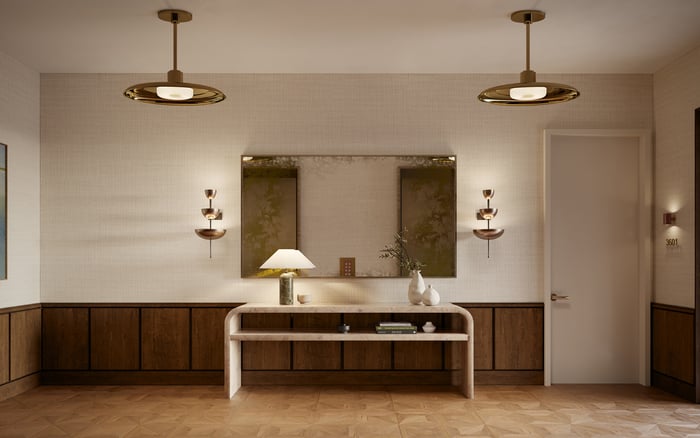
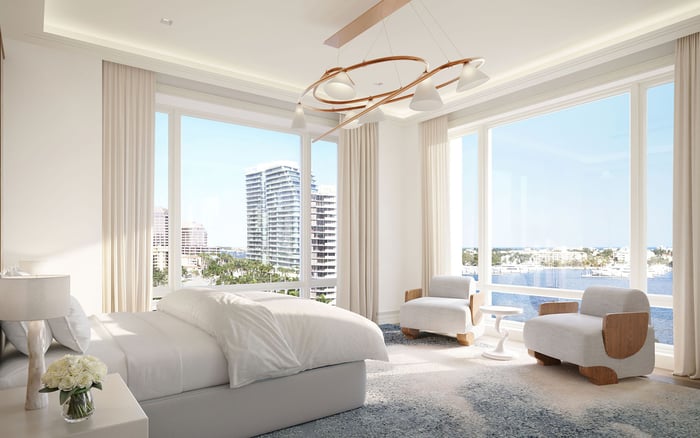
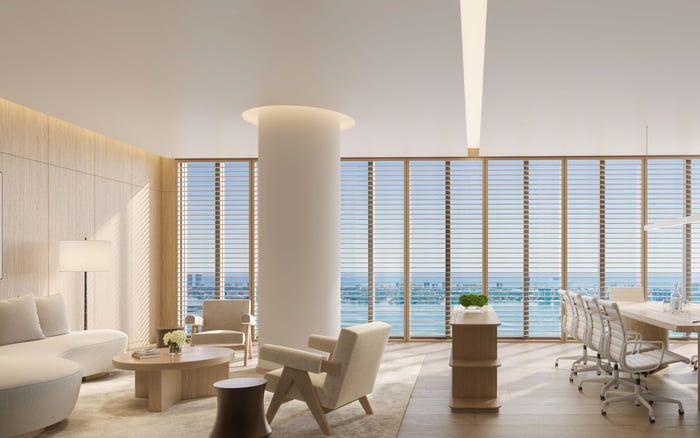
For pre-completion purchases, ask for finish details, door types, flooring specifications, and any available information on wall assemblies. Avoid treating renderings as acoustic evidence. A rendering can show calm, but it cannot prove quiet. In a finished residence, ask to experience the room with air conditioning on, doors closed, and nearby spaces in normal use.
Softness matters, but it should be integrated elegantly. Thick rugs, dense yoga mats, upholstered seating, fabric wall panels, bookshelves, drapery, and textured materials can help reduce excessive brightness. Wood millwork can make a room feel warmer, though its effect depends on placement and detail. Large uninterrupted glass, polished stone, and sparse furnishings can make sound feel more reflective.
Doors are often underestimated. A yoga room with a lightweight door may transmit sound more readily than expected. Gaps, louvered panels, and poor seals can undo otherwise thoughtful finishes. If the room doubles as a meditation space or private training room, the door condition deserves close inspection.
Many buyers associate height with quiet, and in certain ways a high-floor residence can feel more removed. Still, sound is contextual. A room on an upper level may reduce some street-level distractions, but it can still receive wind noise, mechanical vibration, corridor sound, or neighbor impact. The only reliable test is the room itself at the time it will be used.
If morning practice is important, visit during morning hours if possible. If evening restoration matters, return later in the day. A space that seems tranquil during a quiet showing may feel different when more residents are home, amenities are active, or building systems are under heavier use.
For a trophy residence, a customized wellness suite, or a buyer planning frequent private instruction, an acoustic consultant can be a discreet and worthwhile addition to due diligence. The consultant can identify likely transmission paths, recommend treatments, and distinguish between cosmetic quiet and true acoustic comfort. This is especially useful when a buyer wants the yoga room to coexist with bedrooms, media rooms, offices, or entertaining areas.
The goal is not to over-engineer a peaceful room. The goal is to avoid expensive assumptions. Acoustic corrections are easiest to consider before closing, before furniture is ordered, and before built-ins define the space.
Use the same test in each home. Stand in the likely practice zone. Listen in silence. Speak normally. Walk. Close the door. Turn on the air conditioning. Note adjacent rooms. Consider where mats, storage, speakers, mirrors, and soft furnishings would go. Then rate the room on calm, privacy, flexibility, and correction potential.
A residence with a slightly less dramatic view may offer a better yoga experience if the room is quieter and easier to tune. A residence with stronger visual drama may still win if treatments can be added elegantly. The refined buyer is not choosing silence in the abstract. The refined buyer is choosing a room that supports ritual.
Why should I test yoga-room acoustics before buying? Because acoustic comfort affects meditation, instruction, privacy, and whether the room feels restorative in daily life.
What is the fastest acoustic test during a showing? Stand quietly, clap softly once, speak at normal volume, close the door, and listen with the air conditioning running.
Can furniture improve a room that feels echoing? Yes. Rugs, drapery, upholstered pieces, mats, and millwork can soften many rooms, though they may not solve transmission from adjacent spaces.
Is a high-floor yoga room always quieter? Not always. Height may reduce some distractions, but mechanical sound, wind, corridors, and neighbors can still affect the experience.
Should I prioritize an in-residence yoga room or an amenity studio? Choose the option that best matches your routine. Private rooms offer control, while amenity studios may offer more space but less exclusivity.
What should I ask about in a pre-construction purchase? Ask about flooring, doors, adjacent rooms, mechanical locations, and whether future acoustic treatments are permitted.
Do waterview rooms perform differently acoustically? A waterview room may feel more serene visually, but sound performance depends on glazing, doors, exposure, and surrounding activity.
Can a terrace work for yoga practice? A terrace can be appealing for movement and breathing, but exterior sound, weather, privacy, and surface comfort should be considered.
When is an acoustic consultant worth hiring? Consider one for a high-value residence, a customized wellness suite, or any room expected to support regular private instruction.
What is the best way to shortlist comparable options for touring? Start with location fit, delivery status, and daily lifestyle priorities, then compare stacks and elevations to validate views and privacy.
For a discreet conversation and a curated building-by-building shortlist, connect with MILLION.
If branded residences are on your mind — as a home or as an allocation — we would be glad to share what we are seeing, privately.
Begin a quiet conversation