A discreet buyer’s guide to evaluating wellness amenities at The Delmore Surfside as a value-underwriting question, with attention to operations, indoor environmental quality, programming, and long-term ownership costs.
At the highest end of the Surfside condominium market, wellness is no longer a single amenity category. It is a language of value. For buyers considering The Delmore Surfside, the more useful question is not whether the building promises wellness, but whether that promise is embedded into daily life in a way that can be felt, used, maintained, and financially supported over time.
That distinction matters. Luxury real estate marketing often turns wellness into a mood: serene renderings, spa vocabulary, curated rituals, and an atmosphere of private retreat. Some of that is meaningful. Some of it is aesthetic shorthand. Sophisticated buyers should separate features that improve sleep, reduce stress, support mobility, improve air quality, enhance cognitive performance, or foster social connection from language designed primarily to reinforce branding, pre-sales momentum, or pricing premiums.
This is especially important in an oceanfront setting. In Surfside, the environment is part of the luxury proposition, but it is also part of the technical challenge. Salt air, humidity, ventilation, filtration, acoustics, and indoor comfort systems all affect how a residence lives day after day. Wellness, in this context, is not simply a lifestyle overlay. It is part of the ownership experience.
The most effective way to evaluate wellness amenities is to ask what each feature does for the resident on an ordinary Tuesday, not during a sales presentation. A fitness center should be judged less by its square footage than by its equipment quality, programming, acoustics, staffing, and fit with the resident profile. A recovery space should be judged by privacy, availability, service consistency, and maintenance. A social calendar should be judged by whether it creates routine engagement, not whether it photographs well.
For new-construction buyers, this approach is particularly useful because many decisions are made before the building can be fully experienced. Renderings can communicate design intent, but they cannot prove reservation ease, staffing standards, cleaning discipline, or long-term funding. The real question is whether the amenity has an operating plan behind it.
Buyers comparing The Delmore Surfside with nearby Surfside references such as Eighty Seven Park Surfside or Fendi Château Residences Surfside should avoid reducing the decision to a simple checklist. A longer amenity list does not automatically create a better wellness outcome. A smaller, better-run, more private, and more frequently used amenity environment may support daily life more effectively than a larger program with unclear access or weak operating discipline.
Fitness amenities carry the most visible wellness promise, but they are also among the easiest to overstate. The buyer’s focus should be practical. Is the space acoustically separated from residences and quiet zones? Does the equipment suit the likely resident profile? Is there enough operational support to keep the room clean, orderly, and available during peak hours? Will programming be offered, and if so, is it included, optional, or dependent on third-party providers?
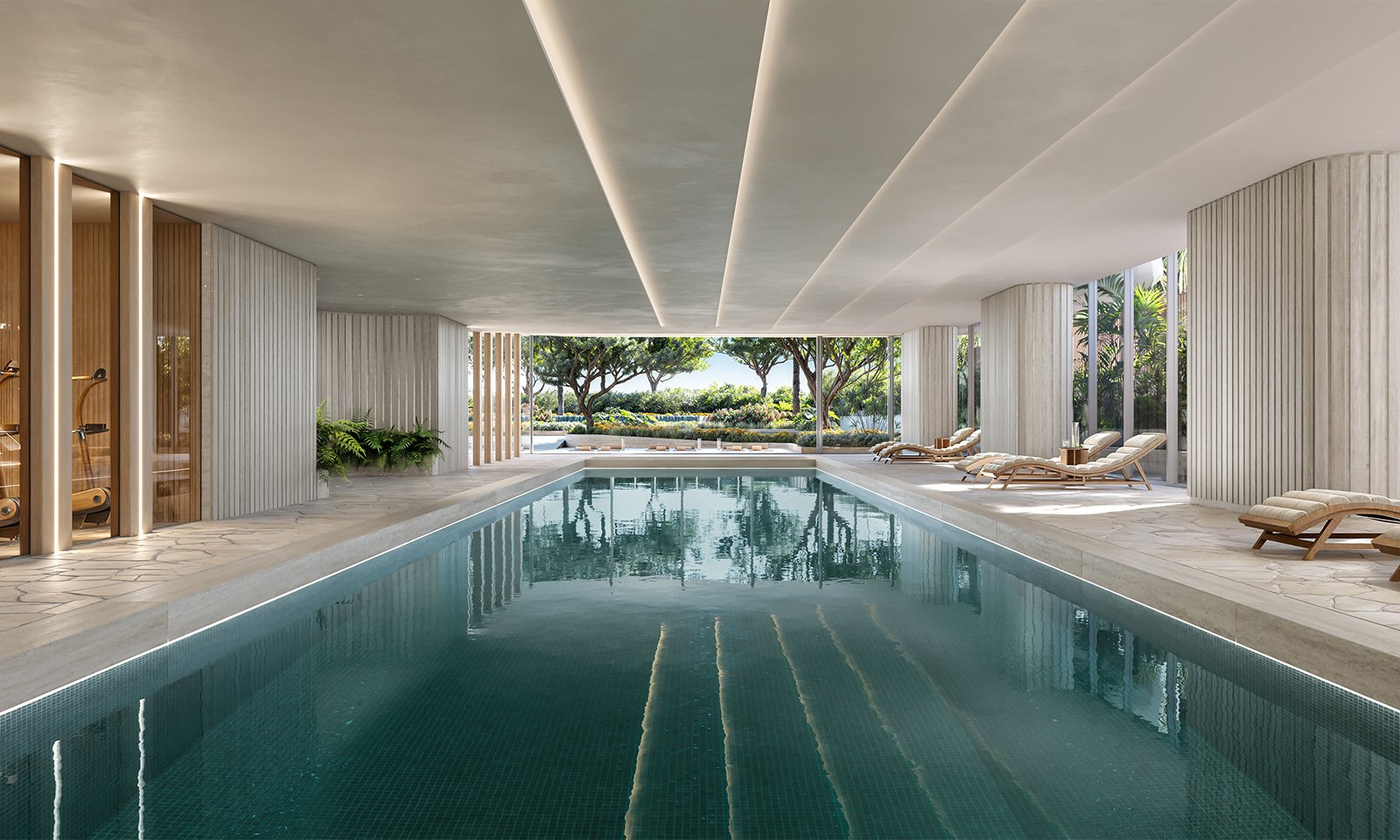
The same logic applies to spa and recovery spaces. A beautiful treatment room, steam area, or relaxation suite has limited value if access is inconvenient, maintenance is inconsistent, or privacy is compromised. Recovery amenities become meaningful when they are treated as services, not scenery. That means trained support where appropriate, clear rules, reliable scheduling, and a maintenance budget that preserves the experience beyond opening season.
This is where buyer’s guides often understate the issue. The amenity is not just the room. The amenity is the room plus the operating model. If ownership costs do not support that model, wellness can become a promise that slowly degrades.
In a coastal condominium, indoor environmental quality may be the most consequential wellness category because residents experience it continuously. Air filtration, fresh air management, humidity control, thermal comfort, and material choices have a direct impact on livability. Post-pandemic marketing has made buyers more attentive to air quality, touchless systems, antimicrobial materials, and health-oriented design claims. The key is to move from adjectives to specifications.
A phrase such as health-optimized should prompt questions, not assumptions. What filtration level is being proposed? How is humidity managed? How is ventilation balanced with energy performance? How are common areas treated compared with private residences? What systems are maintained by the association, and what falls to the individual owner?
Sustainability should also be evaluated separately from personal wellness. Energy efficiency, resilience, material selection, and health outcomes can overlap, but they are not the same claim. A building can be efficient without fully addressing personal comfort. It can use durable materials without making a measurable contribution to sleep quality, stress reduction, or respiratory comfort. Buyers should credit sustainability where it is documented, while still asking how the building supports personal well-being day to day.
Social programming is often presented as a softer wellness feature, but it can be powerful when executed with consistency. Genuine community reduces friction in daily life. It can create routines, encourage movement, make seasonal ownership feel more connected, and turn shared spaces into part of the resident’s rhythm. The issue is whether programming is planned as an ongoing service or as a promotional accent.
Buyers should ask whether wellness programming is included in ownership costs, offered on a pay-per-use basis, or dependent on future third-party operators. Each model can work, but each has different implications for participation and long-term value. Included programming may raise association costs but improve access. Pay-per-use programming may lower baseline costs but reduce usage. Third-party programming may add expertise but can change over time.
This matters across South Florida’s premium market. A buyer looking at wellness-forward narratives in nearby Bay Harbor Islands, including The Well Bay Harbor Islands, or comparing waterfront offerings such as Ocean House Surfside, should ask the same core question: what is promised, what is funded, and what is enforceable through the ownership structure?
The strongest wellness amenities are embedded into building systems and daily resident experience. They are not isolated marketing features. For The Delmore Surfside, the due diligence process should compare sales language with amenity plans, equipment schedules, HVAC specifications, service agreements, HOA budgets, staffing assumptions, maintenance allocations, and rules for resident access.
The goal is not to diminish the appeal of wellness. It is to protect it. When a buyer understands how an amenity will be staffed, reserved, cleaned, repaired, funded, and governed, the conversation moves from atmosphere to value. That is the correct frame for the ultra-premium market. Wellness can support pricing, deepen resident satisfaction, and strengthen long-term desirability, but only when it is operationally real.
For a discerning buyer, the best wellness amenity is the one that quietly performs. It does not need constant explanation. It makes the home easier to live in, the body easier to care for, the air easier to breathe, and the building more coherent as a private residential environment.
What is the best way to evaluate wellness amenities at The Delmore Surfside? Start with daily-use outcomes, then verify how each amenity is staffed, maintained, funded, and accessed.
Should buyers focus on the size of the fitness center? Size matters less than equipment quality, acoustics, programming, staffing, maintenance, and resident fit.
Why is indoor air quality important in Surfside? Salt air, humidity, ventilation, filtration, and comfort systems can materially affect daily livability in an oceanfront building.
Are spa and recovery amenities always valuable? They are most valuable when privacy, access, service consistency, and maintenance are clearly supported.
How should buyers view wellness marketing language? Treat broad claims as a starting point, then ask for specifications, budgets, operating plans, and access rules.
Is sustainability the same as wellness? No. Sustainability and personal wellness can overlap, but energy efficiency, resilience, and health outcomes should be evaluated separately.
What documents should buyers review? Review amenity plans, equipment schedules, HVAC specifications, service agreements, HOA budgets, and resident access rules.
Does wellness programming add real value? It can, if programming is consistent, genuinely used by residents, and supported beyond the sales period.
Should wellness services be included in ownership costs? There is no single correct model, but buyers should know whether services are included, pay-per-use, or third-party dependent.
What is the main takeaway for buyers? Wellness should be underwritten as part of lifestyle value, operating quality, and long-term ownership discipline.
For a tailored shortlist and next-step guidance, connect with MILLION.
If branded residences are on your mind — as a home or as an allocation — we would be glad to share what we are seeing, privately.
Begin a quiet conversation