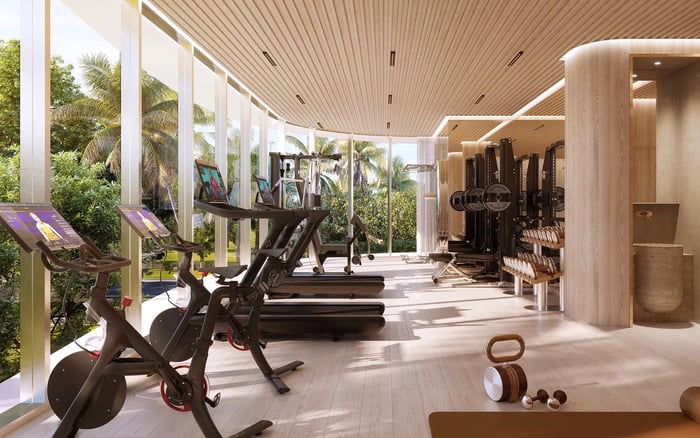
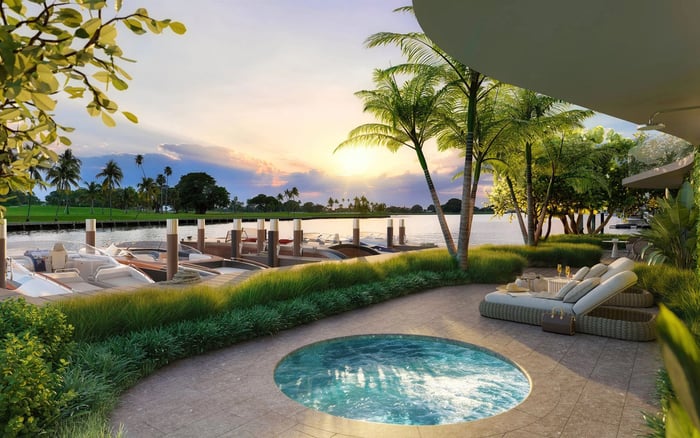
A refined framework for evaluating how daily family wellness changes between beachfront calm and city convenience in South Florida’s luxury residential market.
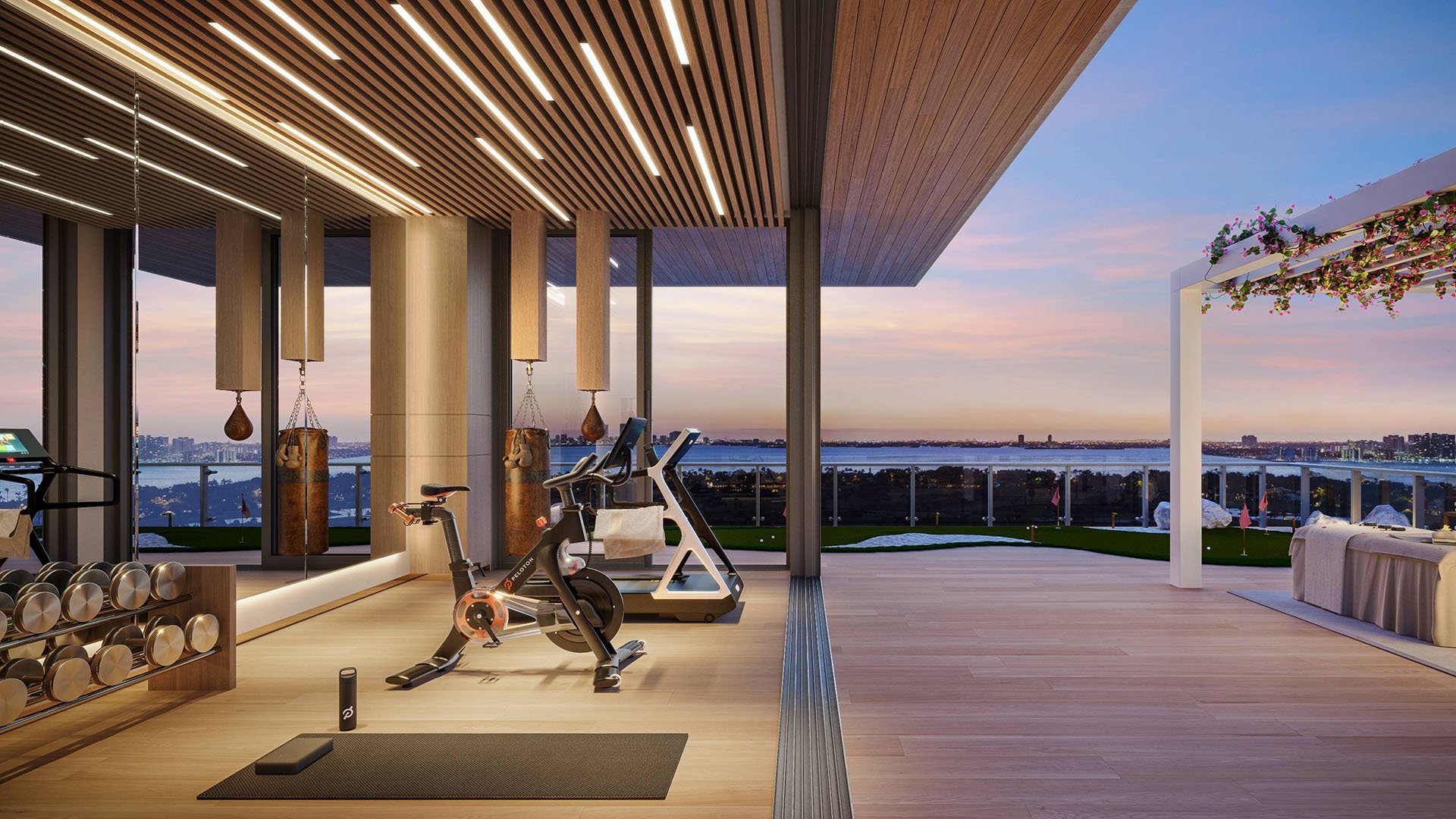
For families comparing beachfront and city residences in South Florida, wellness is rarely a single amenity. It is the quiet choreography of the day: how children wake, how parents move between work and home, how meals are prepared, how quiet is protected, and how the household resets before tomorrow. A beautiful residence can impress in a single showing, but a wellness-oriented residence must perform every morning, afternoon, and evening.
The useful question is not whether the family prefers the beach or the city. It is whether the family’s strongest routine is expansive and restorative, or precise and highly scheduled. A beachfront home may support slower transitions, fresh-air rituals, and a sense of separation from professional intensity. A city residence may support sharper logistics, shorter gaps between commitments, and easier access to the daily infrastructure of school, work, dining, and culture.
Neither model is inherently superior. The more discerning comparison is personal: which setting reduces friction for the specific family in residence?
Before comparing buildings, compare days. A family with early school departures, afternoon tutoring, evening practices, and two parents managing demanding calendars will evaluate wellness differently from a family seeking a more seasonal rhythm. The same home that feels serene on a Saturday may feel inconvenient on a Tuesday morning if the routine requires constant coordination.
Create a simple map of the household’s non-negotiables. Morning movement, school preparation, meals, work calls, pet care, childcare, quiet study, fitness, recovery, and bedtime all belong in the assessment. Then identify where the routine strains. If the pressure point is transition time, a city residence may solve more than it sacrifices. If the pressure point is overstimulation, a beachfront home may restore more than it costs.
This exercise keeps the search grounded. Luxury can distract with finish, scale, and view. Wellness lives in repetition.
Beachfront living often appeals to families who value emotional decompression as much as convenience. The appeal is not only the view. It is the feeling of leaving the day behind, the ease of moving from indoor rooms to open air, and the presence of natural light as part of the household’s daily tempo.
A residence such as 57 Ocean Miami Beach can be considered through this lens: not as a trophy address, but as a framework for how a family might build calmer mornings, more intentional weekends, and an after-school routine that does not immediately default to screens or errands. In a beachfront context, wellness may be measured by how easily the household can step outside, reset, and return indoors with a different energy.
For some families, an Oceanfront setting also supports a second-home mentality even when the residence is a primary home. The building becomes a refuge from the intensity of the week. The tradeoff is that routines requiring frequent cross-town movement must be tested carefully. A restorative setting loses part of its value if daily logistics become a source of strain.
City living is sometimes misunderstood as the opposite of wellness. For many families, it is the structure that makes wellness possible. When the day is dense, proximity can be a form of calm. A shorter route, an easier appointment window, a faster return home between commitments, or the ability to maintain adult routines without disrupting children can matter as much as a spa or fitness room.
In Brickell, a project such as 2200 Brickell may be evaluated as part of a city-centered wellness strategy. The question is how the household uses the neighborhood’s energy without absorbing too much of it. Families should study arrival sequences, elevator comfort, acoustic privacy, work-from-home separation, package and service flow, and how children move through common areas at different times of day.
City residences reward families who plan their interiors with discipline. Bedrooms should feel protected from social areas. Study space should not be improvised. Fitness and recovery should be scheduled into the day, not left to aspiration. The benefit is a routine that can be highly efficient without feeling compressed.
Some families do not fit neatly into beachfront or urban categories. They want privacy, shade, walkability, and access, but prefer a softer residential atmosphere than a high-intensity core. In these cases, a neighborhood with a more layered daily rhythm may be the right comparison point.
A residence such as The Well Coconut Grove can be useful to consider when a family wants wellness to feel integrated rather than performative. The decision is less about escaping to the shoreline or maximizing city speed, and more about building a balanced week in which school, meals, movement, rest, and family time can coexist without constant recalibration.
This hybrid mindset is especially relevant for buyers with split priorities. One parent may prioritize commute logic; another may prioritize quiet. Children may need both activity and decompression. The right residence is the one that reduces negotiation inside the household.
A wellness tour should be conducted as if the family already lives there. Arrive at the time of day that matters most. If mornings are difficult, tour in the morning. If evenings are the concern, return near sunset. Study the route from parking or drop-off to the residence. Notice whether the arrival feels calming or transactional.
Inside, consider where bags land, where shoes collect, where children do homework, where a parent takes a private call, and whether the kitchen supports the family’s real eating habits. A formal room that photographs beautifully may be less valuable than a quiet corner that makes the day work.
On the buyer’s worksheet, mark the essentials plainly: Oceanfront exposure, Pool access, shaded outdoor space, protected bedrooms, practical storage, a usable Terrace, and a layout that lets the family separate when necessary and gather when desired. The best luxury homes do not require the household to perform around the architecture. They let the household breathe.
The beachfront routine is strongest when the family wants softness at the edges of the day. It favors morning light, outdoor transition, unhurried weekends, and a sense of removal. It can be particularly persuasive for families that value ritual: walks, swims, quiet breakfasts, reading outside, or simply the visual calm of water.
The city routine is strongest when the family wants control. It favors tighter scheduling, efficient movement, immediate services, and the ability to keep multiple calendars functioning. It can be ideal for households that feel better when the week is organized and every commitment sits within a manageable orbit.
A Sunny Isles residence such as The Ritz-Carlton Residences® Sunny Isles may sit closer to the beachfront wellness conversation, while a Brickell residence belongs more naturally to the urban efficiency conversation. But the final decision should not be made by category. It should be made by observing how the family’s nervous system responds to the setting, the route, the light, the noise, and the time required to live well.
At the highest end of the market, wellness is not defined by the longest amenity list. It is defined by continuity. The family wakes well, moves well, eats well, studies well, works well, rests well, and reconnects without needing constant correction.
That kind of routine is quiet luxury. It is not always obvious in renderings or listing copy. It is discovered by asking practical questions with uncommon seriousness. Does the home make the family more patient? Does it reduce daily clutter, emotional and physical? Does it support both privacy and togetherness? Does it still feel desirable on an ordinary weekday?
For South Florida families, the choice between beachfront and city residences is ultimately a choice between two forms of ease. One is atmospheric. The other is logistical. The rare home delivers enough of both to make wellness feel less like an initiative and more like the natural condition of daily life.
How should a family begin comparing beachfront and city wellness routines? Start with the actual weekly schedule, then identify where the household feels rushed, overstimulated, or unsupported.
Is beachfront living automatically better for wellness? Not automatically. It may be restorative, but it must still support school, work, transportation, privacy, and daily family needs.
Can a city residence support a calm family lifestyle? Yes. For some families, proximity and efficiency create more calm than distance from the urban core.
What should families test during a residence tour? Test arrival, noise, natural light, storage, bedroom privacy, homework areas, and how the home feels at key times of day.
How important is outdoor space for family wellness? Outdoor space can be meaningful when it is easy to use regularly, not merely attractive in a floor plan.
Should amenities drive the decision? Amenities matter, but the layout, location, and daily flow should carry more weight than a long amenity list.
What makes a beachfront routine successful? It succeeds when the setting supports decompression without making everyday logistics feel burdensome.
What makes a city routine successful? It succeeds when the residence protects privacy while keeping the family close to essential commitments.
How should families compare primary and second-home use? A primary home must perform on ordinary weekdays, while a second home can place more emphasis on retreat and ritual.
What is the clearest sign that a residence supports wellness? The clearest sign is that healthy routines feel easier, more consistent, and less dependent on willpower.
When you're ready to tour or underwrite the options, connect with MILLION.
If branded residences are on your mind — as a home or as an allocation — we would be glad to share what we are seeing, privately.
Begin a quiet conversation