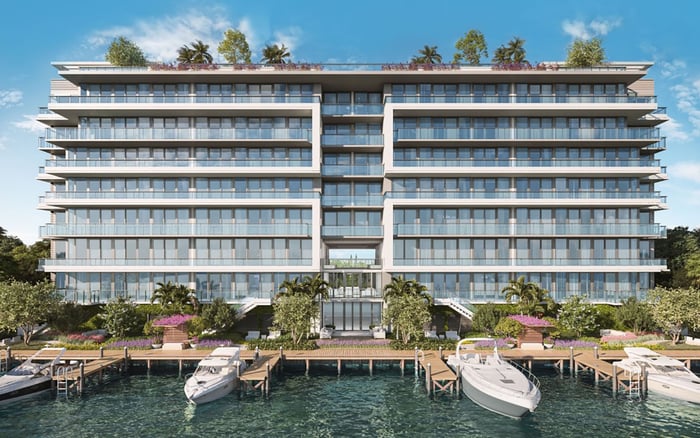
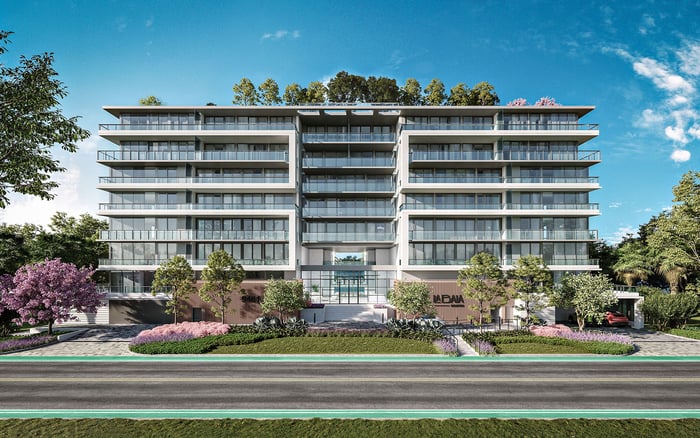
La Baia North in Bay Harbor Islands speaks to buyers who want waterfront living, hospitality-influenced service, and a more private residential rhythm without the visibility of a hotel-style scene.

For a certain South Florida buyer, luxury is no longer measured by how many people can see it. It is measured by how little friction exists between the front door, the water, the service culture, and the privacy of daily life. That is the buyer lens through which La Baia North Bay Harbor Islands becomes especially relevant.
The project is positioned in Bay Harbor Islands, a waterfront enclave that offers proximity to Miami and the beaches without adopting the constant circulation of a larger resort destination. Its value proposition is not spectacle. It is a more residential expression of luxury: service, calm, discretion, and waterfront living without the sense that home is also a public stage.
That distinction matters in the current branded-residence conversation. Many buyers are drawn to hospitality-level service, but not all want hotel traffic, destination restaurants, visible lobbies, or amenity spaces that feel shared with a rotating public. La Baia North speaks to the buyer who wants the polish of hospitality-influenced living while keeping the center of gravity firmly private.
Bay Harbor Islands has a smaller-island geography that naturally supports a more residential, controlled-access feel than denser Miami Beach hospitality districts. The setting is close enough to major lifestyle corridors to remain convenient, yet physically and psychologically set apart. For end users, that separation can be the point.
The daily rhythm is quieter. The arrival sequence feels less performative. The neighborhood context leans residential rather than resort-driven. Buyers comparing the area often look at nearby addresses such as Alana Bay Harbor Islands and Onda Bay Harbor because the broader micro-market has become a magnet for people who want waterfront access without surrendering to the pace of Miami’s most public scenes.
This does not mean disconnected. It means edited. Bay Harbor Islands gives buyers a way to remain close to Miami, Bal Harbour, Surfside, and the beaches while preserving a lower-profile residential base. For primary residents, that can make everyday life feel more composed. For second-home owners, it can mean arrival without the sensation of checking into a destination property.
La Baia North is best understood through the buyer who values privacy as much as amenity. This may be a downsizer coming from a waterfront home who wants service and simplicity without sacrificing discretion. It may be an international buyer who wants Miami access without a lobby that feels like a social venue. It may be a second-home owner who intends to use the residence personally and does not want daily spaces shared with transient hotel guests.
The common thread is control. These buyers still want refinement. They still want ease, polish, and resident-focused service. What they do not want is the energy of a public-facing hospitality environment, where brand prestige may arrive with busier common spaces and a more visible lifestyle.
In practical search language, the appeal spans Bay Harbor, boutique, new-construction, second-home, and water-view preferences, with La Baia North Bay Harbor Islands acting as the anchor phrase for buyers who want the quieter side of the Miami waterfront.
The phrase hospitality brand can blur important distinctions. At La Baia North, the safer and more useful framing is hospitality-influenced living: a residential environment shaped around service expectations, privacy, and ease rather than a hotel operation with public circulation.
That nuance is exactly why the project is worth studying. The buyer is not rejecting service. The buyer is rejecting unnecessary exposure. In a public-facing branded residence, restaurants, lobbies, and amenities may also serve outside guests or carry a destination character. For some owners, that is energizing. For others, it is precisely what they are trying to avoid.
La Baia North sits on the quieter side of that spectrum. It is not trying to be the loudest name in the room. It is more aligned with the current quiet luxury thesis: fewer theatrical gestures, more emphasis on calm routines, residential exclusivity, and the feeling that the building belongs first to the people who live there.
Miami’s luxury market offers many versions of prestige. A buyer focused on internationally recognizable names may also review projects such as The Ritz-Carlton Residences® Miami Beach or The Surf Club Four Seasons Surfside as part of a broader hospitality-residence comparison. Those addresses occupy a different emotional category, one tied more directly to globally known resort and service identities.
La Baia North’s appeal is subtler. Its setting is not asking the buyer to choose maximum visibility. It is asking whether luxury feels better when it is quieter, more residential, and less entangled with public movement. For buyers who already understand Miami and do not need the symbolic charge of a busier scene, that can be a sophisticated answer.
This is also why the project fits the Bay Harbor Islands buyer profile. The area offers access without overexposure. It gives owners proximity to coastal South Florida while allowing them to retreat to an address where daily life can feel deliberately composed.
The right buyer should focus less on the loudest brand language and more on the lived experience. How private does the arrival feel? How residential is the building culture likely to be? Will the amenity environment support owners first? Does the location create calm without making the rest of Miami inconvenient?
These questions are especially important for buyers moving from single-family waterfront homes. The shift into a condominium can be liberating if it delivers service, security, and simplicity. It can disappoint if the daily environment feels too public. La Baia North’s positioning addresses that concern directly by emphasizing a private residential setting over a hotel-style scene.
For the right owner, the luxury is not only the waterfront. It is the absence of interruption. It is knowing that the building’s rhythm is designed around residents, not around becoming a destination for everyone else.
Is La Baia North a good fit for buyers who want privacy? Yes. Its buyer thesis centers on privacy, discretion, and residential exclusivity rather than nightlife visibility or destination-hotel energy.
Is the project positioned as a hotel residence? The more precise framing is hospitality-influenced residential living. The appeal is service and ease without transient hotel traffic.
Why does Bay Harbor Islands matter for this buyer profile? Its small-island geography supports a calmer, more residential feel than denser Miami Beach hospitality corridors while remaining close to major lifestyle areas.
Who is the strongest buyer match for La Baia North? Privacy-focused primary residents, second-home owners, downsizers from waterfront homes, and international buyers seeking service without resort traffic are strong fits.
Does La Baia North suit buyers who want a public social scene? It is better aligned with buyers who prefer discretion. Those seeking high-visibility nightlife energy may prefer more public-facing corridors.
Can the project work as a second home? Yes. It fits second-home buyers who want an easy waterfront base near Miami and the beaches without feeling immersed in a hotel environment.
How should buyers compare it with branded residences? Buyers should separate brand prestige from daily experience. The key question is whether they want hospitality polish or a more public hospitality atmosphere.
Is La Baia North more about quiet luxury than spectacle? Yes. Its appeal is a subtler version of luxury built around calm routines, resident-focused service, and a lower-profile waterfront address.
What should downsizers evaluate most carefully? Downsizers should focus on privacy, arrival sequence, building culture, and whether services simplify daily life without making home feel public.
Is La Baia North convenient to Miami and the beaches? Yes. The positioning emphasizes proximity to Miami and the beaches while avoiding the constant public circulation of larger resort destinations.
To compare the best-fit options with clarity, connect with MILLION.
If branded residences are on your mind — as a home or as an allocation — we would be glad to share what we are seeing, privately.
Begin a quiet conversation