For luxury buyers in South Florida, a serious guest strategy is less about an extra bedroom and more about whether relatives can live independently for weeks without disrupting the main household. The right comparison framework centers on privacy, bath access, food prep, laundry, workspace, parking, outdoor autonomy, and service planning.
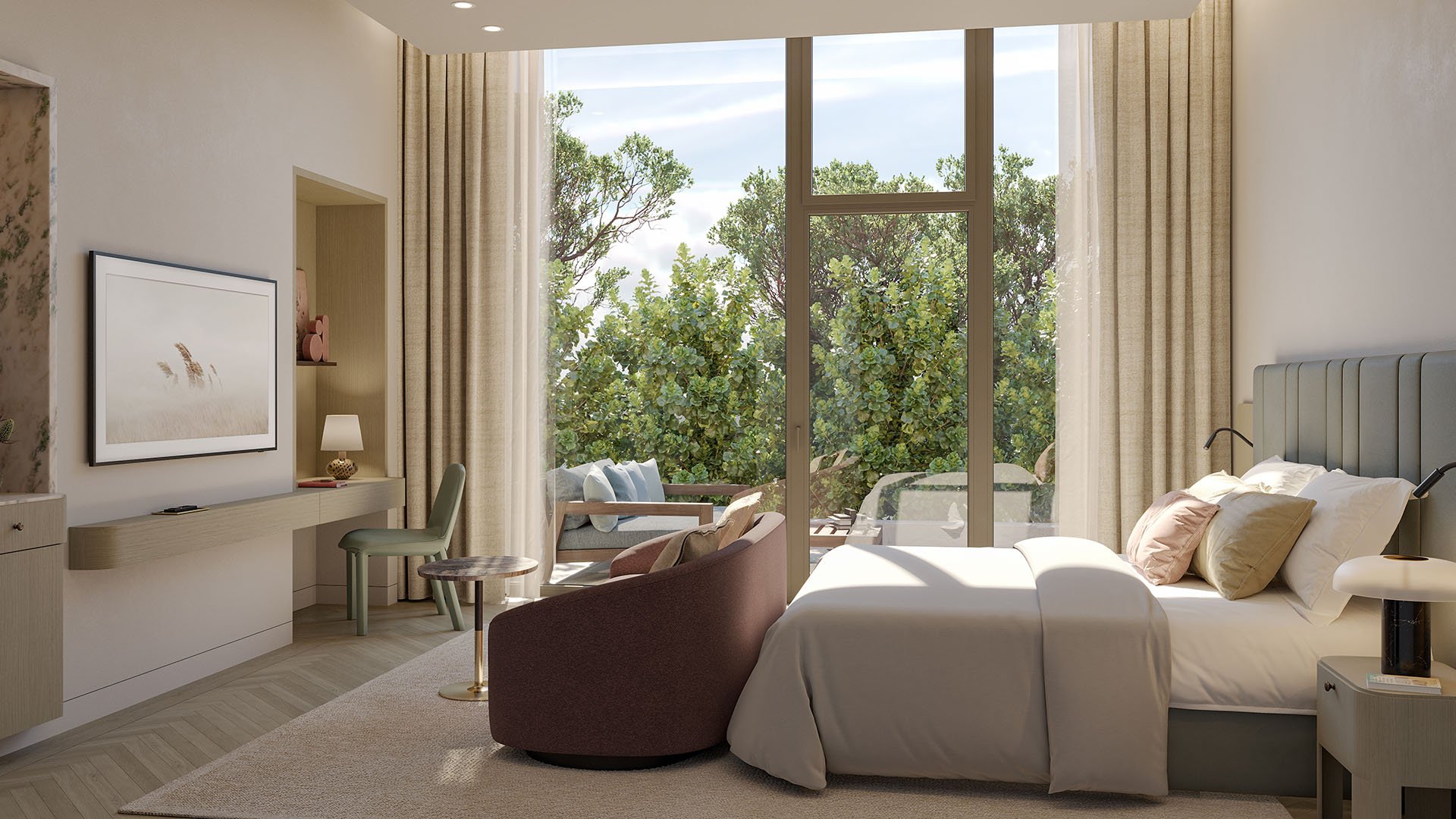
A spare bedroom may be perfectly adequate for a long weekend. It is rarely enough for a month. In the upper tier of South Florida real estate, the sharper comparison is not whether a residence can host relatives, but whether it can absorb them into daily life without making the home feel crowded, scheduled, or overly shared.
That distinction matters because extended stays expose every weakness in a floor plan. A beautiful guest room with a comfortable bed may still fall short if visitors need to cross the main family room for morning coffee, compete for bathroom time, or take calls from the dining table. The practical test is simple: could your guests sleep, work, wash clothes, make breakfast, unpack fully, and find privacy for several weeks while the household still functions smoothly?
In markets from Brickell to Miami Beach and Palm-beach, buyers increasingly understand that true hospitality inside a primary or second-home residence is about autonomy. That is why layouts with flexible suites, bonus rooms, and separated guest quarters often read as more sophisticated than homes that simply count bedrooms.
The first thing to compare is whether the guest area feels like an appendage to the house or a small residence within it. For a month-long family visit, the strongest layouts typically offer some combination of a separate entrance, dedicated seating area, private or semi-private bath, and basic food-prep capability.
Even in a condominium, this idea translates well. A guest wing set away from the primary suite, or a secondary bedroom cluster with its own lounge logic, is materially different from a plan where everyone shares the same circulation spine. In a full-scale home, a detached casita, guest house, or accessory structure is stronger still because both sides gain autonomy.
This is why buyers looking at hospitality-minded South Florida projects often pay attention to how suites are positioned, not merely how interiors are finished. A residence at St. Regis® Residences Brickell, for example, invites a different conversation if guest rooms are meaningfully separated from primary entertaining spaces than if they simply open off the same corridor.
For short visits, sharing a bathroom can be a manageable compromise. Over several weeks, it becomes one of the clearest fault lines in a house. Morning routines, storage, cosmetics, medications, towels, and evening schedules all intensify when bath access is shared too closely.
When comparing homes, look beyond the phrase guest bedroom and ask more specific questions. Is there a dedicated en-suite bath, or at least a semi-private one that does not serve the powder room traffic of the entire house? Are there dual vanities, enough enclosed storage, and enough separation to allow simultaneous routines? If extended family visits are common, extra baths and powder rooms can be more valuable than one more sleeping room.
This is particularly relevant in Coconut-grove and Boca-ratón, where buyers often expect residences to balance family use with refined entertaining. In that setting, a guest suite that preserves privacy around bathing and dressing is not a luxury detail. It is operational design.
One of the easiest ways to distinguish a month-ready residence from a weekend-ready one is to ask what happens at 7 a.m. If the answer is that guests must enter the main kitchen, search for mugs, and navigate the owner’s breakfast routine, the guest strategy is thin.
Longer stays benefit from a kitchenette, beverage station, secondary pantry, mini-fridge, or at minimum a thoughtful coffee setup with counter space and seating nearby. This allows guests to handle early mornings, snacks, and informal meals without turning every small need into a household interaction.
In luxury condominiums, that same principle can be expressed through generous secondary living areas and terraces that support casual use throughout the day. Consider how a residence at The Perigon Miami Beach or Una Residences Brickell might be evaluated not only for entertaining scale, but for whether guests can occupy the home independently for hours at a time.
Many buyers overvalue distance and undervalue sound. For extended stays, privacy is not simply about being on another floor. It is also about whether guests can read, nap, watch television, work remotely, or make a call without hearing the owner’s daily rhythm, and without the owner hearing theirs.
That makes acoustic and visual separation essential. Pocket doors, vestibules, split-bedroom plans, secondary dens, media rooms, and outdoor lounges all help reduce overlap. The best guest strategies create places to retreat without forcing either side to withdraw completely from the home.
This is where larger-format residences in Surfside or Sunny Isles can feel especially compelling when the layout gives guests their own edge of the plan. In a project such as The Delmore Surfside, the key question is not grandeur alone. It is whether the residence allows family members to keep separate daily rhythms with grace.
The less glamorous comparisons are often the most telling. Month-long guests create laundry needs, accumulate belongings, and often require a regular vehicle arrangement. If a home has no practical answer for those realities, hosting begins to feel improvised.
Dedicated or at least convenient laundry access is a major advantage because it keeps guest needs from overtaking the owner’s own household workflow. Storage matters just as much. A proper closet, luggage area, bathroom cabinetry, and a place to unpack fully can determine whether a suite feels residential or temporary.
Parking is equally important in a South Florida context. A dependable garage bay, valet logic, or easy gate access is very different from asking relatives to negotiate ad hoc driveway choreography for a month. In Aventura, Fort-lauderdale, and gated single-family-homes, this often separates homes that are pleasant for entertaining from homes that are genuinely functional for extended family use.
Extended visitors do not experience a residence like weekend guests. They notice afternoon heat, humidity shifts, overexposed balconies, and whether covered outdoor areas can actually be used daily. In this region, indoor-outdoor comfort is part of the guest strategy.
The strongest residences give guests some form of outdoor autonomy, whether that is a balcony off the suite, access to a cabana-like terrace, or a garden connection that does not require moving through primary family zones every time they want fresh air. Covered lounging, controllable shade, and steady climate control become more important the longer someone stays.
That is one reason waterfront residences such as Alba West Palm Beach can be read through a guest-comfort lens as much as an aesthetic one. The value is not just exposure to the water. It is whether the residence supports daily living, quietly and comfortably, over time.
A month-long stay increasingly includes work, video calls, school logistics, or at least the expectation of uninterrupted connectivity. A guest strategy should therefore include a credible place for a laptop, strong Wi-Fi coverage, and enough quiet for real concentration. A bedroom chair in a corner is not the same as a usable work zone.
At the top end of the market, service planning also deserves more attention. Extended guests often justify more frequent housekeeping, linen turnover, and a clearer rhythm for refreshes than a simple weekend visit would require. Buyers who maintain a Second-home in South Florida should think carefully about whether a residence can absorb that level of hospitality without straining staff flow or owner privacy.
There is also a regulatory dimension. If a buyer hopes the guest house, suite, or accessory space could someday support legal 30-day occupancy beyond family use, local rules should be reviewed before assuming that flexibility exists.
From a resale standpoint, the best guest strategies are usually the most flexible ones. True guest suites, finished quarters, and adaptable bonus spaces tend to be more compelling than a beautiful but single-purpose extra bedroom. They appeal to multi-generational living, executive visitors, returning college-age children, and owners who divide time between residences.
That flexibility is particularly relevant across South Florida’s high-end market, where buyers increasingly reward homes that can shift between private retreat, family compound, and polished host setting. A good guest strategy does not merely accommodate relatives. It broadens the residence’s usefulness.
What is the biggest difference between a weekend guest room and a month-long guest suite? A month-long suite should support daily life independently, with space to lounge, unpack, and maintain routines without relying constantly on the main house.
Is a private bathroom essential for extended family stays? In practice, yes. A private or semi-private bath reduces friction around schedules, storage, and privacy over several weeks.
Does a kitchenette really matter in a luxury home? Yes. Even a simple beverage station or mini-fridge helps guests handle coffee, breakfast, and snacks without interrupting the household.
Why is laundry such an important comparison point? Because a month of clothing, beachwear, and linens can quickly overwhelm a shared laundry routine if there is no dedicated guest solution.
How should buyers evaluate privacy in a floor plan? Look for acoustic and visual separation, not just distance, including split-bedroom layouts, doors, dens, and outdoor retreat areas.
Is a detached guest house always better than an in-house suite? Generally, it offers more autonomy for both host and guest, though a well-zoned in-house suite can still perform very well.
Should parking be part of a guest strategy review? Absolutely. Month-long visitors often need a reliable garage bay, valet arrangement, or easy access rather than temporary parking improvisation.
What storage features matter most for long stays? Prioritize full closets, luggage space, bathroom storage, and enough room for guests to unpack rather than live out of suitcases.
How important is outdoor access in South Florida? Very important. A terrace, balcony, or garden connection can make an extended stay feel comfortable and self-contained.
Can a guest suite also support 30-day stays beyond family use? Sometimes, but buyers should confirm local zoning and building rules before assuming that flexibility exists.
Explore more South Florida residences designed for elevated living at MILLION.
If branded residences are on your mind — as a home or as an allocation — we would be glad to share what we are seeing, privately.
Begin a quiet conversation