A discreet buyer-focused look at why security guard coverage matters at Vita at Grove Isle, from arrival sequence and privacy to resale confidence and second-home ownership.
At the top of South Florida’s residential market, luxury is measured by more than views, finishes, architecture, or amenity square footage. It is also measured by the quality of arrival, the calm of daily movement, and the confidence that a private address is managed with discipline. For buyers evaluating Vita at Grove Isle, security guard coverage belongs in that conversation because it shapes how a residence lives from the first approach to the final guest departure.
Quiet luxury has a distinct rhythm. It is not loud, performative, or dependent on spectacle. It is felt when a resident returns home without friction, when a guest is received with clarity, and when the boundary between public life and private residence is handled with polish. In that sense, security is not merely operational. It is experiential.
For an ultra-premium buyer, the question is rarely whether security exists in some form. The more meaningful question is how it is designed, staffed, communicated, and maintained. Guard coverage can influence privacy, convenience, household confidence, and the perceived prestige of a residential setting.
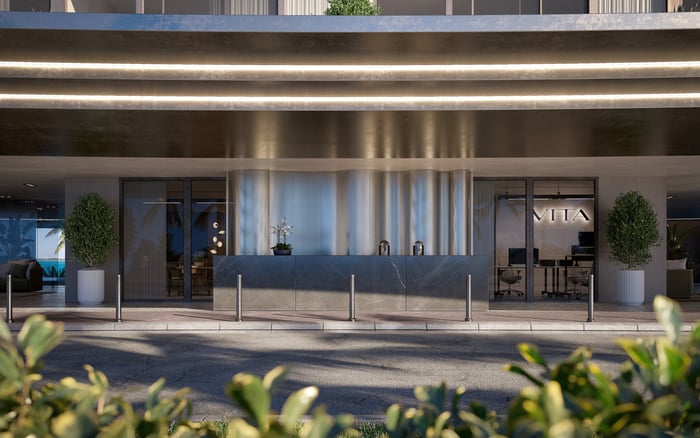
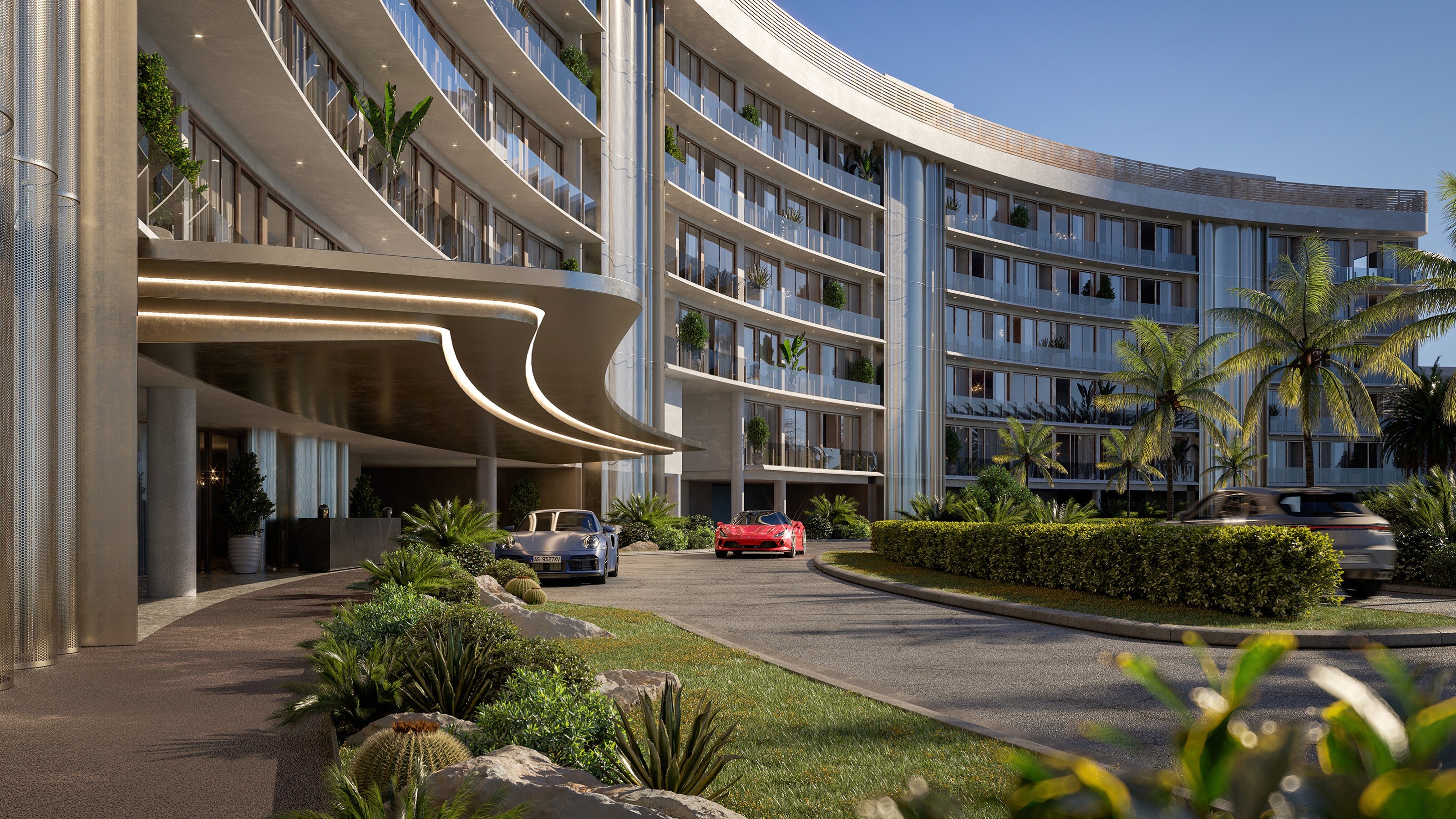
The most revealing moment in a residential property is often not the lobby. It is the approach. A secure arrival sequence tells a buyer how seriously the property treats privacy and order before anyone steps inside. Guard coverage can create a sense of composure that aligns with owners who value discretion over display.
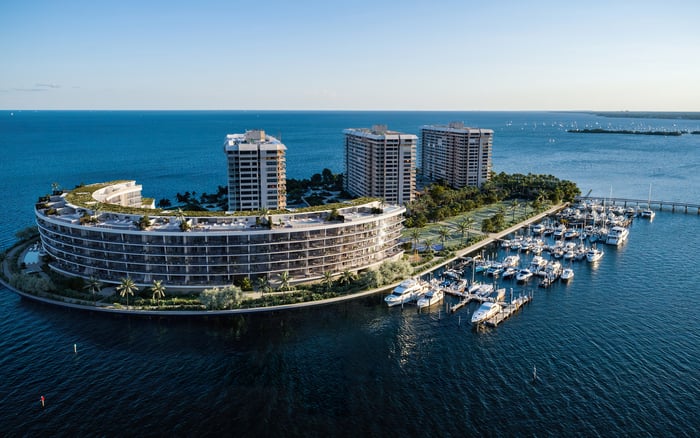
For Vita at Grove Isle, the security conversation is inseparable from the idea of sanctuary. Buyers drawn to private-feeling enclaves typically want separation from the tempo of the city without sacrificing access to it. A well-managed guard presence helps establish that separation. It signals that the property is not simply a place to live, but a place where the threshold is actively curated.
This is where subtlety matters. The best luxury security does not feel theatrical. It feels natural, courteous, and consistent. Residents should not experience the process as surveillance. They should experience it as reassurance. Guests should feel welcomed, not interrogated. Service providers should be directed efficiently. The result is a private residential environment that functions smoothly without drawing attention to the systems behind it.
Security guard coverage should be examined with the same care buyers bring to floor plans, views, parking, storage, and service culture. It is not enough to ask whether guards are present. Buyers should ask how access is controlled, how visitors are processed, how deliveries are handled, and how communication flows among the entry point, residence, management, and staff.
The strongest questions are practical. Is the coverage consistent throughout the week? How is guest authorization handled? Are vendors routed differently from residents and personal guests? How are unexpected arrivals addressed? What happens during peak seasonal periods, private events, storms, maintenance windows, or construction activity nearby? These details may sound operational, but they shape daily life.
Buyers should also consider tone. A luxury residence depends on discretion. The guard function should feel trained, calm, and hospitality-minded. The ideal presence understands that privacy and warmth are not opposites. At this level, a brusque or inconsistent access experience can diminish the feeling of refinement, even when the architecture is exceptional.
Many South Florida luxury buyers do not use their residences in a single predictable pattern. Some occupy seasonally. Some arrive for long weekends. Some host family, household staff, or private service teams. Others maintain the residence as a second home that must operate gracefully whether the owner is in Miami, New York, London, São Paulo, or elsewhere.
In that context, security guard coverage becomes part of residential stewardship. It helps support a lifestyle in which access, privacy, deliveries, and guest coordination need to be dependable even when the owner is away. A buyer may never describe this as glamour, but the absence of friction is one of the most valuable luxuries in ownership.
For residences associated with privacy-sensitive living, the guard function also helps preserve the emotional quality of home. Owners want to feel a meaningful distinction between arriving at a private residence and entering a public venue. That distinction becomes more important as South Florida continues to attract buyers accustomed to service-rich buildings, staffed estates, private clubs, and secure travel environments.
Security is rarely the only reason a buyer chooses a residence, but it can become a decisive supporting factor. In ultra-premium real estate, value is often created through a combination of tangible and intangible advantages. Views and architecture may be visible. Privacy and operational discipline are felt over time.
A residence that offers a composed access experience may be perceived as more complete than one where entry feels informal or inconsistent. For resale-minded buyers, this matters because future purchasers will evaluate not only the unit itself, but also the lived environment around it. If the property’s arrival experience feels controlled, polished, and private, it can reinforce confidence in the overall offering.
This is especially relevant to buyers comparing different luxury typologies. A condominium may compete with a single-family home, a private island setting, or a branded hospitality residence. Guard coverage can help bridge that comparison by offering the sense of discretion and boundary that certain buyers associate with estate living.
The most successful access strategy is not the most severe. It is the one that balances protection with ease. If a system is too loose, residents may question its purpose. If it is too rigid, daily life can feel burdened. Luxury lives in the middle, where the experience is intelligent, responsive, and nearly invisible.
For a buyer, that means looking beyond the presence of a gate or guard station. The focus should be on choreography. How does a resident enter? How does a familiar guest arrive? How is a driver received? How does a private chef, nurse, tutor, trainer, contractor, or delivery service move through the property? The smoother these interactions become, the more valuable the security framework feels.
There is also an aesthetic dimension. Guard coverage is part of the property’s first impression. Uniforms, signage, lighting, landscape transitions, vehicle pacing, and communication style all contribute to the sense of place. In a quiet luxury environment, every detail should reinforce calm rather than announce control.
Before making a decision, buyers should review security-related documents and ask direct questions through the proper purchase process. The goal is not to audit the property like an operator. The goal is to understand whether the lived experience matches the buyer’s expectations.
Useful areas of review include staffing approach, access rules, visitor protocol, package and delivery handling, emergency procedures, insurance considerations, association oversight, and the process for changing policies over time. Buyers who travel frequently may also want clarity on how management communicates with absent owners and how household staff are authorized.
The most discerning buyers treat this as part of lifestyle underwriting. A residence can be beautiful and still fall short if the daily mechanics feel unresolved. Conversely, a well-managed access environment can elevate a property because it makes ownership feel calm, protected, and complete.
Why does security guard coverage matter at a luxury residence? It helps define privacy, arrival quality, visitor control, and the overall sense of residential composure.
Is guard coverage only about safety? No. At the luxury level, it is also about discretion, hospitality, service coordination, and ease of ownership.
What should buyers ask before purchasing? Buyers should ask about staffing consistency, guest access, vendor handling, delivery procedures, and communication protocols.
Does security affect resale perception? It can. A polished, reliable access experience may strengthen buyer confidence in the property’s overall management.
How should guard coverage feel in a quiet luxury setting? It should feel calm, courteous, discreet, and efficient rather than intrusive or theatrical.
Why is this important for seasonal owners? Seasonal owners often need dependable access control and communication when they are not in residence.
Should buyers review association rules related to access? Yes. Access policies can shape daily life, guest use, service routines, and long-term expectations.
Can strong security coexist with hospitality? Yes. The best luxury properties combine privacy protection with a welcoming, well-trained service tone.
Is a controlled arrival part of the luxury experience? Yes. The approach to a residence often establishes the buyer’s first impression of privacy and order.
What is the best way to shortlist comparable options for touring? Start with location fit, delivery status, and daily lifestyle priorities, then compare stacks and elevations to validate views and privacy.
When you're ready to tour or underwrite the options, connect with MILLION.
If branded residences are on your mind — as a home or as an allocation — we would be glad to share what we are seeing, privately.
Begin a quiet conversation