A discreet, buyer-oriented framework for planning residential camera placement across Miami, Fort Lauderdale, and Palm Beach, balancing visibility, privacy, architecture, and lifestyle.
For a luxury residence, camera placement deserves the same discipline as lighting, landscaping, millwork, and access control. The objective is not to make a home look fortified. It is to create a quiet visual record of meaningful moments: arrival, approach, entry, service access, waterside activity, package delivery, garage movement, and after-hours perimeter changes.
Across Miami, Fort Lauderdale, and Palm Beach, the strongest systems are not simply larger systems. They are better composed systems. A camera that captures too much can be as poorly placed as one that captures too little. The right lens in the right location protects privacy, supports daily convenience, and recedes into the architecture.
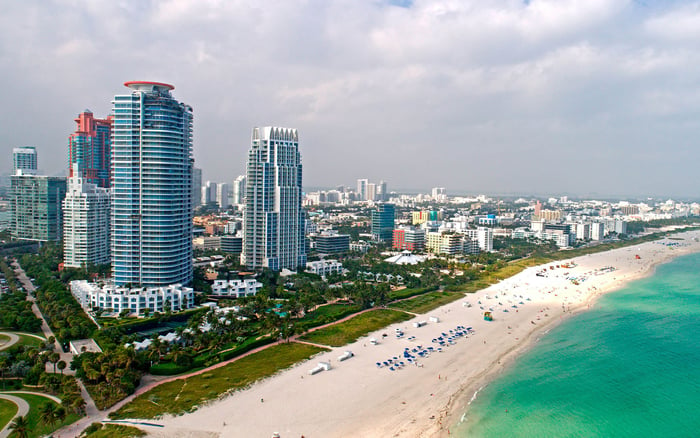
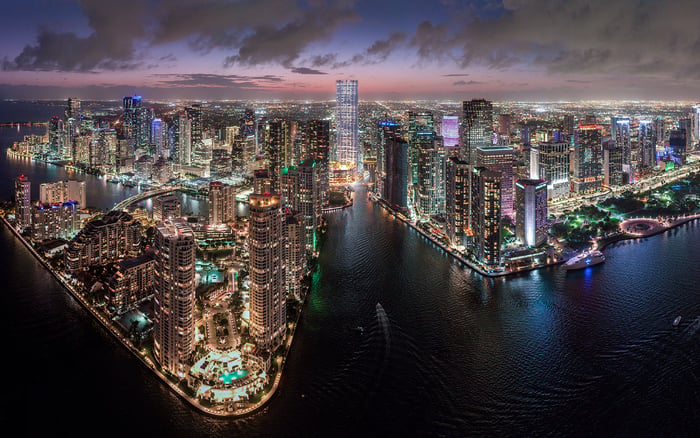
In internal search language, the same framework may apply to Miami Beach, Brickell, Fort Lauderdale, Palm Beach, oceanfront, and gated-community properties, but the camera logic changes with each setting. A high-rise buyer, a waterfront owner, and an estate resident are all solving different versions of the same question: where should the home quietly pay attention?
Begin at the curb, not at the front door. A sophisticated camera plan maps the full sequence of arrival: street frontage, vehicle approach, pedestrian gate, porte cochere, garage threshold, elevator landing, vestibule, and primary entry. Each point should answer a defined question. Who arrived? How did they arrive? Which path did they take? Was access granted, delayed, or forced?
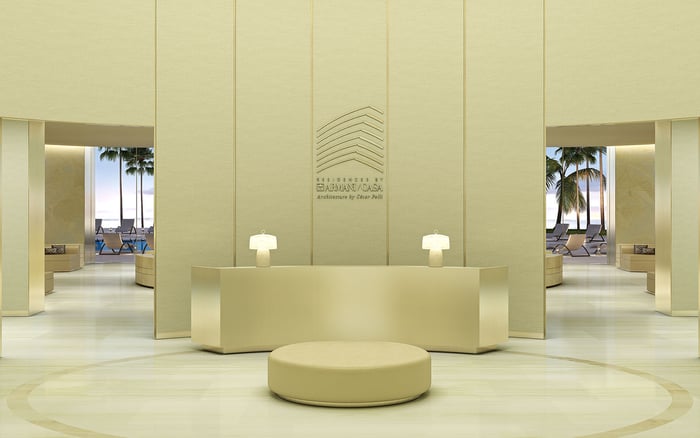
In a Miami condominium, that sequence may begin long before the private residence. Valet, lobby, amenity elevators, private elevators, and residence foyers each carry different ownership and building-rule implications. In a single-family home, the sequence is more direct, but the camera placement must be more self-reliant. The residence, not the building, is responsible for most of the visual field.
The most elegant systems avoid redundant angles. Instead of clustering multiple cameras in obvious locations, a designer can cover the same path through layered sightlines. One camera records the approach, another records the handoff, and another records the moment of entry. The result is clarity without visual clutter.
Miami homes often combine vertical density with highly transparent architecture. In towers and boutique buildings, cameras should be considered around private elevator entries, foyer doors, service doors, terrace access, parking spaces, storage areas, and any transition from shared to private space.
Brickell requires particular attention to controlled thresholds. The lifestyle is highly mobile, with valet, ride-share, delivery, staff, guests, and building personnel moving through layered access points. Inside the residence, cameras are usually most appropriate at entry-facing zones and exterior-facing terraces rather than intimate living areas. The purpose is to document transition, not domestic life.
Miami Beach and bayfront properties add another layer: reflections. Glass walls, polished stone, pools, water, and night lighting can compromise a view if the angle is not tested in real conditions. A camera that performs well at noon may flare at sunset or lose detail under landscape lighting. Placement should be tested at multiple times of day before it is treated as final.
Fort Lauderdale often demands a more marine-aware plan. For waterfront residences, the camera strategy should include dock approaches, waterside terraces, vessel boarding points, side yards, garage doors, service entries, and any path used by vendors or crew. The strongest systems distinguish between guest arrival and service circulation.
A camera at the dock is not simply about watching the water. It is about understanding the choreography of the property. Who came from the house? Who came from the vessel? Was equipment moved? Did a delivery arrive by land or by water? In luxury homes, the waterfront edge is often an active working zone as much as a leisure amenity.
Fort Lauderdale estates also benefit from careful garage planning. Garages are rarely just car storage. They may hold bicycles, chargers, boards, tools, luggage, and high-value recreational equipment. A strong camera angle captures the garage threshold and movement pattern without peering unnecessarily into the entire interior.
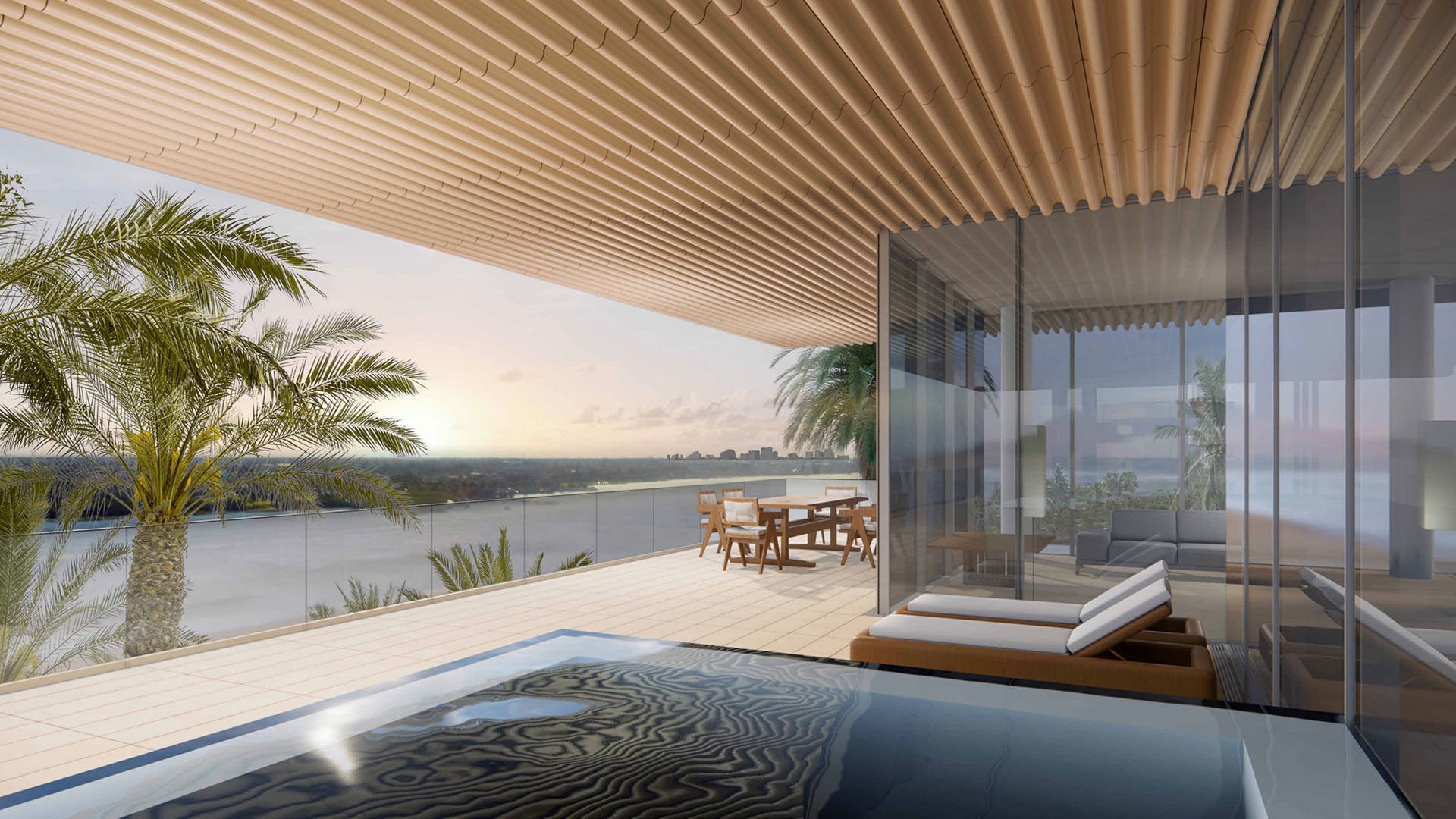
Palm Beach camera placement calls for restraint. Many homes depend on landscape architecture, hedges, walls, motor courts, loggias, and historic or traditional facades. The camera should not become the first thing a guest notices. When possible, equipment should be integrated into eaves, columns, gate structures, soffits, landscape lighting zones, and architectural shadows.
The central concern is balance. A visible camera may be appropriate at a gate or service entrance, where it signals controlled access. At the primary entrance, however, an overly obvious device can disturb the sense of hospitality. The best placement respects the residence as a home first and a protected asset second.
Palm Beach properties also require careful attention to neighboring sightlines. Mature hedging and deep setbacks create privacy, but cameras mounted too high or angled too broadly can capture areas that are not relevant to the residence. A narrower, more intentional view is usually preferable to a sweeping field that invites unnecessary review.
A luxury camera plan should be guided by a simple principle: record events, not intimacy. Exterior approaches, doors, gates, garages, elevators, package zones, pool gates, and dock edges are event-rich locations. Bedrooms, bathrooms, dining tables, lounges, and casual family rooms are not.
This distinction matters for staff, guests, children, and visiting family. A home that feels constantly watched does not feel luxurious. Proper camera placement should create confidence without changing behavior. In practice, that means avoiding cameras that stare into seating areas, indoor living zones, neighboring windows, or poolside spaces where privacy is expected.
For families with staff or frequent vendors, clarity is essential. Cameras should be positioned at entrances and work zones rather than hovering over every task. This protects the homeowner while preserving a professional, respectful environment.
Placement and hardware should be selected together. A camera mounted too low may be vulnerable or intrusive. A camera mounted too high may capture heads and movement but miss identifying detail. A wide lens can be useful for context, while a narrower lens may be better for gates, driveways, and doors.
Lighting is equally important. South Florida properties often use dramatic nightscapes, with uplights, pool glow, moonlighting, and reflective surfaces. Camera placement should account for glare, backlighting, rain, salt air, foliage movement, and seasonal growth. A perfect angle in a freshly trimmed landscape may be compromised once palms, sea grapes, or hedges fill in.
The best result feels calm. The camera belongs to the composition, not as ornament, but as infrastructure. It should be findable when needed and forgettable when not.
For a buyer evaluating a residence, the camera plan should be reviewed before closing, not after move-in. Ask where the current cameras are located, what they capture, which areas are blind, which devices belong to the residence, and which are controlled by the building or association. In a condominium, confirm how private cameras interact with building rules and common areas.
For a single-family property, walk the site at morning, afternoon, evening, and after dark. Note the way guests arrive, where packages are left, how the garage is used, where staff enters, and how the property meets the water or street. A camera plan drawn from daily movement will always outperform one drawn from a floor plan alone.
The most valuable systems are not the most conspicuous. They are the ones that support the way the home is actually lived.
Where should camera planning begin? Start with the arrival sequence, including street, gate, driveway, garage, elevator, foyer, and service entry points.
Should every exterior corner have a camera? No. Coverage should be intentional, with each camera assigned to a specific event or transition.
Are cameras inside the residence advisable? Interior cameras should be limited and carefully considered, with emphasis on entries rather than intimate living areas.
What matters most in a Miami condominium? Focus on private thresholds such as elevator landings, residence foyers, terraces, parking, and storage areas.
How should waterfront homes be approached? Include dock access, waterside terraces, vessel boarding points, side yards, and service paths in the plan.
What is different about Palm Beach placement? Discretion is paramount, so equipment should be integrated into architecture and landscape wherever possible.
Can landscaping interfere with cameras? Yes. Hedges, palms, sea grapes, and seasonal growth can block or distort a view over time.
Should camera angles be tested at night? Yes. Reflections, landscape lighting, pool glow, and glare can change performance dramatically after dark.
What is the best privacy principle? Record arrivals, entries, and service movement, not intimate spaces or neighboring private areas.
What is the best way to shortlist comparable options for touring? Start with location fit, delivery status, and daily lifestyle priorities, then compare stacks and elevations to validate views and privacy.
For a tailored shortlist and next-step guidance, connect with MILLION.
If branded residences are on your mind — as a home or as an allocation — we would be glad to share what we are seeing, privately.
Begin a quiet conversation