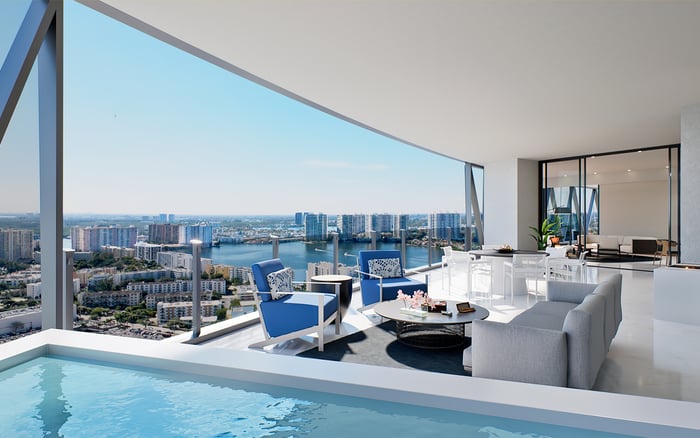
Miami's next generation of branded, ultra-luxury towers has made buying a $5M plus pre-construction condo a sophisticated, multi-year strategy. This guide explains how to choose the right neighborhood and project, navigate deposits and construction timelines, negotiate fees and finishes, and protect your position so your new Miami residence delivers both an exceptional lifestyle and a resilient long term asset.
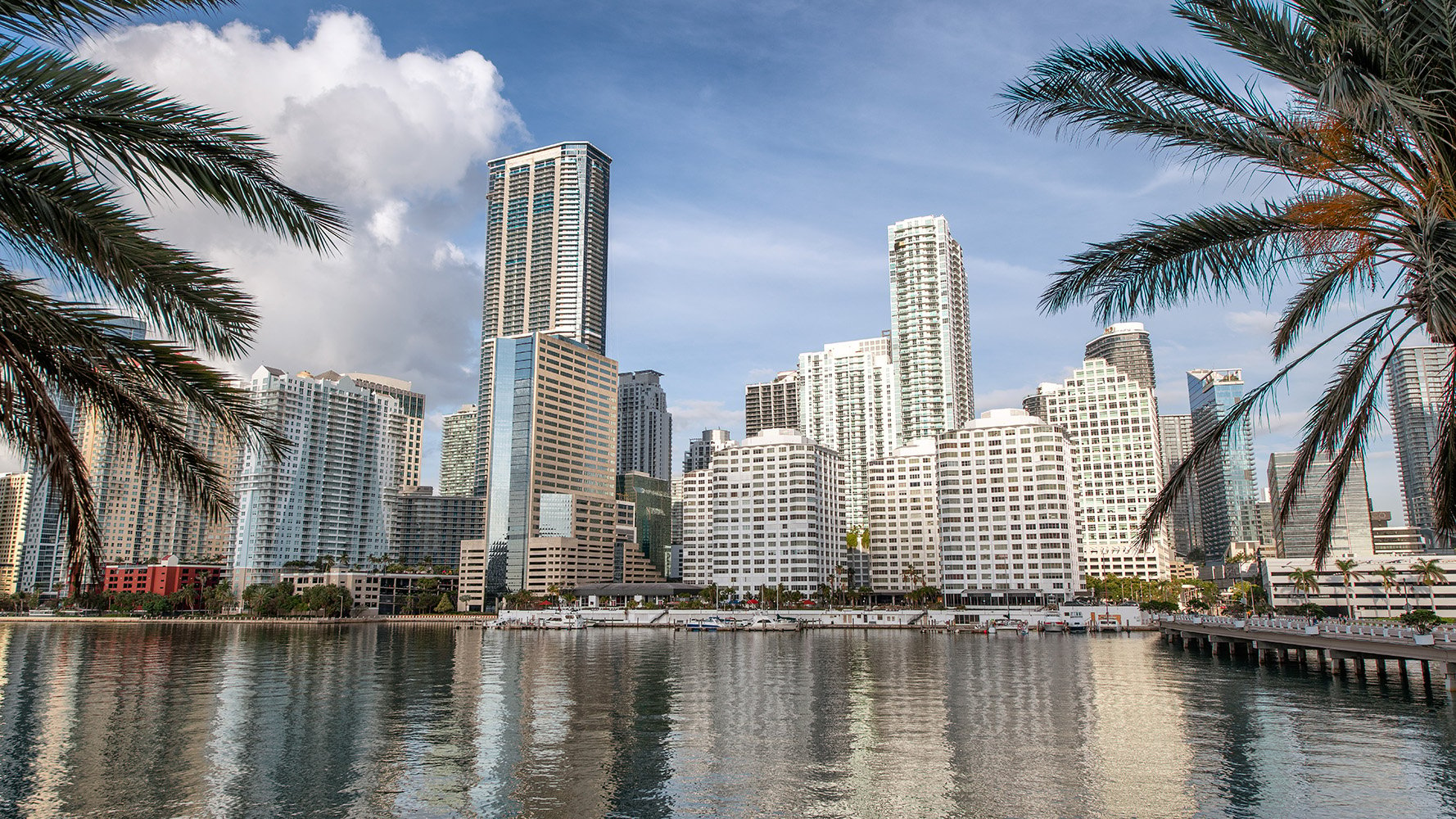
Miami's skyline is in the middle of a generational reinvention. Construction cranes mark the rise of a new wave of branded, ultra-luxury condominium towers where even three bedroom residences routinely exceed five million dollars. For buyers at this level, a Pre-construction purchase is less about speculation and more about securing a long term lifestyle asset in one of the world's most dynamic coastal cities.
The attraction is clear. No state income tax, year round sunshine, a growing financial and technology hub and a lifestyle that blends beach, boating, dining and culture have turned Miami into a preferred base for global families. What was once a seasonal destination has matured into a year round city. Developers have responded with vertical resorts that pair estate sized residences with amenities and services that rival or surpass five star hotels.
Committing at the planning stage means you are essentially buying a blueprint. You may sign a contract two to four years before delivery, funding the project with a sequence of deposits while architects, designers and contractors bring the building to life. When handled thoughtfully, buying a $5M plus pre construction condo aligns your portfolio, your family plans and your definition of daily comfort.
This guide is written for serious buyers in that bracket. It is designed to demystify the process, highlight where the most compelling opportunities lie and help you approach Miami's New-construction inventory with the same rigor you would bring to any other material investment.
Begin with geography. At the very top of the market most buyers narrow their search to just a handful of neighborhoods: the urban energy of Brickell and Downtown, the classic shoreline of Miami-beach, the tower row of Sunny-isles and the rarefied privacy of Fisher-island and Bal Harbour. Each offers its own mix of views, access and sense of community. The right choice is the one that mirrors how you actually live, not simply where prices are highest.
If you favor a walkable, city forward lifestyle with quick access to office towers and cultural venues, a glass wrapped residence in the core may be ideal. Downtown's future icon, Waldorf Astoria Residences Downtown Miami, for example, is conceived as a stack of sky cubes with panoramic views across Biscayne Bay and the islands. In contrast, The Perigon Miami Beach curves along the sand with flow through layouts that keep the Atlantic and the city skyline in constant view.
Those who prioritize resort style beach living often gravitate north. Bentley Residences Sunny Isles brings the automotive brand's design language to a tower where select residences feature private car lifts, in residence garages and plunge pools on deep terraces. In Bal Harbour, Rivage Bal Harbour takes a quieter, ultra boutique approach, with an intimate number of homes, private elevators and a focus on refined interior detailing and generous ceiling heights.
If genuine seclusion is non negotiable, a private island setting such as The Residences at Six Fisher Island may appeal. Set within one of the most exclusive enclaves on the East Coast, residences are conceived as sky villas, many with oversized terraces, club level services and membership in an existing network of marina, spa, tennis and beach amenities.
Once you have narrowed the map, evaluate the team behind a project. Names like OMA, KPF, SOM, Arquitectonica or a high profile hospitality brand signal a certain level of execution, but the developer's track record is equally important. Walk completed buildings, speak with residents and your advisor and pay attention to how closely previous projects matched what was promised in their marketing. At the $5M level and above you are buying into process and reliability as much as square footage.
Inside the building, study the fundamentals. Ceiling heights, column placement, elevator configuration and service circulation matter more than mood images. Boutique towers with fewer residences may feel more discreet and club like, while larger properties can support broader amenity programs such as private marinas, residents only restaurants, wellness clubs and children's suites. The amenities list should match the way your family will realistically use the building five and ten years from now.
Most premier Miami developments follow a similar framework. You may first be offered a reservation, secured with a relatively small deposit, while the developer finalizes its formal condominium documents. This stage is optional and often fully refundable. The significant commitment occurs at contract, when you sign the purchase agreement for a specific residence and make an initial deposit, commonly in the range of ten to twenty percent of the purchase price.
Florida law gives buyers of a new condominium a fifteen day rescission period after receiving the full offering package. During that window you and your attorney can review the budget, building rules, floor plans and disclosures in detail. If anything feels misaligned, you may cancel and have your deposit returned. Sophisticated buyers use this period to validate every assumption, from projected maintenance fees to how many slips sit in the private marina.
After the rescission period, your deposits become non refundable outside specific contingencies, and the remaining deposit schedule begins. For a $5M plus residence it is typical to reach thirty to fifty percent paid in stages, tied to milestones such as groundbreaking, the building structure topping off and installation of interior partitions. Each time a milestone is achieved, the escrow agent will call the next percentage due. Your advisor should help you understand the exact schedule before you sign.
The construction period often ranges from two to four years, depending on the complexity of the tower. During this time your role is largely that of informed observer. You will receive periodic updates and may be invited to private previews of model residences or amenity spaces. If your home is being delivered in designer ready condition, this is the ideal window to engage your own interior team so that flooring, millwork and lighting can be scheduled to install shortly after closing.
A few months before completion, you will coordinate financing if you intend to place a mortgage on the property. Lenders typically underwrite against the executed contract and the building's projected completion date, issuing a commitment to fund when the certificate of occupancy is granted. At the end of the process you will perform a detailed walk through of your residence with the developer's representative, document any punch list items and then move to closing, where your final balance, closing costs and any developer fees are settled.
Within the ultra luxury segment the best units in the best buildings are rarely discounted. For a trophy penthouse in a brand new tower your real win may be securing the line and exposure you want. That said, knowledgeable buyers know where there is room to create value without disrupting a developer's pricing matrix. Common negotiation points include closing credits, partial payment of association fees for the first year or inclusion of upgraded finish packages at no additional charge.
Timing matters. Developers may be most flexible at defined inflection points, such as when they are aiming to reach the pre sales threshold required by their construction lender, or as they work to sell the final inventory before delivering the building. Buying early can deliver preferred pricing and choice of line; buying late can sometimes yield more aggressive concessions once the developer is focused on wrapping the project.
Pay attention to the fine print around closing costs. In addition to standard items such as title insurance and recording fees, New-construction contracts often include a development fee, contribution to the condominium association's reserve fund and impact or connectivity fees that are unique to each project. A seasoned attorney who regularly represents buyers in this tier will know which of these items are customary and which may be negotiable.
Assignment and rental rules are another critical area. Some developers tightly restrict the ability to assign your contract prior to closing or to lease your residence in the first years of operation. If there is any chance that your plans could change, understanding these restrictions in advance is essential. Your attorney should also confirm the process for resolving construction defects, response times for warranty claims and what recourse you have if the building experiences significant delays beyond what is promised in the contract.
Finally, assemble a quiet but highly capable advisory team. A buyer's agent who tracks every major Pre-construction launch, a real estate attorney who lives inside condominium documents and a wealth advisor or private banker who understands how this acquisition fits into your broader balance sheet will help you buy deliberately rather than reactively. At $5M and above, the right guidance protects both lifestyle and capital.
What deposit should I expect to pay on a $5M pre-construction condo in Miami?
Deposit structures vary by project, but many luxury Miami developments require total deposits of roughly thirty to fifty percent of the purchase price paid in stages. It is common to see ten to twenty percent due at contract, with additional installments at groundbreaking, structural top off and other milestones, and the balance at closing.
How long does it usually take from signing to move in?
For ground up towers in Miami's top neighborhoods, plan for roughly two to four years from contract signing to delivery. Factors such as building height, permitting timelines, construction complexity and weather can extend or compress that window, so it is wise to maintain some flexibility in your personal move in plans.
Can I finance a pre-construction purchase?
Deposits during construction are almost always paid in cash, but many buyers obtain financing for the balance at closing. Private banks and mortgage lenders that specialize in new development will typically evaluate your profile, the project and the expected completion date, then issue a loan commitment that funds when the building receives its certificate of occupancy.
Is Pre-construction better than buying a finished resale unit?
Neither path is universally better. Pre-construction can offer first choice of lines, the latest design and building systems and the potential for appreciation by delivery, in exchange for accepting construction timing risk and tying up capital in deposits. A finished resale offers immediate use and visible quality, but may involve compromises on layout, views or technology compared with the newest inventory.
What is the smartest way to begin the search for a $5M plus condo in Miami?
Start by clarifying your priorities around neighborhood, views, services and how often you will use the residence, then sit down with a specialist who lives in this segment every day. A discreet advisor at MILLION Luxury can curate a short list of best in class opportunities across Brickell, Miami-beach, Sunny-isles, Fisher-island and the city's leading branded towers and guide you from first conversation to closing.
If branded residences are on your mind — as a home or as an allocation — we would be glad to share what we are seeing, privately.
Begin a quiet conversation