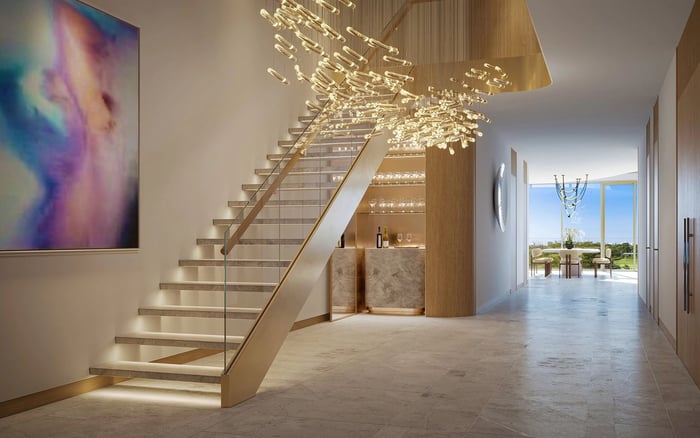
Smart appliance integration is becoming a meaningful part of the Miami luxury residence search, influencing how buyers evaluate kitchens, climate comfort, serviceability, privacy, and long-term ownership confidence.
In Miami luxury real estate, the first impression used to be visual: the waterline, the ceiling height, the stone, the terrace, the arrival sequence. Those elements still matter. Yet an increasingly sophisticated buyer is also asking a quieter question during the first showing: how does this residence actually work?
Smart appliance integration is changing the Miami residence search because it has moved technology from novelty to infrastructure. The strongest residences no longer treat connected appliances as isolated upgrades. They present the kitchen, laundry, climate, lighting, shades, ventilation, and access points as a coordinated domestic environment. For buyers accustomed to multiple homes, frequent travel, and high-touch service, that coordination can be as valuable as a rare finish.
This is not about filling a home with gadgets. It is about reducing friction. A residence that preheats, cools, filters, lights, secures, and monitors itself with clarity can feel more composed, especially in a city where indoor and outdoor living are closely intertwined.
Smart appliances once entered the conversation late, usually after a buyer had already chosen a floor plan or neighborhood. Today, they are part of the initial filter. Buyers want to know whether kitchen appliances communicate with a broader home platform, whether laundry can be monitored remotely, whether wine storage has dependable controls, and whether air quality, humidity, and temperature can be managed with precision.
The shift is especially visible among buyers comparing turnkey residences. In a fully furnished or designer-finished home, visible style may be easy to read, while the technical ecosystem requires closer inspection. A beautifully paneled refrigerator, for example, is only part of the story. The more important question is whether it is serviceable, intuitive, properly integrated, and compatible with the way the owner lives.
For seasonal residents, remote awareness is a central advantage. For full-time residents, the appeal is daily convenience. For households with staff, integration can support clearer routines and fewer manual interventions. In each case, technology is becoming a measure of ease.
The most discerning buyers are not simply asking whether a home is “smart.” They are asking how intelligently the systems have been planned. A residence with too many disconnected apps may be less appealing than one with fewer features and a cleaner operating logic.
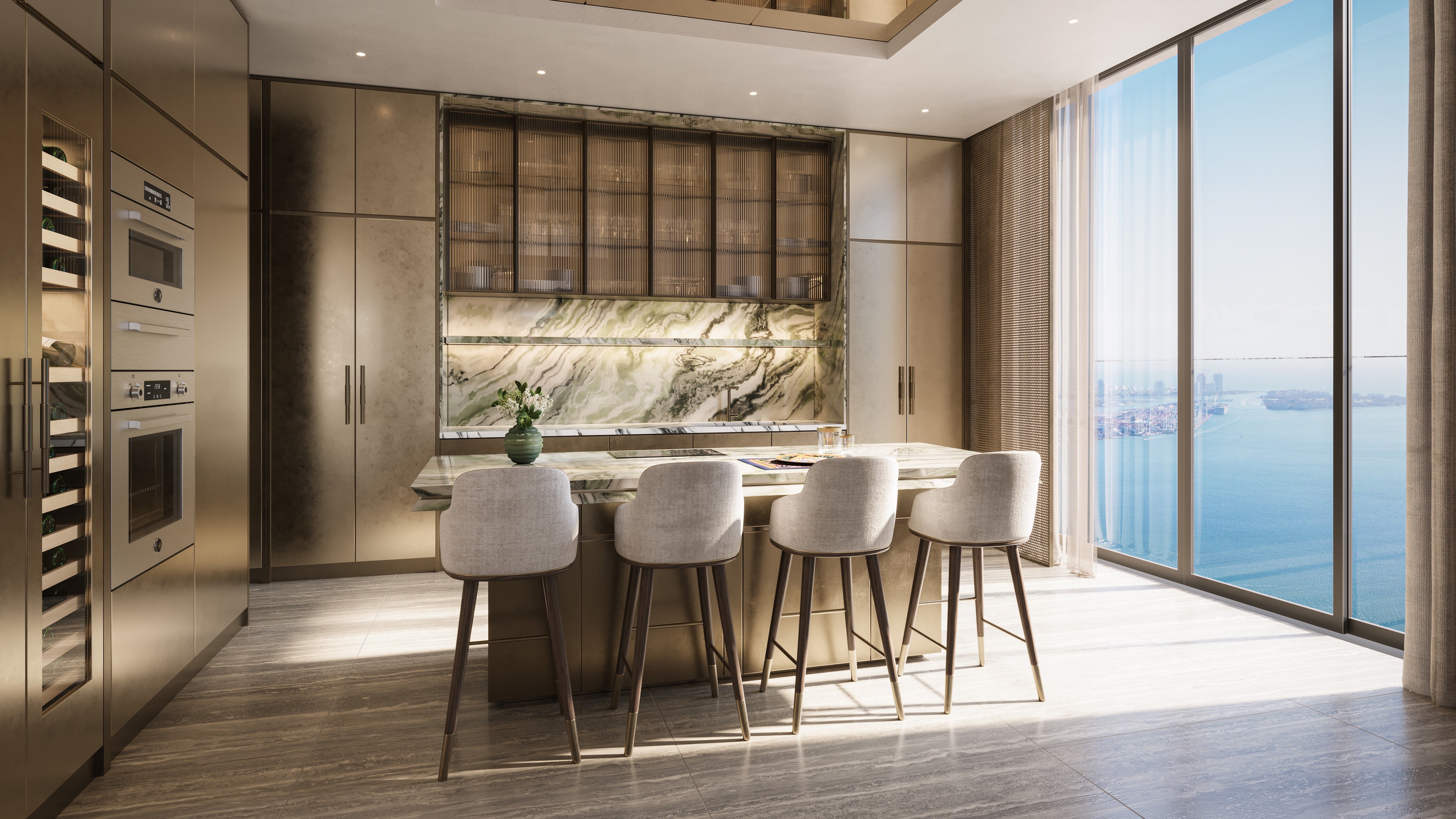
The kitchen is often the starting point. Integrated cooking, refrigeration, dishwashing, coffee systems, warming drawers, and wine storage can define the rhythm of entertaining. In Miami, where hospitality is part of the residential culture, the kitchen must perform for private breakfasts, family dinners, catered evenings, and late arrivals from the airport.
Climate control is equally important. A smart thermostat alone is not enough. Buyers are looking at zoning, response time, humidity management, and how climate settings coordinate with shades and glazing. The most compelling residences feel calm when the sun is direct, when guests arrive, and when outdoor doors open repeatedly during an evening at home.
Laundry is becoming more visible in the search as well. Connected washers and dryers may not carry the glamour of a sculptural kitchen island, but they shape everyday ownership. Alerts, cycle management, and dependable installation matter in a high-service residence.
Finally, buyers are scrutinizing privacy. Every connected appliance introduces questions about data, permissions, updates, and access. The strongest residences make control feel simple without making the owner feel exposed.
Smart appliance priorities vary by location and property type. In Brickell, buyers often favor seamless vertical living, with kitchens and climate systems that support weekday efficiency and effortless entertaining. In Miami Beach, the focus may lean toward indoor-outdoor comfort, shade coordination, and appliances that support a resort-like rhythm without compromising privacy.
In Sunny Isles, where high-rise oceanfront living often emphasizes views and arrival, integrated appliances can help preserve a clean architectural language. The less visual clutter, the more the eye returns to water, light, and proportion. In Coconut Grove, where greenery, terraces, and quieter residential streets shape the experience, buyers may place particular value for comfort systems that support a softer, more residential daily pace.
Search language is also evolving. Terms such as new construction and ultra-modern now often imply a technology expectation, not only an architectural one. Buyers may still lead with views, location, and plan, but they increasingly expect the appliance and control environment to meet the same standard as the finishes.
Smart appliance integration also affects how a residence may be perceived by the next buyer. Technology that feels current, intuitive, and discreet can support confidence. Technology that feels fragmented or difficult to maintain can create hesitation, even when the home is otherwise exceptional.
The point is not to chase every new feature. The point is to choose systems that are durable, serviceable, and understandable. Luxury buyers do not want a home that requires constant technical interpretation. They want one that performs elegantly in the background.
For sellers, documentation matters. A clear record of appliance models, platform compatibility, warranties, service contacts, and operating instructions can make a showing more persuasive. For buyers, due diligence should include a practical walkthrough of the home’s connected functions, not just a visual tour.
Turnkey in Miami once meant furnished, finished, and ready for immediate use. Increasingly, it means operationally ready. The best version of turnkey now includes a home where the appliances are connected, the controls are rational, the service pathway is clear, and the owner can arrive with confidence.
This does not diminish the importance of architecture or location. Rather, it adds another layer to the search. A residence can be visually stunning yet operationally cumbersome. Another can be quietly superior because every system supports the lifestyle promised by the design.
For luxury buyers, smart appliance integration is becoming a form of domestic composure. It helps the home receive, prepare, preserve, cool, clean, and respond. In a market defined by beauty, climate, hospitality, and mobility, that composure is increasingly central to the decision.
Why do smart appliances matter in a Miami luxury residence search? They influence daily convenience, entertaining, remote awareness, and the overall sense that a residence is ready to live in.
Is a smart home the same as a home with smart appliances? Not necessarily. Smart appliances are individual connected products, while a smart home usually connects multiple systems into a broader operating environment.
What should buyers ask during a showing? Ask how appliances connect, which controls are centralized, who services the systems, and whether documentation is available.
Are smart kitchens more important than other connected systems? Kitchens often lead the conversation, but climate, laundry, shades, ventilation, and access controls can be just as important.
Does smart appliance integration help seasonal owners? Yes. Remote monitoring and alerts can make arrivals, departures, and maintenance coordination feel more controlled.
Can too much technology be a drawback? Yes. A complicated system with too many apps or unclear service support can reduce the feeling of ease.
What is the most important privacy question? Buyers should understand user permissions, account ownership, update settings, and how access is transferred at closing.
Should resale buyers expect older residences to be fully integrated? Expectations should be practical. Some older residences may have excellent upgrades, while others may require thoughtful retrofit planning.
Does new construction always mean better smart integration? Not always. The quality of planning, compatibility, installation, and service access matters more than the age of the building alone.
How should buyers compare two similar residences? Compare not only views and finishes, but also how smoothly each home cooks, cools, cleans, protects, and responds.
For a discreet conversation and a curated building-by-building shortlist, connect with MILLION.
If branded residences are on your mind — as a home or as an allocation — we would be glad to share what we are seeing, privately.
Begin a quiet conversation