A buyer-focused editorial on how building culture influences the practical value of layouts, secondary bedrooms, and staff-room planning at the top end of the market.
In the upper tier of South Florida real estate, a floor plan is never just a diagram. It is a social contract between the building, the owner, the family, the staff, and the way guests are received. That is why the comparison between Fendi Château Residences Surfside and Viceroy Brickell is less about declaring one layout language superior and more about understanding how each building culture can shape daily life.
Buyers often begin with numbers. How many bedrooms? How many baths? How large is the primary suite? Those questions matter, but they rarely explain how a residence lives at 8 a.m., during a long family weekend, or when a guest stays for ten days. The more revealing question is how well the plan absorbs change without losing composure.
Surfside and Brickell naturally invite different expectations. Surfside suggests a quieter residential cadence, while Brickell sits within a more urban, high-frequency environment. A buyer considering Fendi Château Residences Surfside alongside Viceroy Brickell should therefore look beyond finish language and ask how the residence supports retreat, reception, work, children, visiting relatives, and staff circulation.
Flexibility is often mistaken for the ability to convert one room into another. In luxury residences, true flexibility is more refined. It is the ability to use rooms differently over time while preserving proportion, privacy, and elegance.
A secondary bedroom that functions as a nursery today may later become a study, wellness room, guest suite, or adult child’s room. A den may become a media lounge or quiet office. A staff room may work beautifully for live-in help, but it may also become overflow storage, a small office, or a service-support room if the circulation allows it.
The buyer’s test should be practical. Can a room accept a queen bed without blocking movement? Is there a logical wall for a desk? Does the door swing compromise furniture placement? Is the closet appropriate for a real guest, or only for occasional use? Does the room feel integrated into the home, or does it read as leftover space?
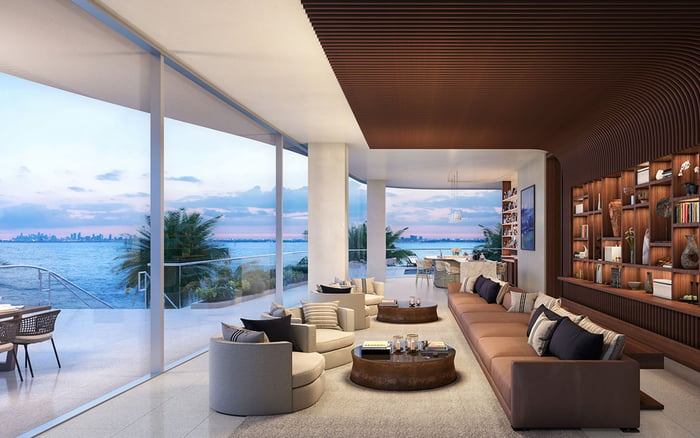
For many buyers, balcony, terrace, and flow-through residence considerations also influence flexibility. Outdoor access can extend a room’s usefulness, while cross-residence circulation can make a home feel less compartmentalized. These details matter most when the residence must perform for both quiet ownership and full-house occupancy.
Primary suites tend to receive the most attention, but secondary bedrooms often determine whether a luxury condominium truly fits a family. Their importance is emotional as well as functional. They are where children settle, guests judge comfort, grandparents find privacy, and owners decide whether the home can evolve.
The best secondary bedrooms do not feel secondary. They offer enough separation from public rooms, enough storage for extended stays, and enough calm to support sleep or work. A room that is technically a bedroom but exposed to noise, service movement, or awkward entry sequences can reduce the perceived livability of an otherwise impressive residence.
In a Surfside context, buyers may value secondary bedrooms that support longer visits and multigenerational use. In Brickell, buyers may focus on rooms that can flex between guest use, office use, and weekday convenience. Neither approach is inherently better. The right answer depends on the owner’s rhythm.
When walking a residence, buyers should mentally assign a person to every secondary bedroom. Not a generic guest, but a real user. A teenager with a laptop. A parent who wakes early. A friend staying after dinner. A nanny needing rest. The plan becomes clearer when imagined through actual behavior rather than brochure categories.
In ultra-prime residences, the usefulness of a staff room depends less on its label than on its position. A room may be called a staff room, service room, or helper’s room, but the essential issue is whether it allows support without compromising household privacy.
Good staff planning considers entry, laundry access, kitchen adjacency, storage, and the ability to move through the home discreetly. If a staff room is too visible from the main entertaining areas, it may feel awkward. If it is too isolated from service functions, it may be inconvenient. If it lacks flexibility, it becomes a room that exists on paper but not in daily practice.
This is especially important for buyers who entertain, travel frequently, or maintain a residence as a second home. The staff room may support housekeeping, childcare, private dining preparation, pet care, deliveries, or seasonal setup. Its value increases when it helps the home remain serene.
A buyer comparing Fendi Château Residences Surfside and Viceroy Brickell should therefore ask a simple question: does the staff area protect the ceremonial parts of the residence? In the best layouts, service supports elegance without announcing itself.
The temptation is to stereotype neighborhoods. Surfside equals quiet. Brickell equals urban. Those shorthand descriptions may be useful at first, but serious buyers should go further.
A Surfside buyer may want a residence that feels composed for long stays, family visits, and privacy. Secondary bedrooms may need to feel generous enough for people who are not merely passing through. Staff areas may be judged by how naturally they support a more residential, settled way of living.
A Brickell buyer may prize agility. A secondary bedroom may need to become a high-functioning office during the week and a guest suite by Friday. A staff room may need to support a lock-and-leave lifestyle, efficient deliveries, or household management in a faster setting. The building culture may be more about responsiveness than retreat.
The point is not to force a binary choice. It is to understand that Fendi Château Residences Surfside and Viceroy Brickell may attract buyers with different expectations about household choreography. The same three-bedroom plan can feel entirely different depending on where the bedrooms sit, how the service areas connect, and whether the public rooms allow private zones to remain protected.
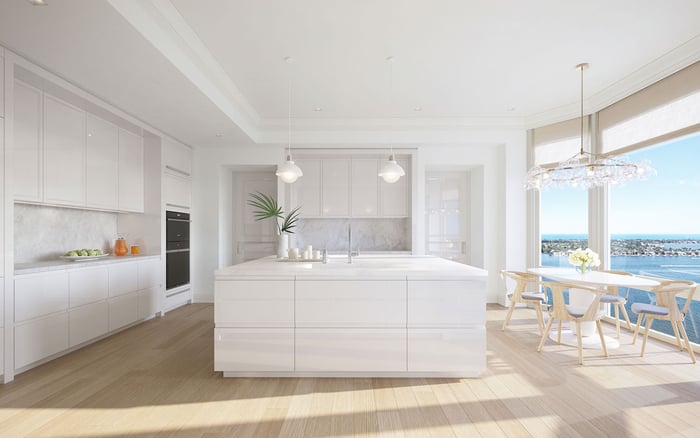
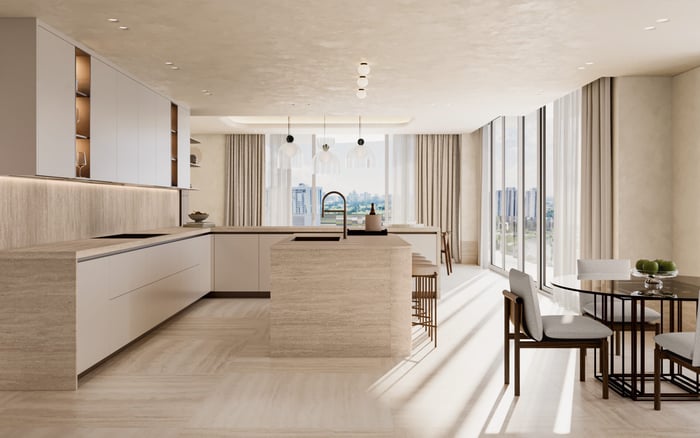
Before committing to any residence, walk the plan as if the home is already occupied. Begin at the entry. Where do guests pause? Can the living area absorb arrival without exposing private rooms? Does the kitchen support both family use and help when entertaining?
Then move to the secondary bedrooms. Stand where a bed would go. Look for natural light, storage, noise exposure, and bathroom access. Ask whether the room would still feel gracious with luggage, a desk, and personal belongings. If the answer is no, the room may be better suited to occasional use than real residency.
Finally, study the staff room and service path. The question is not whether the space exists, but whether it reduces friction. A truly useful staff room makes the home easier to own. It helps preserve the quiet confidence that defines luxury living.
For the most discerning buyers, this is where value becomes visible. Square footage may impress, but circulation convinces. A plan that lets a family grow, host, work, rest, and receive help gracefully will usually feel more valuable than one that simply photographs well.
Why does building culture matter when comparing luxury condos? Building culture influences how residents use shared and private spaces, which can affect how a floor plan feels in daily life.
Is floor-plan flexibility only about convertible rooms? No. It is also about circulation, privacy, furniture placement, storage, and whether rooms can support different life stages.
What should buyers look for in secondary bedrooms? Buyers should evaluate privacy, closet capacity, bathroom access, light, noise exposure, and whether the room feels comfortable for extended stays.
Can a secondary bedroom function well as an office? Yes, if it has good proportions, a practical wall for a desk, sufficient quiet, and a door position that does not limit furniture planning.
What makes a staff room genuinely useful? A useful staff room connects logically to service needs while preserving privacy for the main living and bedroom areas.
How should Surfside buyers think about layout? Surfside buyers may place greater emphasis on calm, privacy, family use, and bedrooms that support longer stays.
How should Brickell buyers think about layout? Brickell buyers may prioritize adaptability, work-from-home options, efficient service access, and rooms that change function easily.
Are balcony and terrace areas part of the flexibility conversation? Yes. Outdoor areas can extend living patterns, improve guest comfort, and make adjacent rooms feel more useful.
Do flow-through residences automatically live better? Not automatically. Their value depends on proportion, circulation, exposure, and how private and public zones are arranged.
What is the best way to shortlist comparable options for touring? Start with location fit, delivery status, and daily lifestyle priorities, then compare stacks and elevations to validate views and privacy.
If you'd like a private walkthrough and a curated shortlist, connect with MILLION.
If branded residences are on your mind — as a home or as an allocation — we would be glad to share what we are seeing, privately.
Begin a quiet conversation