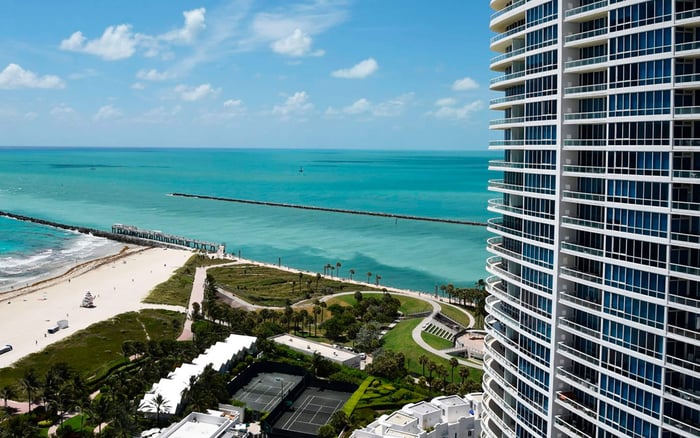
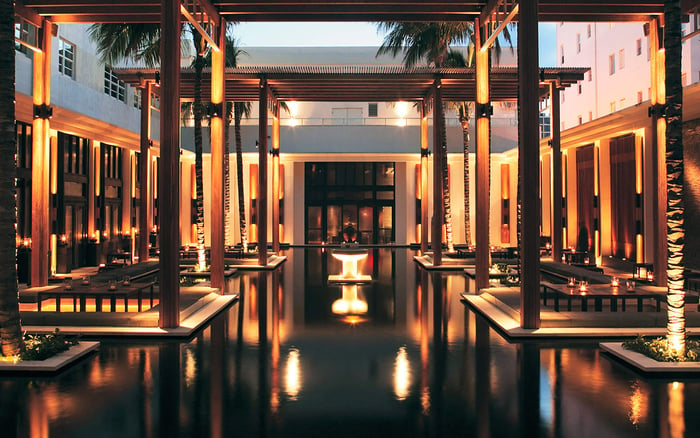
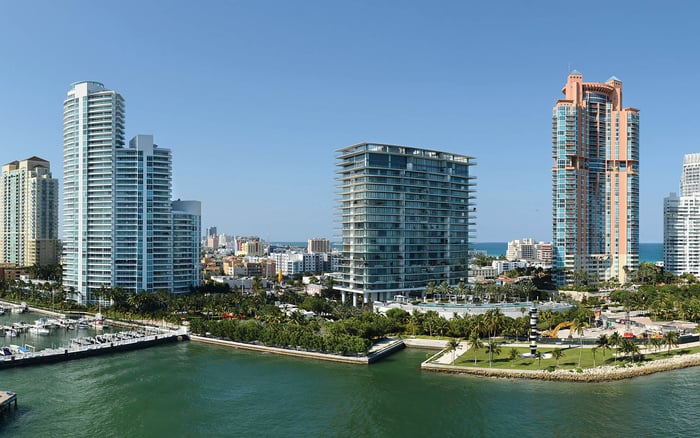
An editorial look at how Setai Residences Miami Beach and The Perigon Miami Beach express a more discreet generation of oceanfront luxury built around service, privacy, calm, and architectural restraint.
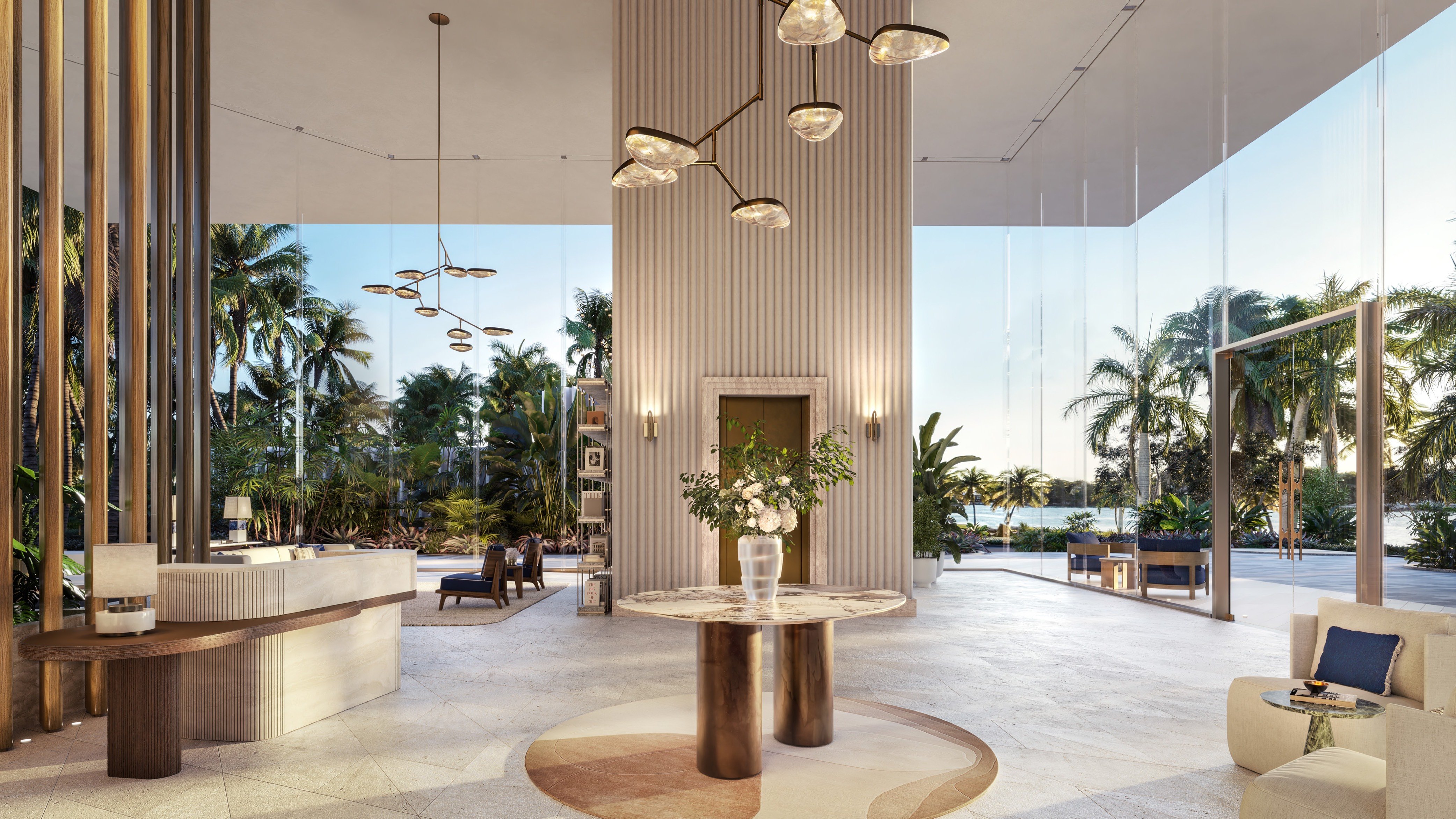
Miami Beach has always understood performance. The city can turn arrival, architecture, dining, art, and nightlife into a stage. Yet at the highest end of the residential market, the more compelling movement is increasingly quiet. The most persuasive luxury is not always the one that announces itself first. It is the one that makes daily life feel controlled, composed, and deeply serviced without asking the resident to participate in a spectacle.
That is why Setai Residences Miami Beach and The Perigon Miami Beach make such a useful comparison. They are not best understood as competitors in a simple old-versus-new ranking. They are two chapters in the same evolution: from hotel-integrated oceanfront living to a newer model of fully private, service-led residential life.
Both speak to the buyer who values access without constant exposure, service without pageantry, and design without overstatement. In a market often associated with visible wealth, they point toward something subtler: the luxury of not having to negotiate the friction of daily life.
Setai Residences Miami Beach remains an established luxury oceanfront residence in Miami Beach, and its importance lies in how it helped normalize hospitality-grade service as part of residential life. It represents an earlier template for the buyer who wanted the ease of hotel-style living embedded within a private oceanfront address.
Its identity has always been less about theatrical display than atmosphere. The Setai language is one of calm, tranquility, and discretion. That distinction matters because it separates the property from louder interpretations of Miami Beach luxury. The value proposition is not built around nightlife energy or celebrity flash. It is built around a composed residential environment where service feels present but not intrusive.
For legacy luxury, that difference is significant. The older model of high-touch Miami Beach living often came through the hotel-residence hybrid, where residents could benefit from a hospitality program while still occupying a private home. Setai Residences Miami Beach showed that resort-level attentiveness could be translated into a more serene oceanfront rhythm.
The Perigon Miami Beach advances the conversation in a different direction. Rather than relying on a hotel-residence hybrid framework, it is positioned as a fully private residential development. That shift is central to understanding the newer generation of Miami Beach luxury.
The buyer profile has changed. Many purchasers still expect hospitality-caliber service, but they increasingly want that service delivered within an environment defined by privacy, control, and residential clarity. The Perigon speaks to that expectation by presenting sanctuary as a core luxury feature. Its appeal is not public-facing buzz. It is the promise of a controlled oceanfront setting where service supports private life rather than drawing attention to itself.
This is especially relevant for owners who view Miami Beach not only as a seasonal pleasure, but as part of a larger lifestyle strategy. They want architecture, service, and privacy to work together. The Perigon’s contemporary design story places it within this newer luxury language, one that treats restraint as a sign of confidence.
Oceanfront has always been one of Miami Beach’s most powerful residential assets, but the meaning of oceanfront luxury is changing. A generation ago, prestige was often measured by visible amenity volume. The conversation revolved around how much could be added, displayed, and branded. Today, the most sophisticated buyers are asking a different question: how much of daily life can be made effortless without turning the building into a resort stage?
Setai and The Perigon both answer that question through calm. Setai does it through an established hospitality-integrated model. The Perigon does it through a newer private-residential model. In both cases, the emphasis is not on excess theater. It is on reliability, discretion, and the feeling that the building understands the resident before the resident has to ask.
That same preference can be seen across other Miami Beach addresses where wellness, privacy, and architectural clarity are increasingly part of the luxury vocabulary. Projects such as 57 Ocean Miami Beach and Shore Club Private Collections Miami Beach belong to a broader market conversation in which the most desirable buildings are not merely collections of amenities, but frameworks for a more intentional daily life.
Design & Architecture now carry a different responsibility in Miami Beach. The best buildings do not simply create a memorable skyline profile. They manage transitions: from city to lobby, from lobby to residence, from public energy to private calm. For ultra-premium buyers, that sequence can matter as much as any single amenity.
Setai’s design identity is associated with tranquility and a deeply composed atmosphere. Its luxury is not dependent on visual noise. It creates a sense of retreat within one of the world’s most recognizable coastal cities. That kind of restraint has aged well because it does not chase fashion. It relies on mood, proportion, service, and a coherent point of view.
The Perigon reflects the next phase, where a contemporary residential development can be high-service without being hotel-like in structure. Its privacy-first positioning suggests that buyers increasingly want the benefits of hospitality without the feeling of living inside a public hospitality environment. The result is not less luxury. It is a more edited version of it.
Lifestyle in Miami Beach is often described through proximity: the beach, restaurants, clubs, cultural events, and the social calendar. But for many ultra-premium owners, the most valuable lifestyle feature is the ability to choose when to engage and when to disappear.
That is where Setai and The Perigon feel aligned despite their generational differences. Setai offers the ease and attentiveness of a service-rich oceanfront environment with a notably calm identity. The Perigon translates similar expectations into a more private residential setting, where sanctuary and control become central to the ownership experience.
This does not mean amenities no longer matter. It means they are being judged more carefully. Buyers are looking less for theatrical checklists and more for utility, atmosphere, and execution. In this sense, the most successful buildings are those that reduce decision fatigue. They make the day smoother, the arrival more seamless, and the home more insulated from the city’s public intensity.
The broader Miami Beach service landscape also includes branded and hospitality-influenced residences such as The Ritz-Carlton Residences® Miami Beach, but Setai and The Perigon are especially instructive because they show two distinct approaches to the same premium expectation: service without unnecessary drama.
The key lesson is not that one model replaces the other. Setai Residences Miami Beach continues to represent an important legacy approach: hotel-grade service embedded into an oceanfront residential environment. The Perigon Miami Beach represents the newer evolution: hospitality-caliber expectations translated into a fully private residential setting.
For buyers, the distinction is practical. Some will value the energy and convenience of a hotel-integrated program, especially when paired with a serene design identity. Others will prefer a private building where service is equally elevated but less connected to public-facing hospitality. Both preferences are legitimate. The decision depends on how an owner wants to live, not merely what a building can advertise.
The more enduring trend is clear. Miami Beach luxury is becoming less dependent on visible abundance and more dependent on invisible competence. The best service is not always the most theatrical. Often, it is the service that preserves privacy, anticipates needs, and allows the residence to feel like a sanctuary rather than a stage.
What makes Setai Residences Miami Beach important in this comparison? It represents an established model of oceanfront living where hotel-grade service is integrated into a calm residential environment.
How is The Perigon Miami Beach different from Setai? The Perigon is positioned as a newer fully private residential development rather than a hotel-residence hybrid.
Does this article argue that The Perigon is better than Setai? No. The comparison is about two generations of service-led Miami Beach luxury, not a winner and loser.
What does high-service living mean in this context? It means residential life supported by hospitality-caliber attention, privacy, reliability, and ease.
Why does discretion matter to Miami Beach buyers? Many ultra-premium buyers want access to the city’s energy while preserving control over privacy and daily rhythm.
Is amenity theater becoming less important? For many sophisticated buyers, yes. The focus is shifting toward useful service, calm design, and long-term livability.
How does Setai express restraint? Its identity is framed around calm, tranquility, and discretion rather than spectacle.
How does The Perigon express the newer luxury model? It emphasizes sanctuary, privacy, control, and a fully private residential experience.
Are both properties considered oceanfront luxury? Yes. Both are positioned within Miami Beach’s oceanfront luxury residential conversation.
What should buyers compare beyond amenities? Buyers should compare privacy, service delivery, atmosphere, ownership style, and how each building supports daily life.
To compare the best-fit options with clarity, connect with MILLION.
If branded residences are on your mind — as a home or as an allocation — we would be glad to share what we are seeing, privately.
Begin a quiet conversation