For private aviation families, the best Surfside pied-à-terre is less about square footage and more about reducing friction between arrival, beach life, privacy, dining, wellness, and departure.
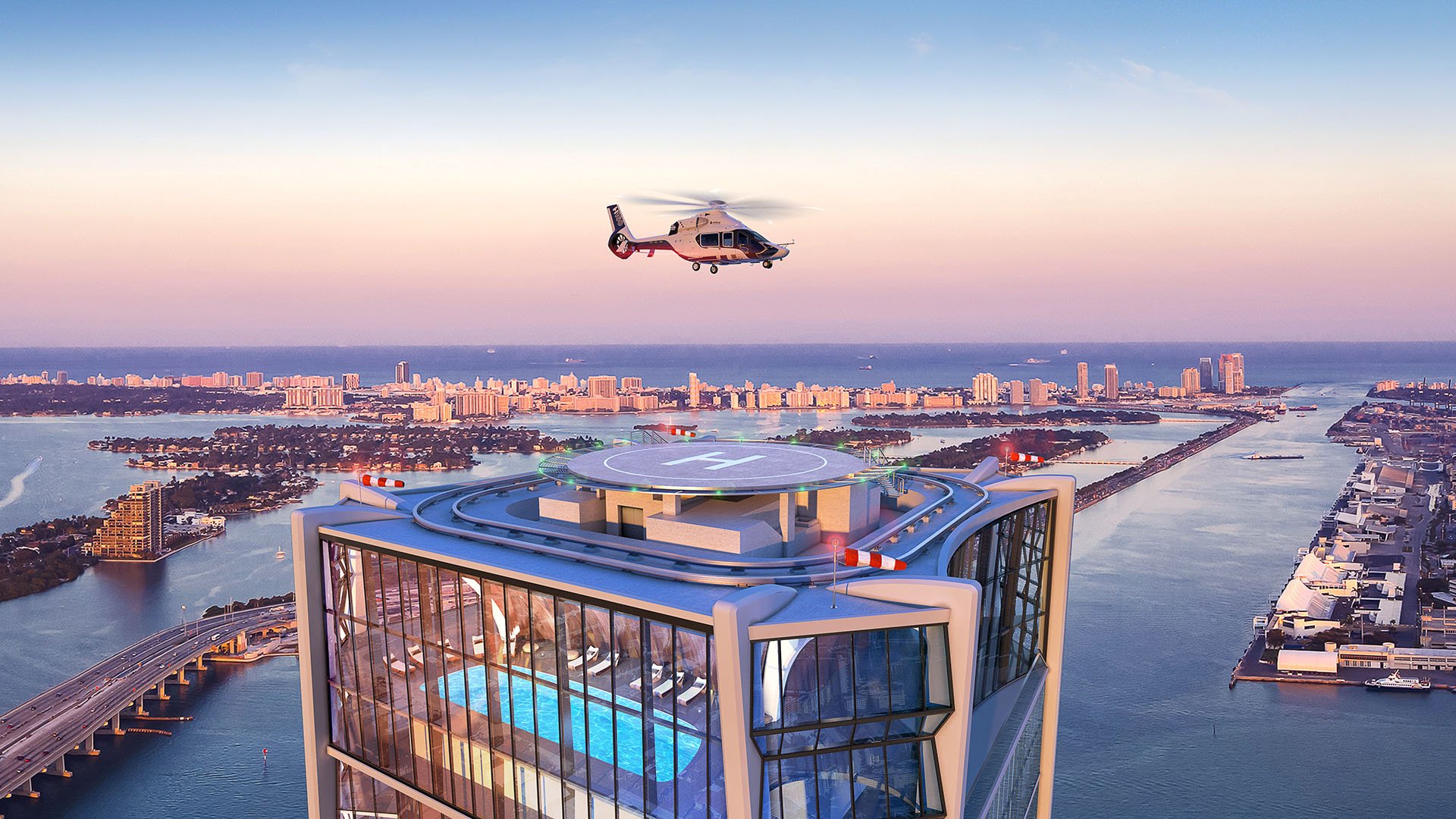
For the private aviation household, a South Florida weekend is rarely measured only in nights. It is measured in the quality of the first hour after landing, the ease of the final hour before wheels up, and the number of unnecessary transitions avoided in between. That is why Surfside becomes more compelling as a pied-à-terre location when the buyer begins with the rhythm of arrival rather than the romance of listing photos.
A better-positioned residence is not always the largest residence. It is the one that receives you cleanly, keeps the weekend legible, and does not require the household to rebuild its routine every time it lands. For frequent flyers, the right address should feel less like a vacation rental and more like a private base: familiar, serviced, discreet, and ready before the door opens.
This is where Surfside has a distinct luxury logic. It offers a quieter residential atmosphere within Miami’s broader coastal life, while still keeping buyers connected to the dining, shopping, wellness, and cultural calendar that draw them south. The best pied-à-terre is not simply a place to sleep. It is an instrument for converting scarce leisure time into usable time.
Private aviation compresses distance, but it does not automatically eliminate friction. The weak link is often what happens after landing: luggage, family members, ground transportation, check-in-style logistics, groceries, dining reservations, beach setup, and the quiet desire to disappear from public view.
For that reason, the Surfside buyer should evaluate a residence through an arrival test. Can the home be entered without drama? Is the building staff accustomed to owners who arrive in concentrated bursts? Does the floor plan allow one person to take a call while another unpacks, rests, or heads directly to the terrace? Can the weekend begin in minutes rather than hours?
Residences such as The Delmore Surfside speak to the larger idea of a highly considered coastal base. The point is not only the architecture or the ocean setting, but the way a serious buyer can frame the property as part of a repeated travel ritual. When that ritual works, ownership feels efficient rather than indulgent.
Surfside is especially interesting because it does not require the buyer to choose between a purely urban pied-à-terre and a remote beach house. It occupies a more residential lane of South Florida luxury, where the experience can be composed around privacy, sand, service, and ease. For the owner who may arrive late Friday and leave Sunday or Monday, that balance matters.
A large house can be wonderful for a long season. A tightly managed residence can be better for a short, recurring weekend. The difference is operational. A pied-à-terre should be ready without a full household mobilization. It should allow a wardrobe to remain in place, preferred bottles to be stocked, wellness appointments to be scheduled, and children or guests to understand the routine immediately.
This is why a second-home strategy in Surfside often becomes less about acquiring another asset and more about designing a repeatable pattern. If every visit begins with decisions, the residence is underperforming. If every visit begins with familiarity, the address is doing its job.
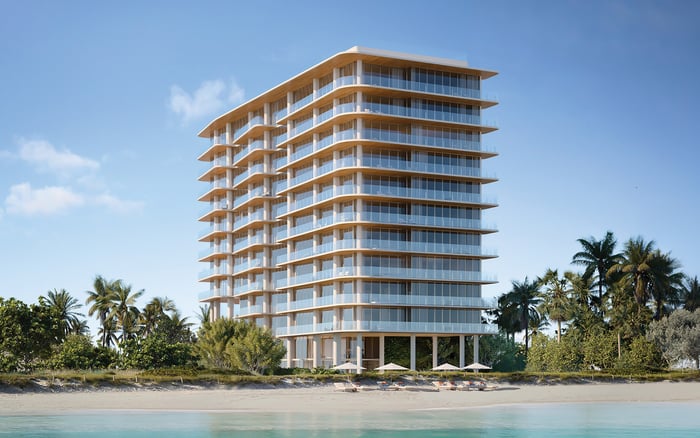
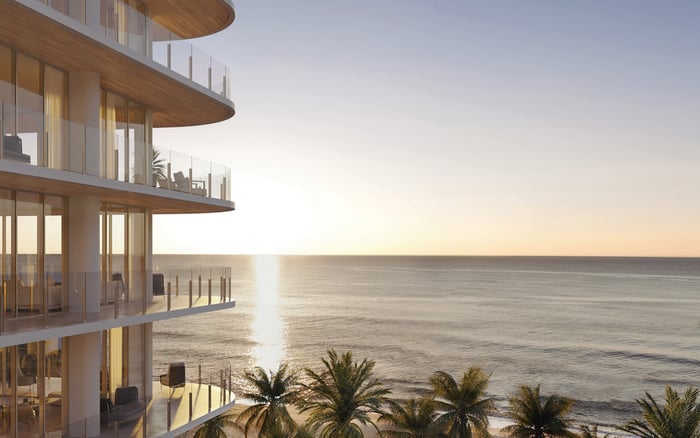
Oceanfront is not only a view category. For the private aviation weekend, it can be a time strategy. The closer the residence brings the owner to the water, the fewer decisions the household must make during a short stay. Morning beach walk, swim, breakfast, calls, lunch, rest, dinner. The entire weekend can unfold without excess choreography.
That is the appeal of buildings like Ocean House Surfside, where the name itself aligns with a straightforward owner desire: to keep the ocean at the center of the stay. The strongest Surfside pied-à-terre buyers tend to be less impressed by novelty and more interested in whether the property makes the weekend feel inevitable.
Beach-access convenience also has practical value. A buyer arriving with children, guests, or limited time may not want the friction of crossing multiple thresholds to reach the sand. Beach access is a quality-of-life detail that becomes more important with repeated use. The first visit may be about beauty. The tenth visit is about ease.
A South Florida pied-à-terre must satisfy two opposite conditions. It must feel personal when occupied and professionally handled when empty. That duality is central for private aviation users, because their calendars can change quickly. The residence should be able to absorb a spontaneous arrival and an equally swift departure.
This is where building culture matters. A buyer should consider privacy at arrival, elevator flow, storage, service expectations, package handling, maintenance coordination, and the overall tone of the address. Ultra-luxury is often revealed by what the owner does not have to ask for repeatedly.
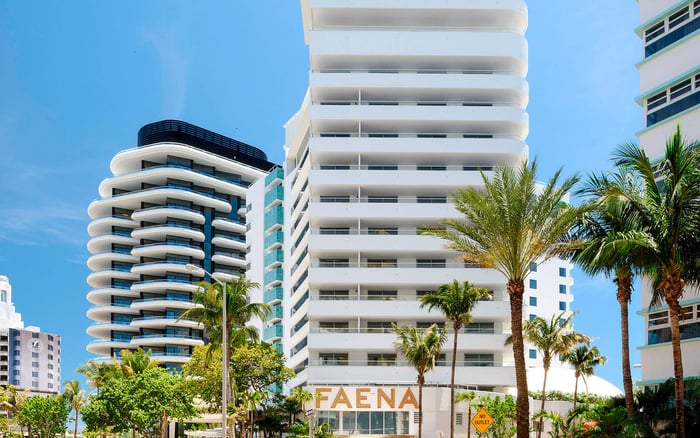
Surfside’s most compelling buildings are those that understand restraint. Fendi Château Residences Surfside, for example, belongs in conversations about design-conscious coastal ownership where the residence is expected to feel polished, private, and substantial. For a private aviation household, that can translate into a more graceful weekend cadence.
A Surfside pied-à-terre also benefits from proximity to the broader luxury geography of South Florida without forcing the owner to live in its busiest moments. A buyer may dine south, shop nearby, visit friends in neighboring enclaves, or host quietly at home. The key is choosing a residence that supports movement when desired and retreat when preferred.
This is why comparisons across the coast are useful. Arte Surfside appeals to buyers who like the idea of a boutique oceanfront environment with a strong architectural identity. The Surf Club Four Seasons Surfside can enter the conversation when the buyer wants an address associated with a highly serviced coastal lifestyle. Each represents a different way to solve the same core problem: how to make a short stay feel complete.
The better-positioned pied-à-terre is the one that matches the owner’s actual pattern. A couple flying in for quiet wellness weekends may prioritize calm, privacy, and immediate access to the beach. A family using the residence around school breaks may care more about storage, guest flexibility, and daily routines. An executive may value separation between work calls and leisure zones. The right answer is personal, but the test is consistent: does the address protect time?
The most sophisticated Surfside search begins with use case, not inventory. How many weekends per year are realistic? Will the residence be used by the owner alone, immediate family, adult children, guests, or staff? Is the priority ocean, privacy, entertaining, wellness, or lock-and-leave simplicity? The best property is the one that answers those questions without strain.
Buyers should also think carefully about emotional residue. A pied-à-terre should make departure easier because the owner knows the home will be ready again. That feeling is difficult to quantify, but it is central to long-term satisfaction. If a residence creates work, it competes with the very leisure it was meant to provide.
For private aviation households, Surfside’s case strengthens when the property is chosen as part of a complete itinerary. Aircraft, ground transfer, residence, beach, dining, wellness, and departure should feel like one continuous line. When that line is elegant, the address becomes more than a second residence. It becomes a private operating system for South Florida.
Why does private aviation make Surfside more relevant for a pied-à-terre? It places a premium on time, discretion, and smooth transitions. Surfside can support a quieter coastal routine while remaining connected to South Florida luxury life.
Is a Surfside pied-à-terre mainly about beach access? Beach access is important, but it is only part of the equation. Privacy, service, storage, layout, and ease of arrival can matter just as much.
Should private flyers prioritize a larger residence? Not necessarily. A smaller, better-positioned residence may outperform a larger one if it is easier to maintain, enter, use, and leave.
What makes a building suitable for lock-and-leave ownership? Strong service culture, privacy, maintenance coordination, secure access, and a sense that the home remains cared for while the owner is away.
How should buyers compare Surfside with busier Miami areas? The comparison should focus on lifestyle rhythm. Surfside may suit buyers who want coastal calm without disconnecting from dining, shopping, and culture.
Is oceanfront always the best choice in Surfside? Oceanfront can be powerful for short stays because it simplifies the weekend. Still, the right fit depends on privacy, floor plan, service, and personal routine.
Can a Surfside residence work for family weekends? Yes, if the layout, storage, guest accommodations, and beach routine are practical. The goal is to reduce planning, not add coordination.
What should executives consider in a pied-à-terre? They should look for quiet work areas, reliable privacy, easy arrivals, and spaces that separate calls from family or leisure time.
How often should an owner use the residence to justify it? The answer depends on lifestyle value rather than a fixed number of trips. If the home consistently improves short stays, it can justify its role.
What is the most important question before buying in Surfside? Ask whether the residence protects the first and last hours of every trip. Those moments often define the entire ownership experience.
When you're ready to tour or underwrite the options, connect with MILLION.
If branded residences are on your mind — as a home or as an allocation — we would be glad to share what we are seeing, privately.
Begin a quiet conversation