A buyer-focused look at how Eighty Seven Park Surfside and Ocean House Surfside frame long-term livability, daily comfort, and ownership discipline in Surfside luxury real estate.
In South Florida’s upper tier, the most disciplined buyers are no longer asking only what a residence communicates on day one. They are asking how it will live after the arrival dinner, after the first season, and after the novelty of a new address settles into the rhythm of ordinary life. That is why Eighty Seven Park Surfside and Ocean House Surfside matter. They give buyers two defined Surfside reference points for a more serious question: which luxury condominium can support comfort, discretion, and long-horizon ownership without relying on spectacle alone?
This is not a ranking. It is a framework for reading two Surfside properties through the lens that matters most to residents who intend to use what they buy. In a market fluent in branding, renderings, and seasonal excitement, livability is the more exacting measure. It asks a buyer to consider arrival patterns, privacy, daily routines, coastal setting, building identity, and the subtle difference between a property that photographs well and one that feels right over years.
Surfside occupies a distinct position within the Miami Beach luxury corridor. It is close enough to the energy of Miami Beach, Bal Harbour, and the broader coastal market to feel connected, yet it maintains a quieter residential character that often appeals to buyers seeking a more composed daily environment. For the long-term owner, that balance can matter more than proximity to the loudest address.
The appeal is especially relevant for buyers weighing full-time residence, second-home use, and future hold strategy. A residence must work in season and out of season. It must feel graceful when entertaining, but also calm on an ordinary morning. It must make sense for family stays, visiting guests, remote work, wellness routines, and the simple act of returning home from dinner without feeling as if one has entered a stage set.
In this context, oceanfront is not merely a view category. Beach access is not merely a weekend convenience. These phrases point to the deeper promise of Surfside living: a daily connection to the water, a softened pace, and a neighborhood scale that can feel more personal than larger urban condo markets.
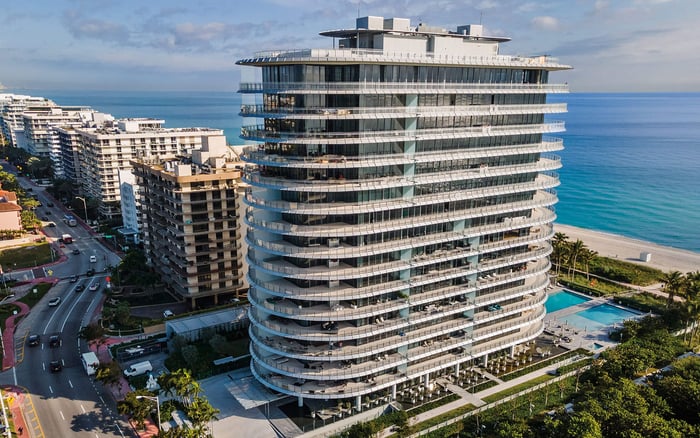
Eighty Seven Park Surfside is useful to buyers because it should be evaluated as a specific luxury condo product, not as generic Surfside shorthand. Its significance is not only that it sits within a desirable coastal setting. Its significance is that it gives the buyer a defined building identity against which long-term ownership questions can be tested.
For a livability-focused buyer, the evaluation begins with how the building’s identity aligns with real use. Does the residence feel like a sanctuary or a showcase? Does the scale of the experience support privacy? Does the project’s positioning feel durable enough to remain relevant as market cycles shift? These are not speculative questions. They are ownership questions.
Eighty Seven Park Surfside also matters because buyers at this level often compare across South Florida, not only within Surfside. Someone considering Surfside may also be aware of quieter high-design coastal options such as Arte Surfside or established luxury references nearby. The point is not to make every property compete on identical terms. The point is to understand how each one serves a different version of daily life.
Ocean House Surfside is the natural counterpoint in this discussion because it is another specific Surfside condo option for buyers evaluating long-term livability. Its role is not to defeat or duplicate Eighty Seven Park. Its role is to sharpen the buyer’s thinking.
When two properties sit inside the same broader residential logic, small distinctions carry weight. A buyer should consider how each building’s positioning feels in relation to personal use. Some owners want a residence that feels quiet and contained. Others want a stronger sense of presence. Some are buying for immediate lifestyle fit. Others are buying with future flexibility in mind. Ocean House Surfside belongs in that conversation because it helps make those preferences visible.
The most thoughtful buyers will avoid reducing the comparison to a single headline variable. Long-term livability is rarely decided by one feature. It is shaped by the total experience of ownership: how the property welcomes you, how it supports your routines, how naturally it accommodates guests, and how confidently it fits within Surfside’s residential character.
The value of comparing Eighty Seven Park Surfside and Ocean House Surfside lies in the discipline it imposes. Rather than chasing the newest claim or the most dramatic presentation, buyers can ask the same set of questions of both properties. Which one feels more aligned with the way we actually live? Which one will still feel appropriate after several seasons? Which one supports both privacy and access without requiring compromise?
That same discipline can extend to other Surfside references, including The Surf Club Four Seasons Surfside and The Delmore Surfside. Each name invites a different conversation about setting, service expectations, architectural presence, and the emotional tone of ownership. Yet the buyer’s central test remains constant: does the property make daily life easier, calmer, and more rewarding?
This is where experienced representation matters. A buyer may be drawn to a project for aesthetic reasons, but long-term fit depends on details that only become clear through careful comparison. The right residence should not require the owner to adapt too much to the building. It should allow the owner’s routines to unfold with minimal friction.
Long-horizon buyers in Surfside tend to think in layers. The first layer is lifestyle: beach proximity, neighborhood feel, privacy, and the quality of daily arrival. The second layer is durability: whether the building’s identity is strong enough to remain desirable as tastes evolve. The third layer is optionality: whether the residence can serve multiple phases of life, from seasonal use to longer stays, from quiet weekends to family gatherings.
Eighty Seven Park Surfside and Ocean House Surfside matter because they encourage this layered reading. They move the conversation away from short-term speculation and toward the more enduring question of how luxury is actually lived. In the best cases, a Surfside residence should feel neither transient nor overdetermined. It should offer enough distinction to feel special and enough restraint to remain comfortable.
For buyers focused on long-term livability, that restraint is powerful. It allows the residence to age with the owner rather than against the owner. It supports a form of luxury that is less about constant performance and more about consistency, privacy, and ease. In Surfside, those qualities are not secondary. They are the reason many buyers begin the search here in the first place.
Why do Eighty Seven Park Surfside and Ocean House Surfside matter to long-term buyers? They give buyers two specific Surfside condo options through which to evaluate comfort, privacy, and daily ownership fit.
Is this a ranking of the two properties? No. The comparison is intended to clarify buyer priorities, not to declare one property universally superior.
What should buyers focus on first when comparing them? Buyers should begin with how each property supports real daily use, including arrival, privacy, routines, and guest needs.
Does Surfside appeal more to full-time owners or seasonal residents? Surfside can appeal to both, especially when the buyer values a quieter coastal setting and long-term residential comfort.
Why is livability more important than short-term market excitement? Market excitement can fade, while a residence that fits daily life can remain valuable to the owner for years.
Should buyers compare Surfside with other South Florida markets? Yes. Comparing Surfside with other coastal areas can help clarify whether the buyer wants energy, privacy, scale, or calm.
What makes a luxury condo feel livable over time? A livable condo supports routines gracefully, offers comfort without excess friction, and feels appropriate beyond peak season.
Are project names enough to make a buying decision? No. A recognized project can start the conversation, but the final decision should depend on personal fit and property details.
How should a second-home buyer approach this comparison? A second-home buyer should consider ease of arrival, maintenance expectations, guest comfort, and whether the residence feels natural in repeated use.
Why does beach access matter in Surfside ownership? Beach access can shape the daily rhythm of ownership, especially for buyers who want the water to be part of ordinary life.
For a confidential assessment and a building-by-building shortlist, connect with MILLION.
If branded residences are on your mind — as a home or as an allocation — we would be glad to share what we are seeing, privately.
Begin a quiet conversation