Palm Beach social season can clarify what a South Florida pied-à-terre should do: provide privacy, service, flexibility and a polished Downtown Miami counterpoint.
Palm Beach social season has a way of sharpening residential priorities. From a distance, the calendar can appear effortless. In practice, it becomes highly specific: wardrobe changes, private dinners, charity evenings, waterfront weekends, art-forward gatherings, last-minute guests, and the constant need to move smoothly between households, clubs, hotels, and airports. For owners who already understand South Florida, the question is rarely whether to be here. It is where a second base should sit, and whether the current one is refined enough for the way life is actually lived.
That is where a better-positioned pied-à-terre in Downtown Miami begins to make sense. It is not a substitute for Palm Beach. It is a complement, one that can add urban rhythm, privacy, and immediate access to Miami’s dining, design, financial, and cultural circles without requiring the scale or obligations of another large residence. The best examples feel less like occasional apartments and more like personal headquarters: secure, serviced, beautifully edited, and ready when the season becomes dense.
For the ultra-premium buyer, this is not about convenience alone. It is about reducing friction while preserving discretion. A well-chosen Downtown Miami residence can make the broader South Florida lifestyle feel more composed, especially when Palm Beach commitments overlap with Miami evenings, business meetings, or visiting family.
In this context, better-positioned is not merely a pin on a map. It is the alignment of building, view, arrival sequence, service culture, and personal routine. A pied-à-terre should be easy to enter, easy to leave, and easy to maintain. It should support a life in motion without ever feeling temporary.
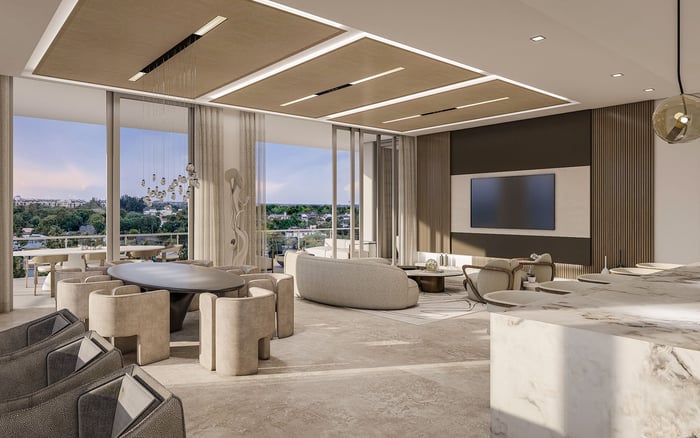
For some buyers, that means a high-floor residence with cinematic water and skyline outlooks. For others, it means a smaller, impeccably planned home with generous closet capacity, staff-friendly service access, private parking logic, and a building team that understands recurring but irregular occupancy. The strongest choices also hold their own architecturally. A pied-à-terre may be compact by estate standards, but it should never feel secondary.
Downtown Miami is especially compelling when the residence can serve multiple roles. It can be a place to spend the night after a Miami dinner, a quiet weekday base for business, a landing point for guests who want independence, or a polished urban retreat before returning north. That flexibility is the core value.
Palm Beach offers heritage, formality, and a social cadence that remains distinct in South Florida. Downtown Miami offers a different register: vertical, energetic, design-conscious, and increasingly defined by branded hospitality, architecture, and waterfront living. The point is not to compare them as equals. The point is to understand how well they can work together.
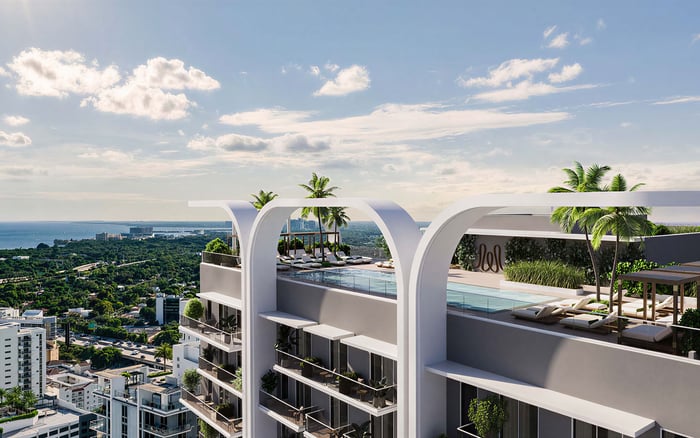
A residence such as Waldorf Astoria Residences Downtown Miami speaks to buyers who want a recognizable service language in a skyline setting. The appeal is not only the name on the building. It is the idea of returning to a residence that can absorb the practicalities of travel and entertaining while still feeling calm, elevated, and private.
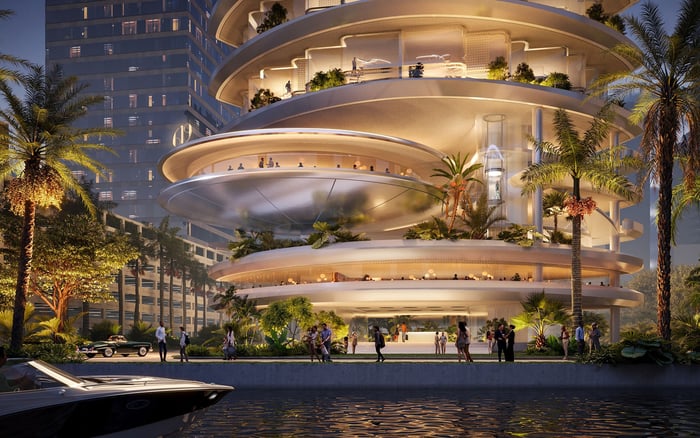
For those who prefer a sculptural presence on the waterfront, Aston Martin Residences Downtown Miami represents another version of the same logic: a Miami address that feels intentional rather than incidental. The right pied-à-terre should create a sense of arrival that matches the owner’s broader portfolio, even if the residence is used selectively.
Brickell often enters the conversation when the seasonal calendar has a business dimension. A South Florida owner may be in Palm Beach for society, family, and legacy reasons, yet still want a Miami base close to meetings, private dining, and the city’s international energy. In that case, Brickell can be less about nightlife and more about efficiency.
Residences such as The Residences at 1428 Brickell fit buyers who want a polished city address with a residential posture. The most relevant question is not simply whether the building is prestigious. It is whether the building supports the owner’s actual pattern: arriving for short stays, hosting selectively, maintaining privacy, and leaving without administrative drag.
Similarly, St. Regis® Residences Brickell may appeal to buyers who place a premium on service identity and hospitality fluency. For a pied-à-terre, service is not a decorative amenity. It is operational infrastructure. When the residence is used around a demanding Palm Beach calendar, the building must make a brief stay feel as complete as a longer one.
The old idea of a second home as purely occasional is too limited for today’s South Florida buyer. The more sophisticated approach is to see each residence as part of a system. Palm Beach may hold the formal residence, the family rituals, and the social center of gravity. Downtown Miami can provide the urban base, the overnight solution, the business address, and the private reset between engagements.
This logic also encourages discipline. Buyers should avoid acquiring more space than they need if the true goal is agility. A better pied-à-terre is often defined by precision rather than scale: the right primary suite, the right terrace, the right valet experience, the right storage, the right building culture, and the right level of anonymity.
Lifestyle matters, but the most elegant lifestyle is often the one with fewer points of resistance. If the Miami residence is difficult to access, over-programmed, under-serviced, or too dependent on short-term novelty, it will not serve the season well. The best pied-à-terre disappears into the rhythm of the owner’s life.
Investment should be considered, but not allowed to dominate the decision. In the ultra-premium segment, the most durable choices tend to combine scarcity, architectural credibility, service quality, and location relevance. A pied-à-terre selected only for future appreciation may fail the daily-use test. One selected only for emotion may lack long-term discipline.
The balance is to ask practical questions. Would this residence be desirable if used more often than expected? Would it accommodate a guest or family member without compromise? Is the building’s identity likely to remain clear over time? Does the address make sense within the owner’s Palm Beach-to-Miami pattern? Is the residence easy to lock, leave, and return to without a long reactivation process?
For many buyers, Downtown Miami and Brickell offer a clean answer because they provide a recognizable urban framework. The most successful purchase will not feel like an add-on. It will feel like the missing piece of a South Florida portfolio.
Begin with rhythm. Map the real season, not the idealized one. If Miami appears repeatedly in the calendar, even for short windows, a pied-à-terre may create more value than another hotel suite or a less conveniently placed residence. Then test the building against the owner’s habits: morning departures, late arrivals, wardrobe storage, privacy expectations, parking needs, pet logistics, staff coordination, and guest use.
Next, consider emotional tone. A Palm Beach owner may not want the Miami residence to mimic Palm Beach formality. It can be sleeker, more vertical, and more contemporary, provided it still feels quietly luxurious. The contrast is part of the appeal. The best Downtown Miami pied-à-terre gives the owner permission to live differently for a night or two without lowering standards.
Finally, be selective. A better-positioned pied-à-terre should reduce decisions, not add them. It should be ready, beautiful, and practical. In a season defined by movement, that is a luxury in itself.
Why would a Palm Beach owner consider a Downtown Miami pied-à-terre? It can provide a discreet urban base for Miami dinners, meetings, cultural plans, and overnight stays while preserving Palm Beach as the primary social anchor.
Is Downtown Miami a replacement for Palm Beach? No. For most buyers, Downtown Miami works best as a complementary address with a different rhythm, service profile, and urban purpose.
What matters most in a luxury pied-à-terre? Arrival experience, privacy, building service, storage, views, security, and ease of maintenance usually matter more than sheer square footage.
Should Brickell be considered alongside Downtown Miami? Yes. Brickell can be compelling for buyers whose South Florida routine includes business, private dining, and frequent Miami-based appointments.
How large should a pied-à-terre be? The right size depends on use, but precision often matters more than scale. The residence should support short stays without feeling compromised.
Can a pied-à-terre also serve guests? Yes, if the layout allows privacy and the building supports easy arrivals. Guest use should be considered before selecting the floor plan and location.
Is service more important for seasonal ownership? Service is critical because the residence may sit unused between visits. A strong building team can make each return feel seamless.
What type of buyer benefits most from this strategy? Buyers with Palm Beach commitments and recurring Miami needs often benefit most, especially when their calendar requires flexibility and discretion.
Should the purchase be viewed as lifestyle or investment? It should be both, but lifestyle fit should lead. A residence that does not work in practice rarely succeeds as a long-term hold.
When is the right time to start evaluating options? The best time is before the season exposes repeated friction. Buying ahead of need allows for a calmer, more selective search.
For a discreet conversation and a curated building-by-building shortlist, connect with MILLION.
If branded residences are on your mind — as a home or as an allocation — we would be glad to share what we are seeing, privately.
Begin a quiet conversation