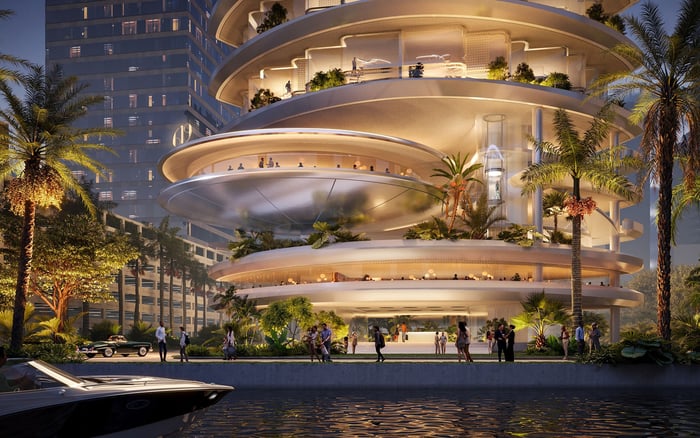
A buyer-focused look at how private arrival, Brickell Key seclusion, and Mandarin Oriental service culture shape the daily residential experience in Miami.
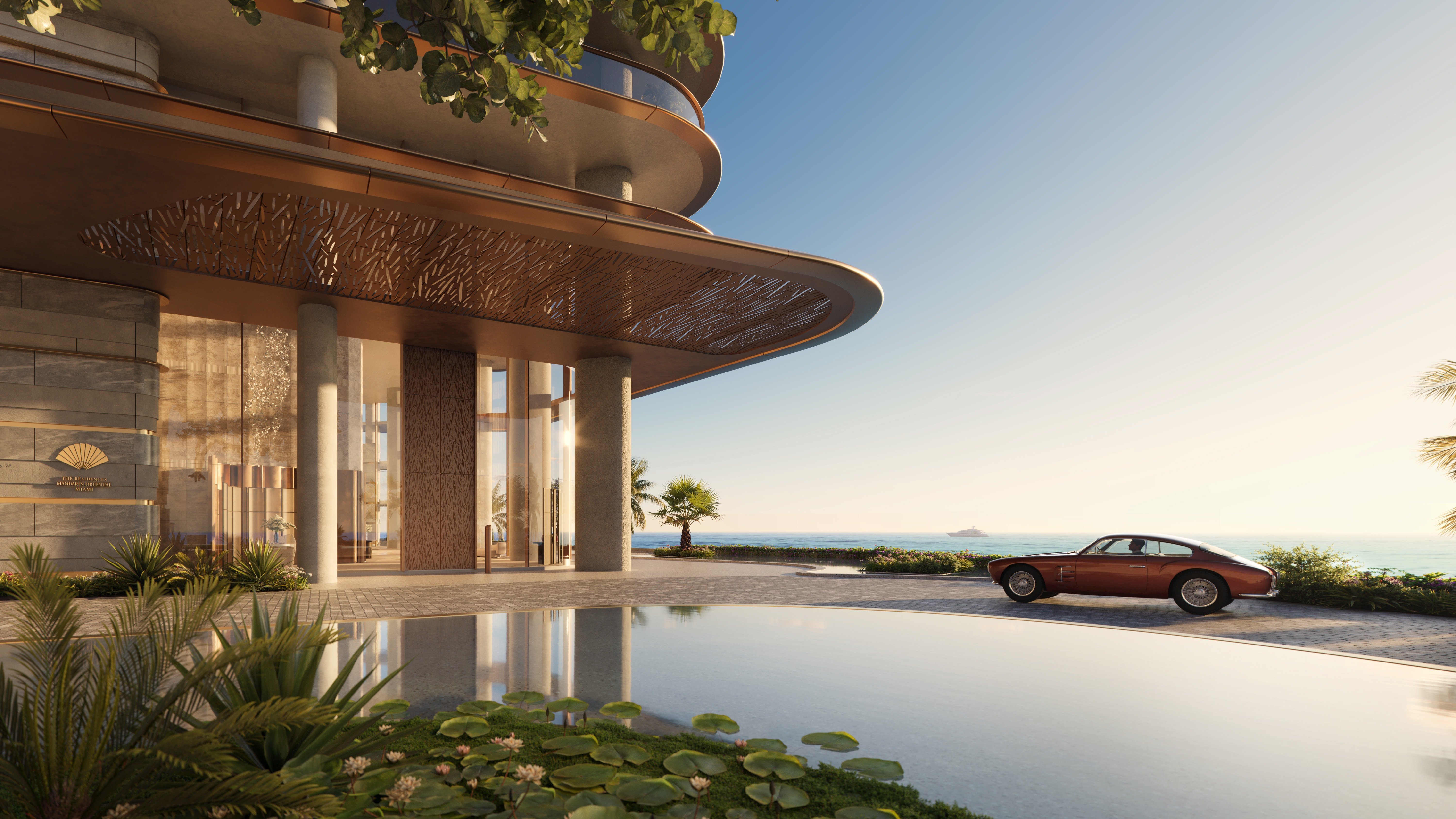
At the highest end of South Florida residential design, arrival is no longer secondary. It is the first amenity, the first layer of security, the first emotional cue, and often the clearest expression of how a building expects its residents to live. At The Residences at Mandarin Oriental, Miami, that idea carries particular weight. The project is positioned as an ultra-luxury waterfront residential address on Brickell Key, where the shift from mainland intensity to island privacy begins before a resident reaches the front door.
This is not simply a question of where cars stop. For buyers comparing Branded Residences across Miami, the choreography between bridge, island roadway, controlled access, porte-cochère, lobby, and private elevator becomes part of the ownership proposition. The sequence reveals whether a property understands discretion, whether it can support global travel patterns, and whether it can make daily life feel composed rather than improvised.
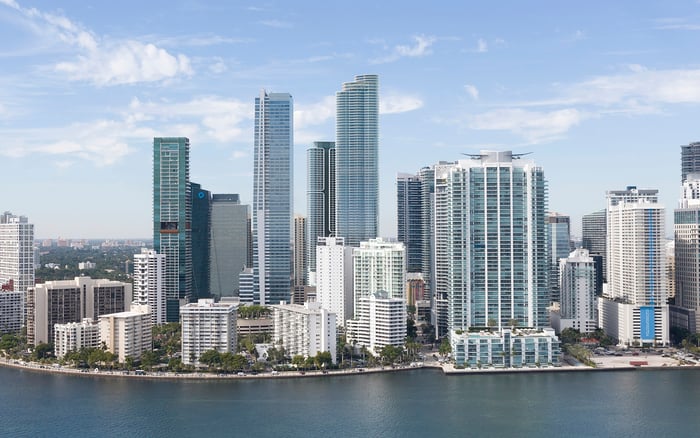
In Brickell, that distinction matters. The neighborhood offers one of Miami’s most energetic urban settings, but its pace can be relentless. Brickell Key’s appeal is proximity without full exposure. The island condition creates a physical and psychological threshold, allowing residents to remain connected to the financial and cultural core while returning to a more private sanctuary.
The resident experience begins with separation. Leaving mainland Brickell for Brickell Key introduces a subtle but meaningful change in rhythm: bridge, water, island roadway, and then the controlled approach to the residence. That progression gives the development a sense of retreat that would be difficult to replicate on a conventional downtown parcel.
For a buyer, this has practical implications. Privacy is not determined only by what happens inside the building. It starts with geography. Brickell Key’s physical separation helps reduce the feeling of being absorbed by the surrounding urban grid. By the time residents arrive at the porte-cochère, the setting has already done part of the work.
This is where The Residences at Mandarin Oriental, Miami differs from many mainland luxury towers. Projects such as Baccarat Residences Brickell and St. Regis® Residences Brickell speak to the strength of Brickell’s branded-residence market, but Mandarin Oriental’s island context gives its arrival narrative a more retreat-driven character. The value is not distance from the city. It is the ability to leave the city’s pressure at the edge of the island.
The Mandarin Oriental name brings expectations of service, but residential ownership requires a different kind of privacy than hotel hospitality. The project’s positioning emphasizes separation between residential life and transient guest activity, with private portals and circulation routes described as distinct from the movements of hotel guests.
For owners, that separation is essential. A luxury residence connected to hospitality must avoid the feeling of living inside a public environment. The strongest executions allow residents to benefit from service culture while preserving the intimacy of home. Arrival is where that balance becomes visible.
Private circulation supports several priorities at once. It can help manage discretion for residents, guide guests more smoothly, organize access to amenities, and reduce friction between daily domestic life and the more public nature of hotel-style operations. For globally mobile owners, it also makes the transition from airport, driver, or private vehicle to residence feel less exposed and more controlled.
New-construction buyers increasingly understand this distinction. Floor plans, views, and finishes matter, but the operational logic of the building can shape daily satisfaction just as strongly. A private elevator experience after a composed arrival can reinforce the sense that the residence is not merely high-end space, but a fully considered environment.
Mandarin Oriental’s residential appeal is closely tied to service, but in a private-home context, service should feel quiet rather than theatrical. The strongest luxury operations rely on recognition, memory, and anticipation. Residents should feel known without feeling observed.
That expectation begins at arrival. Staff recognition, guest handling, vehicle management, and access control are not background functions. They are part of the resident experience. A doorman or attendant who understands a resident’s patterns can make the difference between a building that feels expensive and one that feels genuinely personal.
The arrival path also acts as an important control point for privacy and security. At this level, discretion is not an abstract amenity. It affects how residents host, how family members move through the property, how service providers are handled, and how the building protects the quietness of daily life.
This is why arrival choreography has become one of the more meaningful differentiators among luxury developments. A buyer comparing The Residences at 1428 Brickell, Una Residences Brickell, and Mandarin Oriental is not only comparing architecture or skyline position. The buyer is also comparing the feeling of returning home.
Private arrival tells a prospective resident how the building thinks. A rushed drop-off can suggest congestion. An exposed lobby can suggest permeability. A poorly separated hospitality component can suggest future friction. By contrast, a layered arrival sequence suggests that the development has considered privacy as an everyday experience, not just a marketing word.
At The Residences at Mandarin Oriental, Miami, the sequence from the mainland to the island, then through controlled arrival and onward to private residential circulation, becomes a form of decompression. It allows the owner to move from the speed of Downtown Miami and Brickell into a more measured environment. That sense of transition is especially valuable for residents who divide time among multiple cities and want Miami to function as both an urban base and a private retreat.
The most successful lifestyle buildings in South Florida understand that luxury is often felt in small intervals: the seconds before the door opens, the ease of a guest being received, the absence of unnecessary exposure, the confidence that the residence can absorb complex lives with grace. Mandarin Oriental’s proposition on Brickell Key is built around those intervals.
For ultra-premium buyers, private arrival is not a decorative feature. It is a daily system. It shapes security, convenience, discretion, and emotional tone. On Brickell Key, where geography already creates a threshold from the mainland, The Residences at Mandarin Oriental, Miami uses arrival as an extension of its broader identity: secluded, service-driven, and connected to the city without being consumed by it.
That combination helps explain why the project belongs in any serious conversation about Miami’s next generation of Branded Residences. The address is not defined only by its waterfront position or hospitality name. It is defined by how those elements are orchestrated into the resident’s daily return home.
Where is The Residences at Mandarin Oriental, Miami located? It is positioned on Brickell Key, an island setting connected to mainland Brickell.
Why is private arrival important at this project? It supports privacy, security, discretion, and a calmer transition from city to home.
How does Brickell Key affect the resident experience? The island setting creates separation from the mainland before residents reach the building.
Is the arrival sequence part of the luxury identity? Yes, it is presented as part of the daily residential ritual, not just traffic management.
Does the project include hotel-style hospitality? The development is associated with Mandarin Oriental service culture and residential operations.
How is residential privacy addressed? Residents are described as having private portals and circulation distinct from hotel guests.
Who may value this arrival concept most? Globally mobile owners who prioritize discretion, guest handling, and smooth transitions may value it.
How does it compare with mainland Brickell towers? Its Brickell Key setting gives it a more secluded arrival experience within the urban core.
What does private arrival signal to buyers? It signals that the building considers privacy and service as part of everyday life.
Is this mainly about convenience? Convenience matters, but the larger value is the feeling of a controlled, discreet return.
When you're ready to tour or underwrite the options, connect with MILLION.
If branded residences are on your mind — as a home or as an allocation — we would be glad to share what we are seeing, privately.
Begin a quiet conversation