A refined buyer’s guide to evaluating neighboring development risk, from view corridors and construction exposure to resale liquidity and the private due diligence that protects long-term value.
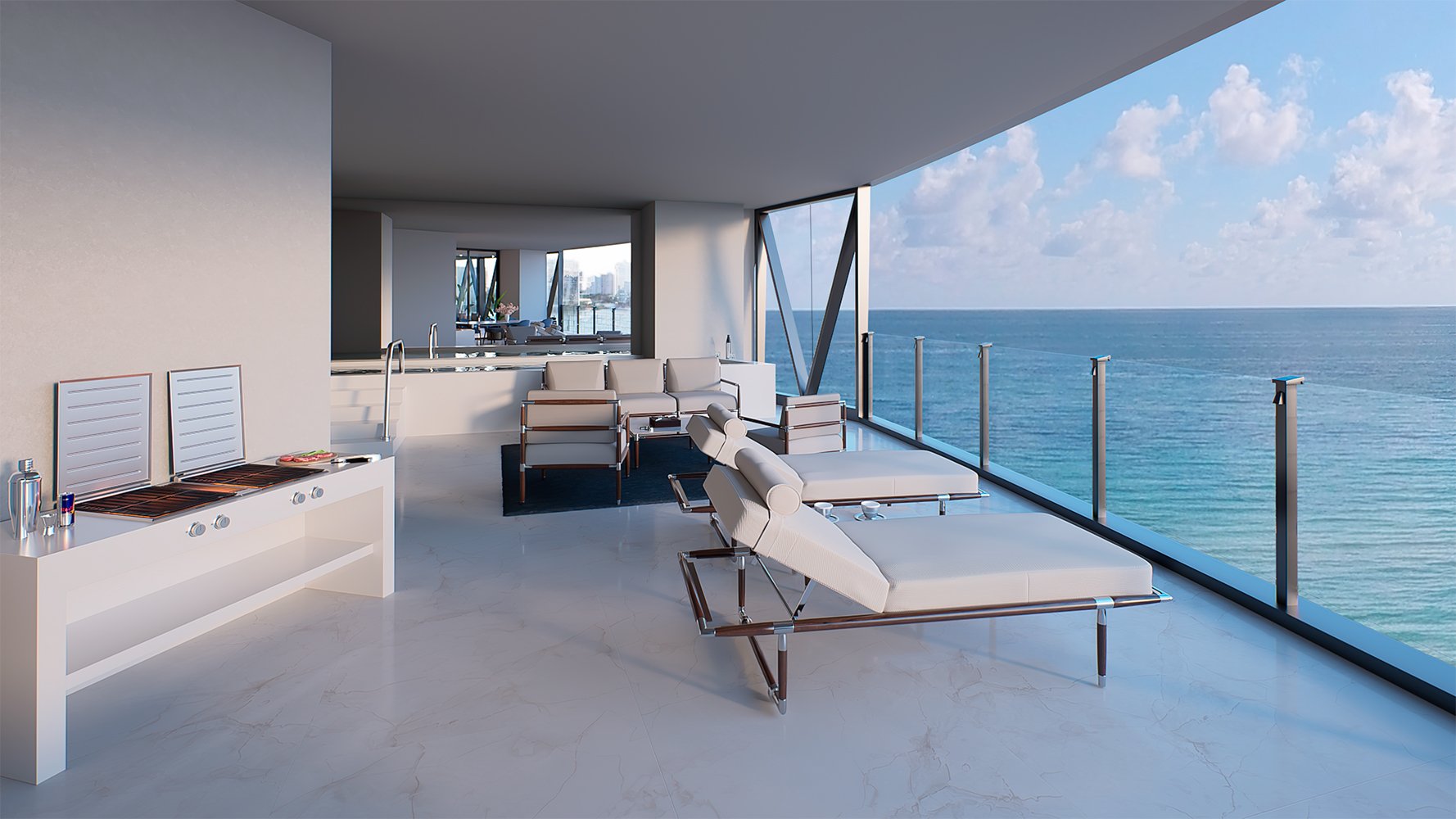
In South Florida, an oceanfront residence is rarely evaluated in isolation. The building, floor plan, service culture and finish package all matter, but the neighboring parcel can quietly reshape the real cost of ownership. A residence that feels serene during a private showing may live very differently if an adjacent site is redeveloped, if a view corridor changes, or if construction staging alters the daily rhythm of arrival, beach access and outdoor living.
This is not a reason to avoid oceanfront property. It is a reason to underwrite it with precision. The most sophisticated buyers look beyond the balcony line and ask what can happen next door, across the street and along the access route. Neighboring development risk is not a single threat. It is a matrix of privacy, light, sound, logistics, liquidity and optionality.
For buyers comparing Miami Beach residences such as The Perigon Miami Beach with other coastal opportunities, the question is not simply whether the residence is beautiful. It is whether the surrounding context supports the way the owner expects to live over time.
A premium oceanfront purchase often reflects scarcity, but scarcity has layers. Direct water frontage is one. A wide view is another. Protected sightlines, limited exposure to future vertical construction, discreet arrival sequences and a stable neighboring fabric can carry their own quiet value.
The real cost emerges when those elements are uncertain. A buyer may pay for a residence as though its light, privacy and horizon are permanent, while the surrounding parcel pattern suggests that change is plausible. If the market later reprices that uncertainty, the owner may face a softer resale audience or a narrower pool of buyers willing to accept the same exposure.
Waterfront ownership also involves emotional utility. Morning light, terrace privacy, the soundscape and the sense of retreat are part of what buyers believe they are acquiring. When nearby development interrupts those qualities, the financial issue is not only price per square foot. It is the diminished enjoyment of a home chosen for calm.
Not every view carries the same risk profile. A direct ocean view over a broad beach may behave differently from an angled water view across a neighboring site. A lower-floor residence may offer a more intimate connection to sand and landscape, but it can also be more exposed to nearby construction, mechanical areas, amenity decks or future structures. A higher-floor residence may preserve more horizon, yet still be affected by cranes, staging, dust and temporary noise.
Privacy deserves equal attention. In dense coastal markets, a residence can shift from secluded to visible if a new building introduces facing balconies or amenity areas. This is especially relevant for buyers who value large terraces, outdoor dining and primary suites with floor-to-ceiling glass. The architecture inside the unit may remain unchanged, but the experience of using it can become materially different.
In Surfside, where buyers often prize a calmer residential character, a comparison involving The Delmore Surfside should still include a careful read of neighboring lots, likely redevelopment patterns and the relationship between private outdoor space and surrounding elevations.
Construction next door is not only an inconvenience. It can influence the timing and cost of ownership decisions. A buyer planning to occupy immediately may assign a different value to a residence than a buyer who can tolerate a multi-season disruption. A seller who comes to market during adjacent construction may need to work harder to present the property’s long-term appeal.
There are practical frictions as well: valet flow, guest arrival, service access, outdoor amenity use, beach path convenience and the perceived quiet of common spaces. None of these necessarily changes legal ownership. Yet each can affect the daily experience that ultra-premium buyers are paying to secure.
This is where the phrase “real cost” becomes useful. The contract price is only the visible entry point. The real cost includes disruption risk, reduced flexibility, potential rental limitations for owners who rely on interim occupancy strategies, and the possibility that resale timing becomes less discretionary.
A disciplined buyer should study the setting from multiple angles. Walk the block. Arrive at different times of day. Look not only at the ocean, but also at side setbacks, vacant or underbuilt parcels, aging neighboring structures, access roads and service areas. Ask what the residence sees now, what it may see later and what future buyers will notice first.
In Sunny Isles Beach, where the skyline is already a defining part of the luxury proposition, residences such as St. Regis® Residences Sunny Isles invite a different question than a low-rise enclave might: does the buyer value a dramatic vertical setting, and has the surrounding height, density and exposure been considered as part of the purchase thesis?
This type of review belongs in every serious buyer’s guide conversation. It is not pessimism. It is the preservation of leverage before a deposit, inspection period or final negotiation narrows the buyer’s options.
The best properties are not risk-free. They are risk-understood. A buyer may accept neighboring development exposure if the residence offers compensating strengths: superior floor height, a rare floor plan, exceptional terrace depth, controlled arrival, strong building services or a location that remains compelling even if nearby parcels change.
In some cases, the right response is not to avoid a residence, but to refine the offer. In others, it may be to choose a different line, a different floor, or a building with a more defensible perimeter. Along quieter stretches such as Hillsboro Beach, evaluating Rosewood Residences Hillsboro Beach against its immediate surroundings requires the same rigor as evaluating a trophy tower in a denser market.
A residence with a slightly higher price but lower neighboring uncertainty can be less expensive in the long run than a seemingly attractive buy that carries unresolved context risk. The luxury buyer is not simply purchasing square footage. The buyer is purchasing control, or at minimum a clear understanding of where control ends.
Before committing, ask what could be built nearby, how access may be affected during construction, whether key views depend on another parcel remaining unchanged, and how privacy would feel if the adjacent site were redeveloped. Review condominium documents, public zoning information and building-site relationships with qualified advisers. For new development, ask how the sales gallery view compares with the real view from the selected residence and whether any neighboring change has been contemplated in the pricing.
The strongest purchase decisions combine desire with discipline. In South Florida luxury real estate, beauty is immediate, but context is what protects it.
What is neighboring development risk? It is the possibility that nearby construction or redevelopment changes a residence’s views, privacy, access, noise profile or resale appeal.
Does this risk only apply to vacant lots? No. Underbuilt sites, aging structures, assemblages and nearby access corridors can also influence future exposure.
Can a higher floor eliminate the issue? A higher floor can reduce some exposure, but it may not remove construction disruption, altered side views or changes in neighborhood feel.
Should buyers avoid buildings next to redevelopment sites? Not automatically. The key is to price the risk, understand the timeline and decide whether the residence has enough offsetting strengths.
How can privacy be affected? New balconies, amenity decks or facing windows can make terraces and glass-walled interiors feel more visible than they did at purchase.
Why does construction matter if I plan to hold long term? Even long-term owners experience daily disruption, and resale flexibility can be reduced if they need to sell during nearby work.
Is oceanfront always safer than bayfront? Not necessarily. Oceanfront can offer strong view value, while any waterfront setting still requires parcel-by-parcel analysis.
What should be reviewed before making an offer? Buyers should review neighboring parcels, zoning context, access routes, building orientation and the specific view from the selected residence.
Can this risk create an opportunity? Yes. A well-priced residence with clearly understood exposure may suit a buyer with the right time horizon and expectations.
Who should guide this analysis? Work with advisers who understand luxury buildings, local development patterns and the difference between visible beauty and durable value.
To compare the best-fit options with clarity, connect with MILLION.
If branded residences are on your mind — as a home or as an allocation — we would be glad to share what we are seeing, privately.
Begin a quiet conversation