A buyer-focused look at why Midtown Miami offers a measured alternative to direct oceanfront living, balancing beach access, urban convenience, wind exposure, and seasonal crowding for luxury buyers.
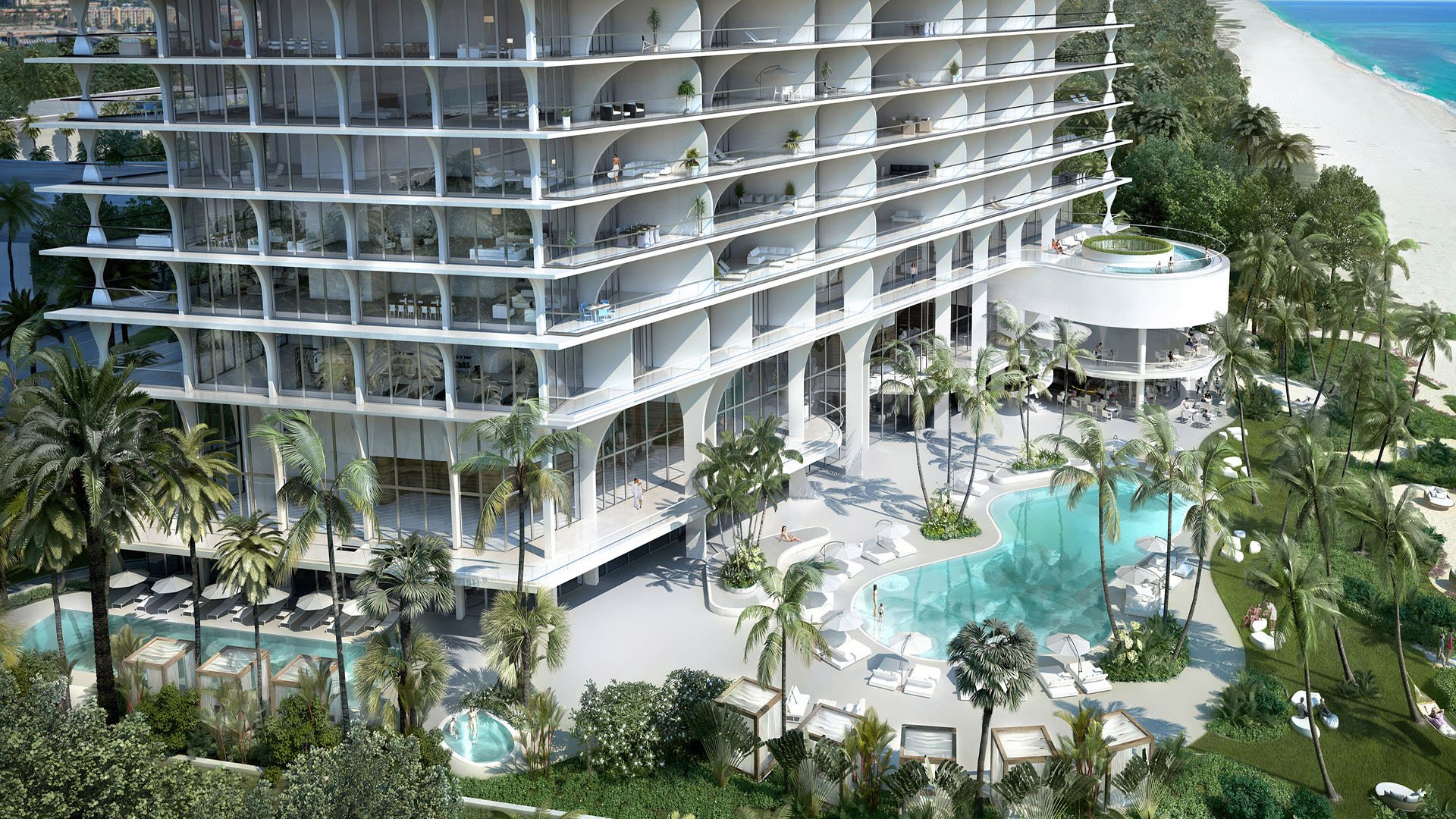
For many South Florida luxury buyers, the instinctive question is simple: how close can I live to the beach? The more sophisticated question is sharper. How close can I be to the beach while preserving comfort, convenience, privacy, and control over my calendar during the busiest months of the year?
Midtown Miami appeals because it reframes coastal living as access rather than exposure. It is not an oceanfront address, and for the right buyer, that is precisely the advantage. The neighborhood gives residents a Miami base with a more urban rhythm while keeping the coast firmly within the lifestyle orbit. The result is a residential strategy that feels less dependent on a single setting and more aligned with how affluent owners actually use the city.
That distinction matters in South Florida. Oceanfront ownership can be extraordinary, but it also carries tradeoffs: more direct weather exposure, more tourist pressure in select corridors, and daily patterns shaped by bridges, beach traffic, valet congestion, and seasonal surges. Midtown offers a different proposition. It lets the beach remain a pleasure, not a logistical commitment.
Beach access is often treated as binary. Either a residence is on the sand, or it is not. In practice, high-end buyers tend to think in gradients. They want to know how easily they can reach the water for a morning swim, a private club afternoon, a hotel lunch, or a family beach day, without making beach tourism part of every errand.
Midtown works well for owners who want the coast nearby but do not need the ocean to define every hour. A Midtown residence can support a week that includes Miami Beach, the Design District, Wynwood, Edgewater, and Brickell without requiring the owner to live entirely inside any one of those markets. That flexibility is especially valuable for second-home owners and seasonal residents who want variety without the burden of constant repositioning.
The appeal is clear in how buyers compare new residences across Miami. A purchaser considering Miami Design Residences Midtown Miami may also look at bay-facing or beach-adjacent alternatives, not because the products are identical, but because each solves a different part of the lifestyle equation. Midtown answers the everyday-use question: where can I live when I want Miami’s cultural, dining, wellness, and design energy close at hand, while keeping the beach as an option?
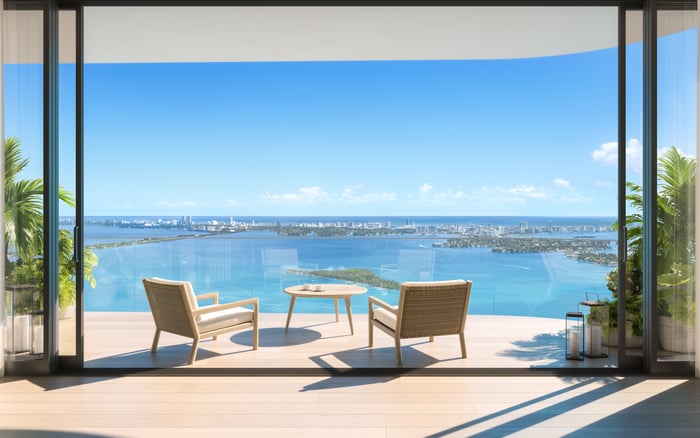
Direct waterfront and oceanfront living often command a premium because of views, light, and immediacy. Yet comfort is also a luxury metric. Buyers who spend extended time in South Florida learn to evaluate wind, salt air, balcony usability, terrace exposure, and the practical difference between a dramatic outlook and a space that can be enjoyed throughout the day.
Midtown’s inland position changes that conversation. It does not eliminate weather, and no serious buyer should think in absolutes. But it can reduce the sense of living on the front line of coastal conditions. For owners who prize a balcony for morning coffee, outdoor dining, or quiet evening use, the question is not only whether the view is impressive. It is whether the outdoor space feels usable often enough to matter.
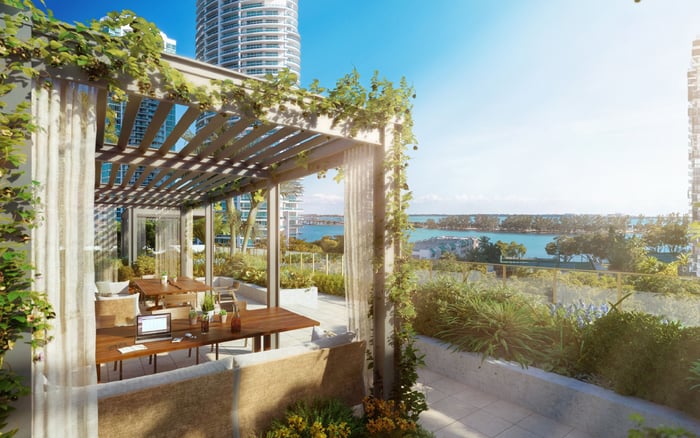
This is one reason urban Miami residences can compete with more obvious resort settings. They offer a less literal version of tropical living. A well-planned pool deck, shaded amenity areas, landscaped terraces, fitness, dining, and private lounge spaces can create a daily resort cadence without placing every experience at the mercy of oceanfront conditions.
Peak season changes South Florida. Restaurants become harder to book, valet stands lengthen, causeways slow, beach districts intensify, and casual plans require more orchestration. For luxury owners, the issue is not whether Miami is busy. The issue is whether the residence helps them manage the busy season with grace.
Midtown’s advantage is optionality. Residents can enter the beach environment when they want it and retreat from it when they do not. They can enjoy Miami Beach for a specific purpose, then return to a mainland address that feels less defined by transient beach demand. For buyers who split time between homes, this can be the difference between a residence that feels effortless and one that requires constant timing.
This is where comparisons become useful. Five Park Miami Beach speaks to the buyer who wants a Miami Beach life with a full expression of resort-adjacent urbanity. Midtown speaks to the buyer who wants proximity to that world without being absorbed by it. Neither position is inherently superior. The right answer depends on how often the owner wants the beach to be the center of gravity.
Midtown’s rise in the buyer conversation is not only about the beach. It is also about its relationship to neighboring luxury districts. Edgewater offers bayfront energy and a residential skyline that continues to attract attention. Brickell offers the city’s strongest high-rise financial and dining rhythm. Midtown sits in a more flexible lane, appealing to buyers who want an urban residence with less formality than Brickell and less waterfront dependency than Edgewater.
The Edgewater buyer often responds to water views and vertical scale. Projects such as Aria Reserve Miami and The Cove Residences Edgewater naturally attract clients who want a bay-oriented lifestyle. Midtown, by contrast, can feel more grounded in daily movement: design showrooms, restaurants, galleries, fitness, coffee, errands, and short hops across multiple neighborhoods.
Brickell brings another contrast. A buyer studying 2200 Brickell may want the polish and density of Miami’s financial core, with a residential product that supports a more metropolitan identity. Midtown is less corporate in feel. It is more relaxed, more design-driven, and often better suited to the buyer who values access to several Miami moods rather than allegiance to one.
New construction in Midtown can be especially compelling when it pairs modern residential programming with a location that avoids overdependence on the beach. Buyers increasingly assess not only finishes and views, but also the daily life around the building. Can guests arrive easily? Can owners dine nearby without crossing water? Can a weekday feel as satisfying as a Saturday? Can the home serve both seasonal use and regular living?
Midtown’s strength is that it does not need to overstate itself. It is not pretending to be a private island, a historic oceanfront enclave, or a financial district. Its luxury is practical and contemporary. It gives the owner a central base from which Miami can be edited daily.
For some, that will never replace the emotional pull of the sand. For others, it is precisely the smarter answer. The beach remains close enough to enjoy, wind exposure becomes a more nuanced variable, and peak-season crowding is something to engage selectively rather than endure constantly.
Is Midtown Miami a good fit for buyers who still want beach access? Yes. Midtown is best for buyers who want the beach within their lifestyle pattern, without making an oceanfront address the organizing principle of daily life.
Does Midtown replace Miami Beach for luxury buyers? No. It offers a different solution, especially for owners who want mainland convenience and selective access to Miami Beach rather than full-time beach immersion.
Why might a buyer prefer Midtown over direct oceanfront living? A buyer may prefer Midtown for easier everyday movement, reduced reliance on beach corridors, and a more urban residential rhythm.
Is wind exposure still a consideration in Midtown? Yes. Weather matters throughout South Florida, but Midtown may feel less directly exposed than oceanfront or open-water settings.
How should buyers evaluate balcony usability? Buyers should consider orientation, shade, surrounding exposure, privacy, and whether the outdoor space supports their actual daily routine.
Does Midtown work for seasonal residents? Yes. Seasonal residents may appreciate being able to enjoy the beach, dining, galleries, and mainland neighborhoods without committing to one traffic pattern.
How does Midtown compare with Edgewater? Edgewater is more bay-oriented, while Midtown is more urban and flexible, with a stronger emphasis on access across nearby neighborhoods.
How does Midtown compare with Brickell? Brickell feels denser and more business-centered, while Midtown generally appeals to buyers seeking a design-forward, less formal Miami base.
Is Midtown mainly for primary residences or second homes? It can serve both. The key is whether the buyer values convenience, cultural proximity, and controlled access to the beach environment.
What is the best way to shortlist comparable options for touring? Start with location fit, delivery status, and daily lifestyle priorities, then compare stacks and elevations to validate views and privacy.
To compare the best-fit options with clarity, connect with MILLION.
If branded residences are on your mind — as a home or as an allocation — we would be glad to share what we are seeing, privately.
Begin a quiet conversation