A buyer-focused guide to reading past view rhetoric, renderings and sales-floor language when a luxury condominium may face future or existing neighbor-tower exposure.
In South Florida luxury real estate, exposure is a language of seduction. Sales galleries speak in sunsets, bay glimmers, skyline drama and ocean orientation. Yet the most consequential question is often quieter: what is, or could be, immediately next door?
Neighbor-tower exposure is not a flaw by default. In Brickell, Edgewater, Miami Beach and other vertical neighborhoods, proximity is part of the urban contract. The issue is whether a buyer understands the difference between a protected panorama, a partial corridor, a temporary view and a composition that depends on a neighboring parcel remaining unchanged.
Marketing theater begins when those distinctions are blurred. A rendering may show atmosphere rather than adjacency. A floor plan may celebrate glass without clarifying sight lines. A residence may be described as having water views, yet the daily experience may depend on a narrow angle from the balcony rather than the primary living room. For buyers operating at the top of the market, the task is not to be cynical. It is to be exact.
Certain phrases should prompt sharper questions. “Open views” can mean unobstructed, but it can also mean open today. “City and water exposure” may describe a mixed view, not a commanding one. “Select residences” can be meaningful, or it can indicate that only certain stacks enjoy the stronger outlook. “Protected views” should never be accepted as a mood. It should be tied to physical, legal or practical constraints a buyer can understand.
The most elegant buyer response is simple: ask what sits in front of each principal room today, what can be built nearby, and how the advertised view has been evaluated from the actual floor or stack. When reviewing a Brickell residence such as The Residences at 1428 Brickell, the question is not only whether the tower is compelling. It is how each exposure behaves across living, dining, primary suite and terrace.
High floors can help, but they are not magic. A higher residence may clear one obstruction while becoming more exposed to another tower across a corridor. Lower floors may offer intimacy, greenery or architectural foreground, but can suffer from direct privacy conflicts. The right answer depends on the stack, angle and neighboring massing.
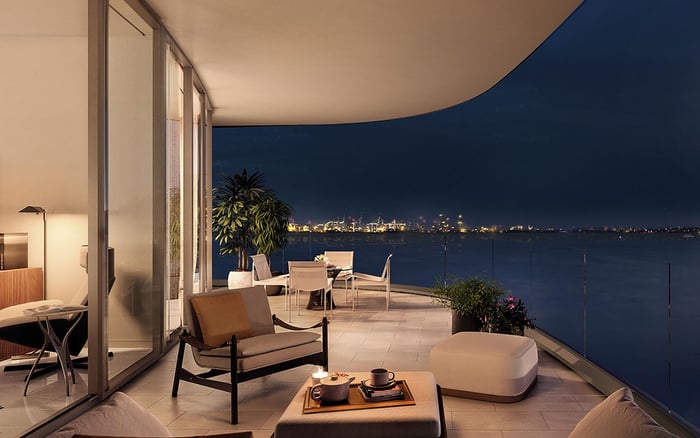
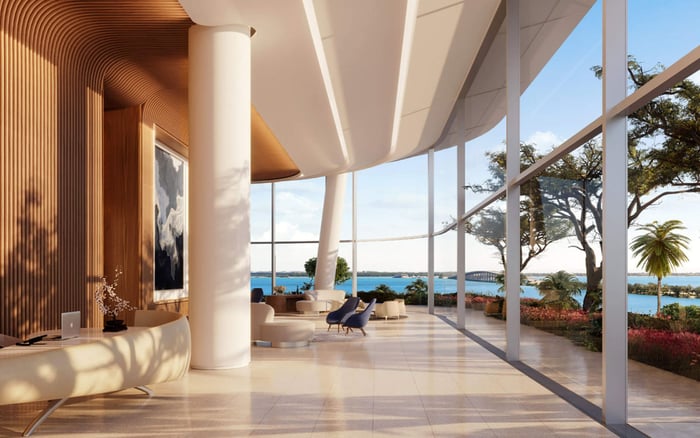
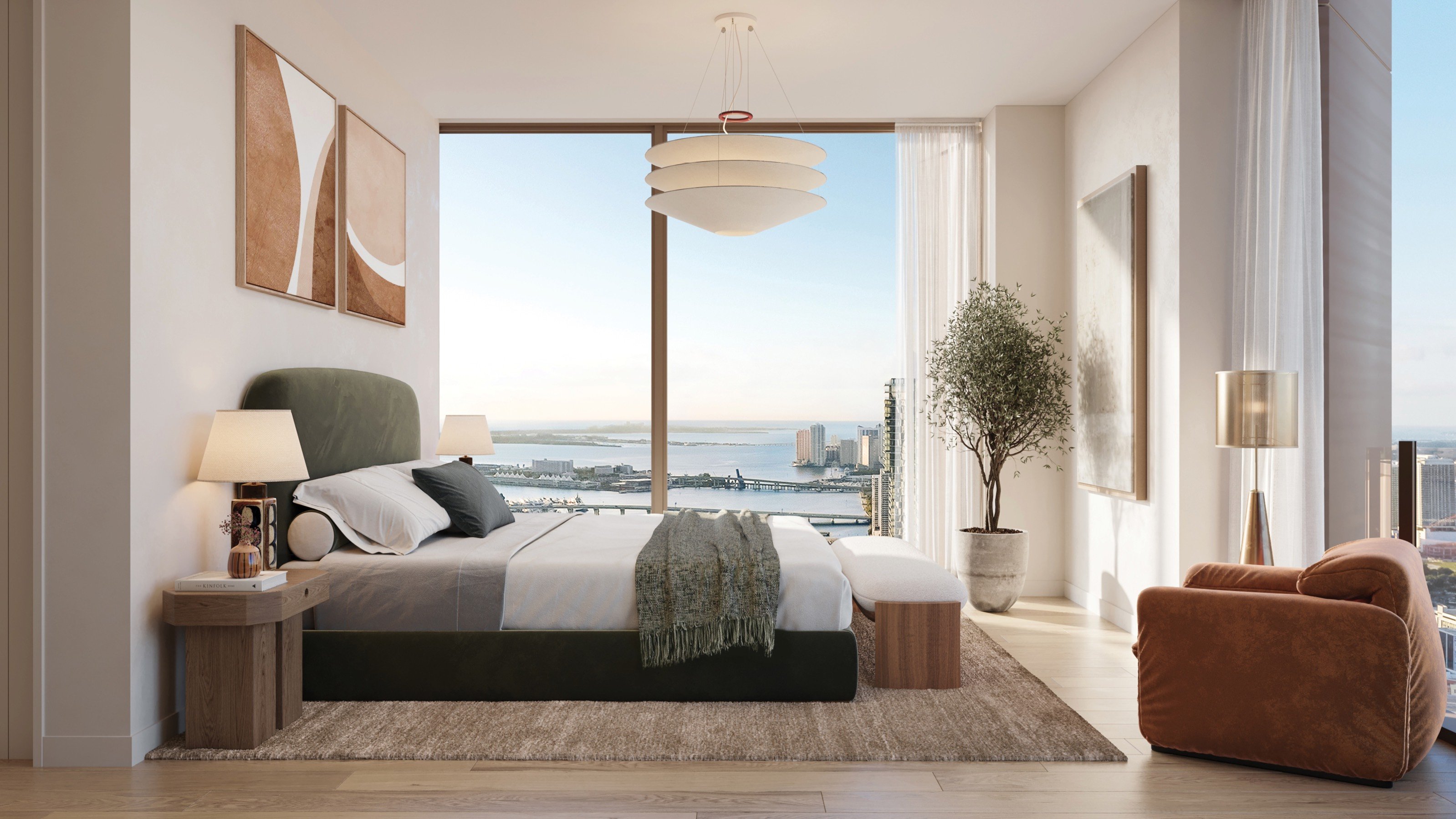
A beautiful rendering can be truthful and still incomplete. It may emphasize horizon, light and lifestyle while minimizing the visual weight of adjacent structures. The buyer should look for context: neighboring towers, blank walls, podiums, amenity decks, parking structures and future construction sites. If those elements are absent or softened, the rendering is not necessarily false. It is simply not enough.
Scale models can also mislead when viewed from flattering angles. Stand over the model. Look from the side. Ask where your line of sight travels when seated, not only when standing at the glass. Luxury life happens at dining tables, sofas, beds and terraces. A view that works only from a perfect corner pose may not justify a premium.
In Edgewater, for example, where towers can create layered skyline and bay compositions, a buyer considering Villa Miami should study how the residence sits within the broader field of neighboring buildings. The strongest exposures often feel generous not because nothing exists nearby, but because spacing, angle and room orientation preserve privacy and depth.
Marketing tends to price views, but sophisticated owners also price privacy. Two residences can have similar water angles, yet one may feel serene because it looks across distance, while another feels performative because a neighboring tower looks back into the primary suite.
Privacy should be evaluated room by room. The primary bedroom matters differently from a formal living area. A bathroom wall of glass may look spectacular in a presentation, but the buyer should understand what is visible at night when interiors are illuminated. Balcony depth, column placement, screening, glazing, landscaping and terrace geometry can all influence the lived experience.
This is where new construction deserves special care. Early buyers often select from plans and imagery before the final built environment can be physically experienced. That can be an advantage when the best lines are still available, but only if the exposure analysis is disciplined.
A residence should be evaluated not only for how it will feel at closing, but how it will be explained at resale. If the view premium rests on vague language, the next buyer may discount it. If the exposure is legible, defensible and easy to demonstrate, it becomes part of the property’s enduring value.
The resale test is practical: can the view be described in one clean sentence without overpromising? “Wide bay exposure from the main living areas” is stronger than “water glimpses from select angles.” “Set above neighboring podium height” is clearer than “elevated city views.” A luxury buyer should favor exposures that survive direct language.
For Miami Beach buyers weighing a project such as The Perigon Miami Beach, the emotional pull of design should be paired with a calm reading of orientation. Oceanfront, bayfront and urban-edge settings each carry different exposure risks. The premium should reflect that difference.
Ask for the actual stack, not only the model residence. Ask how the view changes from the living room, kitchen, primary suite and terrace. Ask what sits on neighboring parcels and what development rights or practical limitations may shape future construction. Ask whether any view language is tied to a specific floor range.
Also ask to compare multiple lines within the building. Sometimes the most expensive view is not the most livable. A slightly angled residence may offer better privacy. A corner may provide drama but more cross-exposure. A deeper terrace may create shade and discretion, while a shallow balcony may function more as a viewing platform than an outdoor room.
In Sunny Isles, where vertical luxury often meets dramatic coastal outlooks, a buyer studying Bentley Residences Sunny Isles should separate brand magnetism from exposure mechanics. Both can matter. Only one determines what you see every morning.
The best buyers do not reject density. They read it. They understand that South Florida’s most desirable districts are shaped by water, scarcity and vertical design. They know that a neighboring tower can frame a view, diminish it, or make a residence feel more private depending on position.
They also recognize when marketing is asking them to admire a mood instead of assess a condition. Theater relies on distance, gloss and abstraction. Diligence relies on orientation, setbacks, sight lines and plain speech. When those elements align, a residence can justify its premium with confidence.
The goal is not to buy the highest floor or the loudest view claim. It is to buy the exposure that will age well, live well and explain itself without choreography.
What is neighbor-tower exposure? It is the visual, privacy and light relationship between a residence and nearby existing or potential towers.
Is neighbor-tower exposure always negative? No. It can frame a skyline or add urban texture, but it must be understood before pricing the residence.
What is marketing theater in this context? It is presentation language or imagery that emphasizes mood while minimizing practical view and privacy limitations.
Are higher floors always safer for views? Not always. High floors may clear certain obstructions but still face another tower at a meaningful angle.
How should I evaluate a rendering? Look for neighboring buildings, realistic sight lines, podiums and the view from seated positions, not only dramatic angles.
Why does privacy affect value? Privacy influences daily comfort and can shape how future buyers perceive the residence’s desirability.
What room matters most for exposure? The primary living area and primary suite usually carry the greatest lifestyle and resale weight.
Can a partial water view still be valuable? Yes, if it is honest, attractive and priced appropriately relative to more open exposures.
What should I ask before signing? Ask what exists nearby, what could change, and how the advertised exposure applies to your exact stack and floor.
Should I avoid dense neighborhoods? No. The key is to distinguish desirable urban layering from exposure that compromises privacy, light or resale.
To compare the best-fit options with clarity, connect with MILLION.
If branded residences are on your mind — as a home or as an allocation — we would be glad to share what we are seeing, privately.
Begin a quiet conversation