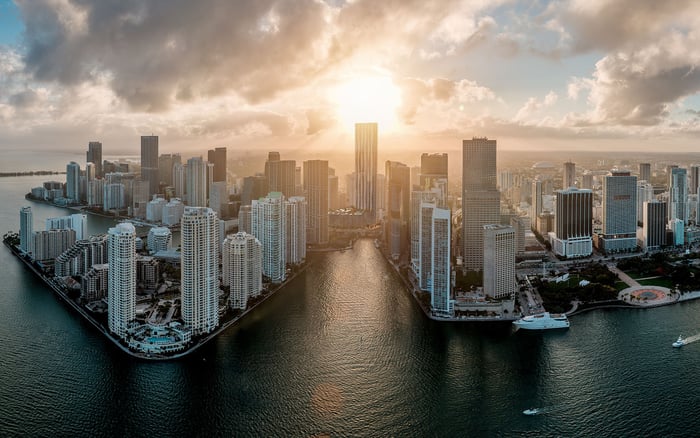
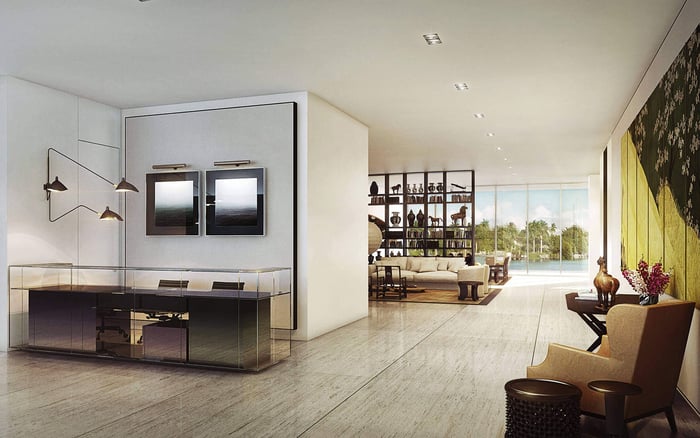
A discreet guide for luxury condo buyers evaluating security beyond the lobby, with practical questions for access, staffing, privacy, amenities, garages, vendors, and daily living in South Florida towers.

For many South Florida luxury condo buyers, security once began and ended with a polished lobby desk. A courteous doorman, a gated porte cochère, and a familiar valet were enough to suggest a building was well managed. Today, that standard is incomplete. The most desirable residences are judged not only by the presence of security, but by how intelligently it is integrated into daily life.
The best systems are discreet. They do not make residents feel watched, delayed, or inconvenienced. Instead, they create quiet confidence from the moment a car enters the property to the moment an owner steps into a private elevator landing. For buyers comparing towers in Brickell, Miami Beach, Sunny Isles, Surfside, and beyond, security deserves the same scrutiny as floor plans, views, finishes, and service culture.
When evaluating urban residences such as 2200 Brickell or Baccarat Residences Brickell, the question is not simply whether staff is present at the front desk. The more useful question is whether the entire property operates as a layered environment, with access, privacy, movement, and response all considered.
A doorman is a human welcome point, not a complete security strategy. Luxury buyers should look for multiple layers of access control, beginning at the property perimeter and continuing through the garage, lobby, elevators, amenity areas, residential corridors, and private residences.
Layering matters because the lobby is only one route into a building. Residents, guests, vendors, domestic staff, maintenance teams, food deliveries, rideshare drivers, and amenity visitors may all move through different entry points. A well-considered building has separate procedures for each category, rather than relying on informal recognition or ad hoc staff judgment.
Ask how guests are announced, how access is approved, and whether permissions can be limited by time, floor, or destination. Ask whether elevators can be programmed to specific residential levels. Ask how the building manages after-hours arrivals, private events, and high-profile residents who require additional discretion. A luxury building should feel effortless, but that ease should be supported by clear rules.
In South Florida, the garage is often the true front door. Owners may arrive by valet, self-park, private driver, or house car. Visitors may enter through a separate lane. Service providers may pass through loading areas that residents never see. If the garage is poorly controlled, even the most elegant lobby loses much of its value.
Buyers should ask where resident vehicles are identified, where guest vehicles are screened, and how valet keys are managed. The best buildings separate convenience from vulnerability. That means clear vehicle flow, documented access procedures, controlled elevator connections, and staff who understand the difference between hospitality and casual familiarity.
For buyers considering waterfront or high-visibility addresses such as Bentley Residences Sunny Isles, vehicle circulation may be central to the daily experience. The garage should be evaluated not only for convenience and capacity, but also for privacy, lighting, camera placement, staff oversight, and how nonresidents are directed.
In the ultra-premium market, vertical movement is a defining part of security. A private elevator vestibule can be an elegant amenity, but buyers should understand how it performs in practice. Who can call the elevator? Can a guest reach a residential floor without staff approval? Are service elevators separated from resident elevators? Are amenity levels accessible to all residents, or controlled by time and reservation status?
The most secure buildings reduce unnecessary circulation. Residents should not have to share private corridors with delivery personnel. Vendors should not wander between floors. House staff should have a clear, authorized path that respects both efficiency and privacy.
This is especially relevant in buildings where amenities are extensive and daily movement is complex. A tower can offer exceptional lifestyle programming, but each additional space creates another access point to manage. Security is not the opposite of hospitality. It is what allows hospitality to remain graceful.
For luxury buyers, security is also about information. Who knows when an owner is in residence? Who has access to guest names, vehicle details, delivery schedules, service requests, and package history? How are staff trained to protect resident privacy? How are conversations at the desk handled when other residents or guests are nearby?
A building can have cameras, locks, and patrols, yet still fail at discretion. Buyers should listen closely during tours. If staff casually discuss residents, owners, or notable visitors, that is a warning sign. A refined building culture treats privacy as a core amenity, not an afterthought.
In markets such as Miami Beach, where residences may serve as primary homes, seasonal homes, or pied-à-terre properties, confidentiality becomes even more important. Buyers comparing The Perigon Miami Beach with other coastal addresses should ask how the building handles extended absences, guest stays, deliveries when owners are away, and authorization for household teams.
Pools, spas, wellness areas, screening rooms, private dining rooms, children’s spaces, lounges, beach clubs, and fitness studios all require their own security logic. The goal is not to make every door feel controlled. The goal is to ensure that residents and approved guests are the only people enjoying the private world they are paying for.
Ask whether amenities are accessed by key, app, staff escort, reservation, or resident recognition. Ask how events are handled and whether outside guests are limited. Ask how staff distinguish between a resident’s invited guest and someone who has simply followed another party through a door.
A strong amenity protocol is especially important in buildings with resort-style programming. Luxury owners want ease, but they also want confidence that private amenities remain private. That balance is one of the clearest signs of sophisticated building management.
South Florida’s most coveted settings often involve water: oceanfront, bayfront, Intracoastal, canal, or marina-adjacent living. These settings bring beauty, light, and lifestyle, but they can also introduce additional access considerations. Buyers should ask how the property controls beach access, promenade access, dock areas, pool decks, service gates, and exterior stairways.
In Surfside, for example, the intimate scale of the neighborhood can be part of its appeal, but buyers should still examine how a property separates public surroundings from private residential life. When considering addresses such as The Delmore Surfside, a buyer should look closely at the transition from street, sand, or waterfront edge into the controlled residential environment.
Security should never interrupt the romance of the water. It should quietly frame it.
Technology is only as strong as the people operating it. A buyer should ask about staffing levels, supervisory structure, overnight coverage, emergency procedures, vendor check-in, package handling, and resident communication. The question is not whether the staff seems pleasant during a sales tour. The question is whether the service culture can remain consistent on a holiday weekend, during a storm, late at night, or when multiple residents are hosting guests.
Consistency is a luxury. It is also a security feature. If rules change depending on who is at the desk, residents quickly learn to work around the system. A well-run building makes the right behavior easy and the wrong behavior difficult.
New-construction buildings may offer more current access technology, integrated apps, and cleaner separation between resident, guest, and service circulation. Resale buildings may offer established staff, mature operating routines, and a known building culture. Neither category is automatically superior.
The sharper buyer studies execution. In a new building, ask how protocols will be implemented after opening, not only what systems are being installed. In an established building, ask whether procedures have evolved with resident expectations. Security should not feel frozen in time.
A serious security review does not need to be theatrical. It should be calm, precise, and practical. Ask how the building manages guest authorization, vendor access, package delivery, valet operations, elevator control, amenity entry, beach or waterfront access, extended absences, emergency alerts, and staff discretion.
Then observe. Watch how the desk handles visitors. Notice whether doors are propped open. See whether delivery workers move independently or are directed. Look at sight lines in the garage. Consider whether the building feels serene because it is well controlled, or merely polished because the tour is being staged.
The best security is not obvious. It is embedded in the choreography of the building.
Is a doorman enough security for a luxury condo? No. A doorman is only one layer. True security also includes access control, staffing, elevators, garages, vendors, amenities, and privacy procedures.
What is the first security question a buyer should ask? Ask how guests, vendors, deliveries, and service providers are authorized and tracked from entry to destination.
Why is garage security so important in South Florida condos? Many residents enter through valet or parking areas, so the garage often functions as a primary residential entrance.
Should buyers prioritize private elevators? Private elevators can enhance privacy, but buyers should understand how access is controlled and who can reach each residential level.
How should amenity access be managed? Amenities should be easy for residents to use while remaining limited to residents and approved guests through clear procedures.
What matters most in waterfront condo security? Buyers should review exterior access points, beach or dock transitions, pool decks, gates, and how public edges are separated from private areas.
Is technology more important than staff? No. Cameras, apps, and access systems need trained staff and consistent protocols to be effective.
How can a buyer assess privacy during a tour? Listen to how staff speak about residents and observe whether personal information is handled discreetly.
Are new buildings always more secure than older buildings? Not necessarily. New buildings may have newer systems, while established buildings may have stronger operating habits and experienced teams.
What is the sign of a well-secured luxury condo? It feels calm, private, and effortless, with security present in the background rather than performed in the foreground.
For a discreet conversation and a curated building-by-building shortlist, connect with MILLION.
If branded residences are on your mind — as a home or as an allocation — we would be glad to share what we are seeing, privately.
Begin a quiet conversation