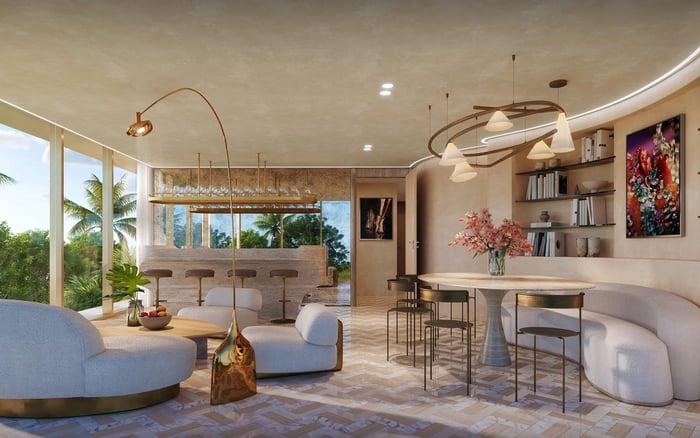
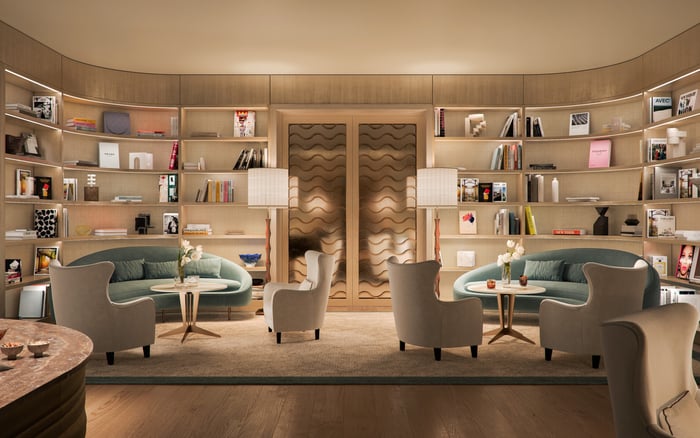
Teen lounges are becoming a practical marker of family-ready luxury, offering privacy, flexibility, and quieter daily flow in South Florida residences.
For years, family living in luxury real estate was framed around bedroom count, outdoor space, staff circulation, and proximity to school. Those still matter. Yet for South Florida buyers raising older children, a more practical question is becoming harder to ignore: where do teenagers actually go?
A better teen lounge is not a novelty room. It is a pressure valve for the household. It gives adolescents a place to decompress, study casually, stream, snack, talk, and host a small group without overtaking the main salon, kitchen island, or primary media room. In a market known for spectacular entertaining spaces, the teen lounge adds something more useful: everyday family grace.
The strongest examples are not childish. They are composed, flexible, and durable, with a design language that can outlast changing tastes. Think deeper seating, forgiving materials, layered lighting, acoustic separation, closed storage, and enough visual polish for the room to feel integrated into the residence. For families considering city residences such as 2200 Brickell, the teen lounge conversation is really about making vertical living feel less compressed and more intuitive.
The best teen spaces respect the developmental reality of older children: they want independence, while parents still want proximity. A successful lounge sits between total exposure and total isolation. It should not occupy the center of the formal living room, but it also should not feel like a forgotten back room.
In single-family homes, that may mean a second-floor loft, a cabana-level lounge, or a flexible den near secondary bedrooms. In condominiums, it may be a converted family room, a secondary suite used more loosely, or a building amenity that gives teenagers a destination beyond the apartment. The key is legibility. Parents should understand sightlines, access points, noise transfer, and how easily the space can be supervised when needed.
This is especially important in South Florida, where social life often extends across school communities, beach days, sports, boating, and weekend dinners. A lounge that can host three friends after class is different from a cinematic screening room meant for adults. Better teen lounges are casual by design, but never careless.
A teen lounge does not need to be large to work. It needs to be specific. A sectional in washable performance fabric may matter more than an extra chandelier. A pair of movable ottomans may be more useful than fixed theater seating. A narrow counter with a beverage refrigerator, concealed trash, and snack storage can keep the main kitchen from becoming a constant traffic zone.
Lighting deserves particular attention. Teen rooms often fail because they are too bright, too dark, or too dependent on a single overhead fixture. Layered lighting lets the same room shift from homework to gaming to a quiet movie night. Window treatments matter as well, especially in bright coastal residences where glare can make screens difficult and heat gain can affect comfort.
Acoustics are another understated luxury. Soft surfaces, rugs, drapery, upholstered walls, and thoughtful door placement can protect the rest of the home from music, calls, and late-night laughter. The goal is not silence. It is containment. A family residence should allow different rhythms to coexist.
In condominium living, the teen lounge may be inside the residence, part of the amenity program, or both. For family buyers, the distinction matters. An in-unit lounge offers privacy and control. A shared amenity space offers scale, social variety, and a neutral setting where teenagers can gather without every visit becoming an event inside the home.
The most thoughtful buyers look beyond whether a building has a media room or game room. They ask how that space is positioned, how formal it feels, whether it is welcoming to teenagers, and whether it can be used naturally on a weekday afternoon. A room that is too adult, too ceremonial, or too hidden may photograph beautifully and still be underused.
Beach-oriented residences such as The Perigon Miami Beach raise another practical issue: transition. After the beach, pool, or sports, teenagers need places to land without dragging wet towels, equipment, and casual noise into the most formal parts of the home. In Miami Beach living, the teen lounge often works best when considered alongside storage, laundry access, elevator arrival, and outdoor circulation.
For many families, the real test of a teen lounge is not Saturday night. It is Monday through Thursday from 4 p.m. to 10 p.m. That is when school bags, tutoring, friends, sports gear, music, dinner, and screens collide.
A useful lounge supports the private-school schedule without turning the residence into a dormitory. It should allow a teenager to start homework, join a video call, eat something informal, and take a break without occupying five different rooms. Parents should be able to set boundaries without constant negotiation over where everything happens.
This is where floor plan discipline becomes a luxury. A lounge near secondary bedrooms may protect the primary suite. A lounge near the kitchen may encourage casual family contact. A lounge near an entry may work for active teenagers coming and going, provided storage is planned well. There is no universal answer, but there is always a best answer for a specific household.
Different South Florida neighborhoods change the brief. In Brickell, where many families choose high-rise convenience, a teen lounge can soften the intensity of urban living by giving older children their own retreat. In Coconut Grove, where indoor-outdoor life and village-scale routines often matter, the lounge may be more relaxed, connected to terraces, gardens, or flexible family rooms. A residence such as The Well Coconut Grove belongs in that broader conversation about wellness-minded domestic rhythm, even when the specific room planning remains personal.
In Bay Harbor settings, the appeal may be quieter daily life, walkability, and proximity to schools and beaches. For a household evaluating The Well Bay Harbor Islands, a teen lounge can be part of a larger strategy: giving children autonomy while preserving the calm that drew the family to the neighborhood in the first place.
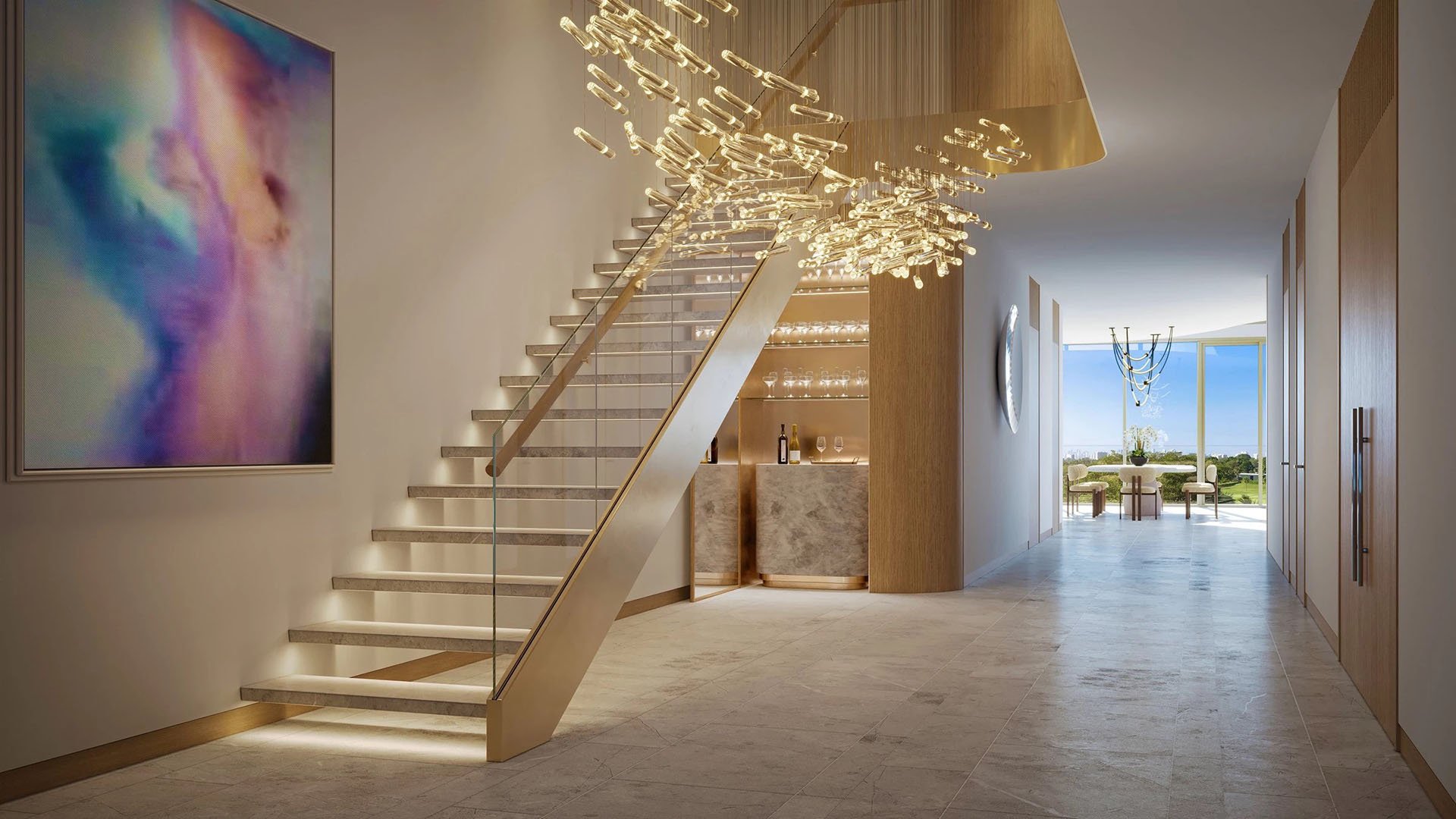
New-construction buyers should be especially deliberate. Renderings tend to emphasize arrival moments, primary suites, kitchens, and outdoor views. Family utility is often discovered later, after move-in. Asking early where teenagers will study, gather, store gear, charge devices, and host friends can shape furniture plans, millwork, electrical layouts, and even unit selection.
A beautiful residence can still live awkwardly with teenagers. Before committing, buyers should walk through a normal weekday in their minds. Where does a child drop a backpack? Where do friends wait? Where does a tutor sit? Where does noise go after 9 p.m.? Can someone watch a film while another person reads in the living room?
The right questions are practical, not precious. Is there enough wall space for a media console and storage? Can the room handle darker fabrics without feeling heavy? Is there natural light, and can it be controlled? Are outlets where they need to be? Can doors be added or improved? Is the lounge visible enough for comfort and private enough for dignity?
Resale-minded buyers should also think about adaptability. A teen lounge should not be so narrowly designed that it becomes obsolete when children leave for college. The most valuable versions can become a study, wellness room, secondary office, guest sitting room, or informal library. Practical luxury is rarely about a single use. It is about a room that can absorb change elegantly.
A better teen lounge is not about indulging teenagers. It is about protecting the whole household. It keeps formal rooms composed, gives older children a real sense of place, and makes daily life less performative. In South Florida luxury real estate, where homes often serve as primary residence, retreat, and social setting at once, that kind of practical planning is deeply valuable.
The most successful family homes are not simply larger. They are better edited. They anticipate friction before it appears. They give every generation enough space to live well, together and apart.
What is a teen lounge in a luxury residence? It is a flexible room or amenity space designed for older children to relax, study, socialize, and use media without overtaking formal areas.
Does a teen lounge need to be separate from the main living room? Ideally, yes. Some separation helps manage sound, privacy, and household flow while still allowing parents to remain nearby.
What size should a teen lounge be? Function matters more than size. A compact room with good seating, storage, lighting, and acoustics can work better than a large, unfocused space.
Are teen lounges useful in condominiums? Yes. In condos, they can make vertical living feel more comfortable by giving teenagers a defined place to gather inside or beyond the residence.
What materials work best for a teen lounge? Performance fabrics, durable rugs, closed storage, and easy-clean surfaces are usually wise choices for daily use.
Should a teen lounge include a kitchenette? Not always. A small snack or beverage area can be helpful, but it should not create unnecessary clutter or maintenance.
How can parents supervise without making the room feel controlled? Use thoughtful placement, partial sightlines, and clear access rather than placing the lounge in the center of formal family life.
Can a teen lounge improve resale appeal? It can, especially when designed as a flexible den, study, or media room that future owners can adapt to their own needs.
Is a shared building game room the same as a teen lounge? Not necessarily. A shared room must feel accessible, comfortable, and appropriately casual to serve teenagers well.
When should buyers plan the teen lounge? Early in the search or design process, before furniture, millwork, wiring, and storage decisions become harder to adjust.
For a discreet conversation and a curated building-by-building shortlist, connect with MILLION.
If branded residences are on your mind — as a home or as an allocation — we would be glad to share what we are seeing, privately.
Begin a quiet conversation