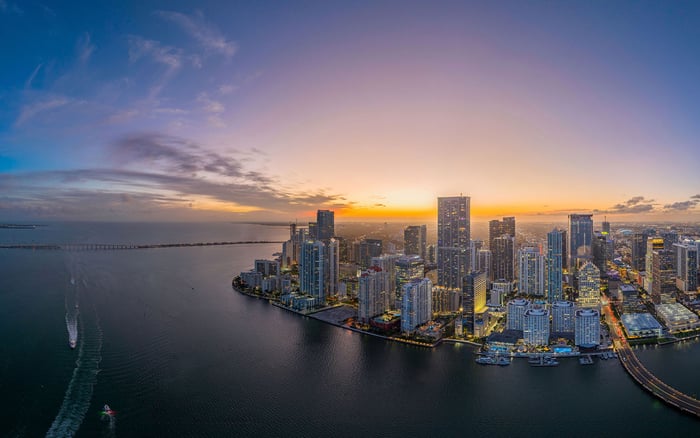
A buyer-focused guide to understanding how delivery timing, contract structure, interim housing, financing exposure, and turnover quality can change the real cost of a family-scale South Florida condo.

For a South Florida family buying a larger condominium, the published purchase price is only the beginning of the financial story. A three- or four-bedroom residence may be chosen for school years, grandparents, work-from-home privacy, staff accommodation, storage, or a longer seasonal stay. That makes timing unusually important. If the residence is delivered later than expected, the family is not simply waiting for keys. It may be carrying another home, renewing a lease, extending temporary housing, revisiting school transportation, or reworking a relocation calendar.
This is the quiet arithmetic of developer delivery risk. It is not always dramatic, and it is not always visible in the sales gallery. Yet it can meaningfully change the effective cost of ownership, particularly in Pre-construction and New-construction purchases where the home is not ready on the day the family commits capital.
In Brickell, for example, a buyer comparing a completed resale with a future residence such as The Residences at 1428 Brickell should look beyond skyline, brand, and floor plan. The deeper question is whether the delivery path supports the family’s calendar, liquidity, and tolerance for uncertainty.
A single purchaser or couple may be able to absorb a delay with relative ease. A family-scale buyer often has less flexibility. Children may be enrolled for a specific academic year. Domestic staff, pet logistics, vehicle storage, medical routines, and travel patterns may already be organized around the expected move. The larger the household, the more expensive ambiguity becomes.
That is why the real cost of a condo should be viewed as a risk-adjusted number. The contract price may remain fixed, but the surrounding costs can shift. Interim rent, duplicate carrying costs, furniture storage, bridge financing, deposits tied up for longer than expected, and revised moving arrangements all belong in the same mental spreadsheet as the purchase price.
In Edgewater, where buyers may be weighing a waterfront lifestyle against urban convenience, a residence such as Villa Miami may sit in the consideration set because of location and design language. The family buyer should also ask how much capital is committed before closing, what happens if delivery timing changes, and how the contract treats outside dates, notices, and remedies.
Delivery risk becomes expensive through accumulation, not through one single charge. The first layer is housing overlap. A family may keep its current residence longer, rent something interim, or delay selling an existing home. Each option has a cost. The second layer is financing. A buyer expecting to close within one window may face a different lending environment later, or may need to update approvals, liquidity documentation, and rate assumptions.
The third layer is opportunity cost. Deposits held in a development contract are not available for other investments, renovations, tuition planning, or a different real estate purchase. For many ultra-premium buyers, this is not a question of affordability. It is a question of capital efficiency. A delayed delivery may still lead to a beautiful home, but the capital path to that home may be less elegant than expected.
There is also emotional cost, which high-net-worth buyers often underprice. A family-scale residence is not merely an asset. It is the stage for holidays, summers, visiting relatives, and daily routine. When completion timing is uncertain, the household may live in a state of suspension. That has value, even if it never appears on a closing statement.
In luxury real estate, buyers naturally focus on architecture, ceiling heights, outdoor space, views, services, and finishes. For a new development purchase, the contract deserves the same level of attention. It shapes how risk is allocated between buyer and developer.
Key areas for review include deposit schedule, permitted construction delays, outside closing dates, default remedies, specification changes, force majeure language, assignment rights, financing contingencies if any, and how notices are delivered. A family buyer should understand not just what the contract says, but what it means in the real world if delivery moves by a quarter, a season, or longer.
The goal is not to turn every purchase into an adversarial exercise. The most sophisticated buyers usually remain calm, direct, and commercially reasonable. But they do not confuse a prestigious presentation with a completed home. They ask precise questions before deposits become meaningful.
Delivery risk feels different depending on the market. A buyer focused on Surfside may have a narrow lifestyle objective: quieter beachfront living, proximity to Bal Harbour, and a more residential rhythm. If that family is considering The Delmore Surfside, the alternative set may be limited by geography and taste. In that case, waiting may be acceptable, but the buyer should price the wait honestly.
In a deeper market such as Brickell, there may be more alternatives, from completed residences to other pipeline projects. That can reduce opportunity cost if the buyer remains flexible. In a more specific lifestyle market, the cost of missing the right building may be higher. This is where personal utility matters. The same delivery delay can be tolerable for one family and unacceptable for another.
Sunny Isles introduces another kind of calculus. Buyers may be comparing vertical beachfront living, privacy, and resort-style services across a small number of trophy buildings. When considering a future-facing option such as The Ritz-Carlton Residences® Sunny Isles, the question is not only whether the family likes the residence. It is whether the delivery profile fits the way that family actually lives.
A discreet buyer can learn a great deal through disciplined questioning. Has the project reached the stage the buyer assumes it has reached? What approvals, construction milestones, and financing elements remain? How are purchaser updates handled? Are changes communicated clearly and early, or only when unavoidable? Does the sales team answer contract and timing questions with specificity, or does every answer return to lifestyle imagery?
The buyer’s advisory team should also examine whether the deposit structure and closing obligations match the family’s broader balance sheet. A family that is also buying a school-year home, renovating another property, or relocating a business may need a more conservative liquidity plan than a buyer making a pure second-home acquisition.
This is especially relevant in Coconut Grove, where buyers often seek permanence and neighborhood texture rather than a purely seasonal address. A project such as Four Seasons Residences Coconut Grove may appeal to a family-oriented buyer, but the same delivery discipline applies. The romance of a neighborhood should be paired with a clear calendar.
Developer delivery risk is not a reason to avoid new development. In many cases, the best residence for a family is precisely the one that is still being created. New floor plans, fresh building systems, contemporary services, and first ownership can be compelling. The issue is not whether risk exists. The issue is whether the family has priced it, negotiated around it where possible, and reserved enough flexibility to remain comfortable.
For an investment-minded buyer, delivery risk also affects future optionality. A residence delivered later than expected may shift the owner’s resale, rental, or occupancy timeline. Even when the long-term thesis remains sound, the first years of ownership may look different from the original model.
A prudent family can create its own delivery-risk allowance. This may include a budget for interim housing, a liquidity reserve for financing changes, a flexible moving plan, and a realistic view of how long deposits may be committed. The allowance does not need to be pessimistic. It simply needs to be honest.
The best question is not, “Will this project be delivered exactly when expected?” In luxury development, timelines can be complex. The better question is, “If delivery moves, are we still happy with the economics, the lifestyle outcome, and the trade-off?”
When the answer is yes, the buyer can proceed with confidence. When the answer is no, the issue may not be the project. It may be the mismatch between the family’s calendar and the development’s uncertainty. In South Florida’s most desirable buildings, the difference between a good purchase and a strained purchase often lies in this quiet layer of preparation.
What is developer delivery risk? It is the possibility that a new condominium is delivered on a timeline or with conditions that differ from the buyer’s expectations.
Why does it matter more for family-scale condos? Larger households often have school, staffing, travel, storage, and interim housing needs that make timing more expensive.
Is delivery risk only about delays? No. It can also involve contract flexibility, finish substitutions, financing timing, turnover quality, and closing readiness.
Should buyers avoid Pre-construction because of this risk? Not necessarily. The goal is to price the risk clearly and decide whether the lifestyle upside justifies the uncertainty.
How can a buyer model the real cost? Add interim housing, duplicate carrying costs, financing changes, storage, moving, and deposit opportunity cost to the base price.
What contract terms deserve special attention? Review deposit schedules, outside dates, delay clauses, remedies, assignment rights, specification language, and closing obligations.
Can location change the impact of delivery risk? Yes. In markets with fewer suitable alternatives, waiting for a specific building may carry a higher personal opportunity cost.
Does New-construction eliminate delivery risk? It may reduce some timing uncertainty, but buyers should still review turnover condition, closing obligations, and building readiness.
Who should be involved before signing? A qualified real estate attorney, tax or wealth adviser when relevant, financing adviser, and experienced buyer representative can all add value.
What is the best way to shortlist comparable options for touring? Start with location fit, delivery status, and daily lifestyle priorities, then compare stacks and elevations to validate views and privacy.
To compare the best-fit options with clarity, connect with MILLION.
If branded residences are on your mind — as a home or as an allocation — we would be glad to share what we are seeing, privately.
Begin a quiet conversation