A disciplined South Beach offer starts below the building average, with a close reading of resale liquidity, exact-line evidence, floor height, exposure, and whether a prized view can truly remain scarce.
South Beach can appear exceptionally strong in aggregate. In Q3 2025, it was Miami Beach’s fastest-selling luxury condo submarket, averaging 80 days to sell. The median luxury condo sale price reached $2 million, up 18.7 percent from $1.685 million a year earlier, while pricing rose from $1,123 to $1,538 per square foot.
Yet those figures should begin a buyer’s inquiry, not conclude it. South Beach encompasses markedly different sub-corridors, buildings, price tiers, ownership profiles, and view conditions. South of Fifth, Ocean Drive, and Collins Avenue offer more useful analytical frames than a single neighborhood-wide average. With inventory ranging from roughly $400,000 studios to trophy penthouses above $60 million, any broad assumption about liquidity is particularly fragile.
Resale analysis starts with a simple principle: the asset being purchased is not merely a condominium in Miami Beach. It is a particular line, at a particular elevation, within a particular building.
Resale depth measures how many credible future buyers and meaningful comparable transactions exist for the residence. Request closed, pending, withdrawn, and expired listings for the building, price tier, and closest matching lines over the preceding 12 to 24 months. Building-wide averages can conceal a line that trades rarely or attracts a narrower buyer pool.
In 2026, South Beach resale supply stood above 15 months, with more than 1,200 listings and asking prices roughly 20 percent above the average transaction price. That broad oversupply can coexist with genuine scarcity in an exceptional building or line. It also makes expired listings important: they reveal the prices the market declined to validate.
Larger complexes can offer clearer price discovery because more units transact. A residence at Continuum on South Beach should therefore be assessed not only against headline neighborhood pricing, but also against its closest internal substitutes and the pace at which those alternatives have sold.
Low turnover demands a different test. It may reflect satisfied, owner-driven occupancy and enduring exclusivity, both constructive qualities. It may also leave a buyer with few reliable comparables and a shallow exit market. Ask who is likely to purchase the residence later, what alternatives that buyer will have, and how often equivalent homes actually reach closing.
The upper tiers do not necessarily move with the broader market. At midyear 2025, Miami Beach condo sales from $6 million to $10 million fell 14 percent, while inventory increased 14 percent and days on market rose 25 percent. Above $10 million, inventory rose 30 percent to 26 months of supply, while average pricing declined to $3,368 per square foot. Preconstruction represented 60 percent of pending ultra-luxury sales, creating direct competition for existing residences.
South of Fifth trophy buildings can still trade above $3,000 per square foot, and select penthouse transactions have exceeded $4,000. Apogee South Beach illustrates why scarcity must be defined precisely: the 22-story tower contains only 67 residences, with four homes per floor and flow-through layouts offering ocean and bay exposures. Recent transactions there have ranged from roughly $3,000 to $3,900 per square foot.
Even so, not every residence is interchangeable. The average gap between list and sale prices in South of Fifth was about 8 percent, while expired listings showed gaps as wide as 30 percent. An offer should be anchored to executable value, not the ambition embedded in neighboring asking prices.
The correct comparable must match more than bedroom count and interior area. Compare stack, floor height, orientation, floor plan, renovation level, terrace, parking, and view corridor. A beautifully renovated lower-floor residence may not support the same price per square foot as an unrenovated high-floor home with an irreplaceable exposure.
Line selection also shapes the daily experience. Flow-through plans may command attention because they capture contrasting exposures, cross-light, and more than one horizon. Corner positioning, terrace geometry, and the relationship between primary rooms and the view can matter more than a generic oceanfront label.
Use nearby luxury offerings as competitive context, not automatic comparables. Five Park Miami Beach and The Ritz-Carlton Residences® South Beach may shape a buyer’s expectations for newness, service, and design, but a resale comp remains relevant only when its physical attributes and ownership proposition align closely.
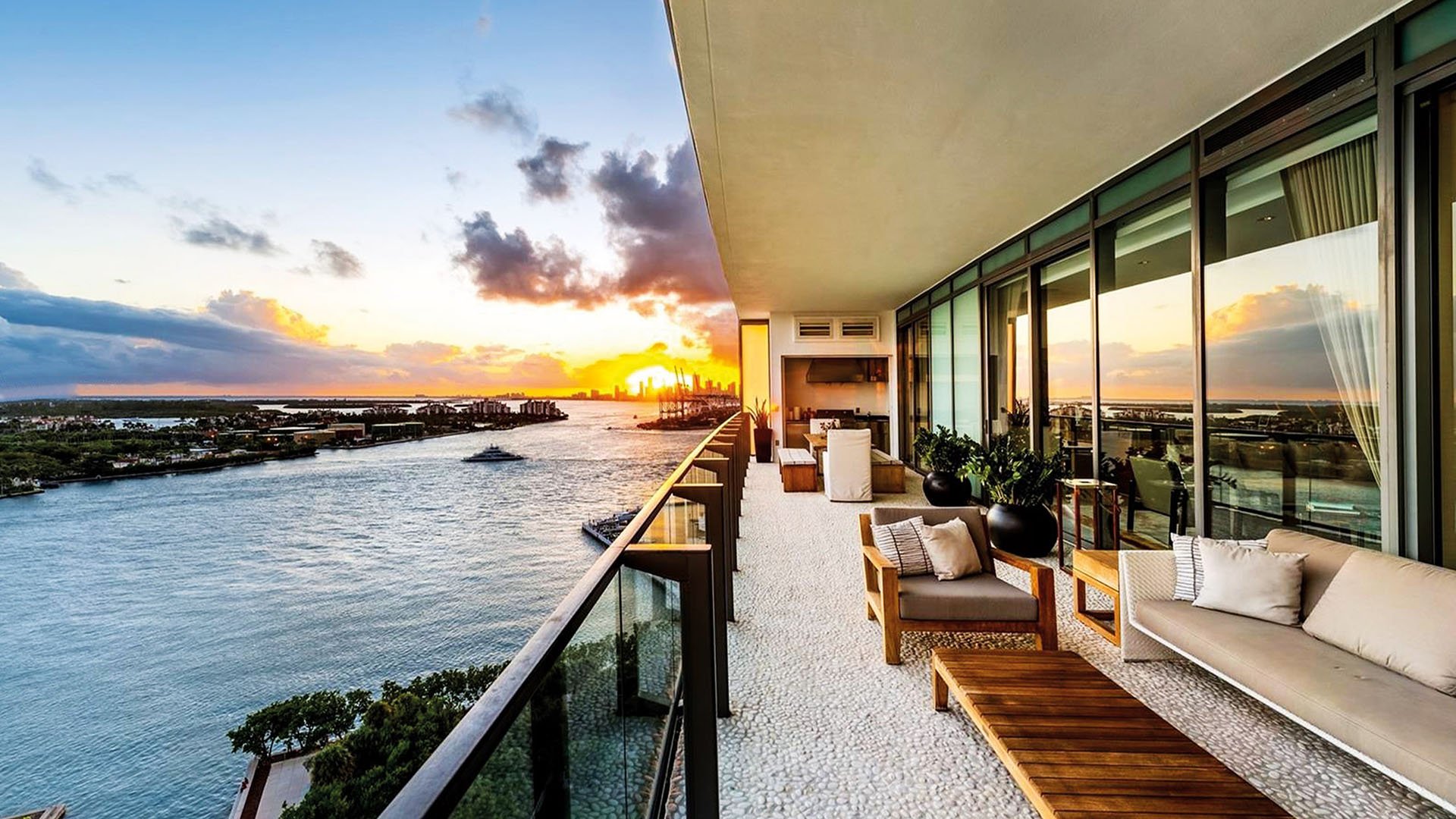
A view premium should reflect permanence, breadth, elevation, and rarity. Ask which parcels sit within the sightline, what development could occur there, and whether another line in the building can replicate the same outlook. An attractive but vulnerable view should not command the premium reserved for a protected panorama.
Study the view from the principal living spaces and bedrooms, not solely from the terrace. Consider seasonal sun angles, neighboring structures, and whether the most important water exposure remains compelling while seated indoors. The best view is not always the widest. It is the one future buyers will recognize as difficult to reproduce.
A disciplined offer reconciles three layers: recent executable sales, current direct competition, and the residence’s scarce attributes. Give weight to closed transactions, use pending sales as directional evidence, and treat withdrawn or expired listings as warnings of price resistance.
Strong building financials, limited rental activity, reputation, and owner-driven occupancy have supported better-performing Miami Beach properties. Review those characteristics alongside line-level evidence. The objective is not simply to secure a desirable home, but to purchase one whose desirability can be explained clearly to the next sophisticated buyer.
What is resale depth in a luxury condominium? It is the volume and quality of likely future demand, supported by relevant transactions and a credible pool of replacement buyers.
How far back should buyers review comparable sales? Review the preceding 12 to 24 months, including closed, pending, withdrawn, and expired listings.
Why are building-wide price averages insufficient? They can combine materially different floors, lines, exposures, renovations, terraces, and views.
Does low turnover always indicate scarcity? No. It can signal exclusivity and satisfied owners, but it can also produce weak price discovery and fewer exit opportunities.
Are larger buildings easier to resell? They can provide greater transaction volume and transparency, although the quality of and demand for the exact line still matter.
How should an expired listing influence an offer? It shows where the market resisted the seller’s expectations and can help identify an unrealistic pricing threshold.
What makes one condo line superior to another? Floor plan, elevation, orientation, terrace, privacy, parking, and the quality and durability of its view all contribute.
How can a buyer test whether a view is protected? Examine the parcels and potential development within the view corridor, then determine whether comparable lines can reproduce it.
Should preconstruction affect a South Beach resale offer? Yes. New inventory can compete for the same ultra-luxury buyer by offering a different mix of design, service, and perceived newness.
What should ultimately anchor the offer price? Closely matched completed sales should lead, adjusted carefully for line-specific attributes, current competition, and demonstrated scarcity.
To compare the best-fit options with clarity, connect with MILLION.
If branded residences are on your mind — as a home or as an allocation — we would be glad to share what we are seeing, privately.
Begin a quiet conversation