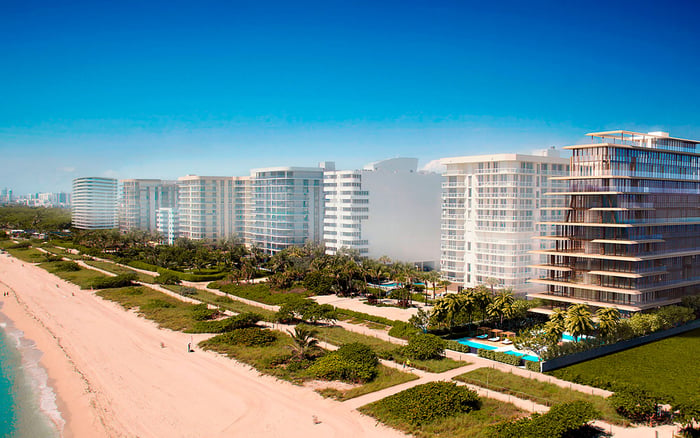
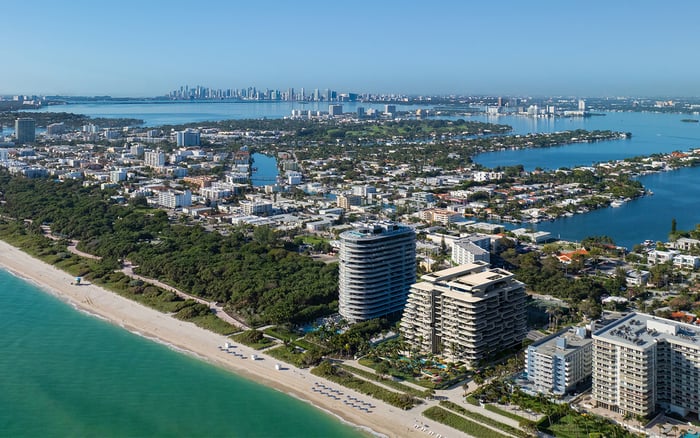
Surfside gives Dallas buyers a rare combination: a low-key oceanfront address, walkable daily conveniences, and quick access to Bal Harbour and Miami Beach. The best choice depends less on neighborhood averages than on the privacy, service model, and carrying profile of a specific building.
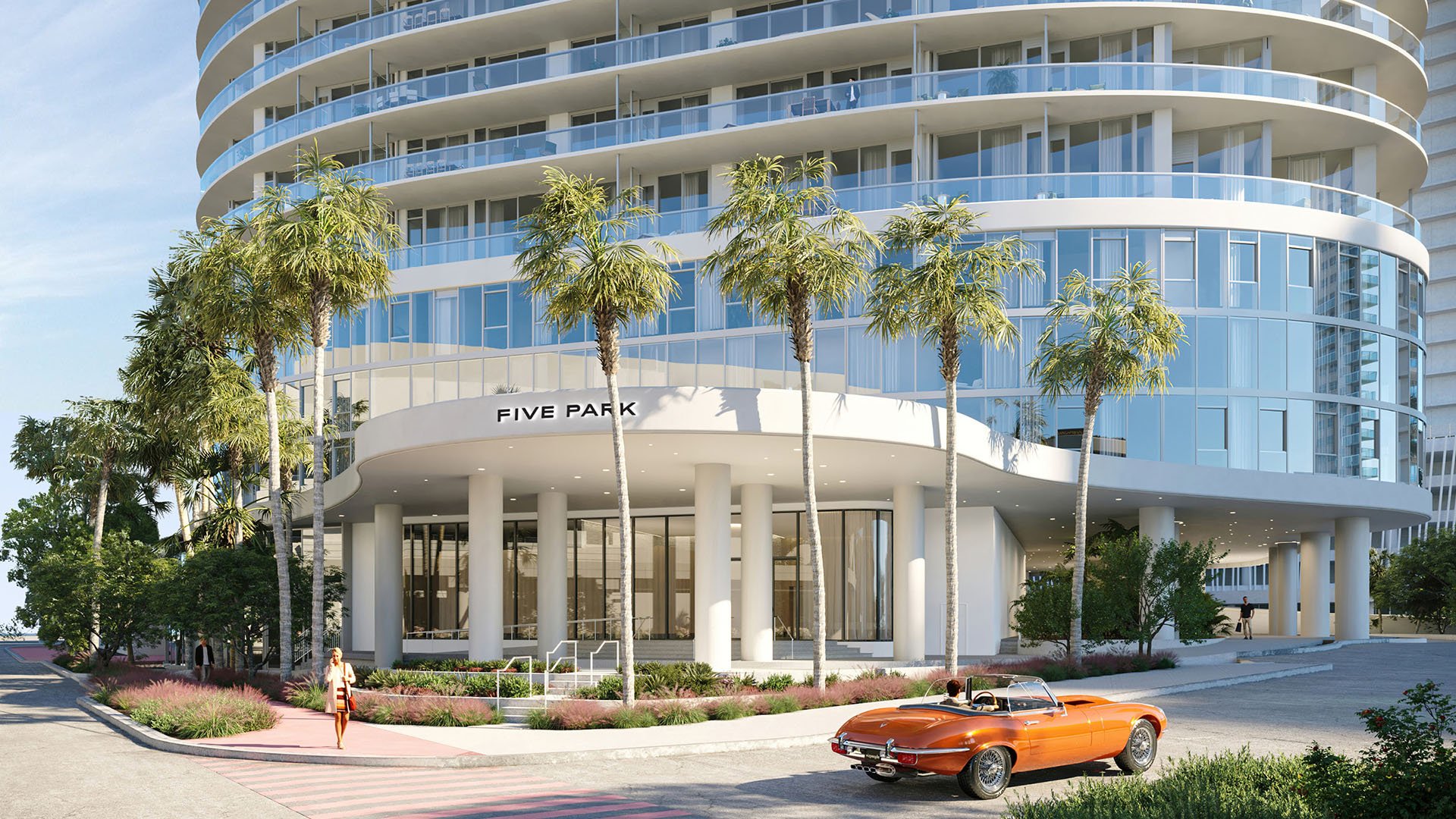
For Dallas buyers, Surfside’s central appeal is not isolation, but controlled proximity. The half-square-mile oceanfront town sits between Bal Harbour and Miami Beach, pairing barrier-island living with ready access to neighboring dining, shopping, and amenities. Its character is quieter and lower-density than the busier condominium corridors farther south.
That distinction matters for buyers accustomed to Dallas convenience but seeking a more private coastal rhythm. Surfside’s wide public beach and boutique commercial district along Harding Avenue create a setting that feels residential without becoming inconvenient. The town is walkable and low-key, rather than defined by a resort-strip atmosphere.
The balance is best viewed through a practical lens: the neighborhood establishes the mood, but the individual property determines whether convenience and privacy truly coexist.
Convenience in Surfside begins at street level. A residence within comfortable walking distance of Harding Avenue can simplify coffee, dining, and routine errands during short stays. Bal Harbour Shops is only minutes away, offering access to luxury retail without placing residents inside a dense commercial district. Miami Beach remains close enough to broaden the choice of dining and entertainment.
A Dallas buyer should therefore assess how a residence functions from morning to evening. Is Harding Avenue comfortably accessible? Does the arrival sequence feel discreet? Is beach access straightforward? Does the building provide enough support to make a second home easy to open, use, and leave?
Properties such as Arte Surfside and Ocean House Surfside belong within this broader location analysis. The objective is not simply to choose Surfside, but to select the precise position and building experience that suit the owner’s routine.
Surfside’s low-density identity supports privacy, yet no neighborhood label can substitute for a building-specific review. Buyers should examine the number and scale of residences, elevator and corridor arrangements, arrival areas, beach access, amenity circulation, and the relationship between private homes and shared spaces.
Oceanfront orientation is only one part of the equation. A residence may command a remarkable beachfront setting while operating within a highly serviced environment. Another may offer a more boutique atmosphere with fewer layers of hospitality. Neither model is inherently superior. The right choice depends on whether privacy means minimal interaction, discreet service, generous interior scale, or the ability to arrive without managing household logistics.
Surfside’s luxury market is small and tightly held, with limited active inventory and relatively few annual transactions. As a result, neighborhood-wide averages can obscure meaningful differences. Building quality, service structure, and the exact beachfront setting deserve more weight than broad price comparisons.
Surfside spans several distinct ownership experiences. Newer boutique construction has entered the market from the low seven figures, while branded and ultra-luxury residences can exceed $40 million. These categories are not interchangeable.
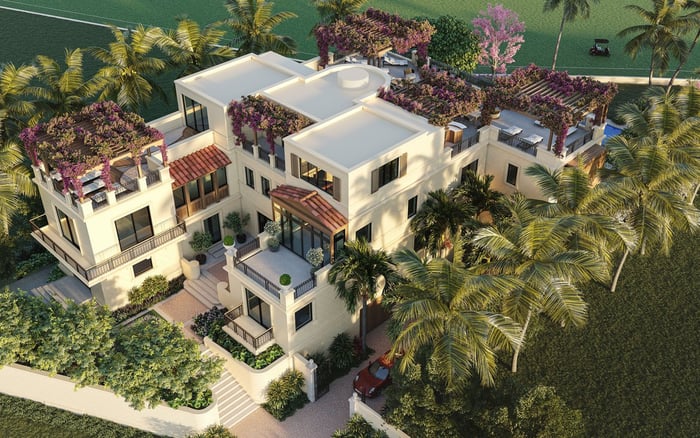
A boutique property may appeal to buyers who value a more intimate residential atmosphere. Some newer offerings plan substantial services, including concierge support, beach assistance, fitness and wellness spaces, a pool deck, and co-working areas. The relevant question is whether those amenities simplify ownership without creating more shared activity than the buyer prefers.
Branded residences offer another solution. The Surf Club Four Seasons Surfside combines 119 private residences with 31 hotel residences at 9001 to 9111 Collins Avenue. Its service-heavy format may suit an owner seeking hotel-style support within a beachfront residential base.
At the upper end, The Delmore Surfside is planned with 37 oceanfront residences averaging approximately 7,000 square feet. The development is associated with DAMAC International and Zaha Hadid Architects, with pricing from $15 million to more than $45 million. A separate 2026 Beach Villa transaction at 9165 Collins Avenue reached $44.2 million, or approximately $4,800 per square foot for about 9,200 square feet. The sale illustrates the scale of Surfside’s trophy segment rather than serving as a universal comparable.
Begin by ranking four priorities: walkability to Harding Avenue, proximity to Bal Harbour, service level, and property-specific privacy. A buyer anticipating frequent long weekends may place concierge support and easy access above maximum seclusion. Someone planning extended seasonal stays may prioritize residential scale, quieter common areas, and a stronger sense of separation.
Next, distinguish between the purchase price and the complete ownership experience. Association costs, assessments, staffing, amenity programs, and ownership rules vary by building. A highly serviced residence may reduce personal effort while increasing carrying costs. A boutique alternative may feel more private, but its operational model still requires close review.
Finally, compare only genuinely similar properties. Older condominiums, newer boutique projects, hotel-branded residences, and large ultra-luxury homes answer different needs. Trophy transactions can establish the market’s reach, but they should not serve as direct benchmarks for smaller residences.
Limited supply makes patience and preparation especially valuable. Before committing, verify current inventory, association expenses, pending or current assessments, ownership restrictions, and the scope of services. Review how beach access, deliveries, guests, staffing, and arrivals are managed in practice.
The most successful Surfside purchase will not simply split the difference between city energy and coastal privacy. It will define which conveniences should remain close, which services should be built into the residence, and which forms of privacy are non-negotiable.
Why does Surfside appeal to Dallas buyers seeking a second home? It combines a quiet residential beach setting with walkable conveniences and access to Bal Harbour and Miami Beach.
Is Surfside more private than Miami Beach? Surfside is generally lower-key and lower-density, but actual privacy depends on the specific residence and building.
What should buyers examine near Harding Avenue? Consider the practical walking distance to dining, retail, and routine errands, along with the privacy of the route and arrival.
How close is luxury shopping? Bal Harbour Shops is only minutes from Surfside, providing luxury retail without requiring residence in a dense commercial district.
Are all Surfside condominiums comparable? No. Boutique, branded, older, and ultra-luxury properties can differ significantly in scale, service, privacy, and carrying costs.
What is the benefit of a branded residence? Hotel-style services can simplify arrivals and ownership, particularly for buyers using the property seasonally.
Does oceanfront automatically mean private? No. Buyers should also assess shared spaces, building circulation, arrivals, beach access, and the number of residences.
How broad is Surfside’s luxury price spectrum? Newer boutique offerings have started in the low seven figures, while ultra-luxury residences have been priced above $40 million.
Should a trophy sale guide every valuation? No. A large Beach Villa transaction may indicate the upper market, but it is not a direct comparable for smaller or older condominiums.
What must be verified before purchasing? Confirm current pricing, inventory, association costs, assessments, ownership rules, services, and property-specific conditions.
When you're ready to tour or underwrite the options, connect with MILLION.
If branded residences are on your mind — as a home or as an allocation — we would be glad to share what we are seeing, privately.
Begin a quiet conversation