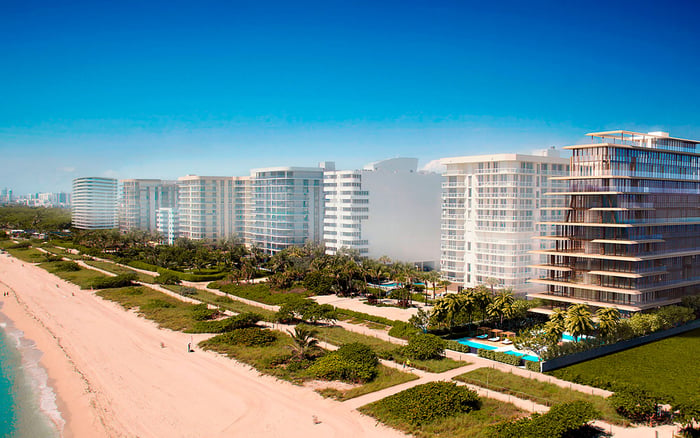
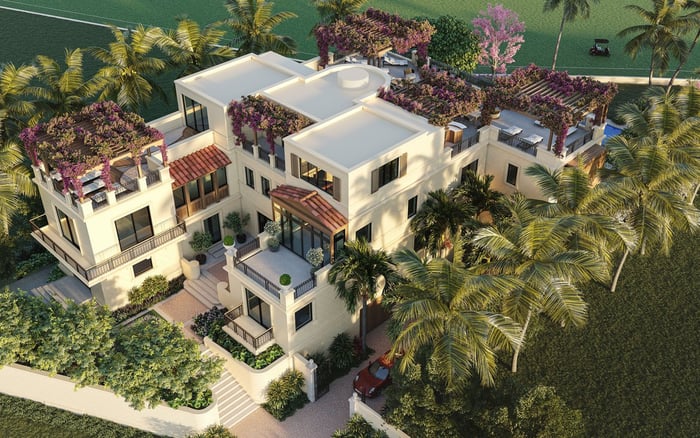
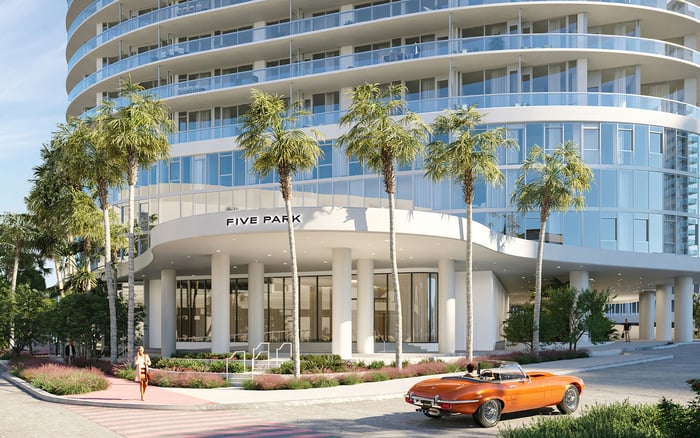
A buyer-oriented look at the compact coastal rhythms surrounding The Delmore Surfside, including the beach, Harding Avenue conveniences, nearby luxury corridors, and the practical distinctions between neighborhood access and private club life.
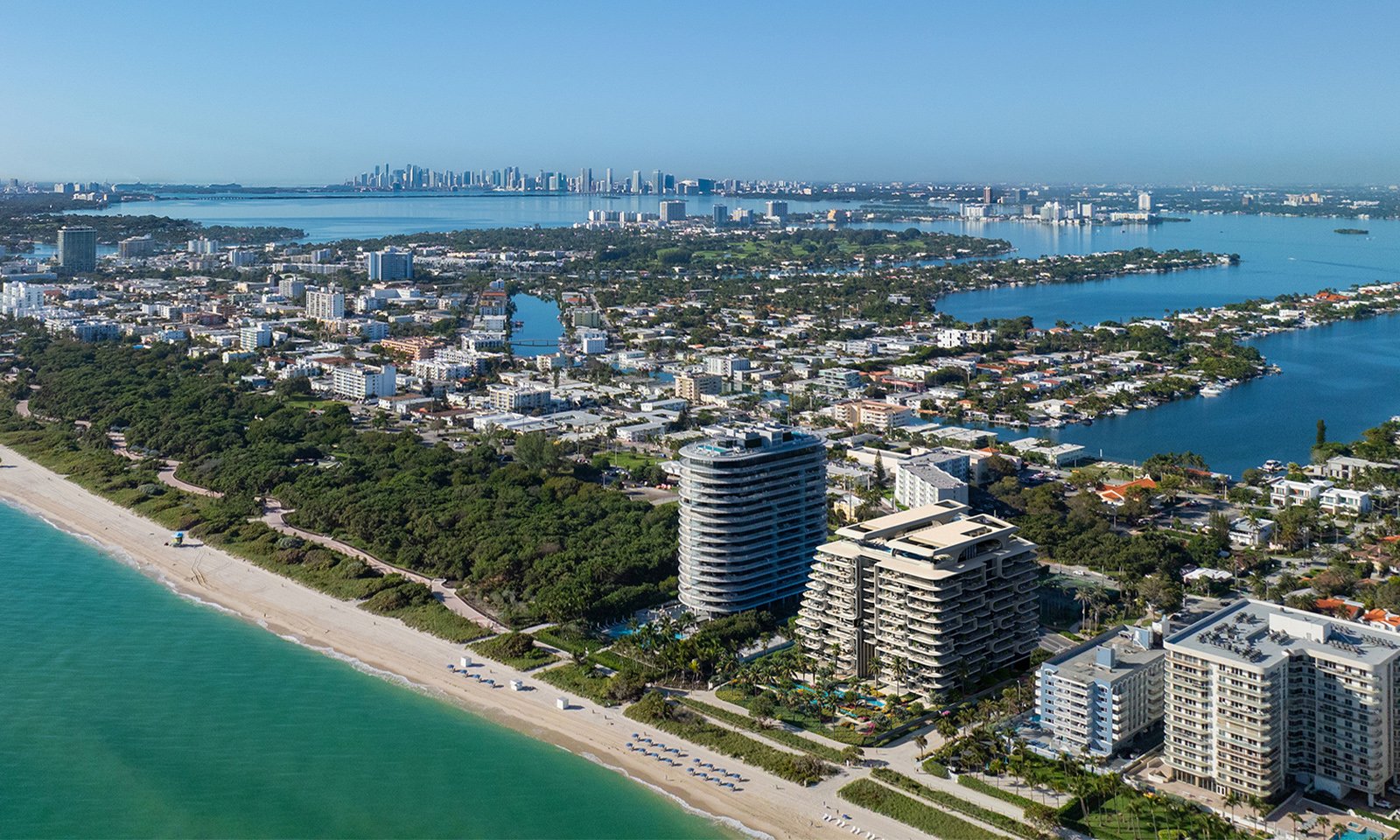
Daily life near The Delmore Surfside begins with geography. Surfside occupies a barrier-island position between Miami Beach to the south and Bal Harbour to the north, with the Atlantic Ocean to the east and the Intracoastal Waterway to the west. This bounded setting lends the neighborhood an enclave-like quality without isolating it from the broader coastal corridor.
The result is a distinctive balance. Prominent oceanfront residences and resort properties line the coast, while quieter, village-like streets unfold immediately inland. Residents can move between private, amenity-oriented environments and a more informal neighborhood fabric without turning every outing into a destination trip.
For buyers, that contrast may prove more meaningful than an extensive amenities inventory. The central proposition is not simply waterfront living, but the ability to alternate among privacy, the beach, practical errands, and nearby luxury districts within a compact residential setting.
Collins Avenue forms Surfside’s oceanfront luxury spine, with high-end condominiums and hotels defining much of its architectural character. One block inland, Harding Avenue operates at a different scale. Its lower-rise commercial corridor accommodates cafés, shops, groceries, pharmacies, and everyday services.
This division creates a useful daily rhythm. Collins Avenue represents arrival, coastal presence, and the neighborhood’s polished frontage. Harding Avenue provides much of the practical texture that allows residents to stay close to home for routine needs.
Nearby residential reference points illustrate the variety within this compact geography. Ocean House Surfside and Fendi Château Residences Surfside sit within the broader Surfside conversation, while The Surf Club Four Seasons Surfside reflects the corridor’s connection to resort-oriented residential life. These are not interchangeable propositions, but their proximity underscores the concentration of luxury addresses along the oceanfront.
Immediate beach access can shape the day more decisively than a conventional neighborhood amenity. Walking, exercise, promenading, and time near the water become readily available rather than requiring advance planning. Together, the beachfront path, Collins Avenue, and Harding Avenue support short, hyper-local movements.
The experience is also environmental. Ocean breezes, humidity, salt air, daylight, and changing weather influence when residents venture outside and how they use terraces, paths, and the beach. A clear morning may favor an early walk, while heat or rain can redirect activity toward indoor amenities and the commercial corridor.
Buyers assessing an oceanfront address should therefore consider beach access a feature of daily life, not merely a view or weekend benefit. Its value lies partly in how seamlessly the shore can enter an ordinary routine.
Surfside’s lower-rise commercial fabric supports casual, neighborhood-oriented dining and errands, while nearby hotels and the broader coastal corridor offer more polished settings. The useful distinction is between what suits an unplanned meal and what belongs to a more formal social calendar.
Private-club access should be evaluated separately from geographic proximity. Living near a hotel, resort, or club does not by itself establish membership rights, resident privileges, reservation access, or included services. Prospective owners should verify those details directly when comparing residences and memberships.
This distinction protects the integrity of the purchase decision. Neighborhood dining can introduce spontaneity, while club life may provide a curated social environment. The two can complement one another, but they are not the same benefit.
Bal Harbour expands the nearby lifestyle offering through luxury shopping, hotels, and residences. Buyers considering the northern edge of the corridor may also compare Rivage Bal Harbour as part of a wider coastal search.
West of Surfside, across the Intracoastal Waterway, Bay Harbor Islands adds another residential enclave to the immediate context. Together, these adjacent areas give the local map a layered quality: oceanfront living in Surfside, luxury destinations to the north, and a distinct island residential setting to the west.
The practical advantage is choice without sacrificing a defined home base. Surfside remains quieter and village-like, while nearby districts broaden the range of shopping, hospitality, and residential environments.
Buyers should experience the neighborhood at several points throughout the day. Walk from Collins Avenue to Harding Avenue, observe the transition from private frontage to everyday commerce, and consider how changing weather affects the appeal of outdoor movement.
It is also worth distinguishing permanent conveniences from optional privileges. Groceries, pharmacies, cafés, beach access, hotel venues, and private memberships belong to different categories. Understanding those distinctions offers a clearer view of the address than treating every nearby feature as part of a single amenity package.
Ultimately, The Delmore Surfside proposition is grounded in adjacency and contrast: Atlantic frontage, a compact commercial corridor, restrained residential streets, and access to neighboring luxury enclaves.
Where is The Delmore Surfside positioned? It is positioned on Surfside’s oceanfront, within the luxury coastal corridor north of Miami Beach.
What gives Surfside an enclave-like character? The Atlantic Ocean and Intracoastal Waterway geographically define the area, reinforcing its bounded coastal setting.
How does Collins Avenue shape daily life? Collins Avenue serves as the oceanfront luxury spine, connecting high-end residential and hotel environments.
What is available along Harding Avenue? Its lower-rise commercial corridor includes cafés, shops, groceries, pharmacies, and everyday services.
Is the neighborhood suitable for short local trips? The proximity of Collins Avenue, Harding Avenue, and the beachfront path supports compact, hyper-local movement.
How central is the beach to the lifestyle? Immediate access makes walking, exercise, promenading, and other ocean-oriented routines a regular possibility.
Does proximity to a private club guarantee access? No. Membership, privileges, reservations, and resident benefits should always be verified separately.
What does Bal Harbour add to the area? Bal Harbour broadens the nearby offering with luxury shopping, hotels, and residences.
Where are Bay Harbor Islands in relation to Surfside? Bay Harbor Islands lies west of Surfside, across the Intracoastal Waterway.
What environmental factors affect outdoor routines? Ocean breezes, humidity, salt air, daylight, and changing weather can influence the timing and character of outdoor activity.
If you'd like a private walkthrough and a curated shortlist, connect with MILLION.
If branded residences are on your mind — as a home or as an allocation — we would be glad to share what we are seeing, privately.
Begin a quiet conversation