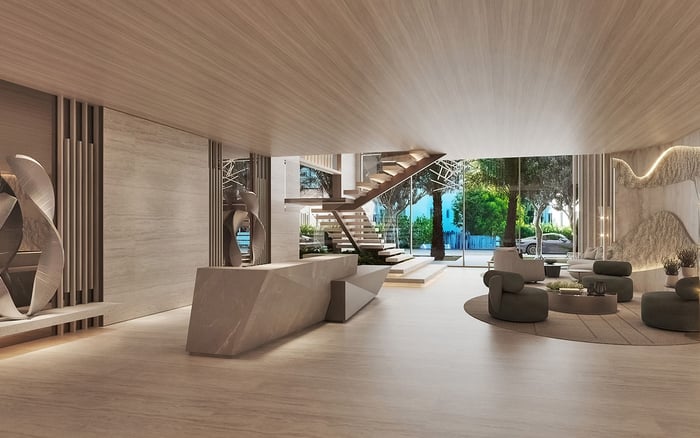
In South Florida’s luxury condo market, quiet has become a core measure of quality rather than a secondary perk. As amenity packages converge across new towers, acoustic performance now plays a larger role in daily comfort, sleep, workability, resale appeal, and owner satisfaction.

In South Florida’s highest residential tier, buyers have become fluent in the language of amenities. A wellness suite, private dining room, lounge, spa treatment space, cold plunge, screening room, and concierge program no longer feel exceptional on their own. In many new towers, they are expected. That shift matters because once amenity packages start to look interchangeable, the most meaningful distinction returns to the residence itself.
Quiet is where that distinction becomes unmistakable.
A luxury condominium is not judged only by its arrival sequence or rooftop programming. It is judged at 6 a.m., when a resident is trying to sleep after a late flight, at 2 p.m. during a video call, and at 10 p.m., when traffic, music, elevators, hallway conversations, and mechanical hum either recede into the background or impose on daily life. In that sense, acoustics are not an amenity at all. They are part of the core product.
That is especially true in dense submarkets such as Brickell, Downtown, and Edgewater, where traffic, nightlife, construction, and constant urban activity are part of both the appeal and the challenge. A buyer may admire the programming at 888 Brickell by Dolce & Gabbana or the skyline positioning of Waldorf Astoria Residences Downtown Miami, but the long-term test of luxury remains more intimate: does the home feel composed, protected, and calm?
The modern luxury tower still needs strong amenities. No serious buyer is arguing otherwise. But the market has reached a point where pools, fitness centers, lounges, and hospitality-inflected services no longer create the same separation they once did. They are now part of the expected package.
When every building offers its own version of the same social and wellness spaces, buyers begin ranking a residence by the quality of its everyday living spaces instead. Bedrooms matter more than branded common rooms. A home office matters more than a clubroom visited occasionally. A living room that does not collect corridor noise or elevator vibration delivers more real value than another beautifully staged terrace lounge two dozen floors away.
This is one reason acoustics are gaining prominence in serious buyer conversations. They shape sleep, concentration, privacy, and recovery. They determine whether a residence feels restorative or merely expensive.
In quieter, more residential settings such as Coconut Grove or Bay Harbor, expectations can be even higher because buyers often associate those addresses with retreat. That is part of the appeal behind projects such as Four Seasons Residences Coconut Grove and Onda Bay Harbor, where the promise of discretion and ease extends beyond finishes to atmosphere.
Most purchasers do not arrive with a technical acoustic checklist, but they know discomfort when they hear it. Conversation through a party wall. Footfall from the residence above. Door slams reverberating down a corridor. Mechanical noise cycling at night. Street sound filtering through glazing. These are the details that determine whether a home feels truly private.
In residential construction, sound isolation is often described through Sound Transmission Class, or STC. In simple terms, a higher rating generally means less audible speech and less noise transfer between spaces. But headline numbers alone do not tell the full story. A building can meet basic code requirements and still fall short of luxury expectations.
That gap between compliant and exceptional is where many projects succeed or fail. Genuine acoustic comfort typically comes from hidden decisions rather than visible upgrades: more mass in wall assemblies, cavity insulation, resilient channels, decoupled systems, better floor construction, and tighter detailing around penetrations and transitions. These are not glamorous features to market, yet they often matter more than whatever was added to the amenity deck.
Open-plan layouts can complicate the picture further. They photograph beautifully and support an expansive sense of space, but fewer enclosed rooms and more hard surfaces also allow sound to travel and reverberate more easily. In a market that favors large-format stone, glass, and sleek minimalism, acoustic performance has to be designed in, not assumed.
South Florida buyers often focus on views first, and rightly so. But the same glass that frames Biscayne Bay or the Atlantic also mediates the outside world. In urban towers, façade design can matter just as much as the separation between neighboring units because glazing and enclosure details strongly shape how much exterior noise enters the home.
Standard glazing may be adequate in many settings, but it can underperform in areas defined by dense traffic patterns, nightlife, marine activity, or prolonged construction cycles. Acoustically upgraded window systems can materially improve interior calm and sleep quality, particularly in neighborhoods where the city remains active long after sunset.
This is part of the broader design conversation around urban waterfront residences, from The Residences at 1428 Brickell to The Perigon Miami Beach. Buyers may first respond to views, brand, and architecture, but over time they live with enclosure quality. The silence between sounds becomes part of the residence’s value.
Visual refinement can mask many things, but it cannot redeem a persistent mechanical hum. HVAC systems, pumps, elevator equipment, and poorly isolated building services often create the kind of low-level irritation residents notice most at night. This is why acoustic quality must be planned early. Structure, enclosure, equipment placement, and interior finishes all influence the final experience.
For developers, that makes sound control both a design issue and a risk-management issue. Once a building is occupied, meaningful acoustic fixes are notoriously difficult and expensive. Opening walls, reworking floors, or replacing façade components is disruptive and costly. More importantly, acoustic failure can become an owner-satisfaction problem that lingers long after the sales gallery has closed.
In a competitive market, transparent discussion of acoustic intent can therefore become a more credible differentiator than another amenity announcement. Buyers understand the difference between a brochure feature and a construction decision that improves daily life.
As inventory expands and buyers become more selective, the residences that hold attention are often the ones that feel easiest to inhabit. That principle applies in Brickell, Downtown, Miami Beach, and West Palm Beach alike. In each market, a beautifully serviced building still competes on the quality of the private environment it delivers.
For resale, acoustics matter because they are difficult to disguise and expensive to correct. A purchaser may forgive an amenity package that feels conventional. It is far harder to overlook noise that interrupts sleep, work, privacy, or family life. In that sense, sound performance supports owner retention as much as it supports first impressions.
The most discerning buyers increasingly read silence as evidence of planning, discipline, and long-term value. That may be the clearest sign of where the market is heading. In South Florida luxury condos, the best buildings will not simply offer more. They will interfere less.
Why do acoustics matter more than amenities in luxury condos? Amenities are used occasionally, but acoustics affect sleep, privacy, work, and comfort every day.
Is quiet really a luxury feature now? Yes. In top-tier condos, quiet is increasingly treated as a baseline expectation rather than a bonus.
What does STC mean for condo buyers? STC refers to sound isolation performance, with higher ratings generally meaning less speech and noise transfer.
Can a building meet code and still feel noisy? Yes. Minimum code compliance does not automatically deliver the acoustic comfort expected in luxury residences.
What types of noise matter most in South Florida towers? Traffic, nightlife, construction, corridor activity, neighbors, and mechanical systems are common concerns.
Do open floor plans make condos louder? They can. Fewer enclosed rooms and more hard finishes often allow sound to travel more freely.
Why is window design so important for acoustics? Glazing and façade detailing strongly affect how much exterior noise enters the residence.
Can poor acoustics be fixed after move-in? Sometimes, but meaningful improvements are often expensive and disruptive once a building is occupied.
Does acoustic quality influence resale? Yes. Noise issues can undermine buyer confidence, while a calm interior environment supports long-term appeal.
What should buyers ask about during due diligence? Ask about wall and floor assemblies, glazing, mechanical isolation, and how privacy was addressed in design.
For a discreet conversation and a curated building-by-building shortlist, connect with MILLION.
If branded residences are on your mind — as a home or as an allocation — we would be glad to share what we are seeing, privately.
Begin a quiet conversation