A cash offer can simplify a luxury wellness purchase, but the real cost depends on liquidity, timing, reserves, privacy planning, and closing discipline.

For a South Florida buyer pursuing a wellness-led residence, paying cash can feel elegantly simple. No financing contingency. No lender timeline. No appraisal friction. In a market where privacy, certainty, and speed can matter as much as a view corridor, that simplicity has real value.
Yet cash is not free. The real cost of an all-cash acquisition is shaped by liquidity, timing, reserve planning, closing logistics, currency movement for international buyers, and the opportunity cost of capital held outside a portfolio. A residence designed around recovery, calm, spa rituals, fitness, and daily ease may be emotionally compelling, but the purchase mechanics still require the same discipline as any major allocation.
That discipline is especially important in South Florida, where buyers may compare a beachfront condominium, an urban tower, a branded wellness concept, and a low-density boutique building in the same week. The contract price is only the visible number. The cost of how the cash moves is the quieter one.
Cash buyers often focus on negotiation leverage. The more important first question is whether the funds are already liquid, already in dollars, and already positioned for closing without disrupting other commitments. If cash must be raised from securities, private holdings, foreign accounts, or business distributions, timing can create a hidden cost.
A buyer may be able to close quickly, but selling assets at an inconvenient moment can be more expensive than a modest price concession would have been. Holding excess cash for too long can also carry a cost if the purchase timeline stretches. The cleanest strategy separates purchase readiness from purchase urgency. Funds should be accessible, but not arranged in a way that forces rushed decisions.
This matters when evaluating wellness-oriented residences such as The Well Bay Harbor Islands, where the lifestyle premise may be clear, but the buyer still needs a precise capital plan before turning preference into a contract.
In new construction and pre-construction purchases, the real cost of cash is not limited to final closing. It can begin with deposits, additional payments over time, and the period between commitment and delivery. A buyer who does not require financing may feel insulated from rate movements, yet still has capital committed before enjoying the residence.
That capital has a carrying logic. It is not debt service, but it is still committed capital. The question is whether the residence is worth the timeline, the illiquidity, and the confidence required to commit before the home is complete. A wellness-led project can justify that commitment when the building concept, location, service model, and private living environment align with how the buyer actually intends to live.
A buyer comparing The Well Coconut Grove with other Coconut Grove or waterfront options should look beyond finishes and amenities. The more revealing analysis is how much cash is committed, when it is committed, and what alternatives that capital must forgo during the same period.
Cash can compress a transaction. That can be powerful when a seller values certainty or when a buyer wants to secure a specific residence before competition expands. But speed should never weaken diligence.
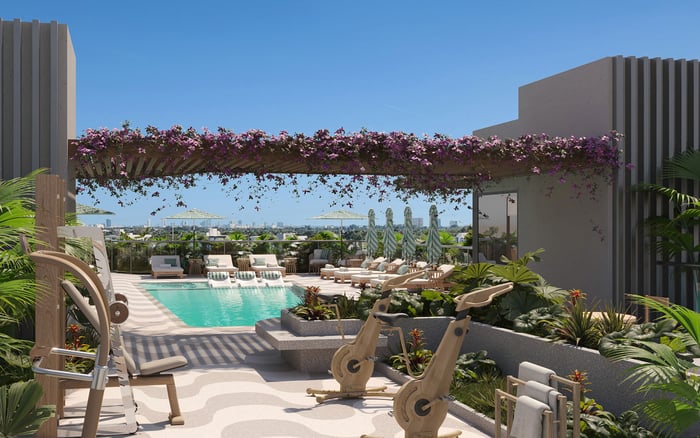
A wellness-led residence deserves review through several lenses: building governance, monthly obligations, insurance structure, reserve posture, rules around renovation or use, service expectations, and the durability of the wellness program itself. Buyers should also evaluate whether the residence supports daily life rather than occasional aspiration. A treatment room, fitness level, meditation garden, or spa-like pool deck has value only if it becomes part of a repeatable routine.
In Miami Beach, a residence such as 57 Ocean Miami Beach may attract a buyer for its coastal setting and lifestyle language, but the cash process still depends on practical diligence. A fast close is useful only when the buyer has already reviewed the documents, confirmed funds, coordinated title, and established the ownership structure.
A cash buyer avoids mortgage payments, but not ownership costs. Association dues, insurance obligations, taxes, maintenance, improvements, assessments, staffing, parking, storage, and lifestyle services can all shape the real annual cost of the residence. In a wellness-led building, service depth may be part of the appeal, but that depth should be understood as an ongoing commitment.
The most sophisticated buyers model the purchase in layers: acquisition price, closing costs and immediate improvements, annual carrying costs, discretionary lifestyle spending connected to the residence, and a liquidity reserve for unexpected obligations.
That reserve is not pessimism. It is freedom. It allows the owner to enjoy the residence without reacting to every invoice or board decision as a surprise. In the ultra-premium segment, serenity is not only architectural. It is financial.
Cash buyers often care about discretion. The ownership vehicle, funding path, signatory authority, estate planning considerations, and closing communications should be organized before the contract stage whenever possible. Changing structure late can slow the process and increase the risk of errors.
This is particularly relevant for buyers purchasing across multiple markets or through family offices. The residence may be personal, but the capital movement may involve advisors, entities, banks, and documentation standards. The more parties involved, the more essential early coordination becomes.
In Brickell, where buyers may consider an urban wellness routine alongside business access and cultural convenience, 2200 Brickell illustrates the broader point: even a lifestyle purchase benefits from institutional-quality execution. Privacy is preserved not by rushing, but by reducing preventable friction.
Large cash transactions create operational risk when communications are loose. Wiring instructions should be verified through secure, known channels. Last-minute changes should be treated with caution. Buyers should maintain clear internal controls over who approves funds, who verifies instructions, and who confirms receipt.
This may sound administrative, but it is central to the real cost of the purchase. A delay, miscommunication, or avoidable compliance issue can create stress at precisely the moment a buyer expects the transaction to feel effortless. The larger and more international the buyer profile, the more important these controls become.
Cash should simplify closing. It should not create a fragile process dependent on hurried emails and unverified instructions.
The strongest wellness-led residences are not merely amenity-rich. They reduce friction. They make movement easier, recovery more natural, social life more intentional, and time at home more restorative. The buyer’s task is to decide which elements have daily utility and which are simply attractive during a tour.
A Miami Beach buyer considering Five Park Miami Beach may value access, light, scale, and a sense of retreat within a highly active coastal setting. Another buyer may prioritize the quieter rhythm of Bay Harbor Islands, the village-like ease of Coconut Grove, or the business convenience of Brickell. The right choice depends on use pattern, not presentation alone.
Cash logistics belong in that same analysis. If the purchase drains flexibility, forces inconvenient asset sales, or leaves the buyer under-reserved, the residence may feel less restorative than intended. If the cash plan is disciplined, the home can perform as both a lifestyle asset and a stable personal base.
For a South Florida wellness-led residence, cash can buy control: control over timing, negotiation posture, privacy, and certainty. But control has to be designed. The best buyers do not simply ask whether they can pay cash. They ask how that cash should be staged, protected, documented, and replenished after closing.
In that sense, the real cost of a cash purchase is not only the money transferred at closing. It is the total capital architecture surrounding the residence. When the logistics are precise, cash can make the acquisition feel composed. When they are improvised, cash can make an otherwise beautiful purchase unnecessarily expensive.
Does paying cash always lower the total cost of a luxury residence? Not always. Cash can improve certainty, but liquidity timing, opportunity cost, reserves, and closing logistics can raise the effective cost.
Why does liquidity matter if I already have the funds? The timing and source of those funds can affect taxes, portfolio strategy, currency exposure, and flexibility after closing.
Are wellness-led residences more expensive to carry? They can involve deeper services or more amenity infrastructure, so buyers should review ongoing obligations carefully before closing.
Should I keep a reserve even if I have no mortgage? Yes. A reserve helps absorb insurance, maintenance, assessments, improvements, and lifestyle costs without disrupting broader planning.
Can cash speed up a South Florida closing? It can simplify the process, but only if diligence, title work, wiring controls, and ownership structure are ready in advance.
What should I review before buying in a condominium building? Review governance, association obligations, use rules, insurance approach, reserves, service expectations, and any planned capital needs.
How should international buyers prepare for a cash purchase? They should coordinate currency movement, documentation, signatory authority, and banking requirements before contract execution.
Is pre-construction different for cash buyers? Yes. Deposits and staged commitments can tie up capital before delivery, so buyers should model the full timeline.
How do I judge whether wellness amenities justify the cost? Focus on daily utility. The most valuable wellness features are the ones that genuinely support routines, recovery, and ease.
What is the best way to shortlist comparable options for touring? Start with location fit, delivery status, and daily lifestyle priorities, then compare stacks and elevations to validate views and privacy.
For a tailored shortlist and next-step guidance, connect with MILLION.
If branded residences are on your mind — as a home or as an allocation — we would be glad to share what we are seeing, privately.
Begin a quiet conversation