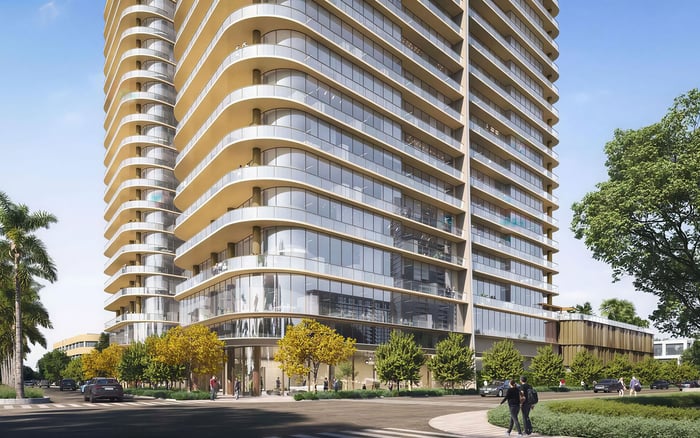
A buyer-focused framework for evaluating privacy, service, circulation, access control, and arrival procedures when considering Frida Kahlo Wynwood Residences in South Florida.

At Frida Kahlo Wynwood Residences, buyers should assess privacy as a sequence rather than a single feature. The relevant journey starts at the property boundary and continues through drop-off, reception, access control, elevators, corridors, and the residence entrance.
A sales presentation may communicate the intended experience, but buyers should request documents and diagrams that explain how the property will operate. The goal is to determine whether each stage of arrival supports discretion, predictable access, and clear separation between private and shared areas.
A useful review considers more than an owner’s routine return home. Buyers can ask how the property would handle family members arriving independently, invited guests checking in, deliveries reaching a residence, and service providers requesting access.
Questions should cover vehicle queuing, valet handoffs, guest waiting areas, credential verification, elevator permissions, and after-hours procedures. Buyers should also ask whether temporary credentials expire and how staff respond when a visitor lacks authorization.
The answers matter because privacy depends on repeatable procedures. Written protocols are more informative than assumptions about how staff may handle a particular situation.
Where a development may include different users or functions, buyers should request a circulation plan identifying entrances, reception points, elevators, parking routes, service areas, and shared spaces. They should then determine where pathways remain separate and where they may overlap.
This review can reveal practical questions about lobby activity, elevator demand, deliveries, staffing responsibilities, and access after normal business hours. Buyers should ask who controls credentials, who registers visitors, and which rules apply when different users enter the property.
For additional South Florida context, buyers may compare the arrival concepts presented for Miami Tropic Residences and Kempinski Residences Miami Design District. These comparisons should be used to sharpen questions, not to assume that separate developments share the same operations or legal structure.
Luxury service should be evaluated as an operating system. Buyers can request proposed schedules and responsibilities for reception, concierge, security, valet, maintenance, and package handling, then ask what happens when a desk is unstaffed or demand increases.
Any promoted health, wellness, hospitality, or concierge component should be tested against written terms. Relevant questions include eligibility, operating hours, reservation procedures, fees, guest access, response standards, and the ability of management to modify the offering.
A comparison with House of Wellness Brickell may help buyers develop questions about wellness-oriented positioning. The decisive information for any purchase, however, remains the documentation governing the specific residence under consideration.
Guest and delivery management can materially affect daily privacy. Buyers should ask whether visitors are preregistered, where delivery personnel wait, how packages are stored, and whether staff may grant elevator access without direct resident approval.
The same review should address oversized deliveries, food drop-offs, move-ins, service appointments, and overnight guests. Clear procedures can reduce uncertainty, while vague answers may indicate that important operational details remain unresolved.
If any form of rental use is important to the purchase decision, buyers should verify the applicable rights and restrictions in the purchase agreement, condominium documents, management rules, and relevant regulations. Marketing language should not be treated as a substitute for enforceable terms.
Operational questions are equally important. Buyers should determine who registers occupants, issues credentials, handles luggage, responds to lockouts, monitors amenity access, and enforces building rules. The frequency and administration of occupant turnover may influence lobby activity, staff workload, and the residential experience.
Any representation about finishes, furniture, appliances, storage, parking, office space, balconies, memberships, or services should be matched to the contract and exhibits for the selected residence. Buyers should ask about substitution rights, warranties, exclusions, recurring fees, transfer restrictions, and management’s authority to change procedures.
This residence-specific review helps separate general project imagery from the exact property interest being acquired. It also gives legal and financial advisers a clearer basis for evaluating obligations and potential limitations.
A disciplined review combines plans, contracts, governing documents, operating proposals, and direct questions. Buyers should retain written answers concerning access, staffing, guests, deliveries, shared circulation, amenities, rentals, and any separately documented property interests.
The central test is whether the proposed operating model supports a calm and controlled residential experience when multiple arrivals occur. If an answer affects the purchase decision, it should be confirmed in the controlling documents rather than left to expectation.
What is the first privacy question buyers should ask? Ask for a clear explanation of the complete route from curbside arrival to the residence door.
Why should buyers examine several arrival scenarios? Owners, guests, deliveries, and service providers may follow different procedures, so each route should be reviewed separately.
What should a circulation plan show? It should identify entrances, reception points, elevators, parking routes, service areas, and any locations where different users may cross paths.
How can buyers evaluate access control? Request written details about credentials, visitor authorization, elevator permissions, expiration rules, and after-hours access.
What staffing information should buyers request? Ask for proposed coverage and responsibilities for reception, concierge, security, valet, maintenance, and package handling.
Why do package and delivery procedures matter? They affect who enters shared areas, how long visitors remain on-site, and whether residence access stays controlled.
How should promoted services be reviewed? Confirm eligibility, hours, fees, reservations, guest rules, modification rights, and other terms in writing.
What should buyers verify if rental use matters? Review the purchase agreement, condominium documents, management rules, and applicable regulations with qualified advisers.
Why must buyers review the documents for a specific residence? Included property, features, rights, fees, and restrictions may depend on the selected residence and its contract exhibits.
What is the best way to shortlist comparable options for touring? Start with location fit, delivery status, and daily lifestyle priorities, then compare stacks and elevations to validate views and privacy.
If you'd like a private walkthrough and a curated shortlist, connect with MILLION.
If branded residences are on your mind — as a home or as an allocation — we would be glad to share what we are seeing, privately.
Begin a quiet conversation