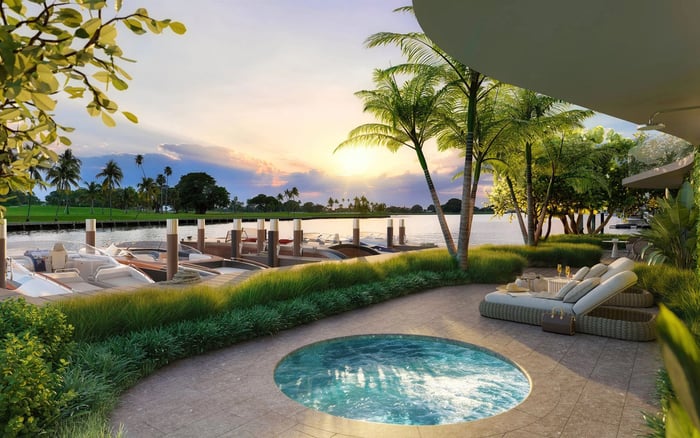
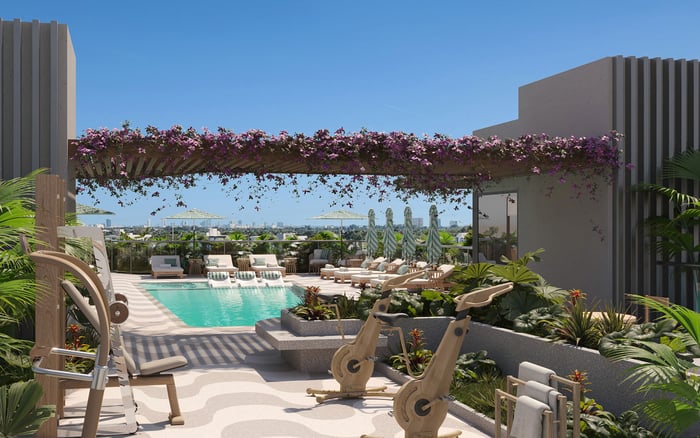
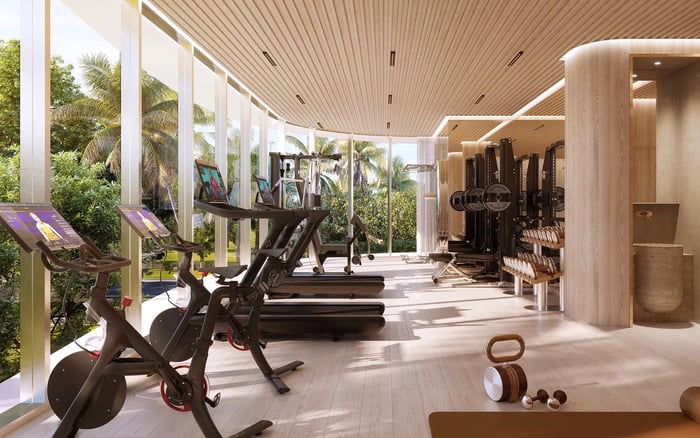
A buyer-focused guide to South Florida residences that balance wellness, privacy, and cultural-season access across Miami, Bay Harbor, Coconut Grove, and West Palm Beach.
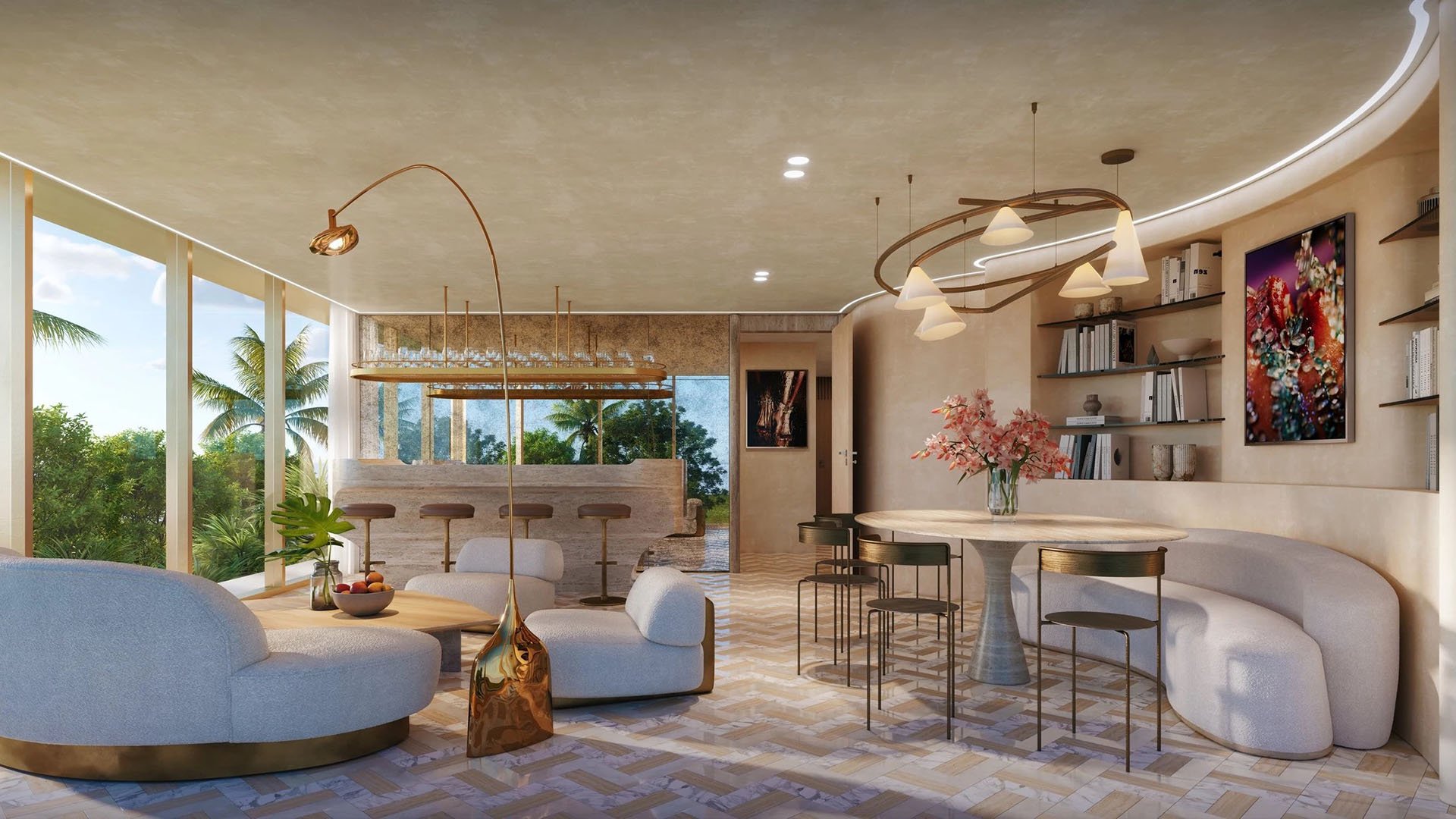
For South Florida’s most selective owners, wellness is no longer a separate amenity category. It is the framework through which the entire residence is judged: how quietly the building receives you, how quickly you can reset after a gala, and how easily a morning routine survives a week of dinners, openings, performances, and houseguests.
Cultural season sharpens that calculation. The best address is not simply the one closest to a venue or dinner reservation. It is the one that protects energy. A residence should make the transition from Pilates to patron dinner, from beach walk to private preview, feel almost frictionless. That is why wellness-led living has become especially relevant for owners who divide time between art fairs, museum evenings, symphony nights, philanthropic events, and the intimate social choreography of winter in South Florida.
The strongest choices tend to fall into five lifestyle geographies: Brickell and Downtown Miami for urban immediacy, Miami Beach for coastal culture, Bay Harbor Islands for quieter access, Coconut Grove for restorative greenery, and West Palm Beach for a refined Palm Beach County rhythm.
1. Brickell and Downtown Miami: urban cultural efficiency
This is the choice for owners who want the city to work around them. Brickell places daily fitness, business lunches, private dining, and evening events into a compact routine. The wellness value is not only the building; it is time recovered. For buyers comparing this lifestyle, 2200 Brickell belongs in the conversation as a Brickell address for those who want the city close without making every evening feel like a production.
2. Miami Beach: sea air, social proximity, and ceremony
Miami Beach remains compelling for owners who want culture with a resort-like cadence. The advantage is emotional as much as geographic: ocean light in the morning, a measured afternoon, then a short evening transition into dining, collecting, and hosting. A residence such as 57 Ocean Miami Beach fits the buyer who wants beach access, a softer start to the day, and a cultural calendar that still feels within reach.
3. Bay Harbor Islands: discretion between the beach and the city
Bay Harbor appeals to owners who prefer calm, privacy, and smaller-scale residential texture while remaining connected to both the beach and Miami’s broader social circuit. The area’s value during season is its ability to feel removed without feeling remote. The Well Bay Harbor Islands is especially relevant for buyers using wellness as the primary lens rather than a secondary feature.
4. Coconut Grove: restorative living for the culturally active
Coconut Grove is for owners who want to participate fully, then retreat into a more organic setting. The Grove’s appeal lies in its slower residential pace, mature landscape, and sense of privacy. For buyers who want wellness to feel residential rather than performative, The Well Coconut Grove offers a natural point of comparison within the Coconut Grove lifestyle conversation.
5. West Palm Beach: refined seasonality with Palm Beach adjacency
West Palm Beach has become increasingly relevant for owners who want cultural access with a more composed daily rhythm. The draw is the ability to move between galleries, dining, waterfront walks, and Palm Beach social life without defaulting to Miami’s higher velocity. Alba West Palm Beach suits buyers evaluating West Palm Beach as a wellness-forward base for the season.
The first criterion is arrival. A wellness-led residence should reduce the cognitive load of the day. That begins with discreet entry, intuitive circulation, and spaces that make returning home feel restorative. During cultural season, when schedules can become compressed, this matters as much as the gym or treatment room.
The second criterion is routine resilience. Can the owner maintain sleep, movement, nutrition, and privacy during an active week? The right residence supports the rituals that keep a full calendar pleasurable. Morning training, a quiet swim, a shaded terrace, or a calm lobby can be as valuable as proximity to a gala.
The third criterion is guest management. South Florida’s season often brings visiting family, collectors, advisors, and friends. A wellness-led home should make hosting feel elegant, not disruptive. Owners should consider how the building handles arrivals, service, parking, elevators, and privacy when the social calendar is at its busiest.
Brickell is best for the owner who treats culture as part of a tightly managed urban life. It works when the priority is speed, convenience, and the ability to move between business, wellness, and dinner without resetting the day.
Miami Beach is best for the owner who wants the cultural season to feel glamorous but balanced by water, light, and leisure. The Miami Beach buyer often values emotional restoration as highly as logistical convenience.
Bay Harbor is best for the owner who wants quiet between engagements. It is a strong fit for those who prefer privacy, boutique scale, and a less theatrical residential setting.
Coconut Grove is best for the owner who wants softness, greenery, and a sense of retreat. It suits buyers who love the season but do not want to live inside its tempo every hour.
West Palm Beach is best for the owner who prefers elegance with restraint. It is particularly compelling for buyers whose social and cultural life leans toward Palm Beach County, but who still want a condominium lifestyle.
The most important luxury in season is not always square footage or spectacle. It is the ability to protect attention. A great wellness-led residence allows an owner to say yes more selectively and recover more completely. It supports the body, but it also protects the calendar.
For South Florida buyers, the smartest decision is rarely about choosing the most visible building. It is about choosing the address that matches the owner’s rhythm. Some will need Brickell’s immediacy. Others will prefer Miami Beach’s coastal ceremony, Bay Harbor’s discretion, Coconut Grove’s restorative character, or West Palm Beach’s composed sophistication.
The best wellness-led residence is the one that lets culture enrich life without consuming it.
What makes a residence wellness-led rather than simply amenity-rich? A wellness-led residence supports daily recovery, privacy, movement, sleep, and calm, not just a long list of shared spaces.
Is Brickell a good choice for cultural season buyers? Yes, Brickell works well for owners who want urban access, efficient evenings, and a highly connected daily routine.
Why would a buyer choose Miami Beach for wellness and culture? Miami Beach offers a coastal lifestyle that can balance social intensity with light, water, and a more resort-like cadence.
Is Bay Harbor Islands too quiet for cultural season? Not for buyers who value discretion. It can serve as a calm residential base between Miami Beach and the broader city.
Who is the Coconut Grove buyer in this category? The Coconut Grove buyer usually wants greenery, privacy, and restorative residential character while remaining culturally active.
How does West Palm Beach fit into the wellness-led conversation? West Palm Beach appeals to owners seeking a polished seasonal rhythm with access to dining, galleries, waterfront living, and Palm Beach social life.
Should buyers prioritize proximity or privacy? The best answer depends on lifestyle, but many ultra-premium buyers choose the address that preserves energy rather than the closest possible location.
Are wellness-led residences mainly for primary homes? No. They can be especially valuable as seasonal homes because they help owners maintain routines during a dense social calendar.
What should owners evaluate during a private tour? Focus on arrival, noise, light, circulation, service flow, wellness spaces, terrace usability, and how the building feels at different times of day.
Can one residence serve both cultural access and retreat? Yes, if the location, building scale, service model, and private spaces are aligned with the owner’s actual seasonal rhythm.
For a tailored shortlist and next-step guidance, connect with MILLION.
If branded residences are on your mind — as a home or as an allocation — we would be glad to share what we are seeing, privately.
Begin a quiet conversation