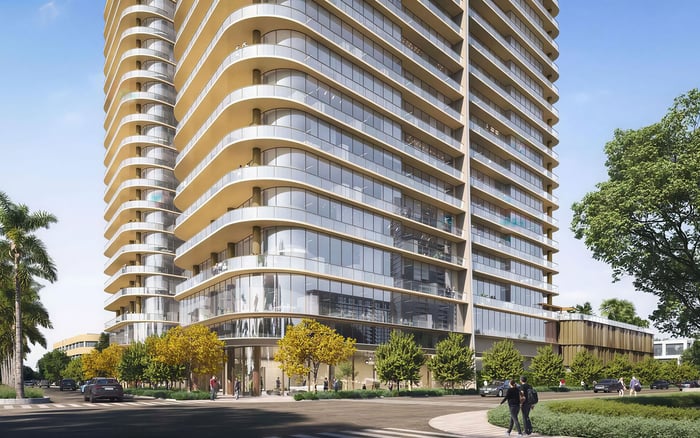
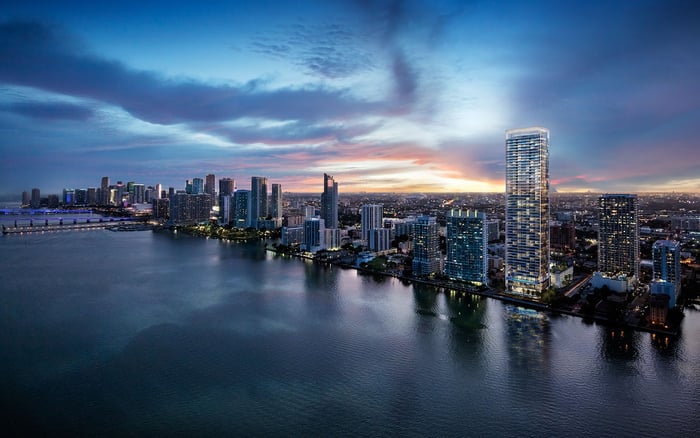
A discreet buyer’s framework for California entrepreneurs evaluating Midtown Miami, from daily rhythm and building service to resale discipline and portfolio fit.

For a California entrepreneur, buying in Midtown Miami should not begin with a view, a lobby, or a dinner reservation. It should begin with a thesis. What role is this residence meant to play: primary base, tax-season residence, creative retreat, pied-a-terre, family landing pad, or portfolio asset with personal use?
Midtown can be compelling precisely because it offers a more urban version of Miami living. That is also why it requires discipline. A buyer coming from Los Angeles, San Francisco, Palo Alto, or Newport Beach may be accustomed to a different relationship with car time, privacy, neighborhood identity, and residential service. In Miami, small lifestyle frictions can matter as much as floor plan drama.
Pressure-testing means refusing to let the sales narrative do all the work. It means living with the decision before owning it. Walk the blocks you expect to use. Arrive at the times you would actually arrive. Ask how the building will feel on a weekday morning, a Friday evening, and a quiet Sunday. A luxury residence is not only an object. It is a daily operating system.
The first test is not architectural. It is behavioral. Map a typical California day and rebuild it in Miami. Where do you take calls? Where does your spouse work out? Where does your child need to be dropped off? Where do visiting partners stay? Where do you take a last-minute investor dinner without turning the evening into logistics?
A buyer who loves Midtown on a curated tour may feel differently after testing the cadence of mornings, deliveries, guest arrivals, dog walks, private drivers, and late returns. If your life depends on quiet early calls with the West Coast, study the building's acoustic privacy and the orientation of the residence. If you entertain investors or founders, consider whether the arrival sequence feels polished without becoming theatrical.
For many entrepreneurs, the balcony is not simply outdoor space. It is a decompression zone between markets, calls, and travel. Test whether it feels usable, private, and proportionate to the way you will actually live. A beautiful terrace that cannot support your routine is decoration, not value.
Midtown should be judged against alternatives, not in isolation. Begin with a relevant Midtown lens such as Miami Design Residences Midtown Miami, then compare the feeling against nearby and established luxury references that sharpen your criteria.
If you are considering the broader urban Miami market, look at how a residence in Edgewater changes the emotional equation. A project such as EDITION Edgewater helps frame the difference between design-led city living and a more water-oriented version of the same ambition. The point is not to decide by brand alone. It is to understand what you value when lifestyle, service, and setting compete.
Then test Brickell. A branded urban reference such as 888 Brickell by Dolce & Gabbana introduces a different kind of energy: more business-facing, more vertical, and more closely tied to Miami's financial rhythm. If that feels too formal, Midtown may gain appeal. If it feels efficient, Midtown must prove why its softer edges are worth choosing.
Finally, include a waterfront comparison. Villa Miami can help a California buyer clarify whether the desired Miami experience is truly urban, or whether the water is doing more emotional work than expected. This comparison set prevents the common mistake of buying the first neighborhood that feels fresh.
Entrepreneurs understand product-market fit. Apply the same rigor to the residence. A floor plan has to match the buyer's use case, but so do the building's service culture, governance, guest policy, rental posture, parking logic, and maintenance philosophy.
Investment should not be reduced to projected appreciation. In the luxury tier, the more durable question is whether future buyers will understand the asset quickly. Is the residence easy to explain? Does it have a clean hierarchy of rooms? Are the views, ceilings, outdoor areas, and arrival experience coherent? Does the building identity feel specific without becoming too narrow?
New construction can appeal to California buyers who prefer contemporary systems, wellness-oriented amenities, and a lower initial appetite for renovation. Still, newness is not a substitute for scrutiny. Ask how the building will mature. Study the quality of materials at the touch points. Consider how common areas will age under real use. A residence bought for convenience should not become a management project.
The best purchase is one you would be comfortable defending to your own board: why this building, why this line, why this floor, why this neighborhood, and why now for your life.
Midtown Miami can be attractive to buyers who want cultural access without defaulting to a purely resort environment. But privacy is not only about seclusion. It is about control. Can you enter discreetly? Can guests be received without confusion? Can staff, deliveries, private chefs, drivers, and service providers move through the building smoothly?
California entrepreneurs often have hybrid households: part family, part office, part hospitality suite, part wellness retreat. The building must accommodate that complexity. Look closely at elevator flow, package handling, back-of-house competence, valet rhythm, and the tone of the front desk. A five-minute wait repeated daily becomes a material flaw.
Noise is another essential test. Do not evaluate only with windows closed during a quiet showing. Visit when the neighborhood is active. Stand in the rooms where you will sleep and take calls. If your Miami life includes Wynwood dinners, Brickell meetings, and Edgewater friends, test the travel pattern from each rather than imagining it.
Service should feel intuitive, not performative. The right building does not overannounce luxury. It removes friction so quietly that the owner can think, recover, host, and leave again.
Before making an offer, write a one-page purchase memo. This is not bureaucracy. It is clarity. Include the intended use, must-have lifestyle outcomes, non-negotiable building characteristics, acceptable compromises, and exit logic.
For a California entrepreneur, Midtown must prove at least four things. First, it must improve daily life rather than merely diversify geography. Second, it must compete convincingly with other Miami submarkets you would actually consider. Third, the specific residence must have enough architectural and functional clarity to remain legible on resale. Fourth, the building must operate at the level your life requires.
If the answers are strong, Midtown can become more than a Miami address. It can be a strategic residential base, one that supports work, family, wellness, and access without forcing the buyer into a single Miami archetype. If the answers are vague, wait. In luxury real estate, restraint is not hesitation. It is often the highest expression of taste.
Should a California entrepreneur buy in Midtown Miami before renting first? Renting first can be useful if the buyer is uncertain about daily rhythm, commute patterns, or building style. If conviction is already high, a rigorous multi-day test can provide similar clarity.
What is the most important Midtown Miami pressure test? Test the exact life you plan to live, not the life presented during a showing. Morning routines, evening returns, privacy, and service flow reveal the truth.
How should Midtown compare with Edgewater? Edgewater may clarify whether water orientation matters more than neighborhood energy. Use it as a benchmark for setting, views, and emotional tone.
How should Midtown compare with Brickell? Brickell is useful as a business-district comparison. If its pace feels too corporate, Midtown may feel more personal and flexible.
Is Midtown Miami a lifestyle purchase or an investment? It can be both, but the personal-use case should be clear first. Luxury assets perform best for owners when the residence is easy to understand and easy to live in.
What should buyers ask about new-construction residences? Ask how materials, service systems, amenities, and common areas are expected to age. Newness should support convenience, not replace due diligence.
How many times should a buyer visit before committing? Visit at different times of day and under different conditions. A residence that works only during a polished tour has not passed the test.
What role should amenities play in the decision? Amenities matter only if they match actual habits. A quieter, better-run building can outperform a longer amenity menu.
Should resale be considered even for a long-term home? Yes. Resale discipline protects optionality, especially for entrepreneurs whose business, family, or tax circumstances may evolve.
What is the final sign that Midtown Miami is the right choice? The right residence should feel both emotionally compelling and operationally easy. If it simplifies your Miami life, it has earned serious consideration.
When you're ready to tour or underwrite the options, connect with MILLION.
If branded residences are on your mind — as a home or as an allocation — we would be glad to share what we are seeing, privately.
Begin a quiet conversation