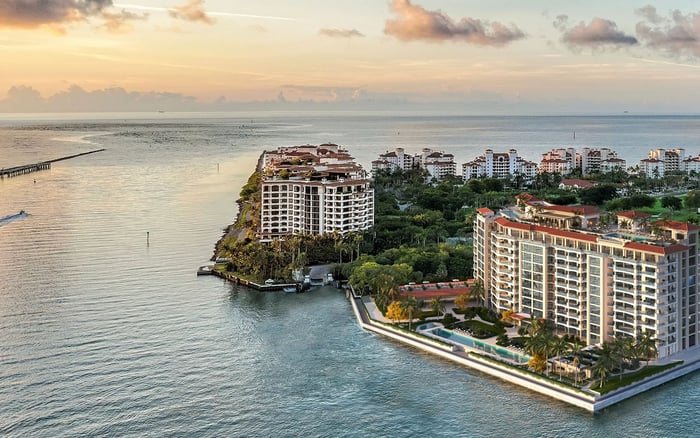
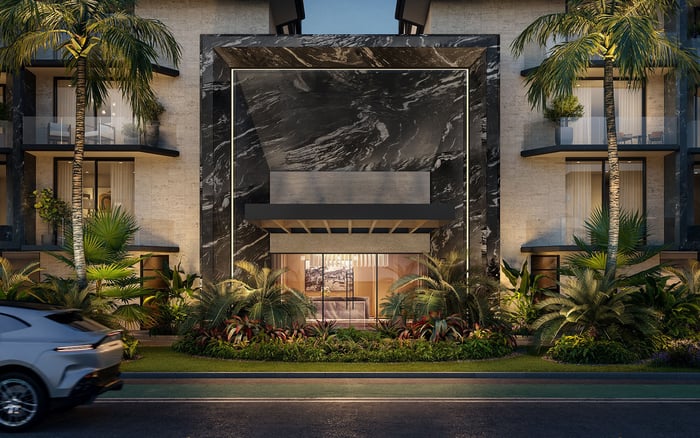
A discreet buyer’s guide to evaluating lock-and-leave ownership in North Miami, from building operations and storm planning to access, maintenance, privacy, and long-term flexibility.

For a North Miami buyer, lock-and-leave ownership is less about absence than control. The ideal residence should feel serene when occupied and equally well managed when empty. That takes more than a handsome lobby, a pool deck, or a promise of convenience. It takes a building culture capable of protecting privacy, preserving condition, and handling ordinary disruptions without turning a second residence into a second job.
North Miami occupies a useful position for this kind of ownership. Buyers can weigh proximity to Biscayne Bay, Aventura, Miami Beach, Bal Harbour, and the broader waterfront corridor without committing to the pace of a denser urban core. That flexibility appeals to second-home buyers who want access without constant oversight. Still, convenience should be verified room by room, policy by policy, and line item by line item.
A polished sales presentation may describe a carefree lifestyle, but the better question is practical: what happens when you are not there? If a delivery arrives, a leak appears, a storm approaches, or a contractor needs access, the answer should be clear before you sign.
In lock-and-leave ownership, the building is part of the asset. A beautiful unit can be undermined by weak operations, vague communication, or policies that shift too much responsibility back to the owner. Before studying finishes, study the building’s rhythm.
Ask how access is managed for guests, family, vendors, housekeepers, and private service providers. Clarify whether the front desk, management office, or security team controls entry permissions. Confirm whether there is a formal process for authorizing work inside the residence while you are away. Luxury buyers often focus on discretion, but discretion depends on systems: logs, approvals, notification standards, key control, and escalation protocols.
This is where comparing buildings becomes useful. A buyer considering One Park Tower by Turnberry North Miami can sharpen expectations by looking beyond architecture and amenities to the operational promise implied by the ownership experience. The same lens applies when comparing nearby bayfront and island projects such as Continuum Club & Residences North Bay Village, where lifestyle expectations may be similar but governance, access, and service culture can differ meaningfully.
A lock-and-leave residence should have a plan for the weeks when no one is home. Buyers should ask management how vacant residences are handled, what the owner is expected to do before departure, and what building personnel will and will not monitor. There is a difference between a building that is staffed and a building genuinely prepared for absentee ownership.
The strongest buildings make owner communication simple. You should know whom to contact after hours, how urgent issues are escalated, and whether the association or management company distributes operational updates in a timely manner. Ask about water shutoff procedures, air-conditioning guidance, balcony furniture expectations, package storage, mail handling, and access for approved vendors. None of these questions is glamorous. All of them matter.
For waterfront ownership, storm preparation deserves special attention. Buyers should understand what the association requires from residents before severe weather, including balcony clearing, shutter or glass protocols where applicable, and procedures for securing common areas. The goal is not to predict events. It is to know whether the building has a disciplined, repeatable response.
Governing documents are often treated as closing formalities. For lock-and-leave buyers, they are operating manuals. Review rules on rentals, guest stays, pets, renovation hours, move-in procedures, deliveries, storage, parking, valet, and service elevator use. If your life includes extended travel, visiting family, private staff, seasonal entertaining, or a driver, the rules should support that reality.
Pay particular attention to rental restrictions. Even if you do not intend to rent, future flexibility can affect resale. A building with strict occupancy rules may appeal to privacy-focused owners, while a more flexible policy may appeal to investors. Neither is universally better. The question is whether the policy matches your intended use and long-term exit strategy.
In the spirit of practical buyer’s guides, buyers should request a complete picture of monthly obligations, reserves, insurance responsibilities, and special assessment procedures. A lower carrying cost is not automatically more efficient if services are limited or deferred maintenance becomes a future burden. Conversely, a higher monthly cost may be rational if it funds staffing, security, upkeep, and amenities you will genuinely use.
Views are emotional. Logistics are what make lock-and-leave ownership livable. Visit at different times if possible and observe arrival, parking, elevator flow, package handling, valet coordination, lobby privacy, and the route from car to residence. A property that feels calm in a presentation may feel less seamless when residents, guests, vendors, and deliveries converge.
Ask where oversized deliveries are staged, how long packages can remain on site, and whether cold storage is available for food deliveries. Clarify how housekeepers and private chefs enter, where they park, and whether building rules require advance notice. If you expect to arrive late from the airport or depart early for a flight, the experience should be intuitive rather than improvised.
North Miami buyers often compare the area with nearby island, beach, and mainland alternatives. Looking at La Baia North Bay Harbor Islands and Bentley Residences Sunny Isles can help calibrate what different submarkets emphasize, from bay access and quieter scale to branded service and high-amenity living. The exercise is not to chase a name. It is to identify which operating style best fits the way you actually live.
The right lock-and-leave property for a frequent traveler may not be right for a family using the residence every school holiday. Some buyers want a quiet, residential building with minimal traffic. Others prefer a more serviced environment where staff can coordinate arrivals, deliveries, and lifestyle needs. Both can be luxurious when expectations are aligned.
Privacy should be evaluated in layers. Consider elevator configuration, corridor density, amenity access, guest policies, valet procedures, and how visible arrivals feel from the lobby. Maintenance should be evaluated just as carefully. Who services mechanical systems? How easy is it to schedule preventive work? Are there preferred vendors? Can management coordinate access, or must the owner be present?
The most successful purchases are made by buyers who define their absence before defining their amenities. If you plan to leave for months, the building must be more self-sufficient. If you come and go weekly, arrival speed and staff familiarity may matter more. If you host often, guest policies and parking become part of the luxury experience.
What does lock-and-leave mean in North Miami? It means owning a residence that can be secured and managed with minimal owner involvement while you are away.
Is a condo better than a single-family home for lock-and-leave ownership? A condo can be easier because building staff and shared systems may reduce the owner’s day-to-day oversight.
What should I ask before buying? Ask about access control, storm procedures, vendor entry, package handling, maintenance responsibilities, and communication protocols.
Do amenities matter for lock-and-leave buyers? Yes, but operations matter more. A useful amenity is one that is consistently maintained and easy to access.
How important are association rules? They are central. Rules determine how guests, rentals, pets, renovations, deliveries, and vendors are handled.
Should I worry about rental restrictions if I do not plan to rent? Yes. Rental rules can affect future flexibility, resale positioning, and the building’s overall residential character.
What makes waterfront ownership different? Waterfront ownership places greater emphasis on storm readiness, balcony protocols, exterior maintenance, and insurance awareness.
How should second-home buyers compare buildings? Compare the experience of being absent: who communicates, who grants access, and how issues are resolved.
Is Aventura relevant to a North Miami search? It can be. Aventura offers a nearby point of comparison for access, shopping, services, and residential lifestyle preferences.
When should I involve an advisor? Bring in an advisor before contract review so operational questions, building rules, and ownership costs are studied early.
When you're ready to tour or underwrite the options, connect with MILLION.
If branded residences are on your mind — as a home or as an allocation — we would be glad to share what we are seeing, privately.
Begin a quiet conversation