A discreet buyer’s guide to wind mitigation credits in Aventura luxury real estate, focused on documentation, insurance review, and smarter due diligence before closing.

In Aventura, the most sophisticated real estate decisions are rarely about beauty alone. A residence may offer the right view corridor, the right arrival sequence, the right marina adjacency, and the right sense of privacy. Still, the ownership experience often turns on less visible details. Wind mitigation credits sit in that quieter category: technical, easily overlooked, and potentially meaningful to carrying costs.
For a luxury buyer, the question is not simply whether a property is elegant. It is whether the residence is documented with the same discipline that shaped its design. Wind mitigation credits are generally tied to qualifying features that may help an insurance carrier evaluate wind-related risk. The credit itself is not automatic, and it should never be assumed from a building’s price point, newness, or waterfront stature.
That is why this topic deserves attention before contract deadlines expire. A polished sales presentation may describe impact glazing, roof systems, shutters, or building standards, but an insurance advisor will want documentation, not adjectives. For buyers evaluating Aventura, the most valuable posture is calm, precise, and early.
The first question is direct: what wind mitigation documentation exists today, and who prepared it? A seller, association, developer representative, or property manager may have records, but the buyer should understand whether those records are current enough and specific enough for underwriting review.
In a condominium, ask whether documentation applies to the entire building, to the specific residence, or to both. The distinction matters because credits may depend on features shared by the structure and features particular to the unit. A high-floor residence with sweeping water views may still need unit-level details confirmed, especially around openings, balcony doors, and any prior alterations.
In a single-family or townhouse setting, the conversation may be more individualized. Ask for roof details, permits related to major exterior work, documentation for windows and doors, and any prior wind inspection materials. If the home has been renovated, confirm that replacement products were properly recorded and that the documentation matches what is installed.
Luxury buyers often hear broad phrases such as storm ready or hurricane rated. Those phrases may be useful in conversation, but they are not a substitute for insurance review. Ask specifically which features may be relevant to wind mitigation: roof type, roof attachment, opening protection, exterior doors, garage doors where applicable, and secondary water resistance where relevant.
The goal is not to become an inspector. The goal is to know which questions belong in front of the right professionals. A qualified inspector can observe and document. An insurance advisor can interpret how a carrier may treat the findings. A closing team can help keep timing aligned with contract milestones.
For new-construction purchases, the buyer should still request the applicable documentation rather than assuming the credit will follow. For resale purchases, the buyer should ask whether any previous credit was actually applied, whether circumstances have changed, and whether the current policy context will be different for a new owner.
Many Aventura luxury buyers focus on amenities, service, security, and water access, but association recordkeeping can be just as important to the ownership experience. In a condominium, ask whether the association maintains building-level wind mitigation materials and whether those materials can be shared with buyers, lenders, or insurance professionals during due diligence.
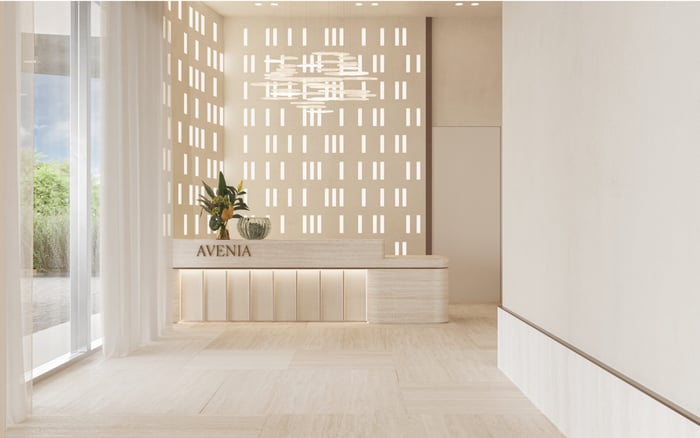
The question is especially relevant when comparing boutique scale with larger resort-style communities. A buyer considering Avenia Aventura, for example, should treat insurance documentation as part of the same pre-closing file as architectural plans, association materials, and budget review. The point is not to diminish the romance of the purchase. It is to protect it.
Ask who within the building can answer documentation questions. Is it the management office, the association board, the developer team, or the seller’s representative? If a credit depends on a form, inspection, or record that cannot be produced quickly, timing may become the true issue.
A wind mitigation credit is useful only when understood in context. Ask your insurance advisor to estimate how documented features may affect the premium, but also ask what is not captured by the credit. Deductibles, coverage structure, carrier appetite, occupancy, replacement values, and other underwriting considerations may shape the final insurance picture.
This is particularly important for buyers comparing Aventura with nearby luxury corridors. A residence near Sunny Isles Beach may feel similar in lifestyle language, but the insurance conversation should remain property-specific. When buyers study projects such as Bentley Residences Sunny Isles, the same discipline applies: admire the architecture, then verify the documentation.
The most elegant approach is to begin the preliminary insurance conversation early. Not after the inspection period. Not after loan conditions are underway. Not after the moving plan begins. Early enough for the buyer to evaluate total cost of ownership with composure.
One common misconception is that a prior owner’s credit automatically creates the same benefit for the next owner. A better question is: what was credited before, and what will my carrier recognize now? Even if the seller provides evidence of an existing credit, the buyer should still confirm how a new policy may be handled.
Ask for a clear paper trail. If the seller references a credit, request the supporting documentation rather than relying on a premium line item. If the building references mitigation features, request the materials that an insurance advisor can review. If the residence has impact openings, ask for product information where available and confirmation that any modifications are reflected in the file.
Waterfront ownership often rewards patience in due diligence. The view is immediate; the paperwork is slower. Yet in a market where discretion and efficiency matter, orderly documentation can be a genuine luxury.
Wind mitigation should not be treated as an isolated technical issue. It can inform pricing, contract timing, inspection strategy, and the buyer’s understanding of future carrying costs. If records are incomplete, that does not automatically mean a buyer should walk away. It may mean the buyer needs more time, more clarity, or a more conservative insurance assumption.
For residences in surrounding luxury nodes, the same thinking carries across the coast. A buyer drawn to Shell Bay by Auberge Hallandale or Rivage Bal Harbour may be evaluating lifestyle, privacy, and service first. Still, the wind documentation file should enter the conversation before final commitment.
The refined buyer’s stance is simple: ask early, ask specifically, and let professionals interpret the result. Aventura rewards buyers who see beyond finishes and understand the mechanics of ownership.
Before offering, ask whether any current wind mitigation documentation is available. During inspection, ask whether the visible features match the documents. Before insurance binding, ask your advisor which credits may apply and which assumptions remain unresolved. Before closing, ask whether all records have been saved in your ownership file.
Also ask about balcony openings, sliding glass doors, terrace access, and any exterior penetrations that could affect the review. In high-service buildings, confirm whether management has a standard package for buyers. In boutique properties, confirm who controls the relevant records.
The best luxury acquisitions feel effortless because the difficult questions were asked quietly and early. Wind mitigation is one of those questions. It is not glamorous, but it can be consequential.
What is a wind mitigation credit? It is a potential insurance credit associated with documented wind-resistant features. Eligibility and value should be confirmed by an insurance professional.
Should I ask about wind mitigation before making an offer? Yes. Early questions can help you understand whether documentation exists and whether insurance assumptions should be reviewed before deadlines.
Does a luxury building automatically qualify for wind credits? No. Price, prestige, and age do not replace documentation or carrier review.
Who should review the wind mitigation documents? A qualified inspector can document features, while an insurance advisor can explain how those findings may affect coverage and premium.
Do condominium buyers need unit-specific information? Often, yes. Building-level records may not answer every question about the particular residence, especially openings and alterations.
Can a seller’s previous credit apply to me? Do not assume it will. Ask your insurance advisor whether a new policy would recognize the same documentation.
What if the association does not have records ready? Ask who controls the files and whether they can be produced during due diligence. Timing can be as important as the records themselves.
Should new-construction buyers still ask for mitigation documents? Yes. New-construction may offer modern systems, but buyers should still confirm what documentation is available for insurance review.
Does wind mitigation replace a full insurance review? No. It is one component of a broader insurance conversation that may include coverage structure, deductibles, and underwriting details.
Is this only relevant for waterfront properties in Aventura? No. Waterfront homes make the topic feel especially visible, but wind documentation can matter across many luxury property types.
For a tailored shortlist and next-step guidance, connect with MILLION.
If branded residences are on your mind — as a home or as an allocation — we would be glad to share what we are seeing, privately.
Begin a quiet conversation