A discreet buyer’s guide to comparing The Residences at 1428 Brickell with a wellness-access concept in Brickell, focused on ownership clarity, amenity control, privacy, and the daily rhythm of Miami’s urban core.
In Brickell, the most sophisticated residential decisions are no longer framed solely around square footage, skyline exposure, or proximity to the financial district. Buyers are asking a more exacting question: what kind of life does the ownership model actually deliver? The Residences at 1428 Brickell and House of Wellness Brickell sit squarely in that conversation because both speak to a buyer who values privacy, amenity depth, club-like access, and the ability to move through the neighborhood with ease.
The distinction is that The Residences at 1428 Brickell can be evaluated as a clearly defined Brickell luxury residential project. House of Wellness Brickell, by contrast, should be approached through careful review of its legal structure, access terms, membership rules, and any residential component before a buyer assumes how it functions. That distinction is not minor. It is the difference between buying into a private residential building and considering an access-oriented wellness concept whose ownership implications must be confirmed.
For the ultra-premium buyer, the question is not simply which address feels more desirable. It is whether the daily experience is controlled by deeded ownership, building governance, and private residential amenities, or by a more fluid framework centered on club access, services, wellness programming, and neighborhood convenience.
The Residences at 1428 Brickell is positioned within Brickell’s luxury residential market as a project relevant to buyers comparing private ownership and amenity access in Miami’s urban core. That matters because Brickell buyers often want the intensity of the city without surrendering the privacy and predictability associated with a fully residential environment.
In this model, the residence is the foundation. Amenities support the private home rather than replacing it. The buyer is not merely purchasing proximity to services or a social calendar. The buyer is selecting a residential framework in which access, building experience, and long-term control are expected to flow from ownership.
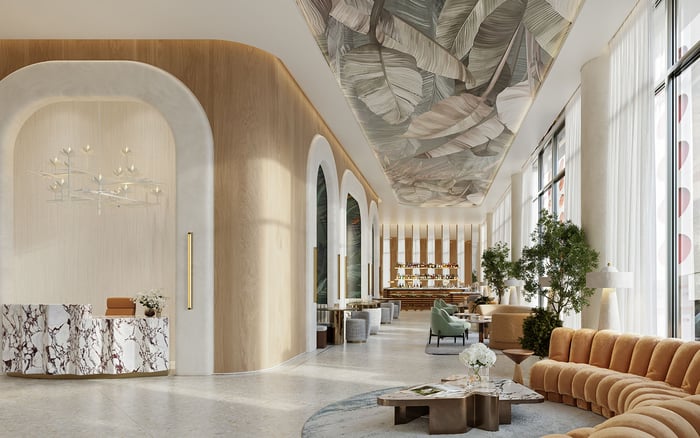
That is why The Residences at 1428 Brickell is the anchor point in this comparison. It represents the side of the market where a buyer can ask traditional luxury condominium questions with discipline: What is the private amenity philosophy? How does the building protect resident-only spaces? How do the lobby, arrival sequence, wellness areas, pool, and everyday service patterns support residential calm inside a highly active district?
For buyers already focused on Brickell, The Residences at 1428 Brickell also belongs to the broader new-construction and pre-construction conversation. Those categories carry their own diligence needs, from contract review to future building operations, but they can also offer a more intentional fit for clients who want contemporary design, new amenity planning, and a lifestyle calibrated to how Miami is being lived now.
House of Wellness Brickell should be evaluated differently. Without confirmed project terms, a buyer should not assume that the name describes deeded residences, transferable club privileges, specific amenity rights, membership obligations, pricing, delivery timing, or access guarantees. The word “wellness” can mean many things in a luxury real estate context, from spa and fitness programming to hospitality-style service, medical-adjacent longevity concepts, members-club environments, or simply a design language centered on health and restoration.
That ambiguity can be attractive, but it also demands precision. If House of Wellness Brickell is part of a buyer’s consideration set, the essential questions are contractual rather than emotional. Is the buyer purchasing real property, membership access, or a combination of both? Are privileges attached to ownership, personal to the member, or subject to change? Are amenities private, shared, reciprocal, or operated by a third party? What happens on resale? What happens if programming changes?
For a buyer who already owns a primary residence in Miami, an access-led wellness model may be appealing if it functions as an extension of daily life rather than a substitute for home. For a buyer seeking a principal residence, the analysis becomes more serious. A residence needs permanence, governance, privacy, and clear rights. A club environment can deliver energy and convenience, but it may not provide the same residential certainty unless its structure is explicit.
The phrase “club access” has become powerful in South Florida because it suggests curation. The right club can make daily life feel frictionless: morning movement, recovery, dining, informal meetings, social overlap, and a sense of belonging. But access is not the same as ownership. Access can be governed by rules, capacity, guest policies, membership categories, and operational decisions that may evolve.
Private amenities, by contrast, are typically evaluated through the residential building itself. The buyer wants to understand who can use them, how they are staffed, whether guests are limited, and how the building preserves exclusivity during peak periods. In a district like Brickell, where the public realm is lively and highly visible, private amenity separation becomes part of the luxury value proposition.
This is where The Residences at 1428 Brickell and a wellness-club concept would appeal to different instincts. The former starts with home and extends into amenities. The latter, if structured around access, may start with experience and extend into lifestyle. Both can be compelling, but they are not interchangeable. For investment-minded buyers, that distinction also affects how future purchasers may understand value. A deeded residence in a luxury building can be assessed through comparable residential ownership. A membership-led or wellness-access model may require a more tailored analysis.
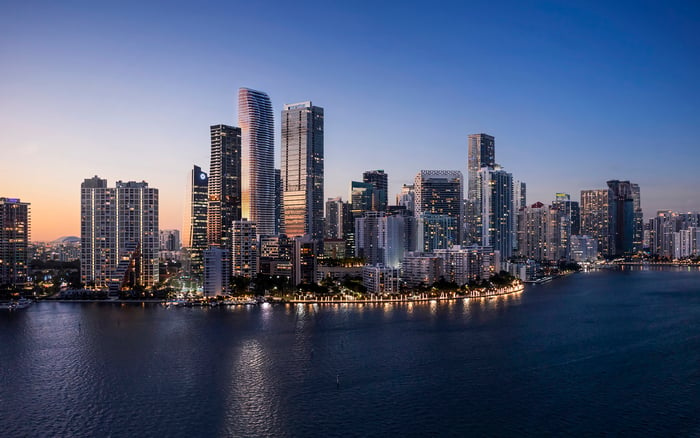
Brickell’s appeal is its rhythm. The neighborhood supports early workouts, business lunches, evening dining, waterfront movement, and a level of walkability that remains rare in many luxury South Florida submarkets. A buyer who chooses Brickell is often choosing productive density: the ability to live vertically, move efficiently, and keep the day’s obligations close.
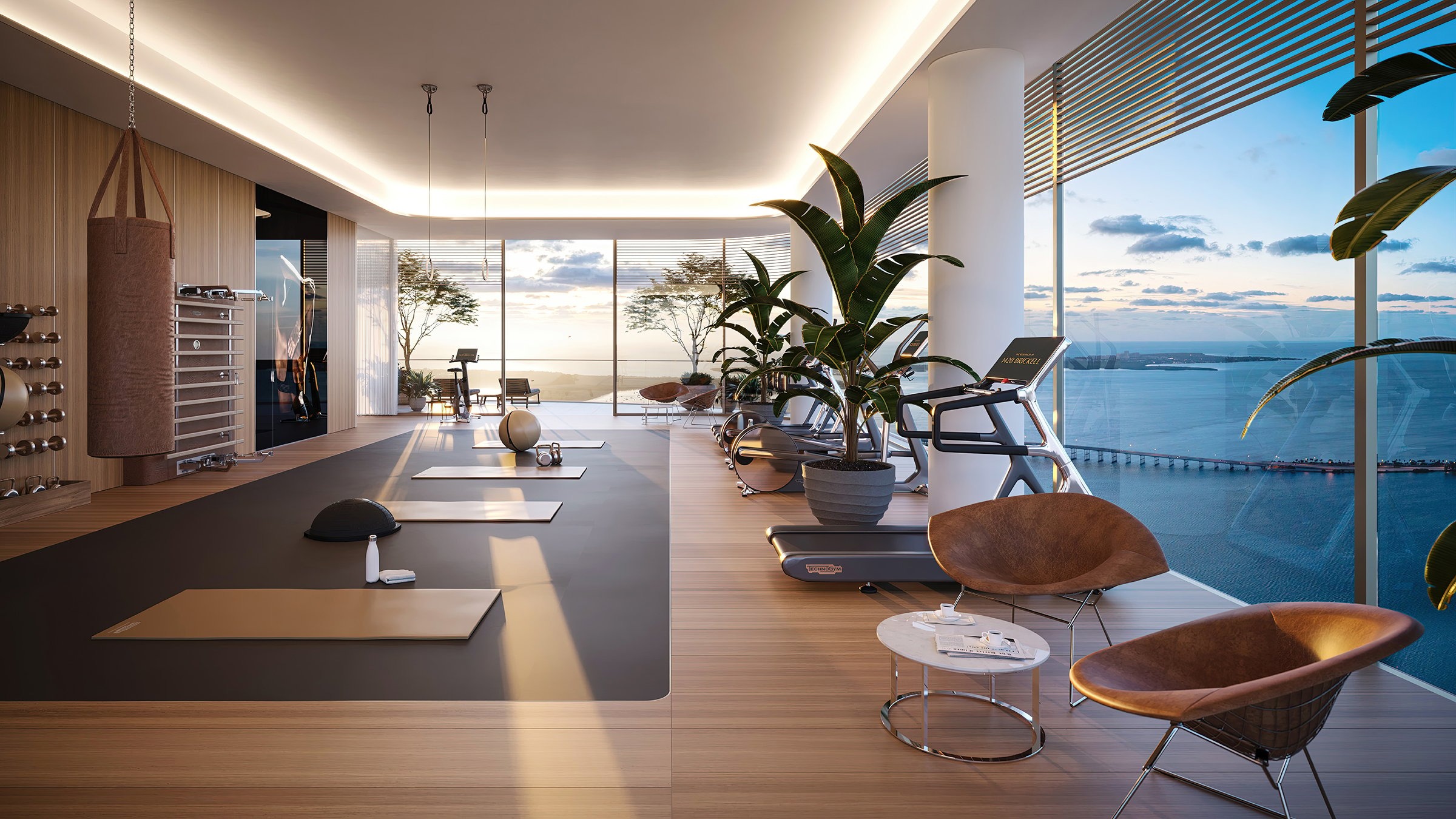
That rhythm rewards buyers who understand how they actually live. A frequent traveler may prioritize a lock-and-leave residence with strong service and controlled access. A Miami-based executive may value a building where the amenity deck can replace several external memberships. A wellness-focused buyer may want a daily routine that includes training, recovery, dining, and social interaction without crossing the causeway or planning an entire day around appointments.
The best decision is therefore not abstract. It depends on how often the buyer will be in residence, whether the home is primary or seasonal, how much privacy is required, and whether the household wants wellness as an in-building amenity or as a broader neighborhood layer.
The clearest way to compare the two models is to separate ownership from access. The Residences at 1428 Brickell belongs in the private residential ownership conversation for Brickell buyers seeking a luxury home with amenity relevance in the urban core. House of Wellness Brickell, while thematically aligned with the wellness expectations of today’s buyer, should be reviewed through confirmed legal, membership, and operating terms before any residential or access assumptions are made.
In the most refined purchases, restraint is an advantage. Buyers do not need to chase every new lifestyle phrase. They need to know what they own, what they may use, who else may use it, and how durable those rights are over time.
Is The Residences at 1428 Brickell a relevant option for Brickell luxury buyers? Yes. It is positioned as a Brickell luxury residential project for buyers comparing private ownership and amenity access in Miami’s urban core.
Can House of Wellness Brickell be described as a residential project? Not without confirmed terms. Buyers should review its ownership, access, membership, and operating structure before treating it as residential.
What is the main difference between private amenities and club access? Private amenities are typically tied to a residential building, while club access may be governed by membership terms, rules, and operational discretion.
Why does Brickell appeal to wellness-focused buyers? Brickell offers a dense daily rhythm where work, dining, fitness, services, and residential life can sit close together in Miami’s urban core.
Should a buyer assume wellness branding means private access? No. Wellness branding should be separated from legal rights, guest policies, capacity rules, and long-term control.
Is The Residences at 1428 Brickell part of the new-construction discussion? Yes. Buyers may evaluate it within Brickell’s new-construction and pre-construction landscape while focusing on ownership clarity.
How should investment buyers compare these models? Investment buyers should distinguish deeded residential value from any access-based benefits that may depend on separate rules or memberships.
Does a pool or wellness amenity define the full value of a residence? No. Amenities matter, but privacy, governance, service quality, access control, and resale clarity are equally important.
Who is best suited to a private residential model in Brickell? Buyers seeking a primary or seasonal home with predictable rights, controlled access, and a residential foundation may prefer this model.
What should buyers confirm before choosing an access-led wellness concept? They should confirm what is owned, what is merely accessible, whether rights transfer, and how rules can change over time.
When you're ready to tour or underwrite the options, connect with MILLION.
If branded residences are on your mind — as a home or as an allocation — we would be glad to share what we are seeing, privately.
Begin a quiet conversation