In South Florida, the most consequential lifestyle decision in luxury real estate is often not architectural style but orientation: fairway or water. Private golf-course communities package privacy, social access, and service into a controlled environment, while waterfront ownership monetizes views, boating, and scarcity. For today’s ultra-premium buyer, the right choice hinges on how you value daily rituals, carrying costs, and liquidity across market cycles.
South Florida’s top-end market can satisfy almost any aesthetic brief, from legacy estates tucked behind mature landscaping to glass-forward towers with private elevator access. Yet for many luxury buyers, the most consequential decision is not architectural. It is orientation. Do you want to live inside a private club ecosystem built around the fairway, or do you want a home defined by water, view lines, and direct access?
MILLION Luxury often frames the comparison as two distinct value systems. A private golf address is typically membership-based and amenity-centric. The gates, the social calendar, the concierge-level services, and the club culture combine into an intentionally managed environment that can feel like a private resort with residences attached.
Waterfront ownership is, by contrast, geography-first. It is the horizon you wake up to, the angle of the afternoon light, the proximity to the Intracoastal, bay, or ocean, and the practical logistics of docking and boating. The water is not an amenity added to the lifestyle. It is the lifestyle.
Neither choice is universally “better.” Each can be the most rational decision for a different buyer, depending on how you actually live, travel, entertain, and recharge. In this price tier, the costliest mistake is choosing what photographs best, then discovering it does not fit your Tuesday.
For many high-net-worth households, golf communities are not primarily about golf. They are about access and control. The course is the visible centerpiece, but the underlying value is often a layered package of privileges: curated social proximity, predictable service levels, and the sense that the neighborhood is intentionally composed rather than accidentally assembled.
In South Florida, prestige is intensely localized. In Palm Beach County, for example, private golf communities frequently associated with top-tier positioning include The Bear’s Club in Jupiter and Old Palm Golf Club in Palm Beach Gardens. These names operate as shorthand. If you understand the club, you generally understand the expectations: discretion, standards, and a particular rhythm of social life.
The modern private-club model is also evolving. Newer high-end concepts, such as Panther National in Palm Beach Gardens, have been publicly discussed with initiation pricing that makes the membership decision central to the ownership equation. In other words, the “price” of the lifestyle is not just the purchase price of the home. It is the continuing participation in the club.
From a value perspective, club prestige and course adjacency can support pricing power. National research on housing near golf courses notes that homes can sell at a premium, often cited around 11% nationally, though outcomes vary widely by market and by club. In South Florida, where reputation and gatehouse branding carry real weight, the premium can be influenced as much by the name on the entrance as by the fairway view itself.
The quiet cost of golf living is structural: many communities tie residency benefits, access, or day-to-day convenience to club membership and ongoing dues. These costs are not the same as typical non-club ownership expenses. Even when a home is owned outright, the lifestyle can remain expensive by design.
Carrying costs are only one layer. Governance and operating economics also matter. Industry guidance notes that golf courses can be HOA assets or liabilities and can materially affect community finances. That risk is rarely visible in a listing description, yet it can shape the lived experience. A course is not just scenery. It is an operating business embedded inside a residential ecosystem.
When maintenance standards change, capital plans shift, or the underlying economics evolve, the effects can ripple across the community, from assessments to service levels to resale narrative. None of this implies that golf communities are fragile. It simply means due diligence must be more operational than aesthetic.
The strongest gated environments tend to be those where the club model is transparent, financially coherent, and aligned with what residents actually use. For buyers, the practical goal is clarity: understand what is mandatory, what is optional, what is included, and what is likely to change over time.
If golf communities concentrate value through controlled lifestyle, waterfront ownership concentrates value through controlled supply. In South Florida, true water positions are finite, widely recognized, and frequently marketed under the umbrella of “waterfront luxury.” The buyer pool for the best waterfront product is often global, which can reinforce demand for the most legible, irreplaceable locations.
Waterfront value drivers are straightforward, but they are powerful because they are difficult to replicate:
Market commentary from Naples, for example, describes waterfront and Gulf-access property as commanding large premiums, often discussed in the 30% to 40% range versus non-waterfront, depending on submarket and access. The point is not that every neighborhood performs at that level. The point is that the best water positions can behave like scarce assets, with pricing that reflects limited supply and enduring desirability.
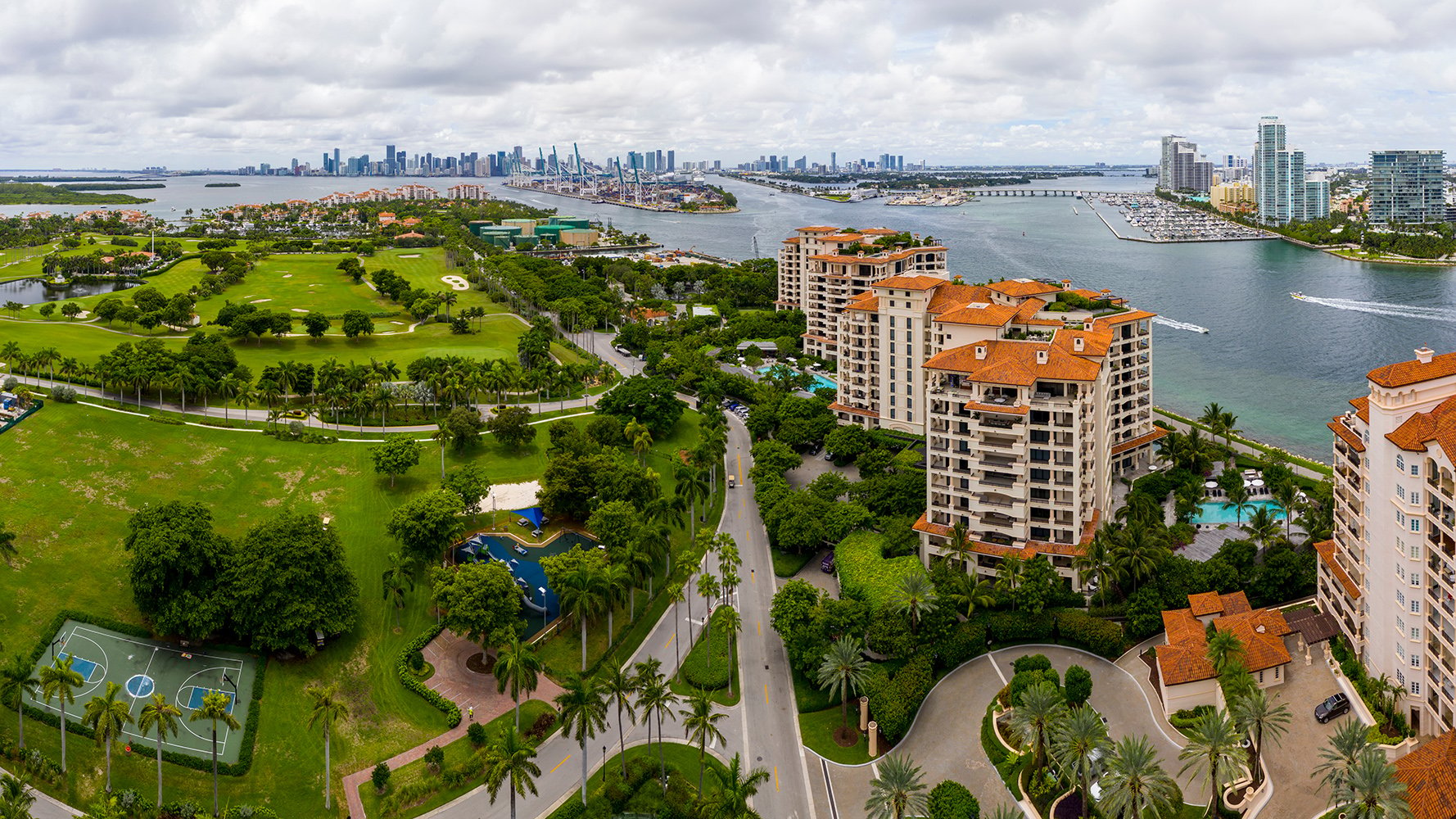
At the far end of the spectrum, Fisher-island is consistently marketed as an ultra-luxury waterfront and island submarket. It reinforces a broader South Florida truth: certain water addresses become categories of their own, where scarcity, privacy, and identity converge.
Waterfront living is not only romantic. It is mechanical. Owners are often exposed to higher storm and flood risk, and the maintenance profile tends to be more complex. Seawalls and dock systems require attention. Salt air accelerates corrosion. Even the best-built properties demand a more deliberate approach to preventive upkeep.
Many luxury buyers ultimately treat this as a portfolio question. If you want the daily satisfaction of being on the water, you accept a more engaged ownership model, and you budget for it accordingly. If you want a simpler, turnkey cadence, you may gravitate toward a building or community where professional management consolidates responsibilities that would otherwise be handled personally.
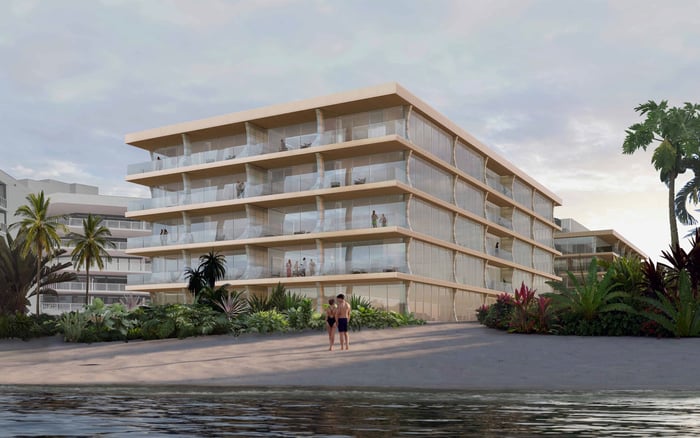
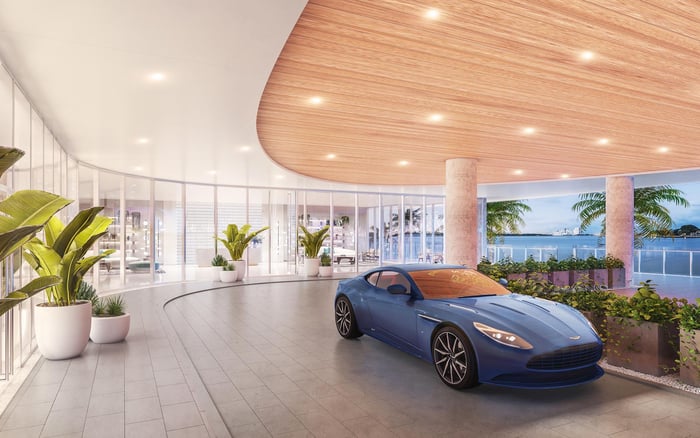
This is one reason new-construction product can be compelling for certain buyers. No home is maintenance-free, but newer coastal condominiums often appeal to those who want a lock-and-leave rhythm, with building operations absorbing many day-to-day concerns. The trade is clear: you may sacrifice a private dock or yard, but you gain predictability, staffing, and a lighter operational footprint.
In the ultra-luxury segment, liquidity is often about narrative clarity. Buyers pay for lifestyle categories they can understand quickly, and that their peers also understand. The easier it is to explain the “why” in one sentence, the easier it can be to support demand when conditions tighten.
MILLION Luxury market reporting has described South Florida’s $10M-plus segment as highly active, and has noted that foreign buyers represent a major share of new-construction condo demand in the referenced period, often cited as roughly about half. That demand profile tends to favor globally legible product types: amenity-rich towers, frequently in coastal environments, with brand language that travels well.
Golf estates can also trade with velocity when the club is aspirational and the membership story is stable. But the resale pitch can require more context: “Join this club and live inside its culture.” Waterfront resales can be more direct: “Own the view and the access.”
In practice, both categories can be liquid when they are positioned correctly. The difference is the messaging load. Golf often asks a buyer to opt into a system. Waterfront often asks a buyer to opt into a place.
One of the most instructive submarkets for observing these preferences is West-palm-beach. It has become a center of gravity for buyers who want walkable urban convenience without abandoning the region’s resort sensibility. In that setting, luxury product increasingly speaks the language of service, brand, and simplicity.
It also reveals how the traditional “fairway versus water” decision is sometimes reframed. A buyer might compare the club-driven routine of an inland gated community with the curated, low-friction lifestyle offered by vertical living. For second-home owners in particular, new-construction in this corridor offers a way to be present in South Florida without inheriting the full operational burden of a large estate.
Projects such as Mr. C Residences West Palm Beach and The Ritz-Carlton Residences® West Palm Beach illustrate the appeal of hospitality-rooted living: predictability, staffing, and an experience that feels deliberately composed.
For buyers who prioritize privacy but still want a modern, amenity-forward setting, Alba West Palm Beach and Forté on Flagler West Palm Beach offer additional expressions of the same preference: a refined base with a lighter lifestyle footprint.
None of these replaces a fairway estate or an Oceanfront house with a dock. They expand the palette for buyers who want a “best of South Florida” experience with fewer daily operational demands.
The most effective way to choose between golf and waterfront is not to start with price per square foot. Start with time. How do you actually spend your days when you are in South Florida, and what do you want those days to feel like?
If your ideal week includes structured leisure, familiar faces, and a built-in social architecture, a club environment can be the most efficient way to buy lifestyle. If your ideal week revolves around light, water, and open-ended afternoons, waterfront can deliver daily satisfaction that is hard to replicate.
The decision is also about friction. Golf communities can reduce decision fatigue by concentrating amenities and relationships inside the gates. Waterfront can reduce the need for programming by making the environment itself the amenity. Both can be luxury. They are simply different forms of luxury.
This approach is especially resonant for buyers who value community cadence. If you like the idea that a Saturday can be fully programmed without leaving the gates, golf living can feel like a private institution, with a calendar and culture you can step into.
Waterfront ownership shines for buyers who want their home to feel like a horizon, not a schedule. It tends to reward those who value sensory payoff: the morning light, the water movement, and the constant reminder that you own something inherently limited.
Luxury buyers rarely lose money because they overpaid by a small percentage. They lose money because they misunderstood the operating model. In South Florida, that model can be as decisive as the view or the floor plan.
For golf communities, the early questions are about obligation and governance. What is mandatory, what is optional, and what is the long-term health of the system you are joining?
For golf communities:
For waterfront properties, the early questions are about exposure and mechanics. What do you own, what must you maintain, and what constraints shape how you use the water?
For waterfront properties:
This is also where an experienced local advisor earns their keep: not by selling a view, but by translating the fine print into a lifestyle you can live with. The goal is not to eliminate risk. It is to choose the type of risk you are comfortable carrying.
South Florida’s luxury market rewards clarity. The best purchases tend to be the ones where the home’s daily experience matches the buyer’s identity and routines. If you want community, ritual, and a controlled environment, a top-tier gated, club-driven address can be a perfect match. If you want scarcity, horizon, and a home that feels irreplaceable, waterfront can be the more emotionally durable choice.
The decision is not a referendum on status. Both categories can represent the pinnacle of the market. It is a question of which environment supports your habits and your definition of ease.
When buyers get it right, they stop comparing. They arrive, exhale, and realize the home fits.
Is golf-course living always more expensive to carry than waterfront? Not always. Golf communities often concentrate costs into membership and dues, while waterfront can concentrate costs into insurance and maintenance. The “more expensive” option depends on the property and the club model.
Do homes near golf courses really sell for a premium? National research suggests an average premium is common, often cited around 11% nationally, but the result varies widely by market and by the prestige of the specific club.
Why do some buyers prefer new-construction condos over estates? Many want a lock-and-leave lifestyle with professional management, predictable services, and less day-to-day operational responsibility.
Is Fisher-island mostly about privacy or waterfront? Both. It is widely marketed as an ultra-luxury island and waterfront submarket, which makes it a powerful example of scarcity and discretion working together.
Explore South Florida’s most compelling lifestyle addresses with MILLION Luxury.
If branded residences are on your mind — as a home or as an allocation — we would be glad to share what we are seeing, privately.
Begin a quiet conversation.jpg&width=700&height=438&fit=cover)