From panoramic walkthroughs to data-rich digital twins, immersive technology is reshaping how South Florida’s luxury residences are marketed, toured, and ultimately managed. Buyers now expect remote clarity: true-to-scale room flow, verified view corridors, and materials that read honestly on screen. At the same time, platform politics, portal compatibility, and the fast-evolving ecosystem of capture tools mean that not all “virtual tours” are created equal. This MILLION Luxury editorial breaks down what’s changing, what to ask for, and how discerning buyers can use these tools to make faster, better decisions, especially in Pre-construction and New-construction environments.
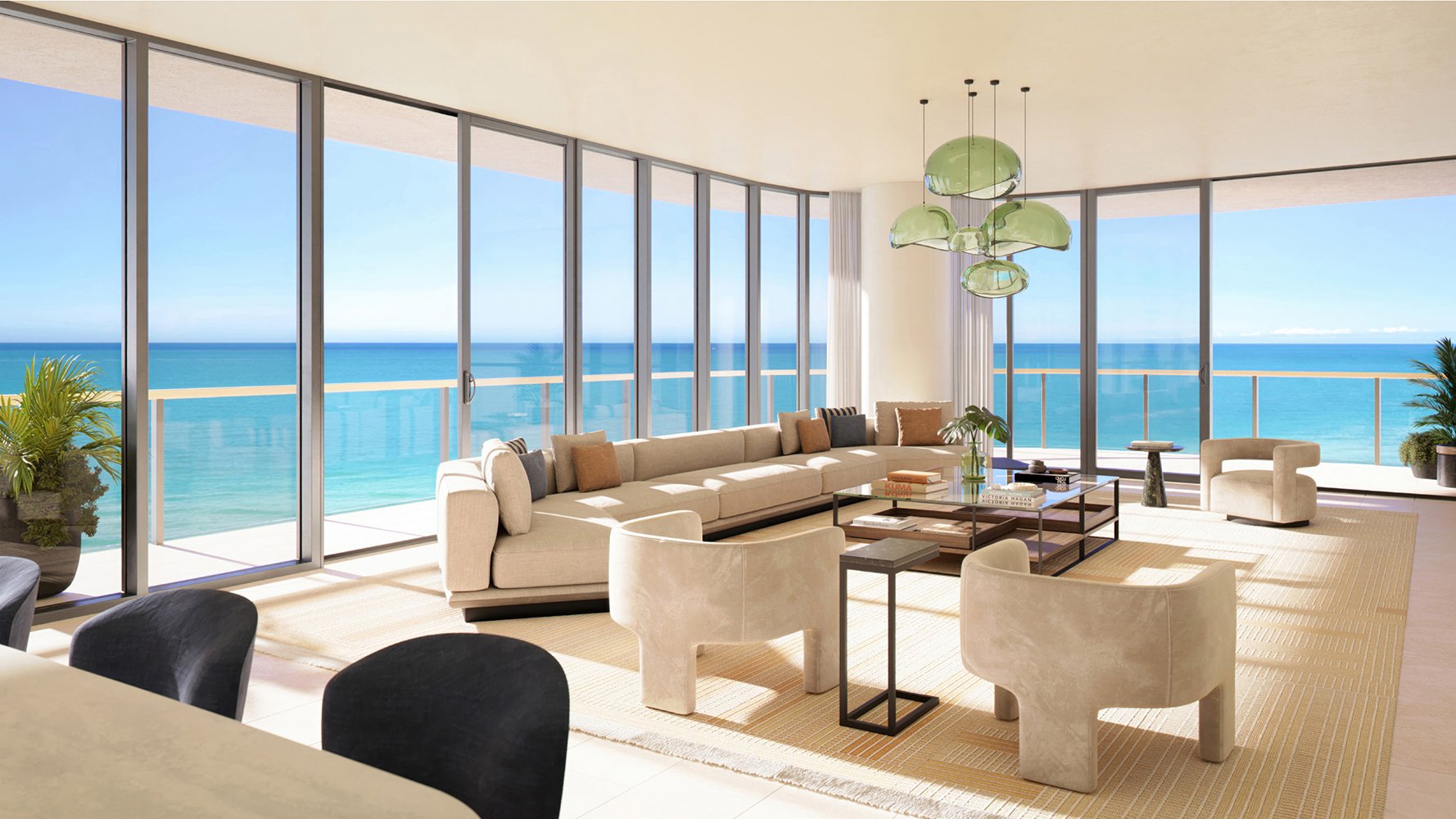
Luxury buyers did not become less discerning when the search moved to screens. They became more exacting. In South Florida’s upper-tier market, a listing without an immersive layer can feel unfinished, even when the photography is exceptional. The reason is straightforward: still images can flatter, but they rarely clarify. A well-executed virtual experience, by contrast, resolves practical questions quickly. It shows how the living room truly relates to the terrace, whether the primary suite is buffered from entertaining areas, and if the kitchen reads as the home’s social anchor or as a back-of-house service zone.
This shift matters because time is now a primary luxury. Buyers often want to narrow options before investing in travel, traffic, and scheduling. Immersive touring helps compress that cycle. It can confirm that a residence fits the way someone lives, not just the way it photographs.
Most virtual tours began, and still often begin, as 360-degree panoramic walkthroughs created from stitched viewpoints. These are the familiar experiences where you pan, zoom, and click between positions. They remain highly effective for immediate orientation and have become a baseline expectation across many online listings.
At the top of the market, however, the bar keeps moving. Developers and premier listing teams are increasingly migrating from simple panoramas toward experiences that function more like a product showroom: structured, measurable, and designed to pre-answer common objections before a call is scheduled. The goal is not novelty. The goal is confidence.
A clear way to evaluate immersive content is to ask one question: what can it prove?
A traditional 360 tour is essentially a sequence of spherical photos. It excels at ambiance, finish cues, and a quick sense of lifestyle. It can also conceal. Without a reliable sense of scale, wide-angle distortion and selective camera placement can make a room feel larger, brighter, or more open than it is. That does not make a 360 tour “bad”, but it does mean you should treat it as a strong visual introduction, not as a substitute for dimensional understanding.
A 3D tour system, often associated with Matterport-style capture, is typically differentiated by structure. Instead of isolated panoramas, it produces a navigable model with a “dollhouse” overview that reveals the layout at a glance. In many implementations, that structured model can also generate derivative assets such as measurements and floor plans. This is a key reason these tours are frequently favored in higher-end marketing: they reduce ambiguity about circulation, proportions, and adjacency.
A digital twin represents the most ambitious step in this progression. It is a data-rich, interactive replica that can be built from scanning, photogrammetry, or BIM-driven visualization layers. The distinction is intent. A digital twin is not only meant to persuade a buyer. It is designed to persist as an information layer over time, and in some cases it extends beyond marketing into operations.
For buyers, the practical takeaway is calibration. The more structured the capture and the more verifiable the output, the more weight you can place on the experience when making pre-visit decisions. When the model is measurable and navigable, you are closer to due diligence than to entertainment.
Even in luxury, distribution is not optional. A tour that lives only on a project website may be stunning, but it is not always where buyers first meet the property. Many searches begin on portals, social previews, texted links, or forwarded emails. Compatibility, therefore, is not a technical footnote. It is a marketing reality that can influence visibility, engagement, and ultimately momentum.
Major tour platforms range from smartphone-friendly tools to professional systems. The ecosystem commonly cited by real estate marketing teams includes Matterport, Zillow 3D Home, CloudPano, Ricoh360 Tours, EyeSpy360, and Asteroom. Some options emphasize low-friction capture and quick publishing. Others prioritize higher-fidelity modeling and structured outputs.
The complication is that portals control how the experience is embedded and displayed. Zillow, for example, has publicly discussed how certain third-party tours appear on its sites. Industry press has also documented periods when vendor relationships and portal decisions disrupted how tours were surfaced, creating sudden workflow shifts for agents and developers.
For a luxury seller or developer, the implication is simple: redundancy is prudent. For a luxury buyer, the implication is equally important: do not confuse absence with nonexistence. If you do not see an immersive tour where you expected it, ask whether it is hosted elsewhere, whether a different format is available, or whether it is being routed through a platform that is not currently visible in that context.
The most compelling application of immersive touring is not resale. It is Pre-construction.
When a residence is not yet built, the buyer is asked to make durable choices based on provisional information: floor plans, finish boards, view studies, and lifestyle promises. VR and interactive visualization are widely positioned as tools that help buyers understand layouts and options before completion. The point is to reduce reliance on physical model homes, expand access for remote buyers, and compress the decision cycle without sacrificing clarity.
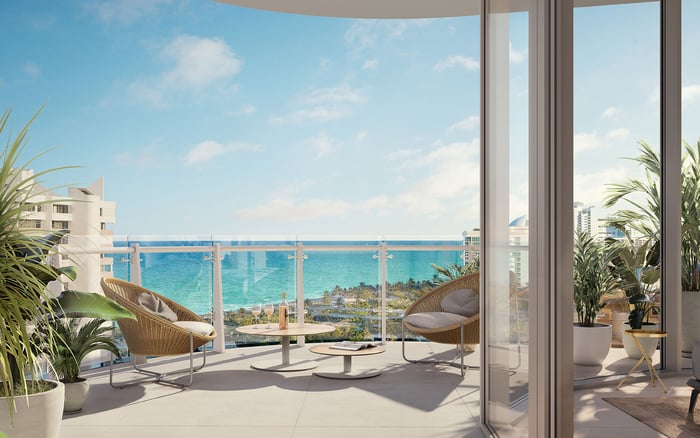
In South Florida, that value proposition sharpens along the oceanfront. Orientation, elevation, and the geometry of neighboring buildings can materially change light and view corridors. The buyer does not merely want to see a rendering. The buyer wants to feel the room-to-view relationship, the depth of glazing, and how a terrace reads from the main living area.
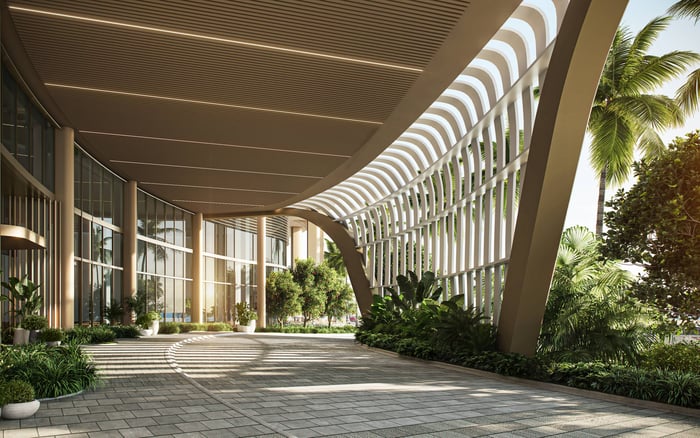
This is one reason branded and design-forward coastal offerings are leaning further into interactive visualization. In the Pompano Beach conversation within Broward, for instance, branded residences are increasingly marketed as a complete lifestyle and service proposition, and immersive content becomes the bridge between a brochure and a buyer’s confidence.
When you evaluate oceanfront offerings, pay attention to what kind of experience you are being given. A cinematic flythrough can be beautiful, but it is still curated. An interactive environment you can control is typically more informative. Control lets you linger on practical moments that decide livability: the entry sequence, the transition from kitchen to dining to terrace, the location of bedrooms relative to entertaining zones, and the sense of depth as you look outward.
In that context, exploring the positioning of Armani Casa Residences Pompano Beach alongside The Ritz-Carlton Residences® Pompano Beach can be useful as a study in how branded storytelling is increasingly paired with digital clarity.
A virtual experience can be luxurious without being reliable. Sophisticated buyers separate production value from proof, and the questions they ask tend to be simple.
First, confirm what the tour actually is. Is it a straightforward 360 capture, or a structured 3D model with a dollhouse-style overview? That single distinction often signals whether the experience can support derivative assets such as measurements or floor plan outputs.
Second, ask whether the tour reflects the exact residence type you are evaluating or a similar model. In New-construction marketing, a “representative” tour can still be valuable, but it should be labeled as such. If it is not the exact line, press for what differs in ways that matter: window placement, ceiling conditions, terrace depth, service entries, and how public and private zones are separated.
Third, request view-specific validation, especially for higher floors and view-dependent pricing. The ideal workflow is immersive plus documentary: interactive touring complemented by current-condition photography from comparable elevations, or other publicly available view verification. In a coastal market where exposure and horizon lines affect both lifestyle and value, this is not a minor detail.
Finally, ask about device experience. Some tours perform beautifully on desktop but degrade on mobile. Others are designed to be headset-ready for buyers who prefer a more immersive VR feel. The best teams can tell you where the experience is strongest and can provide alternatives when a platform limitation affects usability.
Immersive content is the stage. The next layer is intelligence.
Industry coverage increasingly describes AI being paired with immersive tours to support personalization and automation inside the experience. That can include guiding buyers toward layouts that match stated preferences, or surfacing features aligned with priorities so the tour feels less like wandering and more like a curated review. This is not about replacing the advisor. It is about reducing friction between curiosity and comprehension.
Separate from the tour itself, AI is also being used through lead scoring: ranking prospects based on behavioral and intent signals so agents can focus faster on the most qualified buyers. For luxury teams managing multiple inquiries across multiple geographies, this can be decisive. It also aligns with a broader “tech with a human touch” posture: use technology to reduce administrative drag, then use experience to negotiate, counsel, and protect the client’s position.
For buyers, the benefit can be subtle but real. When a team has better signal quality, the conversation becomes more bespoke. Instead of repeating basics, your advisor can move directly to the material questions: which line delivers the most livable terrace proportion, which exposures provide the most consistent natural light, and what the ownership structure implies for privacy, operations, and the long-term owner experience.
Luxury is not only about acquisition. It is about stewardship.
Digital twins are increasingly positioned as operational tools after a building is delivered. With sensor data and analytics layered over an interactive model, they can support predictive maintenance approaches that aim to forecast failures rather than simply react to them. Commentary on this theme often highlights reduced downtime and lower maintenance costs as potential benefits, particularly for complex properties with sophisticated mechanical systems.
For buyers considering ultra-premium towers, this matters more than many admit. Building performance is part of the lifestyle: elevators that move quietly, HVAC that stays stable, smart-home ecosystems that remain secure, and amenities that operate without drama. A well-implemented operational twin can become a behind-the-scenes asset that protects that experience.
This is also where branded, hospitality-adjacent residences can be instructive. Projects positioned at the intersection of residential ownership and hotel-grade service, such as W Pompano Beach Hotel & Residences and Waldorf Astoria Residences Pompano Beach, naturally invite a more systems-minded conversation: service standards, maintenance philosophy, and how the owner experience is managed over time.
In a market where screens often precede site visits, the best buyers treat immersive assets as a form of due diligence. The goal is not to be dazzled. It is to reduce uncertainty.
Start with authenticity. Does the tour feel like it was captured in the actual space, or does it behave like a rendering? Both can be useful, but they serve different purposes. Captured tours are evidence. Rendered experiences are promises.
Then evaluate orientation. Can you understand the home’s sequence without guessing? A strong immersive model makes circulation legible: foyer to public rooms, public rooms to terraces, private rooms separated from entertaining zones, and service paths that do not interrupt the main experience.
Next, demand comparability. If you are comparing multiple residences across a South Florida coastal corridor, ensure each property is being assessed through the same lens. A cinematic video for one and a navigable 3D model for another is not an apples-to-apples comparison. Where possible, ask for parallel assets: similar tour formats, similar floor plan context, and similarly documented views.
Finally, protect your optionality. Because portal policies and vendor relationships can change, ask your representative to provide a direct link to the tour host, plus an alternate version if one exists. It is a small request that can prevent a high-quality asset from disappearing mid-decision.
Are 360 virtual tours still worth it in luxury listings? Yes. A well-shot 360 walkthrough is often the fastest way to understand flow and finishes, but it is most reliable when paired with clear floor plan context.
What makes a 3D tour feel more “truthful” than a 360 tour? Structured 3D tours often include a dollhouse-style overview and can support measurements or floor plan outputs, which reduces ambiguity about scale and layout.
Can listing portals affect whether I see a tour? Yes. Portals control how third-party tours are embedded and displayed, and industry coverage has shown that these policies can change.
Why is immersive tech especially important for Pre-construction? Because it helps buyers understand floor plans, options, and lifestyle intent before anything is physically built, reducing reliance on model homes.
Do digital twins matter after I buy? They can. When used operationally, digital twins can support predictive maintenance strategies that aim to reduce downtime and improve building performance.
For a discreet, buyer-first view of South Florida’s most compelling residences and the technology reshaping how they are sold, explore MILLION Luxury.
If branded residences are on your mind — as a home or as an allocation — we would be glad to share what we are seeing, privately.
Begin a quiet conversation