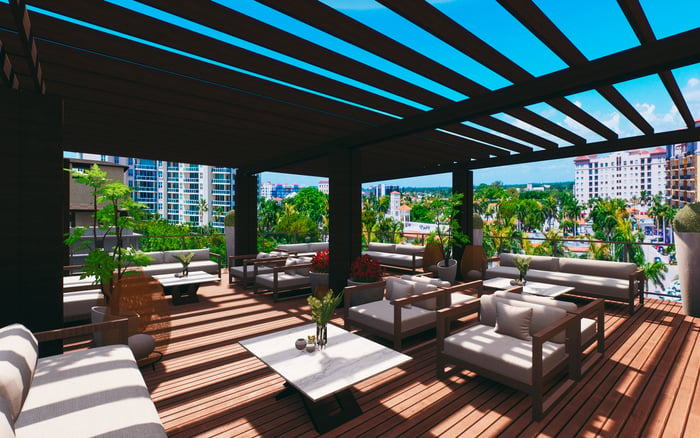
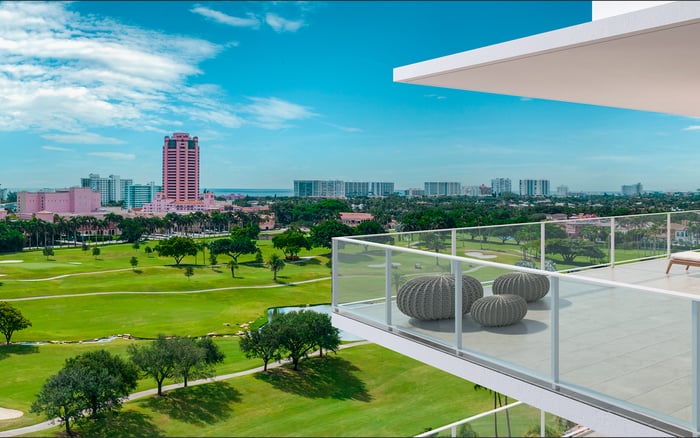
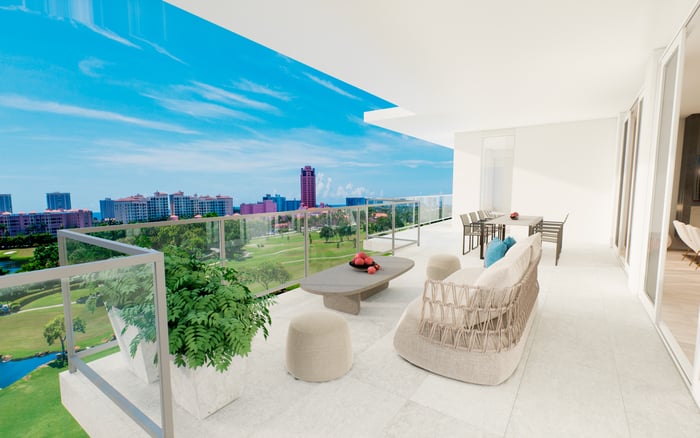
A buyer-focused comparison of Glass House Boca Raton and Alina Residences Boca Raton, framed around boutique transparency, amenity depth, private residence quality, and daily lifestyle fit.
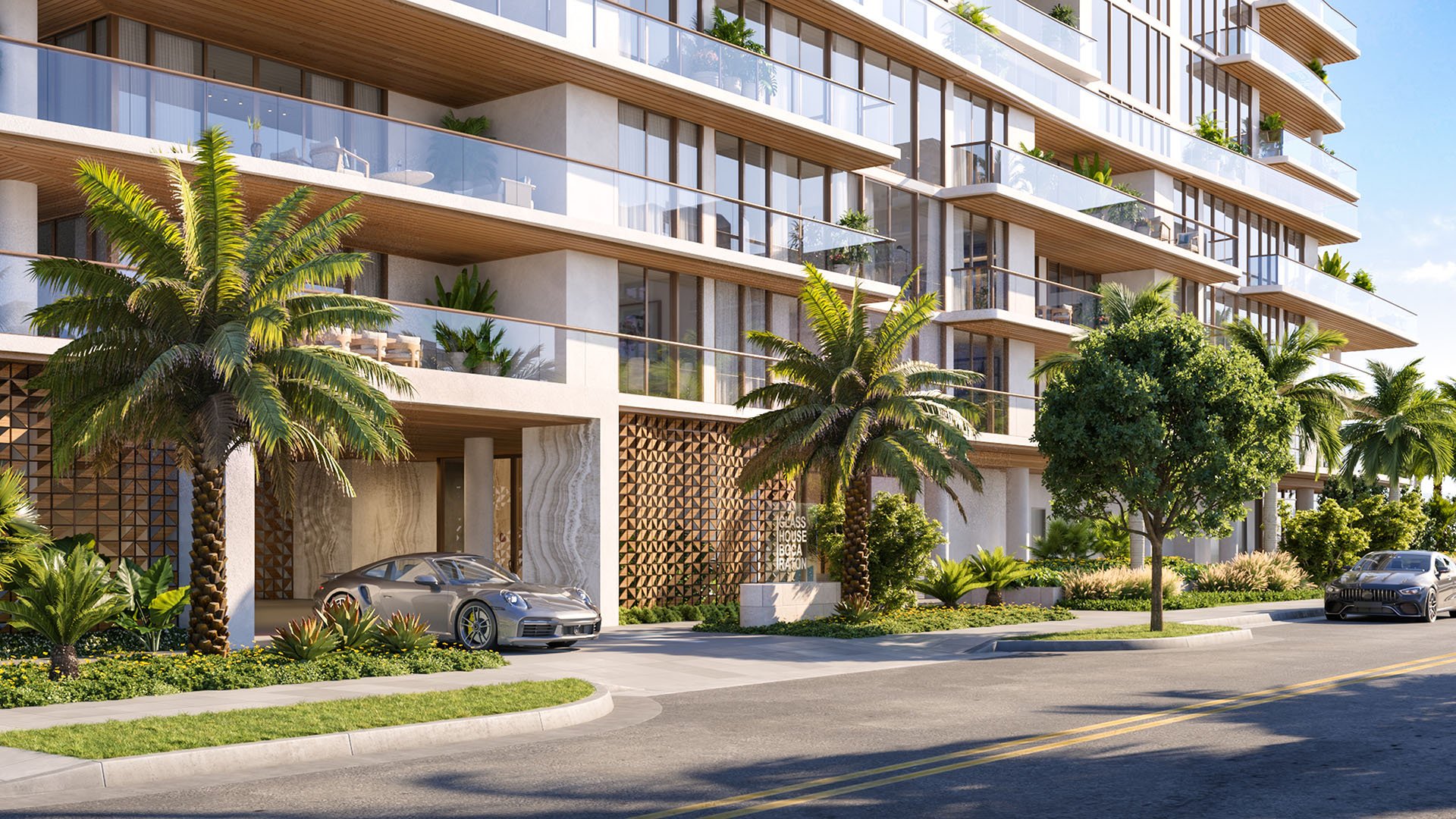
The comparison between Glass House Boca Raton and Alina Residences Boca Raton is best understood as a question of lifestyle architecture. One speaks to the buyer who wants a more focused building identity, where transparency, selectivity, and design rationale lead the conversation. The other is positioned for the buyer who wants a broader urban-residential ecosystem, with amenity depth, service, wellness, social energy, and walkable Boca convenience shaping daily life.
That distinction matters because luxury buyers in Boca are rarely choosing between good and bad. They are choosing between forms of control. Some want the quiet confidence of a residence that feels legible from the first tour: what the finishes are, why the layouts work, how the specifications support long-term living, and how the building presents itself without excess. Others want the ease of a more complete environment, where the residence is one component of a larger private-club rhythm.
In the broader Boca Raton search, both buildings can belong on the same shortlist, yet they answer different emotional needs. The better question is not which one is superior. It is which one will still feel aligned after the first year of ownership.
Before comparing amenities, buyers should begin inside the residence. Layout, light, views, finish quality, terrace usability, privacy, ceiling feel, kitchen functionality, storage, and acoustic comfort often determine whether a luxury condominium lives well day after day. A building can impress in its public spaces, but the private residence must remain the anchor.
For Glass House, the editorial appeal rests on boutique discipline: a more design-led and selective identity, with transparency around pricing, finishes, specifications, and design rationale as a central part of the buyer experience. That does not mean a buyer should assume every detail without review. It means the tour should test whether the building’s stated clarity is visible in the residence itself. Are the materials coherent? Do the plans feel intuitive? Does the design logic reduce friction rather than merely photograph well?
For Alina, the private residence still has to stand on its own. Amenity-rich living can enhance daily life, but it should not distract from the fundamentals of ownership. Buyers should ask whether the floor plan supports their actual routine, whether the finishes meet their standard, and whether the views, privacy, and arrival sequence justify the overall lifestyle proposition.
Glass House is the more focused side of this comparison. Its appeal is not framed around resort-scale amenity volume. It is framed around selectivity, design intention, and the comfort of understanding what one is buying. For certain high-net-worth buyers, that kind of transparency can be more valuable than abundance.
This buyer may already have a club, a wellness routine, a private office, and preferred restaurants. They may not need a building to replicate every aspect of their social calendar. Instead, they want an elegant residential base with a clear identity and fewer distractions. In that context, the value proposition becomes less about quantity and more about precision.
The Glass House buyer should still be exacting. Transparency should be tested through documents, specifications, finish schedules, and the relationship between presentation and delivery. The most successful tour is not the one that creates the most excitement. It is the one that leaves the fewest unanswered questions.
Alina Residences is the larger lifestyle-and-amenity-oriented side of the comparison. It is best suited to buyers who want comprehensive residential services, wellness access, social options, and the convenience of an urban Boca setting. For this audience, the shared environment is not secondary. It is part of the reason to buy.
The Alina buyer may value the ability to move from residence to fitness, lounge, pool, concierge, wellness, and social spaces without leaving the property environment. The appeal is not only convenience. It is the psychological ease of living inside a more complete residential ecosystem.
That model can be particularly compelling for second-home owners who want a property to feel activated immediately upon arrival. It can also suit primary residents who prefer a building that supports routine, entertaining, and service in a more layered way. The buyer should still separate atmosphere from utility. A beautiful amenity only matters if it fits the way the owner actually lives.
The most disciplined buyer should tour the residences first, then the shared spaces. Start with the plan. Stand where the dining table would sit. Test the privacy of the primary suite. Imagine morning light, evening entertaining, storage needs, guest circulation, and quiet work hours. Only then should the amenity conversation begin.
For Glass House, ask whether the building’s focused identity creates calm or feels too restrained for your expectations. For Alina, ask whether the amenity depth feels essential or whether it may become underused. Neither answer is inherently more luxurious. Luxury is alignment.
If your Boca shortlist also includes The Residences at Mandarin Oriental Boca Raton and Mr. C Residences Boca Raton, apply the same discipline: separate the private residence from the shared lifestyle promise. This keeps the decision grounded, especially when multiple branded, design-led, or service-oriented properties compete for attention.
From an investment perspective, both approaches can have logic, but they appeal to different future buyers. A boutique, transparent building can be attractive to purchasers who prize scarcity of identity, design coherence, and a quieter ownership profile. An amenity-rich urban building can appeal to buyers who want convenience, services, and a more complete lifestyle package.
The more important question is whether the proposition is easy to explain. Glass House should be understood as a focused choice: transparency, design, selectivity. Alina should be understood as a lifestyle choice: amenity depth, urban convenience, service, and wellness orientation. A property that is simple to describe is often easier for future buyers to understand.
Owners should also consider operating behavior, not just purchase appeal. A fuller amenity ecosystem may bring more shared services to evaluate. A more boutique building may place greater emphasis on the quality of the private residence and building identity. In both cases, current details should be reviewed directly before decisions are made.
Choose Glass House first if you want a more restrained, design-led environment and value clarity over breadth. It is the more natural fit for buyers who do not need a high-density amenity package to feel served. It may also suit those who prefer a quieter residential identity, where the building does not compete with the life they already have.
Choose Alina first if you want a more amenitized urban Boca experience. It is the stronger match for buyers who expect services, wellness, social spaces, and day-to-day convenience to be part of the residential value. For these buyers, the shared lifestyle is not a bonus. It is part of the residence.
The deciding factor is not status. It is temperament. Glass House speaks to the buyer who wants transparency and focus. Alina speaks to the buyer who wants a fuller ecosystem around the home.
Is Glass House Boca Raton better than Alina Residences Boca Raton? Not universally. Glass House is the more boutique and transparency-led choice, while Alina is the more amenity-rich urban Boca option.
Who is the ideal Glass House Boca Raton buyer? The ideal buyer values design focus, selectivity, and clarity around finishes, specifications, and the overall residential concept.
Who is the ideal Alina Residences Boca Raton buyer? The ideal buyer wants a fuller lifestyle environment with service, wellness, social energy, and urban Boca convenience.
Should buyers compare amenities first? No. Start with the private residence, including layout, finishes, views, privacy, and daily usability, then evaluate shared amenities.
Does boutique mean fewer lifestyle advantages? Not necessarily. Boutique can mean a more focused identity, which may be preferable for buyers who already have their own lifestyle infrastructure.
Does amenity-rich mean better value? Only if the buyer will use the amenities. A broad amenity package should match real habits, not just create a strong first impression.
Are exact prices or fees part of this comparison? No. Buyers should verify current pricing, fees, availability, and specifications directly before making any purchase decision.
Is Alina better for a second-home buyer? It can be, especially for buyers who want services and lifestyle features available immediately when they arrive in Boca Raton.
Is Glass House better for a quieter ownership profile? It may be a stronger fit for buyers who prefer a more focused residential identity over a large amenity-driven environment.
What is the simplest way to decide between them? Choose Glass House if transparency and design focus matter most; choose Alina if amenity depth and urban convenience matter most.
To compare the best-fit options with clarity, connect with MILLION.
If branded residences are on your mind — as a home or as an allocation — we would be glad to share what we are seeing, privately.
Begin a quiet conversation