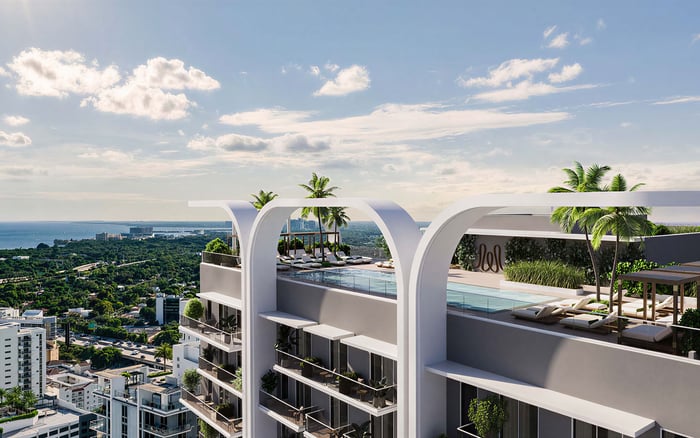
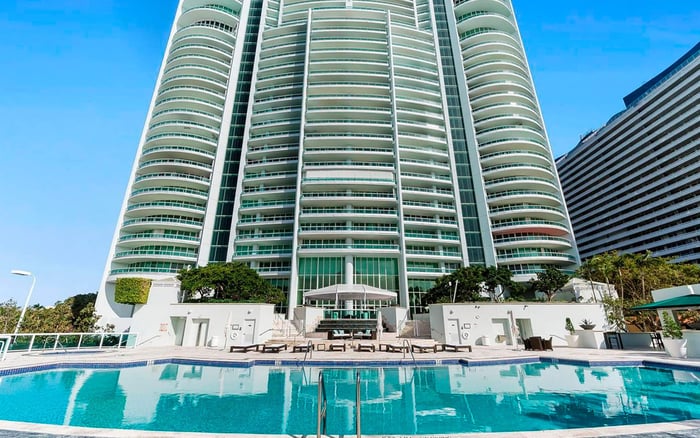
A discreet owner-focused guide to evaluating wellness credibility, air quality, and recovery spaces when comparing Frida Kahlo Wynwood Residences with Waldorf Astoria Residences Downtown Miami.
For a second-home buyer, wellness can function as a weekend amenity. For a full-time owner, it becomes infrastructure. That distinction is especially important when comparing Frida Kahlo Wynwood Residences with Waldorf Astoria Residences Downtown Miami, two names set within very different lifestyle contexts and shaped by very different questions about daily comfort.
A full-time residence is not evaluated only by the presence of a spa, fitness room, pool, or treatment area. The deeper question is whether the building can support sleep, respiratory comfort, predictable routines, and physical recovery over months and years. In South Florida’s ultra-premium market, wellness credibility increasingly depends on what a buyer can verify, not simply what a brochure suggests.
That does not make the conversation clinical. It makes it more refined. The most compelling wellness residences are those in which design, mechanical performance, operations, and privacy align quietly. The strongest evidence is often found in the details: fresh-air strategy, acoustic separation, elevator experience, humidity control, maintenance protocols, and whether recovery spaces remain serene during peak-use hours.
Wellness language is now standard across luxury residential marketing, but sophisticated buyers should separate atmosphere from credibility. Frida Kahlo Wynwood Residences may naturally invite expectations shaped by art, identity, and creative energy, while Waldorf Astoria Residences Downtown Miami carries a hospitality association that suggests service and polish. Those impressions matter, but they are not substitutes for technical and operational clarity.
For full-time owners, credible wellness begins with specificity. A buyer should ask what is actually delivered inside the private residence, what is shared in amenity areas, and what is maintained by building management. A meditation room, sauna, fitness studio, or outdoor deck can be valuable, but only if access, capacity, hours, hygiene, acoustics, and staffing support genuine daily use.
The key is to test every wellness claim against a normal week. Where does the owner stretch before work? Where does a guest recover after a long flight? Can a resident exercise without crossing an entertainment-heavy zone? Is there a quiet transition between street, lobby, elevator, and home? These practical questions often reveal more than a dramatic rendering.
Air quality is one of the most under-discussed elements in high-end condominium selection. It is also one of the most consequential for full-time residents. In Miami, indoor comfort is inseparable from humidity, ventilation, filtration, odors, construction materials, kitchen exhaust, and the relationship between private residences and shared corridors.
Buyers should ask how fresh air is introduced, how filtration is handled, how humidity is managed, and whether the building’s systems are designed to reduce odor transfer between spaces. It is reasonable to request plain-language explanations of mechanical systems and maintenance responsibilities. The most useful answers are not vague assurances, but descriptions of how the residence performs under ordinary conditions.
Balcony living also belongs in the air-quality conversation. A balcony can be a daily wellness asset when it supports morning light, fresh air, and decompression, but the experience depends on orientation, surrounding activity, wind, sound, and exposure. In Wynwood, buyers may think carefully about the energy of an urban arts district. In Downtown, buyers may focus on the tempo of the central city and the vertical nature of daily life.
Recovery is no longer limited to spa treatment rooms. For full-time owners, recovery includes the ability to sleep deeply, decompress after work, reset after travel, and maintain routines without leaving the building. A true recovery environment starts at the residence door and extends into the plan of the home.
The private residence should be reviewed for bedroom quiet, bath functionality, natural light control, storage for wellness equipment, and places to move without clutter. A beautiful amenity floor can be diminished if the home itself does not support restoration. Conversely, a thoughtfully planned residence can make even modest shared amenities feel more effective because the daily baseline is already calm.
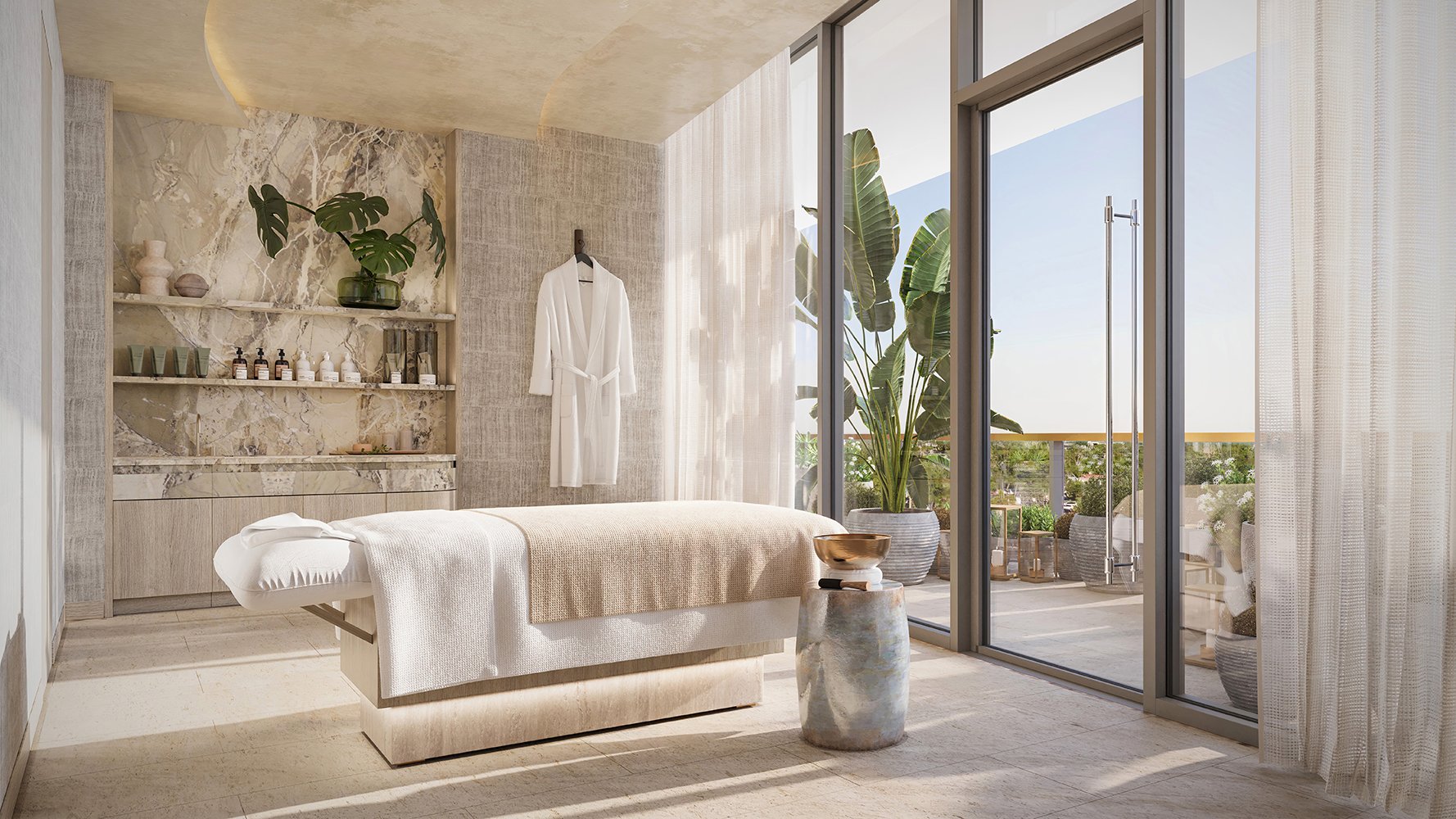
Shared recovery spaces should be evaluated for intimacy and management. A sauna, steam room, plunge element, massage suite, or relaxation lounge is only as useful as its privacy, cleanliness, scheduling, and acoustic character. Full-time owners should imagine using these spaces on a Tuesday evening, not only during a sales presentation.
Wynwood and Downtown are not interchangeable wellness environments. Wynwood is associated with creative energy, galleries, dining, and visual intensity. For an owner considering Frida Kahlo Wynwood Residences, the central question is how the home balances cultural proximity with private retreat. The building should help convert neighborhood stimulation into residential calm.
Downtown offers a different equation. For Waldorf Astoria Residences Downtown Miami, full-time owners may be drawn to a central address, skyline living, and access to the broader business and cultural core. The wellness question becomes vertical ease: how quickly and comfortably one moves between residence, amenity, service, parking, arrival, and the city outside.
Neither context is inherently superior. Each requires a different wellness filter. A buyer who thrives on arts-district immediacy may prioritize sound control, private outdoor space, and intimate amenities. A buyer who wants a polished central-city residence may emphasize service consistency, arrival sequence, elevator performance, and a quiet private suite above the energy below.
New-construction residences allow buyers to consider systems and wellness features before completion, but they also require disciplined questioning. Floor plans, renderings, and amenity descriptions should be paired with practical inquiries about operations. Who maintains wellness areas? How are shared facilities reserved? What are the expected rules for guests? How will air systems be serviced after turnover?
This is where a discerning buyer’s advisory team matters. Attorneys, inspectors, designers, and technical consultants can help translate aspirational language into owner responsibilities and measurable comfort. The goal is not to diminish the romance of a residence. It is to protect it.
Full-time owners should also think beyond first impressions. Materials, lighting temperatures, bath ventilation, closet humidity, terrace usability, and acoustical performance may affect daily life more than a single signature amenity. The strongest residence is one that feels good repeatedly, at different hours, in different seasons, and under the pressures of real life.
The best approach is to create a personal wellness scorecard. Start with sleep, air, sound, movement, bathing, outdoor access, food routines, work-from-home comfort, and guest recovery. Then compare each residence against those priorities rather than against generalized luxury language.
For Frida Kahlo Wynwood Residences, a buyer might focus on how the building interprets creative neighborhood energy without compromising privacy. For Waldorf Astoria Residences Downtown Miami, the focus may be on whether branded residential service supports the ease and discretion expected from daily ownership. In both cases, the most important luxury is not spectacle. It is the feeling that the home quietly helps the owner live better.
The wellness residence of the future will not be judged only by amenities photographed beautifully. It will be judged by how convincingly it supports health, recovery, and calm when no one is watching.
What should full-time owners ask first about wellness credibility? Ask what wellness features are delivered inside the residence, what is shared, and how each space is operated and maintained.
Why is air quality important in a luxury Miami condominium? Air quality affects sleep, comfort, humidity control, odor management, and daily respiratory ease, especially for year-round residents.
How should buyers compare Frida Kahlo Wynwood Residences and Waldorf Astoria Residences Downtown Miami? Compare them through lifestyle fit, privacy, air quality, recovery spaces, and how each setting supports routine daily living.
Is a spa enough to prove a building is wellness-oriented? No. A spa can be valuable, but wellness credibility also depends on operations, acoustics, access, hygiene, and private-home comfort.
What role does a balcony play in wellness? A balcony can support light, fresh air, and decompression, but its value depends on orientation, noise, exposure, and usability.
Should pool areas be evaluated differently by full-time owners? Yes. Full-time owners should consider crowding, shade, noise, service standards, hours, and whether the pool supports routine use.
What does new-construction due diligence mean for wellness? It means asking early about systems, maintenance, amenity operations, ventilation, acoustics, and owner responsibilities.
Why does Downtown require a different wellness lens than Wynwood? Downtown often emphasizes vertical living and service flow, while Wynwood may require closer attention to neighborhood energy and retreat.
Can recovery spaces influence resale appeal? Thoughtful recovery spaces can strengthen long-term appeal when they are private, well maintained, and integrated into daily life.
What is the most important takeaway for full-time owners? Treat wellness as a daily performance standard, not a marketing category, and verify how the residence will actually support your routine.
When you're ready to tour or underwrite the options, connect with MILLION.
If branded residences are on your mind — as a home or as an allocation — we would be glad to share what we are seeing, privately.
Begin a quiet conversation