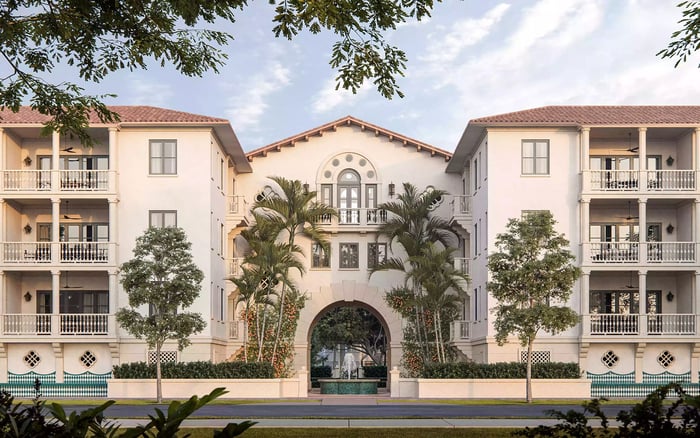
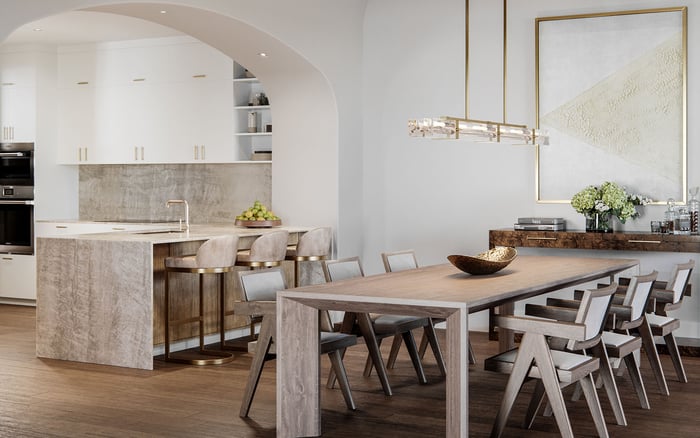
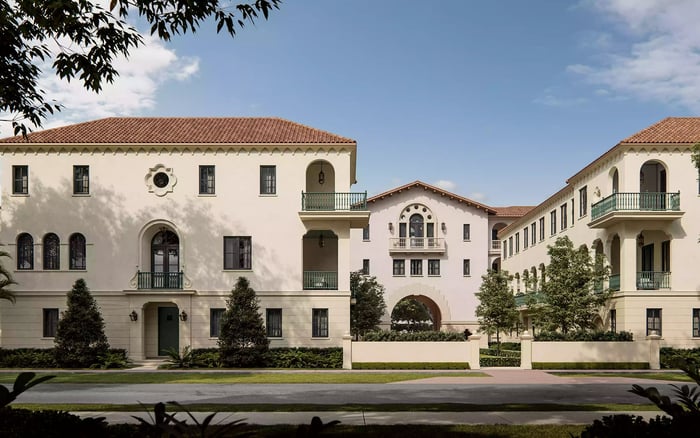
A practical luxury-buyer guide to evaluating balcony rules, outdoor kitchens, terrace comfort, storm preparation, and association governance at Cora Merrick Park and The Village at Coral Gables.
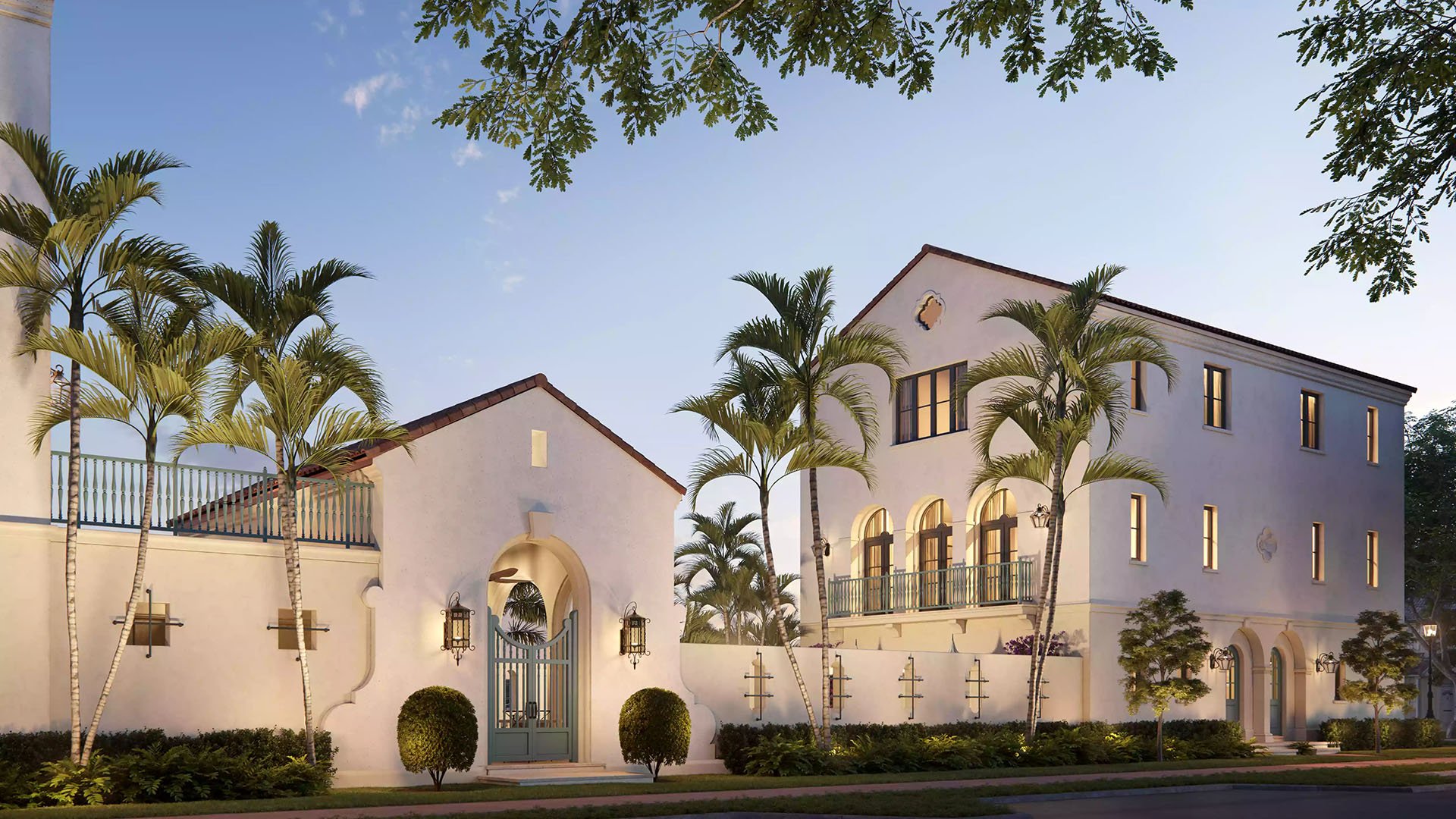
In Coral Gables, outdoor space is not simply a scenic extension of the residence. For full-time owners, it becomes part breakfast room, part evening salon, part work setting, part garden, and part weather-management system. That is especially true when comparing Cora Merrick Park and The Village at Coral Gables, where the promise of refined outdoor living must be measured against the practical rules that govern daily use.
The central distinction is straightforward: marketing language can describe a beautiful terrace, but only the condominium documents, recorded restrictions, rules and regulations, sales contract, and association materials define an owner’s enforceable rights. A terrace that appears ideal for cooking, entertaining, planters, lounge furniture, or seasonal décor may still be subject to limits designed to protect the building, neighbors, insurance position, and architectural character.
This is where sophisticated buyers should slow down. A balcony is not merely a view platform, and a terrace is not automatically a private backyard in the sky. In a full-time residence, these spaces influence comfort, privacy, neighbor relations, maintenance habits, and the rhythm of daily life.
Cora Merrick Park’s appeal is closely tied to its Merrick Park positioning, where walkability and indoor-outdoor living are central to the ownership experience. For a full-time buyer, the balcony or terrace should be evaluated as a functioning daily space, not as a decorative amenity. Morning coffee, laptop use, plants, evening conversation, and quiet downtime all depend on how the outdoor area performs in real conditions.
Before assuming that a private terrace can support a complete outdoor kitchen, buyers should verify the specific permissions for built-in grills, portable grills, smokers, open-flame appliances, and any related fuel sources. The same review should address cooking odors, smoke drift, and whether outdoor food preparation is limited by hours, location, equipment type, or ventilation concerns.
The practical questions are often more revealing than the glossy renderings. Can furniture remain outside year-round? Are umbrellas allowed? Must planters meet weight, drainage, or saucer requirements? Are decorative lights permitted? Can storage boxes be visible from neighboring units or public areas? During storm preparation, who decides when loose items must be removed, secured, or stored indoors?
For full-time owners, these are not minor details. They determine whether the terrace feels effortless to live with or constantly managed.
The Village at Coral Gables is positioned around a village-living concept, placing emphasis on residential character, privacy, architectural consistency, and the way neighbors experience one another. Outdoor areas may serve as workspaces, entertaining zones, reading terraces, or quiet retreats, but their value depends on the rules that preserve calm and aesthetics across the community.
Buyers should ask whether outdoor cooking rights differ by residence type. A condo terrace, townhouse garden area, villa-style outdoor space, or penthouse terrace may not be treated identically. Even where a space feels private, association rules may distinguish between portable equipment, built-in improvements, gas connections, open-flame devices, and visual modifications.
The village-scale setting also makes sightlines important. A chair, planter, umbrella, screen, sculpture, or storage element may be unobjectionable inside a private home but restricted if it changes the exterior character or becomes visible from a shared approach. This is not merely a matter of taste. In a luxury community, visual discipline protects the collective environment and reduces friction between owners.
The same applies to sound and smell. A terrace dinner that feels intimate to one owner may carry noise, smoke, or cooking odors to another. Full-time buyers should understand the rules before imagining the outdoor space as a private restaurant, cigar lounge, garden room, or entertainment terrace.
Outdoor kitchens are among the most misunderstood features in South Florida luxury real estate. A large terrace does not necessarily mean that a built-in grill, smoker, pizza oven, or open-flame appliance is allowed. Conversely, a residence may offer some form of outdoor cooking, but only within strict limitations.
The right due-diligence questions are specific. Are built-in grills allowed? Are portable electric grills treated differently from gas grills? Are charcoal, propane, natural gas, smokers, or open flames restricted? Is association approval required before adding counters, cabinetry, plumbing, power, lighting, or ventilation? Are there limits on hours of operation, smoke drift, cooking odors, or equipment storage?
At Cora Merrick Park, buyers should focus on whether private terraces can support the type of cooking they actually expect to do. At The Village at Coral Gables, they should also clarify whether rights vary by residence format. The difference between occasional electric grilling and a true outdoor kitchen can be significant, both in lifestyle and in approval burden.
A careful buyer should also ask who is responsible if cooking causes staining, drainage issues, smoke complaints, or damage to exterior surfaces. In luxury buildings and associations, responsibility often extends beyond personal convenience.
South Florida outdoor living is seductive because it can be used across much of the year, but comfort is not automatic. Full-time buyers should test terrace weather tolerance in practical terms: sun exposure, shade, heat retention, rain intrusion, wind patterns, drainage, humidity, and seasonal storm readiness.
At Cora Merrick Park, a terrace that feels serene during a tour may perform differently during strong afternoon sun or wind-driven rain. Buyers should consider whether the space can support daily seating, plants, rugs, cushions, and lighting without becoming high-maintenance. Drainage matters, as does the way water moves during storms. So does the question of whether furniture must be brought indoors during hurricane season or when management issues storm protocols.
At The Village at Coral Gables, the same analysis applies to comfort and usability. A private outdoor area should be evaluated for work, relaxation, entertaining, and year-round livability. Heat, humidity, seasonal wind, and storms all shape how often the space will actually be used.
For anyone using Coral Gables as shorthand for refined residential life, the lesson is to evaluate outdoor space with the same seriousness as interior square footage. The best terrace is not always the largest. It is the one whose rules, exposure, drainage, privacy, and maintenance obligations match the owner’s daily life.
Before contract deadlines pass, full-time buyers should request and review the governing documents that address balcony and terrace use. The checklist should include permitted cooking equipment, flame and fuel limits, smoke and odor standards, furniture visibility, planter restrictions, lighting rules, décor guidelines, exterior modification approvals, storage limits, hours of use, drainage responsibility, and storm-storage protocols.
Management questions are equally important. Ask how rules are enforced, whether prior approvals are required in writing, how complaints are handled, and whether storm preparation instructions are mandatory. If a buyer plans to live in the residence full time, small uncertainties can become daily inconveniences.
The most elegant approach is not adversarial. It is clarifying. Luxury association governance exists to protect aesthetics, safety, insurance considerations, and neighbor harmony. A buyer who understands the rules before closing is better positioned to enjoy the outdoor space without friction.
Can I assume a large terrace allows an outdoor kitchen? No. Outdoor-kitchen rights should be confirmed in the governing documents and approval procedures before purchase.
Are Cora Merrick Park balcony rules determined by marketing materials? No. Binding balcony and terrace rules should be verified through condominium or association documents.
Could The Village at Coral Gables treat condos and townhomes differently? Yes. Buyers should ask whether outdoor cooking, décor, or modification rights differ by residence type.
What should I ask about grills and smokers? Ask whether built-in grills, portable grills, smokers, fuel sources, and open-flame appliances are permitted.
Why do smoke and cooking odors matter? They can affect neighboring residences, making them common subjects of balcony and terrace rules.
Are planters usually worth reviewing in the rules? Yes. Planters may be subject to limits involving drainage, visibility, weight, placement, and storm preparation.
How should I evaluate terrace weather tolerance? Consider sun, shade, rain intrusion, drainage, wind, heat, humidity, and hurricane-season furniture protocols.
Can visible décor be restricted? Yes. Associations may regulate visible furniture, lighting, storage, screens, planters, and exterior additions.
Is a penthouse terrace automatically more flexible? Not necessarily. A larger or more private terrace can still be governed by association rules and approvals.
What is the best pre-closing step for full-time owners? Review the recorded restrictions, rules, and management protocols with the same care as the floor plan.
When you're ready to tour or underwrite the options, connect with MILLION.
If branded residences are on your mind — as a home or as an allocation — we would be glad to share what we are seeing, privately.
Begin a quiet conversation