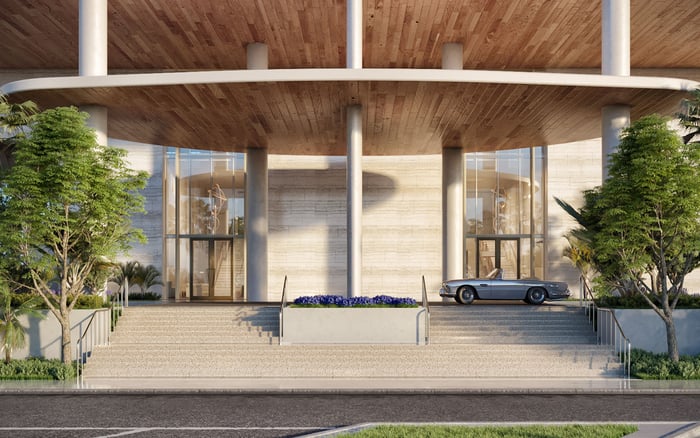
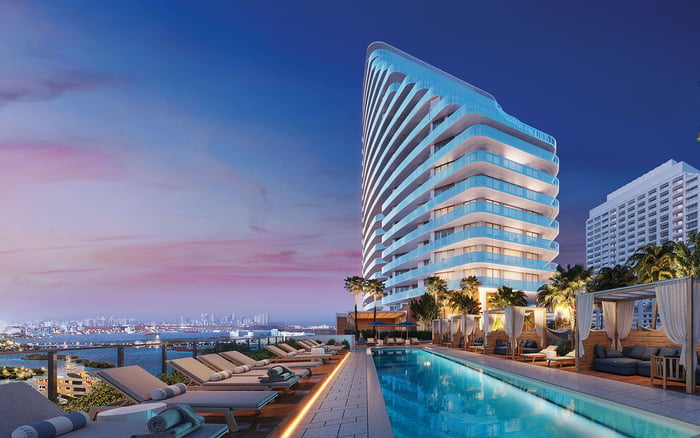
A practical buyer’s framework for comparing branded residences through service, privacy, amenities, governance, and long-term livability.

Branded residences occupy a privileged lane in South Florida real estate because they promise more than architecture, location, and finish quality. They imply a daily standard: how a car is received, how a guest is announced, how a service request is handled, and how privacy is protected before an owner ever reaches the front door.
That is why the comparison between Four Seasons Residences Coconut Grove and Mr. C Residences Boca Raton is most useful through a diligence lens rather than a decorative one. Both names invite buyers to look beyond square footage and consider the operating culture of the building. The essential question is not simply which residence is more glamorous. It is which one best aligns with how the owner intends to live.
For buyers considering a new-construction or pre-construction purchase, the most valuable work happens before a contract feels inevitable. Review the service structure, ask how private circulation is managed, study which amenities are truly reserved for residents, and understand how the building will be governed after opening. In South Florida’s luxury market, discretion is not an adjective. It is an operating system.
Service depth is often mistaken for a long amenity menu. In practice, it is more exacting. It means knowing who is responsible for each layer of the owner experience, how requests move through the building, and whether staffing is calibrated for the peak moments that matter: holiday arrivals, dinner-hour guest flow, valet congestion, deliveries, maintenance access, and owner returns after travel.
A serious buyer should ask direct questions. Will residence services be handled by a dedicated residential team? How are guest permissions managed? What is the protocol for packages, household staff, chefs, wellness providers, and pet care? Are there defined hours for concierge coverage, valet, security, and amenity attendants? If a residence will be used as a second home, what happens while the owner is away can be just as important as what happens during a long weekend in residence.
The distinction between service branding and service execution is where diligence becomes valuable. A polished lobby can make a first impression, but long-term ownership is shaped by response cadence, clear accountability, and consistent personnel. Buyers should listen carefully for specifics, not atmospherics.
Elevator privacy is not a single feature. It is a sequence that begins with arrival and continues through the path to the residence. The strongest buildings make that sequence feel effortless, but buyers should still test it carefully.
Start at the arrival point. Is there clear separation among residents, guests, service providers, and vendors? How is access granted after hours? Does the elevator system create direct or semi-private movement, or are owners sharing transitional space at predictable high-traffic times? How are deliveries routed? Where do household employees enter? These details affect both privacy and the way a residence feels on an ordinary Tuesday, not only during a sales presentation.
For Four Seasons Residences Coconut Grove and Mr. C Residences Boca Raton, the buyer’s task is to compare the promised living experience with the actual circulation plan. Elevator privacy should support the brand promise without requiring the owner to manage awkward interactions. The best outcome is a residence that feels composed from curb to entry.
Owner-only amenities are among the most important differentiators in a branded residence, but they require close reading. The phrase can mean different things across buildings. A buyer should determine which spaces are reserved exclusively for owners, which are shared with guests, which may be subject to private events, and which require reservations or additional charges.
The most relevant questions are operational. Who may access the wellness areas? Can residents bring guests to private lounges or dining spaces? Are pool, fitness, spa, or club areas staffed, and during which hours? Are there rules around children, pets, trainers, private chefs, or outside providers? Boutique appeal is strongest when amenity access remains calm, predictable, and protected from overuse.
Amenity privacy is also financial privacy in another form. A beautiful program can become a source of friction if operating costs are not transparent. Buyers should review budgets, staffing assumptions, and association responsibilities to understand what is included, what may evolve, and what requires owner approval.
The Coconut Grove and Boca Raton buyer may overlap in wealth, but not always in lifestyle rhythm. Coconut Grove searches often emphasize a more intimate Miami pattern, with buyers focused on privacy, neighborhood character, and daily life that does not need to feel like a hotel lobby. Boca Raton conversations can carry a different set of priorities, often centered on ease, security, family use, club-like comfort, and a refined residential pace.
That difference matters when comparing Four Seasons Residences Coconut Grove with Mr. C Residences Boca Raton. A buyer should not ask which brand is better in the abstract. The better question is which service culture fits the household. Some owners want a high-touch environment that anticipates movement. Others want a quieter form of assistance that appears only when needed.
Palm Beach corridor buyers, Miami buyers, and seasonal owners all tend to prize discretion, but they may define it differently. One buyer may consider private elevator access the highest luxury. Another may care more about how a building handles visiting family, wellness routines, or long absences. The right residence is the one whose rules make the owner’s preferred life easier.
The most elegant branded residence still depends on governance. Association documents, reservation policies, staffing plans, insurance obligations, pet rules, leasing restrictions, guest access, and maintenance standards all influence the real value of ownership. Buyers should review these materials early, not as a final formality.
Resale confidence is often supported by clarity. Future buyers will want to understand what is private, what is shared, what is staffed, and what the recurring costs support. The stronger the operating story, the easier it is for a residence to retain its premium narrative over time.
A disciplined buyer also considers how the building will feel after the first season of ownership. Will amenity demand be balanced? Will the service model age well? Will the brand standard remain visible in small daily interactions? In ultra-luxury real estate, the premium is protected not only by location and design, but by the building’s ability to repeat excellence.
What is the main due-diligence focus for branded residences? Buyers should focus on how the building operates day to day, including staffing, access control, amenity rules, and privacy sequences.
Why does service depth matter so much? Service depth determines whether the owner experience is consistent, discreet, and responsive after closing, not just appealing during a tour.
How should buyers evaluate elevator privacy? Buyers should review the full path from arrival to residence entry, including guest, vendor, delivery, and after-hours protocols.
Are owner-only amenities always fully private? Not necessarily. Buyers should confirm who can access each space, whether guests are allowed, and whether reservations or fees apply.
What should a second-home buyer prioritize? A second-home buyer should examine away-from-home services, security, maintenance access, package handling, and guest authorization rules.
Is brand name enough to justify a premium? No. The brand should be supported by clear service standards, durable governance, and an ownership structure that protects privacy.
What documents are most important before signing? Buyers should review association documents, budgets, amenity rules, access policies, staffing assumptions, and use restrictions.
How do Coconut Grove and Boca Raton differ for buyers? Coconut Grove may appeal to buyers seeking an intimate Miami rhythm, while Boca Raton may suit those prioritizing ease and residential calm.
Can amenity rules affect resale value? Yes. Clear and well-managed amenity rules can support buyer confidence, while ambiguity can create friction during resale.
What is the best way to compare these two residences? Compare the lived experience: service culture, privacy, amenity access, governance, and how each building supports the household’s routine.
For a discreet conversation and a curated building-by-building shortlist, connect with MILLION.
If branded residences are on your mind — as a home or as an allocation — we would be glad to share what we are seeing, privately.
Begin a quiet conversation