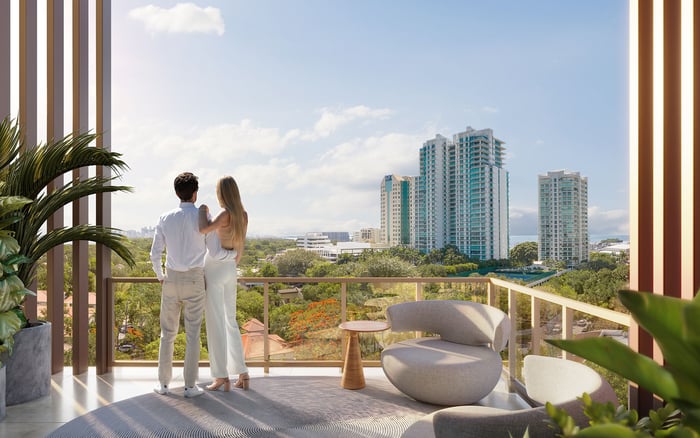
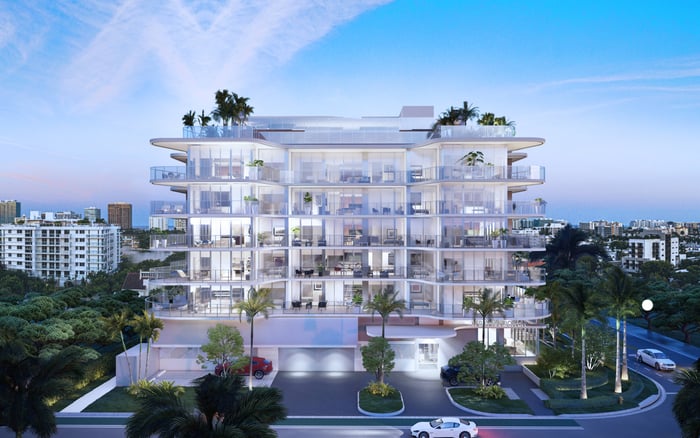
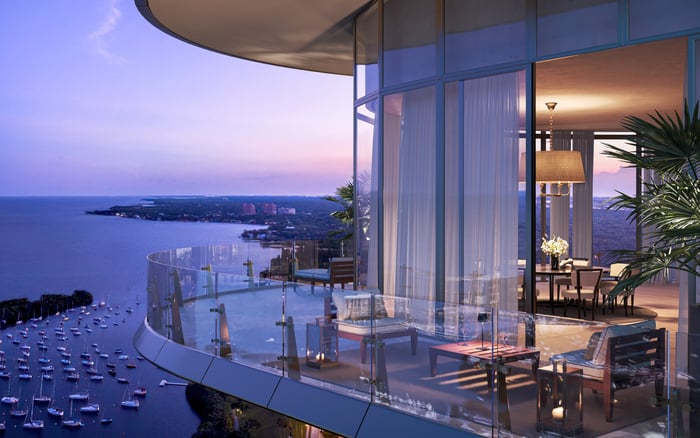
A practical South Florida luxury buyer comparison of Four Seasons Residences Coconut Grove and Mila Bay Harbor Islands through building scale, lobby privacy, staff recognition, and resident familiarity.
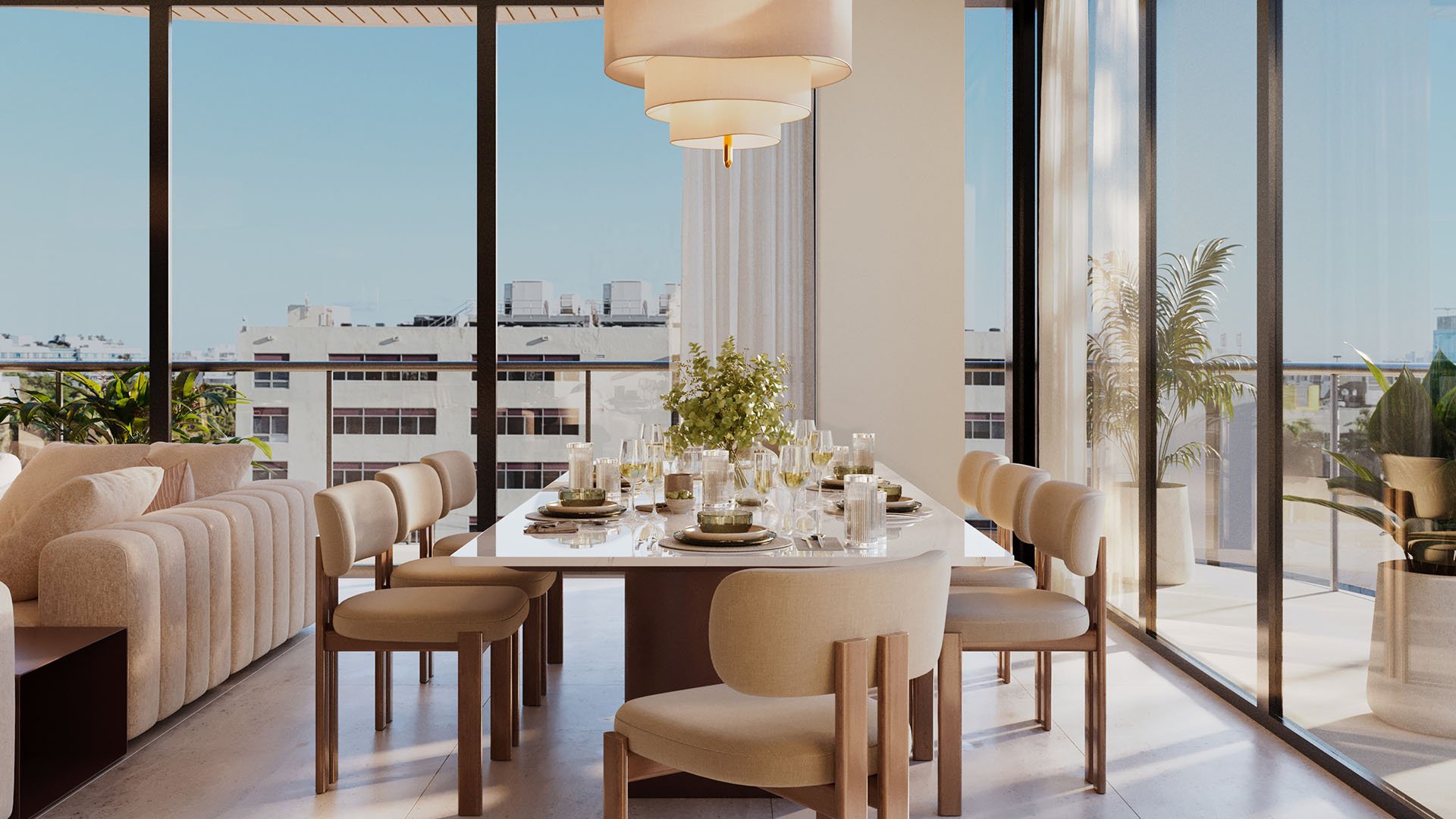
At the top of the South Florida residential market, the most consequential differences are often felt before a buyer reaches the residence itself. They begin at the arrival court, the lobby threshold, the elevator approach, and the quiet rhythm of who is seen, recognized, and encountered over time.
That is why the comparison between Four Seasons Residences Coconut Grove and Mila Bay Harbor Islands should not be reduced to finishes, views, or skyline presence. For a serious buyer, the practical issue is how each building is intended to operate as a daily residential environment.
Scale changes the feeling of a property. It can influence how calm the entrance feels, how frequently residents cross paths, how staff members learn preferences, and how much privacy a household experiences in ordinary moments. The best comparison is not simply which home is larger or which amenity list is longer. It is whether the building’s rhythm fits the owner’s desired lifestyle.
Four Seasons Residences Coconut Grove is best approached through the lens of a brand-led residential experience in Coconut Grove. For buyers drawn to the project, the appeal is likely to include service culture, discretion, and the expectation of a carefully managed home environment.
A buyer evaluating this option should ask how the project’s final residence count, floor configuration, elevator plan, arrival sequence, and staffing model support privacy. Those details matter because they shape the lived experience more than a brochure phrase can. A refined residence can still feel exposed if arrival and circulation are not aligned with the owner’s expectations.
The Four Seasons name also raises a specific lifestyle question: does the buyer want a setting where recognition and continuity are part of the luxury? Some owners value being known by a trusted team. They want the building to remember household preferences, guest patterns, service expectations, and the quieter details of how they live.
For that buyer, the Coconut Grove context can be attractive because the decision is not only about the residence. It is also about the atmosphere surrounding the residence, from the neighborhood identity to the way the building manages privacy at the threshold.
Mila Bay Harbor Islands presents a different buyer question in Bay Harbor Islands. The practical focus is how the building’s confirmed scale, vertical organization, and shared spaces translate into daily privacy.
Some luxury buyers prefer a setting where the resident base feels more diffuse. They do not necessarily want repeated recognition from neighbors or a small social circle at every arrival. For them, a larger or more vertically distributed environment, if confirmed in the final plans, may create a desirable sense of anonymity.
That does not mean privacy is automatic. A tower can feel composed or busy depending on its entry design, elevator strategy, amenity scheduling, service routes, valet procedures, and management standards. The buyer should not assume that height, branding, or visual drama alone will deliver discretion.
For a Bay Harbor Islands buyer, Mila may appeal as a luxury residential option where the daily experience could feel less socially concentrated than a more intimate building. The essential question is whether that diffusion feels calming, efficient, and private, or whether the buyer would prefer a more familiar residential setting.
Lobby privacy is often discussed in abstract terms, but it is one of the most tangible measures of luxury living. The lobby is where personal schedules become visible. It is where residents arrive with family, guests, drivers, luggage, shopping, pets, staff, and service professionals.
The way those moments overlap can define the property’s emotional tone. A composed entrance can make the building feel calm before the elevator doors open. A less controlled entrance can make even a remarkable residence feel less private than expected.
This is why buyers should evaluate more than the renderings. They should ask how the arrival sequence works, where guests are received, how deliveries are handled, how service access is separated, and whether residents have a clear path from arrival to residence. These operating details are central to discretion.
For some households, privacy means being recognized by a small and consistent team. For others, privacy means moving through the building without leaving much social imprint. Both definitions can be valid, but they lead to different building preferences.
The distinction between familiarity and anonymity is central to this comparison. A more familiar environment can feel reassuring when a buyer values continuity, trusted staff, and predictable daily patterns. A more anonymous environment can feel liberating when a buyer wants less social visibility.
A second-home owner may view this differently from a full-time resident. If the home is used seasonally or for select visits, effortless re-entry may be especially important. Staff recognition can make arrivals smoother, particularly when the household expects the property to function without repeated explanations.
A buyer focused on long-term flexibility may ask a different question: how will the building feel to future occupants, guests, and potential purchasers? A property’s perceived discretion, ease of arrival, and sense of exclusivity can influence how it is experienced over time.
Views, exposures, and interiors still matter. But they do not replace the daily experience of entering, circulating, and living in the building. A spectacular outlook may impress at sunset, while an uncomfortable arrival sequence is felt repeatedly.
Four Seasons Residences Coconut Grove appears most aligned with the buyer who prioritizes brand association, service continuity, and a privacy-forward residential atmosphere. The most important due diligence is whether the final building plan and operations support that expectation.
Mila Bay Harbor Islands appears most aligned with the buyer considering a Bay Harbor Islands luxury setting where the tower experience may offer a different balance of privacy and anonymity. The key is to verify how the building’s confirmed layout and management structure shape everyday movement.
The comparison should be verified against current sales materials before any final decision. Residence counts, story counts, floor configurations, service protocols, amenity operations, and access procedures should always be confirmed during the purchase process.
The answer is deeply personal. In ultra-prime real estate, privacy is not one thing. It may mean being known well by a trusted team, or it may mean moving through a building with less social visibility. The more sophisticated buyer defines that preference before comparing finishes, views, or amenities.
What is the main buyer question in this comparison? The main question is how building scale and operating style affect privacy, recognition, and daily comfort.
Is this comparison mainly about price? No. The focus is the practical living experience created by arrival design, circulation, staff interaction, and resident familiarity.
Why does lobby privacy matter to luxury buyers? The lobby is where residents, guests, staff, and service providers often overlap, making it central to perceived discretion.
Does a smaller-feeling building always mean better privacy? Not always. Some buyers prefer a more intimate environment, while others feel more private in a setting with greater anonymity.
What should buyers verify before relying on scale comparisons? Buyers should verify current residence counts, floor plans, access routes, elevator plans, amenity operations, and service protocols.
Who may prefer Four Seasons Residences Coconut Grove? A buyer who values brand association, service continuity, and a privacy-forward Coconut Grove setting may find it compelling.
Who may prefer Mila Bay Harbor Islands? A buyer seeking a Bay Harbor Islands luxury environment with a potentially more diffuse residential feel may find it appealing.
How does staff recognition affect the experience? Staff recognition can make arrivals, guest handling, and household preferences feel smoother, especially for owners who travel frequently.
Can anonymity be a form of luxury privacy? Yes. Some buyers prefer less social visibility and do not want every arrival or routine to feel familiar to others.
What is the best way to choose between the two? The best approach is to define whether recognition or anonymity matters more, then verify the current plans and operations for each project.
For a tailored shortlist and next-step guidance, connect with MILLION.
If branded residences are on your mind — as a home or as an allocation — we would be glad to share what we are seeing, privately.
Begin a quiet conversation