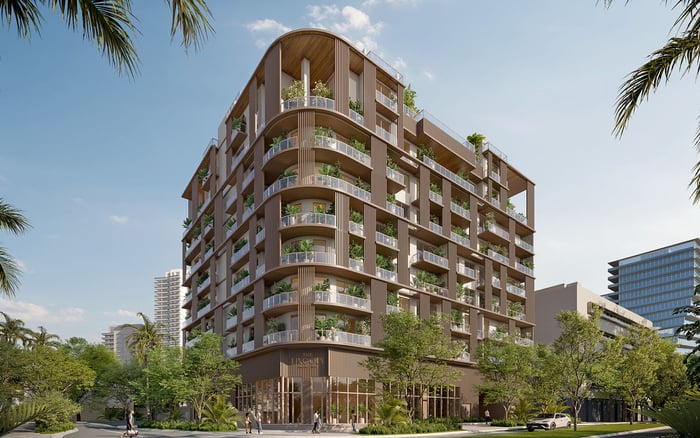
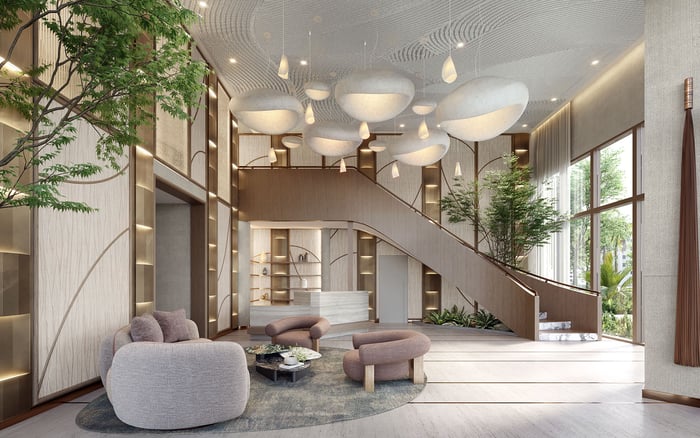
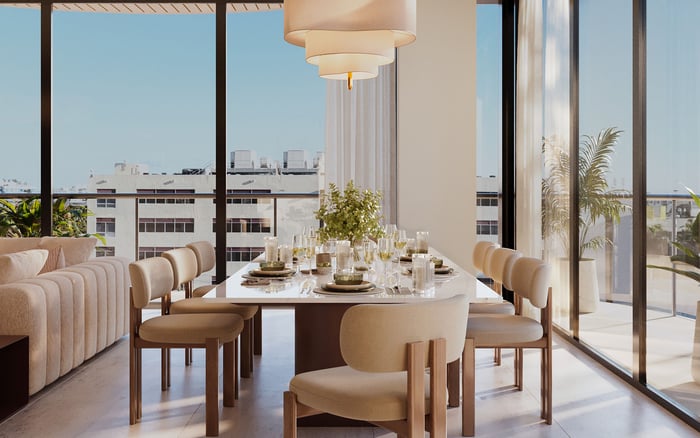
A practical ownership guide to hosting extended family at The Lincoln Coconut Grove with privacy, calm circulation, intuitive systems, and neighborhood-led hospitality.
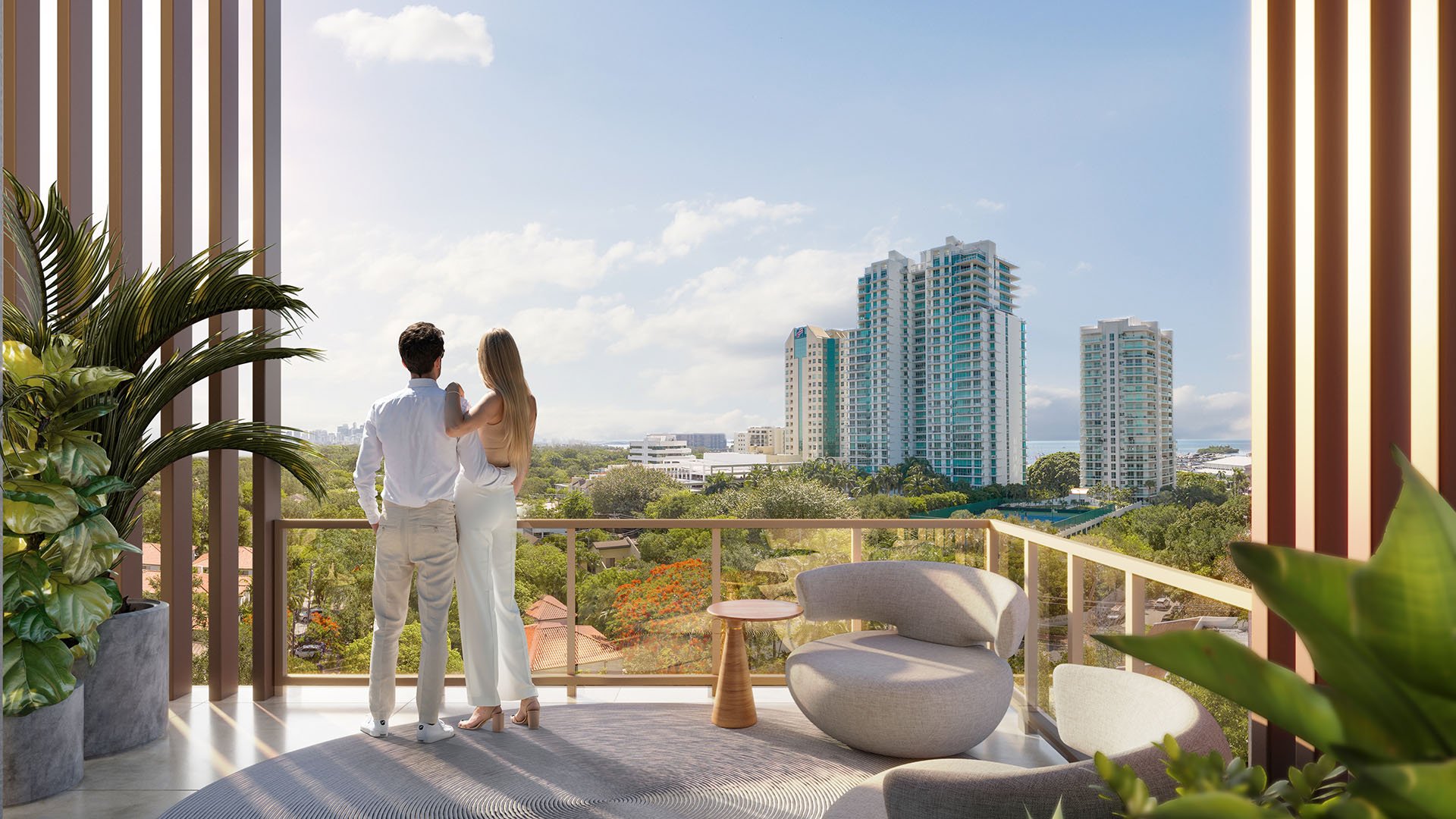
The strongest guest strategy at The Lincoln Coconut Grove is not to make the residence endlessly available. It is to make it intelligently available. For a luxury end user, the objective is a home that can welcome grandparents, adult children, visiting friends, nannies, and staff for days or weeks while still preserving the owner’s privacy, schedule, and sense of retreat.
That distinction matters. The Lincoln Coconut Grove is best understood as a boutique luxury residence suited to planned extended-family stays, not casual high-traffic hosting. The better approach is closer to operating a private ultra-boutique hotel than running an open family house. Arrival, sleeping, dining, technology, amenity use, and quiet hours should all be considered before anyone arrives.
For buyers weighing new-construction opportunities in Coconut Grove, the question is not simply whether a residence looks impressive when empty. It is whether it performs well when full.
Extended-family planning often fails because owners begin with the room count rather than the people. A grandparent visiting for two weeks has different needs than an adult child arriving for a long weekend. A nanny needs practical access and clarity. A family friend may need privacy without decision-making authority inside the home. Staff may require discreet circulation and predictable routines.
The guest plan should assign each type a place in the household rhythm. Grandparents may need the quietest guest zone and the simplest path to common areas. Adult children may be comfortable with more independent movement. Visiting friends should understand where the home becomes private. Nannies and staff need clear instructions that prevent repeated questions to the owner.
This is where the residence begins to function like a private hotel. The experience feels generous because the systems are clear. Guests know how to arrive, where to place luggage, how to control climate, where to gather, and when the home returns to quiet.
A full residence should never mean a displaced owner. The owner’s suite is the anchor of the extended-stay strategy, and its privacy should be treated as non-negotiable. Guests should not need to pass through owner-oriented zones to access refreshments, entertainment, terraces, bathrooms, or exits. Daily routines such as breakfast, work calls, exercise, reading, and rest should remain intact even when the household expands.
Architectural choices should support that standard from the beginning. Flexible guest zones matter, but circulation matters more. If every guest movement crosses the owner’s path, even a beautiful home can feel overrun. A strong plan gives guests places to be without requiring the owner to supervise every transition.
The same principle applies to furnishings. Extended stays call for hotel-like comfort, durability, and easy maintenance. A guest room should not feel precious. Upholstery, bedding, surfaces, lighting, luggage placement, and storage should anticipate real use by people staying longer than a weekend.
Luxury technology becomes a liability when guests cannot use it. Lighting, climate, entertainment, Wi-Fi, and access systems should feel intuitive, not theatrical. The owner should not become the help desk for every visiting relative.
A practical guest strategy includes a simple digital or printed orientation: Wi-Fi details, room controls, entertainment basics, building access expectations, and any family preferences around security. The goal is not to turn the residence into a rental manual. It is to remove friction.
When technology is simplified, the home feels calmer. Grandparents are not guessing at climate controls. Adult children are not changing settings throughout the residence. Nannies know which areas are appropriate for children. Staff know how to support the household without interrupting the owner.
This is especially important in boutique buildings, where intimacy can improve quiet, service familiarity, and ease of movement, but also requires discipline. Guests should understand that corridors, elevators, shared spaces, and amenity areas are part of a residential environment, not an extension of a party suite.
Building amenities should be treated as an extension of the residence. Their role is to absorb activity so the private home does not have to carry every meal, conversation, workout, children’s pause, or afternoon diversion. Used well, amenities create breathing room between togetherness and retreat.
The key is restraint. Extended-family hospitality should feel composed to neighbors and building staff. If guests treat common areas as informal overflow without awareness, the household can quickly become the building’s problem. If the owner sets expectations in advance, shared spaces can support the visit without disturbing the building’s rhythm.
This is one reason buyers comparing Grove residences may study Four Seasons Residences Coconut Grove, Mr. C Tigertail Coconut Grove, and Arbor Coconut Grove through the lens of family flow rather than finish level alone. The most successful residence is the one that supports hospitality without making the owner feel operationally exposed.
The neighborhood itself should be part of the guest plan. Coconut Grove’s walkable village feel, cafés, parks, and waterfront access can reduce reliance on cars, drivers, and constant in-residence entertainment. A family visit becomes easier when guests have natural places to go between meals and gatherings.
That is the strategic advantage of a calmer, more residential Miami setting. The Grove is better suited to multi-generational stays than districts defined by nightlife or transient energy. Guests can step out, return, separate, and regroup without every movement feeling like an event.
For owners considering a second-home that may become a long-term family base, this matters. The neighborhood becomes an amenity layer. It complements the residence and building rather than forcing every activity to happen on-site. Nearby Grove projects such as The Well Coconut Grove also reflect how strongly buyers are reading the area as a lifestyle environment, not simply a location on a map.
The art of extended-family ownership is balancing welcome with structure. Guests should feel expected, not managed. Yet the household needs boundaries around arrival times, sleeping assignments, noise, amenity use, staff communication, and private zones.
That structure should be established before the first extended stay. Decide which rooms are for whom. Decide where luggage goes. Decide whether meals are hosted in the residence, outside in the Grove, or split between both. Decide which guests receive access credentials and which do not. Decide how children, nannies, and visiting friends move through the building.
The result is a quieter form of luxury. The Lincoln Coconut Grove can operate as a family base where hospitality feels natural because the underlying plan is disciplined. For the right owner, that is the difference between a beautiful residence that becomes stressful when full and a private home that remains elegant under pressure.
Is The Lincoln Coconut Grove best for frequent casual hosting? It is better suited to planned extended-family stays than casual high-traffic entertaining. The strongest ownership strategy favors privacy, structure, and restraint.
Who should be included in an extended-stay guest plan? Grandparents, adult children, visiting friends, nannies, and staff should be planned for separately. Each group has different privacy, access, and support needs.
Why is the owner’s suite the starting point? The owner’s suite protects the daily life of the primary resident. If that privacy fails, the entire extended-stay experience can feel intrusive.
How should technology be handled for guests? Lighting, climate, Wi-Fi, entertainment, and access should be intuitive and clearly explained. The best systems reduce questions rather than create them.
Should building amenities be part of the guest strategy? Yes, amenities can absorb activity and reduce pressure on the private residence. They should be used with awareness of neighbors, staff, and building quiet.
Why does Coconut Grove work for multi-generational visits? Its walkable village character, cafés, parks, and waterfront access give guests options outside the home. That reduces dependence on cars and in-residence entertainment.
How formal should house rules be? They should be clear but discreet. Guests need enough guidance to move confidently without making the visit feel rigid.
What is the biggest mistake owners make with extended family? They plan for sleeping but not for circulation, privacy, meals, technology, and downtime. A full home needs systems, not just beds.
Can a boutique building support longer family stays? Yes, if guests respect noise, corridors, elevators, and amenity use. Boutique intimacy works best when the household remains composed.
What type of buyer is best aligned with this strategy? A luxury end user who sees Coconut Grove as a long-term family base is the clearest fit. The residence should serve lifestyle continuity, not just occasional display.
For a confidential assessment and a building-by-building shortlist, connect with MILLION.
If branded residences are on your mind — as a home or as an allocation — we would be glad to share what we are seeing, privately.
Begin a quiet conversation