A practical, buyer-first comparison of Mr. C Tigertail Coconut Grove and 619 Residences by Foster + Partners + Nobu Hospitality, focused on confidence, deposits, and execution risk.

At the highest end of South Florida pre-construction, buyers rarely choose on beauty alone. Presentation matters, but it is not the final discipline. The deeper question behind Mr. C Tigertail Coconut Grove versus 619 Residences by Foster + Partners + Nobu Hospitality is how a buyer should underwrite confidence before the building exists in completed form.
That confidence has three parts. First, the buyer must understand what is being promised and what remains subject to refinement. Second, the deposit structure must fit the buyer’s liquidity, time horizon, and tolerance for construction-cycle uncertainty. Third, the developer track record must be evaluated not as a marketing phrase, but as evidence of execution under pressure.
This is where luxury pre-construction becomes more private banking than showroom browsing. The buyer is not merely selecting finishes, views, or amenities. The buyer is allocating capital into a future asset, with a delivery timeline, a legal framework, and a brand promise that has to survive the distance between renderings and keys.
Pre-construction confidence is strongest when the purchase conversation moves quickly from atmosphere to specifics. A polished sales environment can communicate ambition, but it cannot replace documents, deadlines, construction milestones, offering terms, reservation mechanics, and the written relationship between buyer obligations and developer obligations.
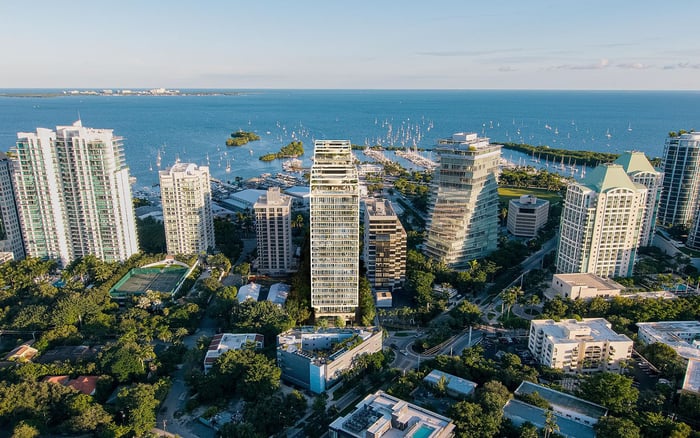
For Mr. C Tigertail Coconut Grove, the appeal is naturally filtered through a Coconut Grove lens: scale, neighborhood character, privacy, and the particular sensibility of buyers who want Miami without feeling absorbed by its most vertical districts. Coconut Grove matters here because the area often attracts buyers who are as focused on daily rhythm as they are on architectural statement.
For 619 Residences by Foster + Partners + Nobu Hospitality, the buyer question is slightly different. The names embedded in the title suggest a conversation shaped by design pedigree and hospitality association. Yet even when a concept carries recognizable design and service language, the practical buyer still has to ask what is contractual, what is operational, and what is aspirational.
The disciplined approach is to separate three categories: what is guaranteed in the purchase documents, what is intended as part of the development vision, and what remains dependent on future management, market conditions, or approvals. The more clearly those categories are defined, the less the buyer is relying on mood alone.
Deposit structure is often described as a threshold for entry, but for serious buyers it is really a capital-planning instrument. The question is not simply whether the buyer can meet the deposits. The better question is whether the deposit schedule aligns with the buyer’s broader liquidity strategy, portfolio timing, tax planning, and personal use case.
A buyer considering pre-construction should evaluate when deposits are due, what events trigger each installment, how funds are held, what remedies apply if either side fails to perform, and how the contract treats delays or material changes. These details can materially affect comfort, even when the headline price feels appropriate.
This is especially important when comparing two projects with different identities. A buyer drawn to Mr. C Tigertail Coconut Grove may be prioritizing neighborhood intimacy and long-term personal use. A buyer drawn to 619 Residences by Foster + Partners + Nobu Hospitality may be giving more weight to international brand language, design association, or a service-forward lifestyle. In either case, the deposit schedule should not be treated as a formality.
The most confident buyers ask whether the deposit path feels proportional to the evidence of progress. They also ask whether tying up capital for a multi-stage period is preferable to purchasing a completed residence, waiting for resale inventory, or maintaining flexibility until later in the development cycle.
Developer track record should be examined as pattern recognition, not reputation alone. A strong record is not merely a list of prior projects. It includes delivery discipline, communication style, quality control, lender relationships, consultant coordination, and the ability to protect the buyer experience when market conditions change.
In a new-construction environment, the polished names attached to a project can create comfort, but they do not eliminate execution risk. Buyers should look for signs that the development team has navigated complexity before. Have they completed comparable residences? Have they delivered product aligned with the original promise? Do past buyers feel the handover matched the sales narrative? These questions are practical, not pessimistic.
The comparison between Mr. C Tigertail Coconut Grove and 619 Residences by Foster + Partners + Nobu Hospitality is therefore not a simple hierarchy. It is a study in what kind of confidence each buyer values most. Some buyers prefer the emotional clarity of a neighborhood-led residence. Others prefer the global fluency of a design and hospitality-led concept. Both positions can be rational if the documentation, economics, and execution story support them.
The right buyer does not ask, “Which project is better?” The better question is, “Which project is better for my intended ownership outcome?” A primary resident, a seasonal owner, a collector of branded residences, and an investment-minded purchaser can all interpret the same opportunity differently.
For a primary or long-term seasonal user, the everyday experience may matter most: arrival sequence, privacy, service consistency, neighborhood fit, noise profile, access to familiar routines, and whether the residence will still feel personal after the novelty fades. For an investor, the underwriting may lean more heavily on liquidity, future buyer depth, carrying costs, perceived scarcity, and exit timing.
That is why boutique sensibility can matter as much as brand recognition. A smaller, more intimate residential idea may appeal to buyers who want discretion and fewer layers between home and neighborhood. A more globally legible concept may appeal to buyers who want a recognizable lifestyle language and a broader audience when they eventually resell.
Neither instinct is inherently superior. The practical distinction lies in whether the buyer’s capital is being placed behind personal conviction, market conviction, or both.
Before moving from interest to contract, buyers should slow the conversation down. They should request clarity on deposit milestones, cancellation rights, anticipated delivery framework, unit modification rules, closing costs, association expectations, service obligations, and any brand-related terms that may affect ownership after completion.
They should also ask how communications will be handled during construction. In pre-construction, silence can create more anxiety than bad news. A serious buyer benefits from a development team that explains progress with discipline, not theatrics.
Finally, buyers should pressure-test the emotional reason for purchasing. Is the decision driven by a durable lifestyle fit, or by the fear of missing a new project? The strongest acquisitions usually combine desire with structure. They feel exciting, but they also survive a sober review.
For South Florida’s ultra-premium buyer, the decision between Mr. C Tigertail Coconut Grove and 619 Residences by Foster + Partners + Nobu Hospitality should be handled as a private capital decision wrapped in lifestyle language. Brand, architecture, and hospitality are meaningful, but they are not substitutes for contractual clarity.
Confidence is earned when the buyer can explain the purchase in plain terms: why this location, why this residence, why this deposit path, why this development team, and why now. If those answers are clear, pre-construction can be compelling. If they remain vague, beauty alone is not enough.
What is the main buyer question in this comparison? The central question is which project offers greater confidence when measured through documents, deposit structure, and execution history.
Is brand affiliation enough to justify a pre-construction purchase? No. Brand affiliation can strengthen appeal, but buyers should still verify what is contractual and how the project is expected to be delivered.
Why does deposit structure matter so much? Deposit structure determines how much capital is committed before completion and how that commitment fits the buyer’s broader financial plan.
Should a buyer prioritize location or developer track record? Both matter. Location shapes daily life and resale audience, while developer track record shapes confidence that the promised residence will be delivered.
How should buyers view Mr. C Tigertail Coconut Grove? Buyers should evaluate it through the lens of Coconut Grove lifestyle, privacy expectations, contract clarity, and long-term personal fit.
How should buyers view 619 Residences by Foster + Partners + Nobu Hospitality? Buyers should consider the design and hospitality positioning while confirming what is legally defined, operationally supported, and financially sensible.
Is pre-construction better than buying a completed residence? Not always. Pre-construction may offer early selection and future upside, while completed residences offer immediate verification of product and building experience.
What documents should buyers review carefully? Buyers should focus on purchase agreements, deposit provisions, offering materials, amendment rights, closing obligations, and any service-related terms.
Can investment logic differ from lifestyle logic? Yes. A lifestyle buyer may prioritize daily comfort, while an investment buyer may focus more on liquidity, resale depth, and capital timing.
What is the safest mindset for a luxury pre-construction buyer? The safest mindset is enthusiastic but disciplined, with every emotional reason supported by written terms and a credible delivery path.
If you'd like a private walkthrough and a curated shortlist, connect with MILLION.
If branded residences are on your mind — as a home or as an allocation — we would be glad to share what we are seeing, privately.
Begin a quiet conversation