A disciplined shortlist for yacht owners evaluating Bay Harbor Islands condominiums, with emphasis on marina documentation, vessel fit, insurance, building resilience, and post-storm access.
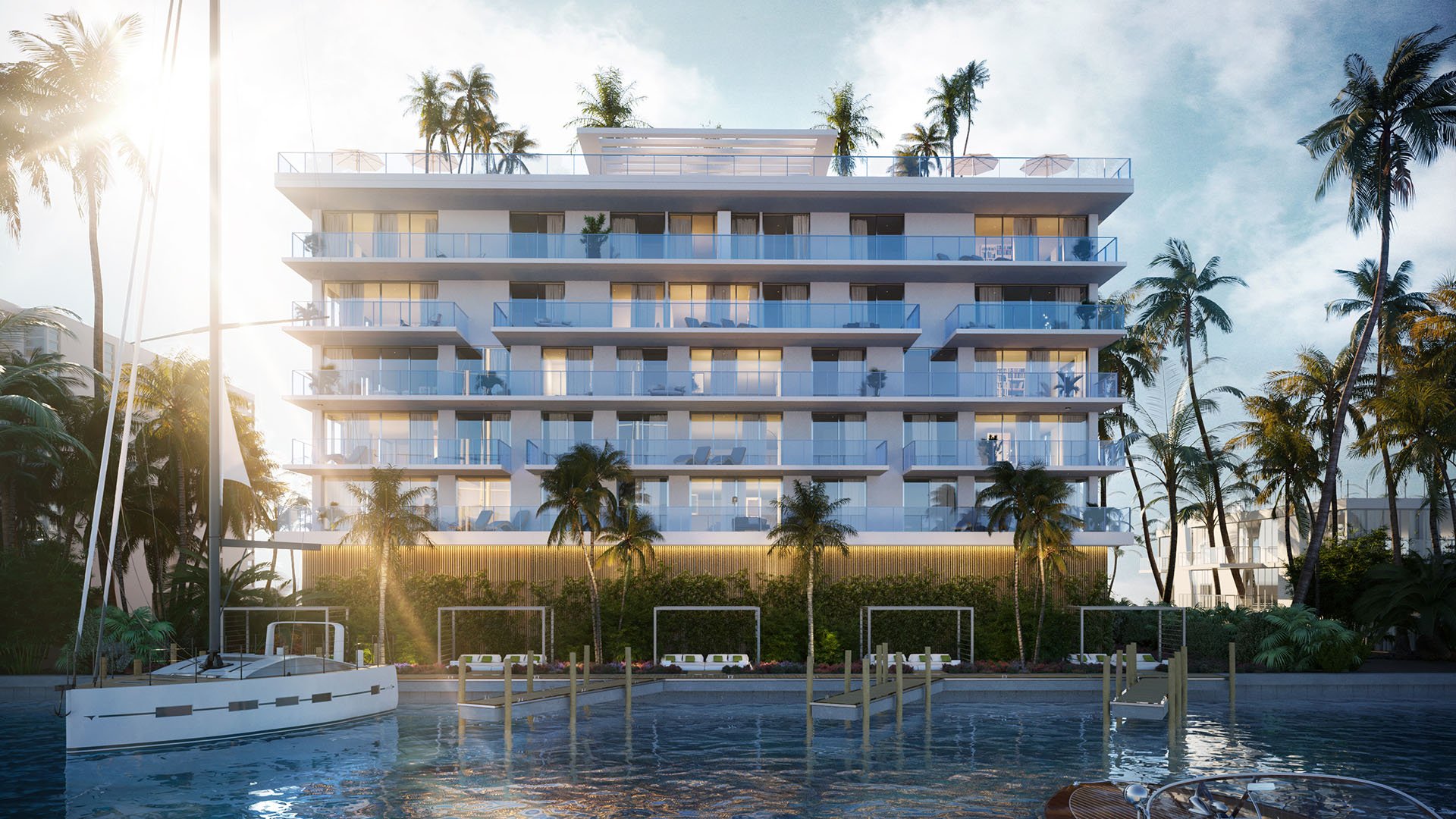
A waterfront condominium can appear perfectly suited to life on the water while leaving essential boating questions unresolved. For a Bay Harbor search centered on yacht ownership, the decisive issues extend beyond the view: the legal nature of the slip, permitted vessel dimensions, depth and clearance constraints, marina operating rules, insurance obligations, and the building’s severe-weather plan.
The following five properties offer a focused starting point. Their order reflects the questions a yacht owner should prioritize-not a claim that every residence includes a slip or can accommodate a particular vessel. Before contracting, buyers should obtain current written documentation from the condominium, marina operator, insurer, and appropriate marine professionals.
1. Onda Bay Harbor - marina-access review
Onda Bay Harbor belongs at the beginning of a yacht-focused search because the review should start with the boating arrangement itself. Confirm whether any slip is deeded, assigned, licensed, leased, or acquired separately, then establish whether that right transfers with the residence.
The next inquiry is practical vessel fit. Request written limits for length, beam, draft, height, shore-power requirements, guest access, fueling procedures, and loading windows before treating marina proximity as usable access.
2. La Maré Bay Harbor Islands - slip-rights review
La Maré Bay Harbor Islands should be evaluated through the precision of its governing documents. A buyer’s attorney should reconcile the purchase contract, condominium declaration, marina rules, wait-list provisions, transfer restrictions, and any separate fees or assessments.
Storm procedures deserve equal scrutiny. Ask who directs vessel removal, how notices are delivered, when utilities may be shut down, and whether owners remain responsible for relocating boats under specified conditions.
3. La Baia North Bay Harbor Islands - vessel-fit review
For La Baia North Bay Harbor Islands, the central test is whether the boating framework suits the owner’s actual yacht rather than a generalized idea of waterfront convenience. Qualified marine advisers should review vessel specifications alongside channel, bridge, tide, and turning considerations.
Buyers should also clarify tender storage, dock-box rules, contractor access, deliveries, security protocols, and provisions for captains or crew. These operational details can materially shape daily use.
4. Origin Bay Harbor Islands - storm-plan review
Origin Bay Harbor Islands merits a resilience-led review that distinguishes residence protection from marina protection. Request documentation covering glazing, openings, emergency power, elevators, water systems, garage access, communications, and procedures for restoring common areas.
Insurance should be analyzed at both the association and owner levels. Coverage limits, exclusions, deductibles, flood considerations, loss-assessment exposure, and requirements affecting the vessel all warrant independent professional review.
5. Bay Harbor Towers - operating-plan review
Bay Harbor Towers rounds out the shortlist as a candidate for a full operating-plan examination. Yacht ownership depends on more than securing a boat slip; it requires confidence in access control, dock maintenance, utility reliability, management communication, and financial planning for shared waterfront infrastructure.
Minutes, budgets, reserve information, engineering materials, insurance documents, and pending-project disclosures should be read together. The objective is to understand how the property prepares, communicates, funds work, and resumes operations after a disruption.
A sophisticated purchase analysis treats the condominium and marina arrangement as connected but distinct assets. The residence may satisfy every architectural preference while the slip remains nontransferable, unsuitable for the vessel, subject to reassignment, or governed by separate costs. Conversely, a compelling boating arrangement does not resolve questions about the building’s finances, insurance, or emergency planning.
Broaden the residential comparison without assuming equivalent boating privileges. Alana Bay Harbor Islands and Alma Bay Harbor Islands can help buyers refine preferences for scale, design, amenities, and ownership structure while they conduct a separate marina analysis.
The written record should answer several points plainly: who controls the slip, what is conveyed at closing, whether subleasing is permitted, which vessels qualify, how fees change, who maintains dock components, and what happens if repairs temporarily prevent access. Counsel should review documents that reflect any verbal assurances.
Storm planning begins before ownership. Buyers should identify the responsibilities of the association, marina operator, unit owner, captain, insurer, and service contractors. The plan should address preparation timing, vessel relocation, emergency contacts, access restrictions, power interruptions, water intrusion, post-event inspections, and the sequence for returning to the property.
When comparing alternatives such as Mila Bay Harbor Islands and The Well Bay Harbor Islands, request project-specific answers rather than extrapolating from age, appearance, or marketing language. Review the precise scope of emergency generation, protected building systems, garage procedures, elevator protocols, and owner communications.
A yacht owner also needs a vessel plan independent of the condominium. That may include a relocation destination, haul-out alternatives, captain availability, fuel planning, lines and fenders, insurance notifications, and a decision deadline that permits safe action. The building’s procedures and the vessel’s plan should align without depending on last-minute access.
The most suitable choice is the property whose legal rights, physical constraints, operational standards, financial profile, and emergency procedures align with the owner’s vessel and expectations. A beautiful dock is not enough. The strongest decision file contains verified dimensions, current rules, transferable rights, realistic recurring costs, professional inspections, insurance guidance, and a workable storm plan.
A viewing of La Baia North Bay Harbor Islands, or any other candidate, should therefore include two conversations: one about the residence and another about the yacht. Keeping those tracks distinct clarifies the comparison and reduces the risk that waterfront appeal obscures a material operating constraint.
Does a waterfront condo automatically include a boat slip? No. Confirm the existence, legal form, availability, cost, and transferability of any slip in writing.
What slip documents should a buyer request? Request the declaration, marina rules, assignment or license, fee schedule, transfer provisions, and relevant meeting records.
Why do yacht dimensions matter before making an offer? Length, beam, draft, height, and utility needs can determine whether a particular slip and route are workable.
Should bridge and channel conditions be professionally reviewed? Yes. A qualified marine professional should assess the proposed vessel, route, clearance, depth, tides, and maneuvering needs.
What should a condominium storm plan cover? It should clarify preparation duties, communications, access restrictions, emergency power, inspections, and recovery procedures.
Who is responsible for moving the yacht before a storm? Responsibility depends on marina rules, insurance terms, and owner arrangements, so buyers should obtain a written answer.
How should insurance be evaluated? Review association, unit-owner, flood, loss-assessment, and vessel coverage with qualified insurance and legal advisers.
What building systems deserve special attention? Examine glazing, openings, generators, elevators, pumps, garages, communications, water systems, and protected common equipment.
Can marina rights be sold separately from the residence? The governing documents determine that point; never assume the slip and condominium transfer together.
What is the most important final due-diligence step? Reconcile all written rights, vessel requirements, costs, insurance terms, inspections, and storm procedures before contracting.
For a tailored shortlist and next-step guidance, connect with MILLION.
If branded residences are on your mind — as a home or as an allocation — we would be glad to share what we are seeing, privately.
Begin a quiet conversation