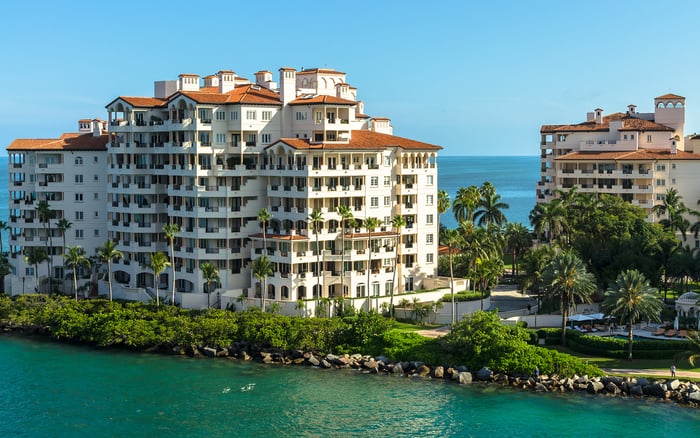
A buyer-oriented 2026 due-diligence view of Forté on Flagler, Rivage Bal Harbour, and The Links Estates at Fisher Island, focused on governance, use, access, and livability.

For South Florida’s most discerning buyers, the next layer of luxury is not only how a residence looks, but how gracefully it can be owned. Forté on Flagler West Palm Beach, Rivage Bal Harbour, and The Links Estates at Fisher Island represent three distinct versions of high-end residential life: a boutique Intracoastal condominium in West Palm Beach, an ultra-luxury oceanfront tower in Bal Harbour, and a limited collection of single-family homes within Fisher Island’s private-island ecosystem.
That distinction matters. A waterfront condominium in an emerging corridor, a coastal village tower, and a private-island estate setting may appeal to the same global buyer, yet each can produce very different answers around use, access, governance, maintenance, guest privileges, and resale planning. In 2026, the strongest purchase decisions will likely begin before finishes, views, and amenities. They will begin with documents.
The practical question is not simply which address feels most prestigious. It is which ownership structure best matches the buyer’s life: full-time residence, seasonal base, family compound, lock-and-leave retreat, legacy asset, or long-horizon hold.
Forté on Flagler is positioned in West Palm Beach as a boutique Intracoastal condominium, and that profile gives it a different due-diligence rhythm than a larger resort-style tower or private-island home collection. Boutique scale often attracts buyers who value privacy, familiarity, and a more residential daily cadence. The key is understanding how that intimacy is governed.
For Forté on Flagler West Palm Beach, the due-diligence lens should include association documents, maintenance responsibilities, guest rules, pet policies, leasing restrictions, move-in procedures, and any architectural or design review standards that may apply to modifications. Because the project sits within an emerging West Palm Beach waterfront corridor, neighborhood trajectory should also be part of the ownership review. Buyers should consider how future area maturation may affect convenience, traffic patterns, services, and long-term desirability.
This is where West Palm Beach buyers should think beyond the immediate residence. A boutique Intracoastal condominium can feel highly livable if the rules align with the owner’s intended use. A seasonal owner may prioritize lock-and-leave simplicity and guest procedures, while a primary resident may care more about daily access, building culture, pet accommodation, and the predictability of common-area upkeep.
Rivage Bal Harbour is an ultra-luxury oceanfront tower in Bal Harbour, placing it in one of South Florida’s more tightly regulated coastal village environments. That setting is part of the appeal. Bal Harbour has long attracted buyers who seek a quieter, more controlled oceanfront experience, where the broader municipal context can feel as important as the tower itself.
For Rivage Bal Harbour, diligence should focus on the interaction between condominium governance and the expectations of a regulated coastal village. Buyers should review association rules for leasing, guests, pets, staff access, deliveries, renovations, elevator use, beach-related procedures, and insurance-related obligations. None of these items should be assumed, especially at the ultra-luxury end of the market, where service standards and privacy protocols can be exacting.
The Bal Harbour lifestyle may be ideal for owners who want oceanfront permanence, polished discretion, and a more formal residential atmosphere. Yet that same atmosphere may come with rules that require careful reading. If a buyer expects frequent visiting family, rotating guests, domestic staff, or intermittent occupancy, the details of access and approval procedures become central to the purchase decision.
In this context, Rivage is not simply a question of oceanfront beauty. It is a question of whether the property’s governance, the village setting, and the buyer’s private life operate in harmony.
The Links Estates at Fisher Island occupies a different category. It is a limited collection of single-family homes on Fisher Island in Miami-Dade, integrated into a highly controlled private-island residential ecosystem. That makes community governance and access rules central to buyer due diligence from the outset.
For The Links Estates at Fisher Island, the ownership review should be broader than a typical single-family home purchase. Buyers should understand the rules that govern island access, guests, service providers, deliveries, club or community protocols, home maintenance expectations, exterior changes, landscaping standards, security procedures, and any resale or transfer-related approvals that may apply. In a controlled private-island environment, the promise of privacy is often inseparable from the structure that preserves it.
For Fisher Island buyers, this can be the defining advantage. The sense of separation, order, and continuity may be precisely what supports long-term livability. At the same time, owners who value spontaneous access for extended networks, frequent entertaining, or highly customized home operations should verify the relevant permissions before committing.
The Links Estates brings the language of single-family ownership into a rarefied community setting. That combination can be compelling, but it requires a disciplined review of both home-level obligations and island-level governance.
Across all three properties, the central diligence categories are similar, even if the answers will differ. Buyers should request and review the applicable condominium, association, or community documents before treating any lifestyle assumption as settled.
Leasing flexibility is often the first question. Owners should confirm whether rentals are permitted, what minimum lease terms apply, how many leases may be allowed within a given period, and whether tenant approval is required. The objective is not merely investment yield. It is flexibility if life circumstances change.
Guest access is equally important. A residence may work beautifully for an owner but poorly for visiting family if registration, parking, staff, elevator, ferry, gate, or security procedures are more restrictive than expected. Pet policies should also be verified in detail, including size, breed, number, service areas, and any approval process.
Maintenance obligations require close reading. In a condominium, the buyer should understand what the association maintains and what remains the owner’s responsibility. In a private home setting, exterior upkeep, landscaping, design standards, and community rules may create ongoing obligations that feel more institutional than a conventional detached residence.
Resale planning belongs in the same conversation. Buyers should ask whether transfer approvals, rights of first refusal, buyer screening, capital contributions, or other restrictions apply. These provisions can materially affect timing, liquidity, and the universe of future purchasers.
The cleanest way to compare these three offerings is by lifestyle architecture. Forté on Flagler may appeal to the buyer who wants boutique waterfront condominium living in an evolving West Palm Beach corridor. Rivage Bal Harbour may suit the owner who values oceanfront stature within a controlled coastal village. The Links Estates may resonate with the buyer seeking single-family space within a private-island framework.
None is universally more flexible. Flexibility is personal. For one buyer, it means leaving the residence for months with confidence. For another, it means accommodating guests, pets, staff, and family without friction. For a third, it means preserving privacy and long-term value through strict governance.
The best due diligence is therefore not adversarial. It is clarifying. It allows the buyer to understand what the property is designed to protect, and whether those protections support the intended life.
Before entering contract, buyers should request the governing documents, budget materials, rules and regulations, insurance summaries where available, application procedures, leasing policies, pet rules, renovation guidelines, and access protocols. Counsel should review them, but the buyer should also read them through the lens of daily life.
Questions should be practical. Can family arrive when the owner is away? How are service providers cleared? Are there limits on rental use? What approvals are required for alterations? How are disputes handled? What is the process for resale? What recurring obligations may increase over time?
In ultra-prime South Florida, the most elegant residence is the one whose rules feel invisible because they fit the owner’s habits. That is the essence of long-term livability.
Is Forté on Flagler a condominium? Forté on Flagler is a boutique Intracoastal condominium in West Palm Beach.
What makes Rivage Bal Harbour different in this comparison? Rivage Bal Harbour is an ultra-luxury oceanfront tower within a tightly regulated coastal village setting.
Is The Links Estates at Fisher Island a tower? No. The Links Estates is a limited collection of single-family homes on Fisher Island.
Should buyers assume short-term rentals are allowed? No. Leasing rights, minimum terms, and approval processes should be verified in the governing documents.
Why are guest rules important for luxury buyers? Guest access can affect family visits, staff logistics, entertaining, security clearance, and daily convenience.
Do pet policies require separate review? Yes. Buyers should confirm the number of pets, size limits, breed rules, access areas, and approval procedures.
Why does West Palm Beach corridor growth matter? Forté on Flagler’s emerging waterfront context makes neighborhood trajectory part of long-term ownership analysis.
Why is Bal Harbour governance relevant? Rivage sits in a village environment where local order and residential expectations shape the ownership experience.
Why is Fisher Island access central to diligence? The Links Estates is part of a controlled private-island ecosystem, so access rules affect everyday livability.
What is the most important first step for buyers? Review the association or community documents early, then compare the rules against your intended use.
When you're ready to tour or underwrite the options, connect with MILLION.
If branded residences are on your mind — as a home or as an allocation — we would be glad to share what we are seeing, privately.
Begin a quiet conversation