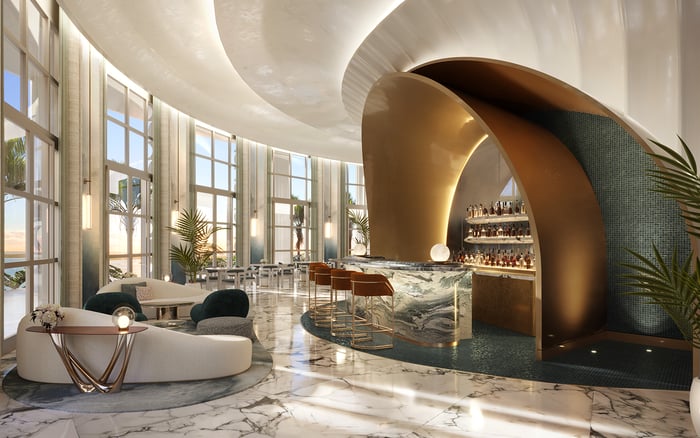
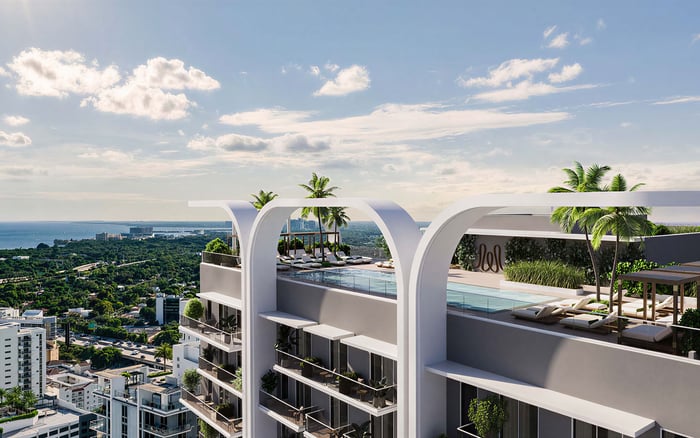
A practical buyer-focused comparison of Five Park Miami Beach and Jade Signature Sunny Isles Beach through the lens of terrace usability, balcony rules, outdoor-kitchen diligence, wind exposure, salt air, and year-round comfort.
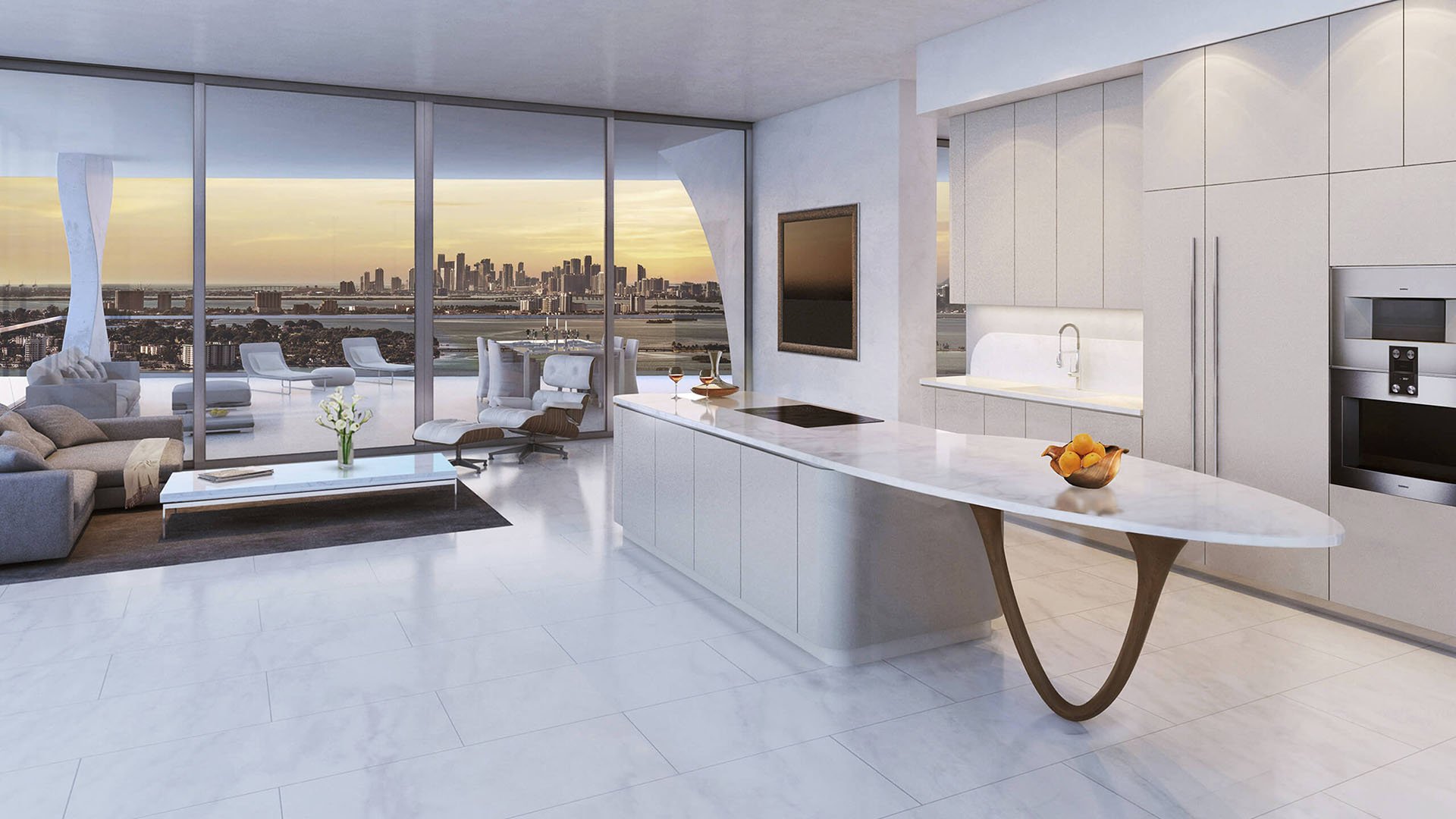
For a certain South Florida buyer, the balcony is no longer a decorative ledge attached to a glass tower. It is a test of lifestyle. Can it host breakfast without punishing morning glare? Can it hold a real dining table, not just two sculptural chairs? Can it support an evening routine when the wind rises, the air turns salty, and a summer storm arrives with little warning?
That is the practical question behind Five Park Miami Beach vs Jade Signature Sunny Isles Beach. Both belong in the conversation for buyers who want luxury condominium living with meaningful outdoor space. Yet the sharper comparison is not simply Miami Beach versus Sunny Isles, or new design language versus oceanfront identity. It is whether the private exterior space can function as an outdoor living room, a dining terrace, or a true extension of the kitchen.
This is where buyers should slow down. A large terrace can be visually persuasive in photography and still be complicated in daily use. A beautiful balcony can read as generous on a floor plan and still carry meaningful limits once rules, weather, maintenance, and exposure are understood.
Five Park Miami Beach should be studied beyond interior finishes, skyline presence, and pricing logic. The terrace question is more intimate: how would a resident actually use the outdoor space at 8 a.m., at sunset, and after dinner?
For buyers considering Five Park Miami Beach, due diligence should begin with the condominium documents and terrace-use policies. If the desired lifestyle includes grilling, a wet bar, planters, fixed furniture, heaters, fans, lighting, or any appliance that resembles an outdoor kitchen, the question is not whether the terrace appears capable of supporting it. The question is whether the building permits it, whether the utilities are already planned for it, and whether architectural review would allow it.
The best way to think about Five Park is as a study in usable outdoor living rather than balcony spectacle. Orientation, overhang depth, exposure, wind conditions at height, and utility locations can matter as much as the terrace dimension itself. A buyer who intends to use the space daily should ask how much shade exists in the most intense months, how rain moves across the terrace, and whether loose accessories would be practical during seasonal wind events.
Jade Signature Sunny Isles Beach invites a different kind of outdoor expectation. For many buyers, Sunny Isles immediately suggests ocean air, long horizons, and a private terrace that feels connected to the water. That romance is real, but the practical analysis should be just as real.
At Jade Signature Sunny Isles Beach, the terrace should be evaluated not only through architectural identity or brand recognition, but through everyday tolerance. Oceanfront and near-ocean outdoor spaces in South Florida can ask more of furniture, metals, cushions, covers, fasteners, appliance housings, and exterior finishes. Salt air and humidity are not abstract conditions. They influence replacement cycles, cleaning routines, and the materials that continue to look refined after repeated exposure.
The buyer who imagines an outdoor dining room or kitchen extension should request the governing documents and rules before making assumptions. Marketing language around terraces does not automatically mean grills, cooking appliances, water lines, gas, drainage, or ventilation are permitted. If those elements are not already approved, pre-plumbed, or contemplated by the building, adding them later can be difficult or impossible under association and building restrictions.
Outdoor kitchens are often the emotional centerpiece of the terrace conversation. They suggest long lunches, quiet dinners, and an effortless transition between interior entertaining and open-air living. In condominium ownership, however, that dream must pass through the documents.
The buyer should ask four plain questions. First, are grills, cooktops, or cooking appliances permitted on private terraces? Second, are gas, electric, water, drainage, or ventilation provisions already built in? Third, are wet bars, cabinetry, counters, or fixed installations allowed by the house rules and architectural-review process? Fourth, if permitted, what types of equipment and materials are acceptable?
The answer can change the value calculation. A terrace that is legally and physically prepared for dining support may function as part of the residence. A terrace that cannot accept cooking, water, or fixed improvements may still be lovely, but it should be valued as seating and lounging space rather than as an exterior kitchen zone.
This distinction matters for both Five Park Miami Beach and Jade Signature Sunny Isles Beach. The right question is not, “Can I imagine an outdoor kitchen here?” It is, “Do the documents, utilities, and building systems allow the version I am imagining?”
In South Florida, weather tolerance is not a secondary detail. It is part of the luxury specification. Heat, sun, rain, wind, salt air, and humidity all determine how often a terrace can be used comfortably and how expensive it is to keep that terrace looking composed.
Overhang depth can affect whether a buyer can sit outside during light rain or intense midday sun. Orientation can determine whether the terrace receives punishing afternoon heat or a softer morning rhythm. Height can intensify wind exposure, which matters for umbrellas, planters, cushions, loose tables, sculptural accessories, and any freestanding equipment.
A sophisticated buyer should also think in seasons. Summer may test shade and storm protection. Winter fronts may test wind comfort. Humid months may test fabrics and finishes. The best terrace is not always the largest one. It is often the one with the highest number of usable mornings, afternoons, and evenings across the year.
Terrace maintenance is often underestimated because it arrives after closing in small, repeated decisions. Cushions fade. Covers wear. Metal finishes can spot or corrode if poorly chosen. Outdoor appliances, where allowed, may require more careful upkeep in salt air. Hardware, hinges, and fasteners should be selected for exposure, not just appearance.
This is especially important in the comparison between a Miami Beach setting and a Sunny Isles Beach setting. Both can deliver extraordinary outdoor living, but both require discipline. Buyers should compare not only the terrace footprint, but also the practical cost of keeping it elegant. A residence that requires constant replacement of soft goods and hardware may carry a higher lifestyle cost than its floor plan suggests.
The most refined buyers increasingly treat exterior specifications with the same seriousness as interior millwork. Furniture weight, fabric grade, corrosion resistance, drainage behavior, and storage options all belong in the conversation before the contract is final.
For Five Park Miami Beach vs Jade Signature Sunny Isles Beach, the better choice depends less on a universal ranking and more on the buyer’s intended pattern of living. If the terrace is primarily for coffee, reading, and evening conversation, the emphasis may be shade, seating depth, wind comfort, and view orientation. If the terrace is meant for dining, the buyer should study table placement, service flow from the interior kitchen, and rain exposure. If the dream is an outdoor kitchen, the documents and utilities become central.
A practical buyer should walk the decision through five tests: rules, utilities, weather, maintenance, and frequency of use. Rules define what is allowed. Utilities define what is feasible. Weather defines comfort. Maintenance defines ongoing cost. Frequency of use defines real value.
That framework avoids the common mistake of paying for terrace square footage that does not match daily life. A smaller, better-protected terrace may outperform a larger, more exposed one. A terrace with the right orientation may be more valuable than a dramatic space that is uncomfortable during the hours a resident actually wants to use it.
Before assuming that either building supports a particular terrace lifestyle, buyers should request the condominium declaration, house rules, architectural-review guidelines, and any terrace-specific policies. They should also ask whether terrace utilities exist, what modifications are prohibited, and whether furniture, planters, umbrellas, grills, lighting, or fixed installations require approval.
This is not a formality. It is a core part of evaluating luxury condominium value. The terrace may be one of the most emotionally important parts of the residence, but it is also one of the most regulated and weather-exposed. A well-advised buyer treats that combination with precision.
The conclusion is simple: compare Five Park and Jade Signature by how the outdoor space will actually live. The winner is not necessarily the residence with the larger terrace or the more seductive rendering. It is the one whose rules, utilities, exposure, and maintenance demands align with the buyer’s private ritual.
Is terrace size the most important factor when comparing these two buildings? No. Usable days, shade, wind comfort, rules, and maintenance can matter more than raw square footage.
Can buyers assume outdoor kitchens are allowed on luxury condo terraces? No. Buyers should verify the declaration, house rules, and architectural-review standards before assuming any cooking use is permitted.
What documents should a buyer request before relying on terrace plans? Request the condominium declaration, house rules, architectural-review rules, and any terrace-use policies.
Why do utilities matter for an outdoor kitchen? Gas, electric, water, drainage, and ventilation provisions can determine whether an outdoor kitchen is feasible or prohibited in practice.
How does wind affect a high-rise terrace? Wind can limit the use of umbrellas, planters, loose furniture, grills, and accessories, especially at higher elevations.
Does salt air change the maintenance calculation? Yes. Salt air and humidity can accelerate wear on metals, fabrics, covers, appliances, and exterior finishes.
Should buyers compare morning and afternoon terrace comfort? Yes. Orientation and overhang depth can materially affect heat, glare, rain protection, and daily comfort.
Is Jade Signature Sunny Isles Beach only an architectural comparison? No. It should also be judged by how its outdoor spaces support real everyday living.
Is Five Park Miami Beach only an interior-design decision? No. Buyers should also evaluate how its terraces can be used day to day.
What is the simplest way to compare these residences? Compare rules, utilities, weather tolerance, maintenance, and how often the terrace will truly be used.
When you're ready to tour or underwrite the options, connect with MILLION.
If branded residences are on your mind — as a home or as an allocation — we would be glad to share what we are seeing, privately.
Begin a quiet conversation