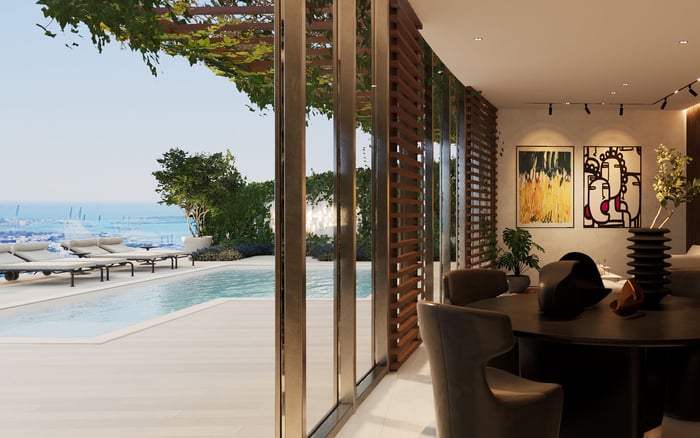
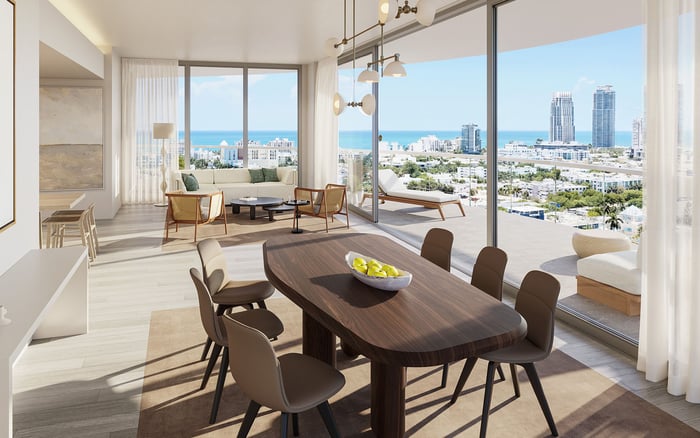
A discreet due-diligence guide for cash buyers evaluating outdoor room furniture in South Florida luxury residences, from contract inclusions to condition, scale, ownership, care, and closing-day verification.
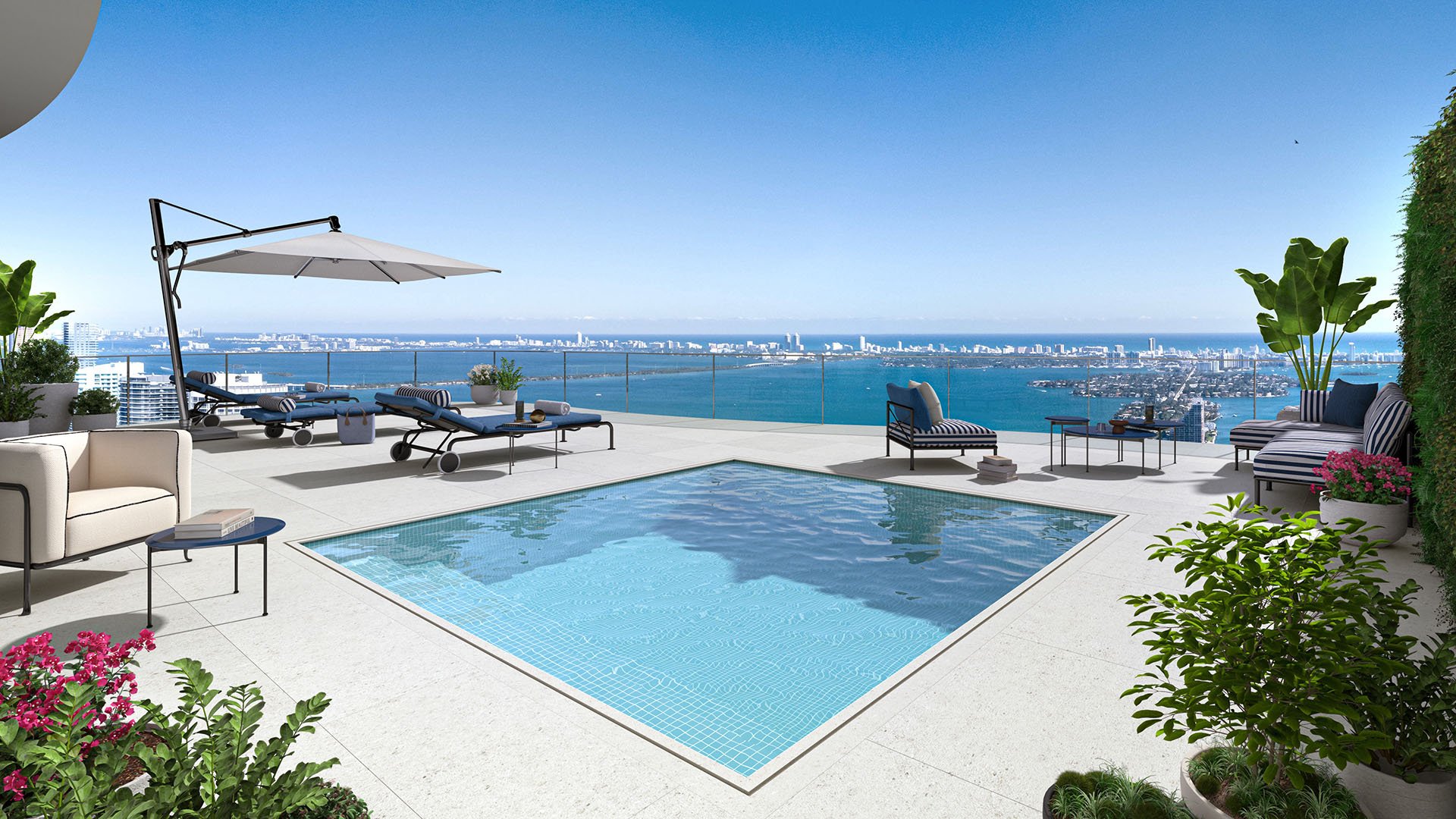
In South Florida’s upper tier, the outdoor room is not an accessory. It is often the emotional center of the residence: the terrace set for sunset cocktails, the poolside dining area that makes a weekend house feel complete, or the balcony lounge that turns a high-floor apartment into a private resort suite. For cash buyers, speed can be an advantage, but speed should not blur the line between ambiance and ownership.
Outdoor furniture is easy to admire during a showing and easy to overlook in contract review. A sculptural dining table, woven chaise lounges, custom cushions, umbrellas, fire bowls, planters, and fitted covers may all appear to belong with the home. They may not. The prudent buyer treats outdoor room furniture as a small but meaningful due-diligence category, particularly when a residence has been professionally styled or marketed as turnkey.
Whether the setting is a balcony, terrace, pool deck, oceanfront cabana, Miami Beach pied-à-terre, or Sunny Isles sky residence, the core question is the same: what exactly is included, in what condition, and what will remain after closing?
The first point of verification is contractual. Outdoor furniture should be identified with the same care as indoor furnishings, lighting, window treatments, audio equipment, or specialty appliances. If a buyer expects the exterior dining set, lounge seating, umbrellas, grills, planters, cushions, covers, or storage pieces to transfer with the property, those items should be described clearly in the agreement or in an attached inventory.
Generic phrases can create friction. “Outdoor furniture included” may sound sufficient, but it can leave room for disagreement over decorative pillows, side tables, fitted weather covers, serving carts, lanterns, or replacement cushions stored in a closet. A more refined approach is to create a schedule of included items by location. The terrace dining area, pool seating area, summer kitchen counter stools, and balcony lounge can each be itemized.
Cash buyers sometimes rely on relationship trust or closing momentum. That can work beautifully when all parties are aligned, but it is not a substitute for precision. If the furniture contributes to the buyer’s valuation of the residence, it should be documented before the deposit becomes meaningful and certainly before the final walk-through.
A polished outdoor room may have been assembled for photography, open houses, or a seasonal listing strategy. The buyer should determine whether the furniture is owned by the seller, leased from a staging company, borrowed from a designer, or otherwise excluded from the sale. This is especially important in residences where the outdoor presentation feels unusually complete, with coordinated textiles, accessories, tableware, and planters.
Staging risk is not limited to obvious decorative items. The most valuable pieces in an exterior setting may be the least conspicuous: modular sectionals with custom dimensions, all-weather dining chairs, fitted covers, storage benches, or umbrellas with weighted bases. If those disappear before closing, the terrace may still be legally delivered, but the lifestyle the buyer thought was being acquired can feel diminished.
A cash buyer should ask direct questions early and calmly. Are the pieces seller-owned? Are any items excluded? Are any pieces rented? Are any replacement cushions, covers, or accessories stored off-site? Is anything being removed for sentimental, designer, or logistical reasons? The answers should be put in writing.
Outdoor furniture in this market lives a demanding life. Sun, salt air, humidity, heavy rain, wind, and frequent entertaining can all leave a mark. A buyer does not need to become a furniture conservator, but a careful visual inspection can reveal whether the pieces are merely photogenic or genuinely durable.
Look closely at frames, welds, joints, glides, feet, screws, hinges, woven surfaces, tabletops, umbrella mechanisms, zippers, seams, straps, and cushion interiors. Check for corrosion, cracking, fading, sagging, mildew odor, loose hardware, uneven legs, brittle straps, warped surfaces, and cushions that hold moisture. Lift cushions rather than judging from above. Open storage benches. Test extension tables, reclining mechanisms, and umbrellas if they are part of the deal.
Material quality matters, but condition matters more. A premium brand that has been left uncovered may be less desirable than a simpler set that has been consistently maintained. The buyer should also ask whether covers are included and where the furniture is stored during severe weather or long absences.
Outdoor rooms are often designed for visual impact. The buyer should also consider daily function. Does the furniture allow doors to open fully? Can service staff, family members, and guests circulate without squeezing around corners? Is there room to pull out dining chairs? Are chaise lounges positioned in a way that respects sightlines, privacy, and sun exposure?
In condominiums, outdoor furniture may be subject to building rules, terrace weight considerations, wind protocols, aesthetic guidelines, or restrictions on grills, umbrellas, planters, and stored items. In single-family homes, the concerns may be different: drainage, irrigation overspray, lawn service access, pool service access, and storage during storms. Either way, the buyer should verify that the current setup is not merely attractive, but workable.
A cash purchaser planning to retain the furniture should imagine the residence after the first month of ownership. Where will wet cushions go? Who will cover the pieces? Can the furniture be moved by staff, or only by a crew? Are there spare covers or replacement parts? The more elaborate the outdoor room, the more important these operational details become.
Outdoor furniture can add real appeal, but it should not be valued solely by the mood it creates during a showing. The buyer should distinguish among replacement cost, current condition, design cohesion, and personal usefulness. A set that perfectly suits the seller’s entertaining style may not match the buyer’s taste, family size, or intended use.
For some buyers, retaining the existing outdoor room is worth a premium because it allows immediate enjoyment. For others, inherited furniture is transitional, useful for the first season and then replaced during a broader design program. The offer strategy should reflect that distinction.
If the seller places a separate value on the outdoor furniture, the buyer should request a detailed inventory and evaluate whether the pricing feels reasonable in light of age, condition, completeness, and compatibility with the property. If the pieces are included without a separate allocation, the buyer should still confirm that they are not being used to mask deferred maintenance or a terrace that will require substantial redesign.
The final walk-through should include the outdoor room with the same discipline applied to interior spaces. Confirm that the agreed furniture remains in place, that cushions and covers are present, that accessories included in the inventory have not been removed, and that the condition has not changed materially since the agreement.
Photographs from the contract date can be useful for comparison. The buyer or representative should walk each exterior zone slowly: balcony, terrace, pool deck, dockside lounge, garden dining area, summer kitchen, and storage closets. If an item has been substituted, damaged, or removed, it is better to identify the issue before closing funds are released.
Cash buyers often win by being clean, decisive, and low-friction. That does not require passivity. The best transactions combine elegance with specificity. Outdoor room furniture may not be the largest financial component of a luxury acquisition, but it can shape how the home lives from the very first evening.
Should cash buyers verify outdoor furniture even when closing quickly? Yes. Cash terms can simplify a transaction, but they do not clarify what personal property is included unless the agreement does so.
Is outdoor furniture automatically included in a home sale? Not necessarily. It should be specifically listed if the buyer expects it to remain with the residence.
What items are most often overlooked outdoors? Cushions, fitted covers, side tables, umbrellas, planters, storage benches, and spare accessories are commonly missed during quick reviews.
How should outdoor furniture be documented? A written inventory by location is best, supported by photos that show the agreed pieces and their condition.
Should staged outdoor furniture be treated differently? Yes. Buyers should confirm whether staged pieces are seller-owned, leased, borrowed, or excluded before relying on them.
What condition issues deserve special attention? Look for corrosion, fading, mildew odor, loose hardware, cracked surfaces, sagging cushions, and malfunctioning moving parts.
Can condominium rules affect outdoor furniture? Yes. Building rules may address appearance, storage, wind procedures, grills, umbrellas, and items kept on terraces or balconies.
Should covers be included in the purchase? If the buyer expects them, they should be listed. Covers can be essential to preserving the condition of outdoor pieces.
What should be checked at the final walk-through? Confirm that all included pieces, cushions, covers, and accessories remain present and in the agreed condition.
Is outdoor furniture worth negotiating separately? It can be, especially when the pieces are high-quality, custom-sized, or central to the property’s immediate livability.
For a tailored shortlist and next-step guidance, connect with MILLION.
If branded residences are on your mind — as a home or as an allocation — we would be glad to share what we are seeing, privately.
Begin a quiet conversation