A buyer-oriented comparison of Five Park Miami Beach and ORA by Casa Tua Brickell, focused on building culture, scale, lobby privacy, and the social patterns that shape daily residential life.
In South Florida’s upper tier, buyers often begin with location, views, architecture, and service. Yet the more revealing question is cultural: what kind of daily life will the building create? Five Park Miami Beach and ORA by Casa Tua Brickell answer that question from opposite sides of the luxury spectrum.
Five Park Miami Beach reads as a privacy-forward resort-residential tower. Its identity is tied to a signature Miami Beach setting, curated amenities, and a residential hierarchy that keeps the home experience controlled. ORA by Casa Tua Brickell is shaped by hospitality. Its appeal is not only the private residence, but the idea that a brand-led social atmosphere can become part of everyday ownership.
That distinction matters because building culture shapes scale. A large tower can feel calm when its arrival sequence, service model, and amenities are organized around residential discretion. A dense urban project can feel magnetic when its programming is designed to create movement, recognition, and spontaneous encounters. For New-construction and Pre-construction buyers, that cultural layer may matter as much as floor plan or finish.
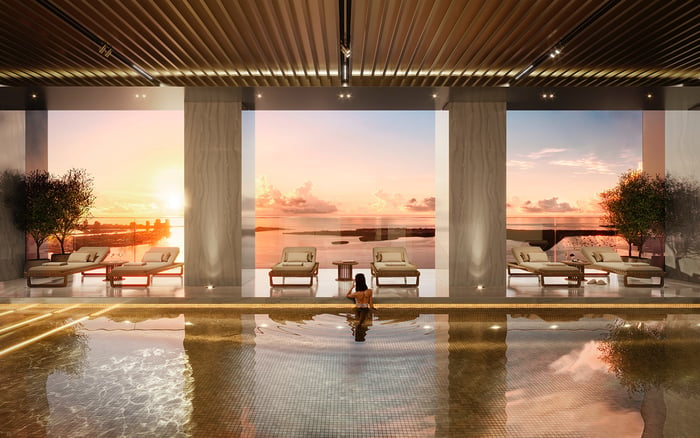
Five Park Miami Beach is best understood as a resort-residential sanctuary rather than a club-first condominium. Its luxury is not quiet in the sense of invisible. The building has presence, prestige, and a signature-tower identity. But its culture is framed around controlled access, hospitality-style service, and a more traditional residential order.
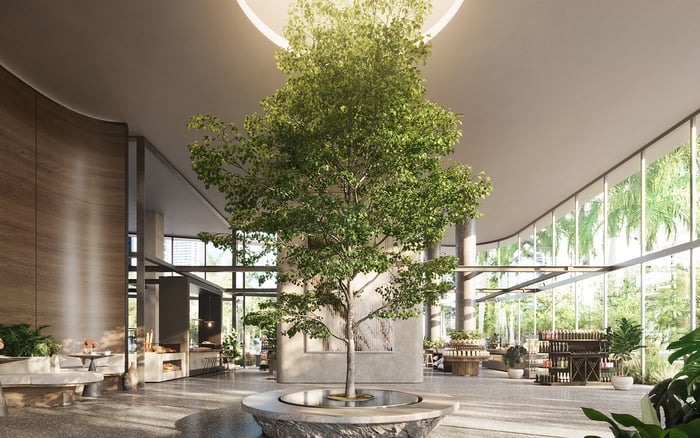
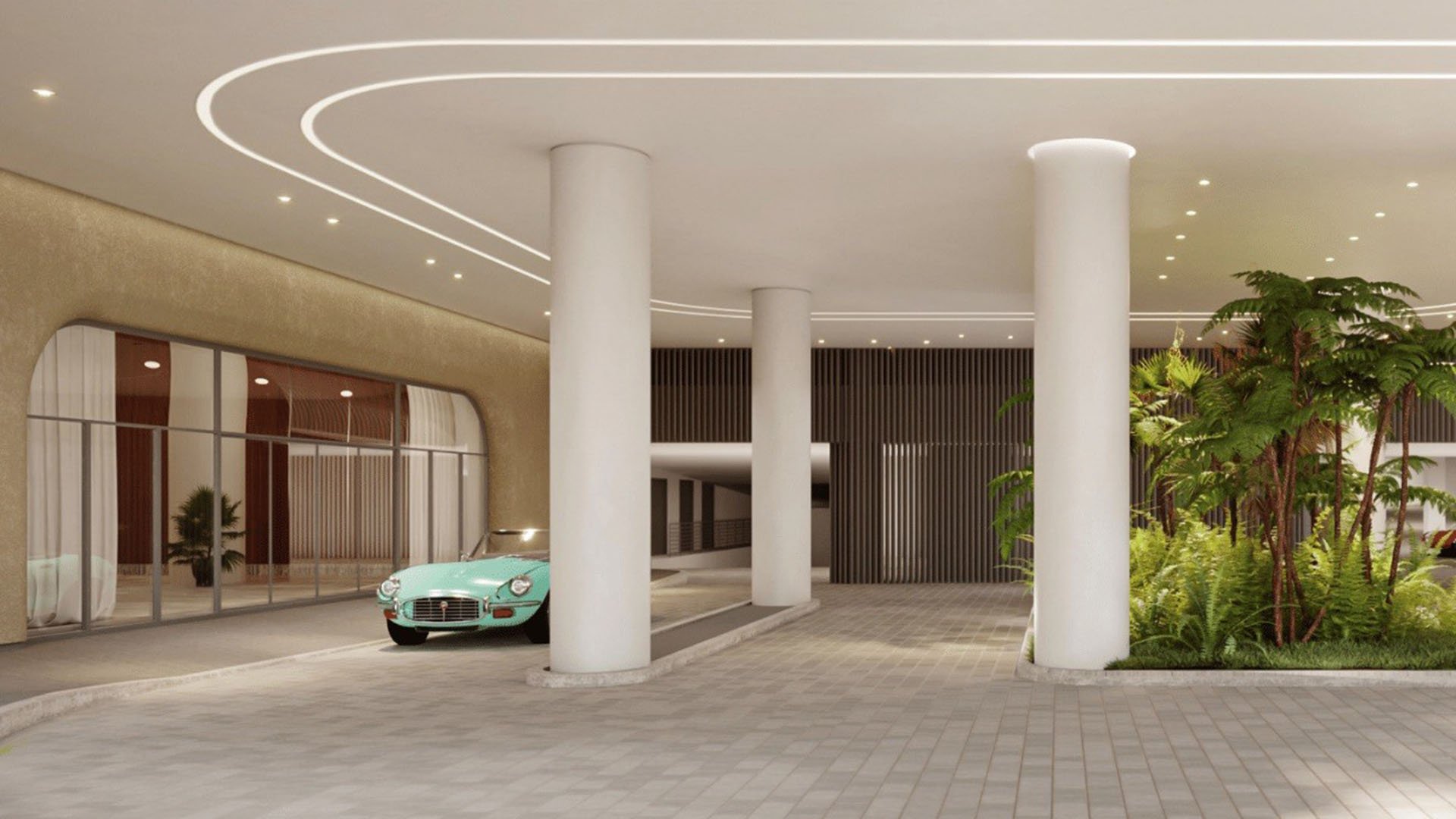
That order is important. In a privacy-forward building, the lobby is not primarily a stage for public energy. It is a threshold. Residents and their guests move through a setting that supports arrival, staff recognition, and the sense that the building belongs first to the people who live there. The relationship to the surrounding Miami Beach context helps soften the feeling of scale, giving daily life a more residential cadence.
For Miami Beach buyers, that can be a defining attraction. The ideal Five Park resident may want amenities and visibility, but not the sensation that home begins inside an active hospitality venue. The culture leans toward balance: polished service without constant social exposure, resort cues without nightlife pressure, and neighbors who may become familiar through repeated residential patterns rather than programmed interaction.
ORA by Casa Tua Brickell approaches luxury from a different premise. It is not positioned here as a conventional private-only condominium. Its identity is shaped by Casa Tua hospitality, with a social ecosystem that extends the brand’s gathering culture into the residential experience.
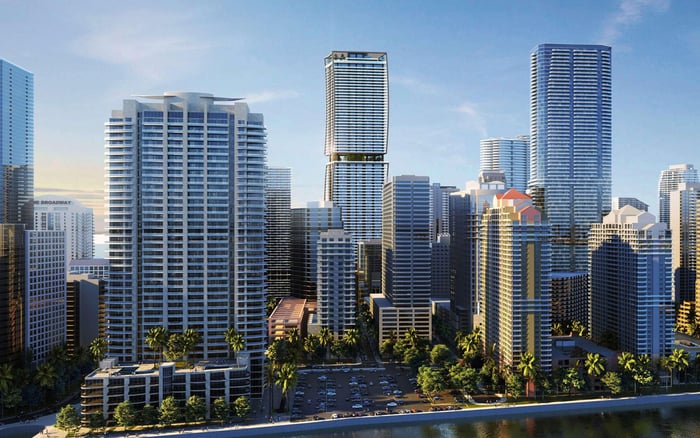
In Brickell, that premise feels intuitive. Brickell is dense, vertical, urban, and already oriented around professional life, restaurants, movement, and evening energy. ORA’s culture embraces that setting rather than retreating from it. The result is a building proposition where residence, private comfort, and hospitality energy intentionally overlap.
For the right buyer, this is the point. ORA is likely to attract residents who want social access inside the building, not simply near it. The elevator ride, lounge-style moment, or planned evening may become part of the ownership rhythm. Resident familiarity can develop through repeated casual encounters and shared hospitality experiences. Rather than relying solely on neighbor-to-neighbor discretion, ORA encourages a more socially porous lifestyle.
The clearest distinction between the two projects is not simply Miami Beach versus Brickell. It is lobby privacy. Five Park Miami Beach suggests a more controlled residential arrival, where the building’s public impression is filtered through private ownership. ORA by Casa Tua Brickell suggests more interaction among residents, guests, and hospitality programming.
That does not make one model superior. It makes them fundamentally different. Some buyers find comfort in a lobby that behaves like a private residence at scale. Others find value in a lobby and amenity ecosystem that creates vitality. The difference becomes especially important for owners who will use the property as a primary residence, because the daily threshold between city and home is experienced again and again.
In a privacy-forward building, staff familiarity and spatial control help preserve calm. In a hospitality-forward building, circulation and programming can create recognition, momentum, and a sense of belonging to something larger than a condominium association. Both are luxury, but they produce different emotional climates.
Scale is not only height or massing. It is how a building handles people. Five Park’s resort-style positioning, curated amenities, and Miami Beach residential context help its scale feel more composed. The tower may be visible, but the resident experience is designed to feel protected, orderly, and softened by service.
ORA’s scale is animated differently. Its density becomes part of the experience because the building culture is tied to gathering. Shared social settings can make vertical living feel more connected and more active. For some, that energy is a benefit. For others, it may feel less private than a more conventional residential hierarchy.
This is where the phrase New Project can be misleading if used too casually. Newness alone does not tell a buyer how a building will behave. New-construction luxury can be discreet, social, wellness-focused, branded, resort-led, club-led, or highly private. The meaningful question is whether the operating culture matches the buyer’s preferred daily rhythm.
Resident familiarity develops through design and operations. At Five Park Miami Beach, familiarity is likely to be quieter. Residents may come to know one another through consistent routines, shared amenities, elevator encounters, and a service environment that keeps the emphasis on residential discretion.
At ORA by Casa Tua Brickell, familiarity may be more frequent and more casual. A hospitality-led ecosystem naturally creates repeated points of contact. Residents may see one another in social settings, sometimes alongside non-resident guests. This can produce a more open sense of community, but also a different privacy equation.
The best choice depends on temperament. A buyer who wants home to feel like a calm retreat after the city may respond to Five Park’s culture. A buyer who wants the building itself to supply connection, atmosphere, and access may find ORA more compelling.
Prestige at Five Park Miami Beach is rooted in composed arrival, residential sanctuary, and the ability to enjoy amenities without feeling absorbed into a public club environment. It suits buyers who value discretion, Miami Beach ease, and a service culture that protects the private nature of home.
Prestige at ORA by Casa Tua Brickell is more socially expressive. It suits buyers who see social access and brand-driven hospitality as part of the asset. Brickell reinforces that proposition because the neighborhood already rewards convenience, density, and an activated urban lifestyle.
For serious buyers, the comparison should not be reduced to which building is more luxurious. Both speak to luxury. The sharper question is whether luxury should feel sheltered or activated, private or porous, serene or socially charged.
What is the main difference between Five Park Miami Beach and ORA by Casa Tua Brickell? Five Park emphasizes a quieter resort-residential sanctuary, while ORA emphasizes a more activated hospitality-residential lifestyle.
Which building is likely to feel more private? Five Park Miami Beach is likely to feel more private because its culture is centered on controlled access and residential discretion.
Which building is more social by design? ORA by Casa Tua Brickell is more social by design because its concept centers on brand-led hospitality and shared social energy.
Does Brickell influence ORA’s building culture? Yes. Brickell reinforces ORA’s urban, dense, and socially activated identity.
Does Miami Beach influence Five Park’s appeal? Yes. Five Park’s Miami Beach setting supports a resort-residential lifestyle with a more composed daily rhythm.
Which is better for buyers who dislike public lobby energy? Five Park is the more natural fit for buyers who want amenities and prestige without a club-like primary lobby experience.
Which is better for buyers who want social access? ORA is better suited to buyers who value gathering spaces, atmosphere, and brand-driven hospitality inside the building.
Will residents know each other differently in each building? Likely yes. Five Park may foster quieter neighbor familiarity, while ORA may create more frequent casual encounters through shared settings.
Is building culture important for long-term ownership? Yes. Building culture affects privacy, daily routines, guest flow, and the emotional experience of coming home.
Should buyers compare these projects only by location? No. Location matters, but the stronger distinction is whether the buyer wants sanctuary-style living or a more social hospitality ecosystem.
When you're ready to tour or underwrite the options, connect with MILLION.
If branded residences are on your mind — as a home or as an allocation — we would be glad to share what we are seeing, privately.
Begin a quiet conversation